

Business
Karnataka suspends online sale of Mysore silk saris as orders surge – The Times of India


BENGALURU: Karnataka govt has suspended online sales of Mysore silk saris after surging orders outstripped supply of the GI-tagged weave made with pure mulberry silk, gold zari and silver threads. State-owned Karnataka Silk Industries Corporation will prioritise limited stocks for buyers visiting its exclusive outlets.Sericulture minister K Venkatesh made the announcement in the assembly on Monday, attributing the spike in demand to the high quality of the saris. He said online sales would resume once production stabilises.KSIC launched online sales to make the saris accessible to customers outside the state. It been producing the famed weave since 1912 and currently turns out 300–400 saris a day. Its collective output over the past three years stood at 3.1 lakh saris.
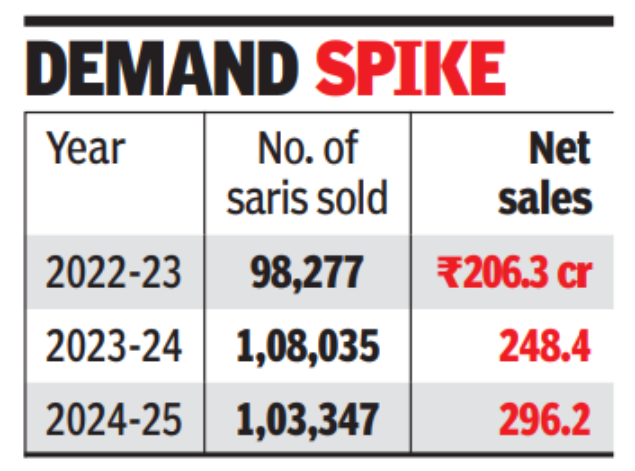
Venkatesh said the popularity of the saris was evident during special discount sales. “Since saris with defects remain unsold, we offer 25% to 50% discounts. During these special sales, people queue up from 3am,” he said.KSIC sources premium cocoons mostly from govt markets in Sidlaghatta, Ramanagara and Kollegal in the state. “There is huge competition in procuring high-quality cocoons from Maharashtra, Tamil Nadu and other states,” Venkatesh said, adding efforts were being made to secure quality supply.To meet growing demand, the govt has installed 30 e-jacquard looms, increasing production by about 7,500 metres a month. KSIC’s finances have also improved, with profit rising to Rs 101 crore in 2024-25 from Rs 73 crore in 2023-24 and Rs 46 crore in 2022-23.
Business
Middle East crisis: Oil tops $100, nears 4-year high as Saudis cut production – The Times of India
Oil prices surged to $120 a barrel before retreating to $102 Monday as Saudi Arabia was reported to be cutting output, adding to the supply squeeze due to disruption in the Strait of Hormuz.Finance ministers of developed G7 nations, who met Monday evening, deferred plans to tap their strategic reserves to cool down the global flare-up in prices, while vowing to keep close tabs on the evolving supply situation.Although Brent prices touched the highest level seen since mid-2022, govt officials said there was no immediate plan to increase pump prices of fuel in India. “We are nicely placed vis-a-vis crude. There is unlikely to be a rise in petrol and diesel prices in the foreseeable future, even if prices remain at $110-120 a barrel,” said a senior govt official.
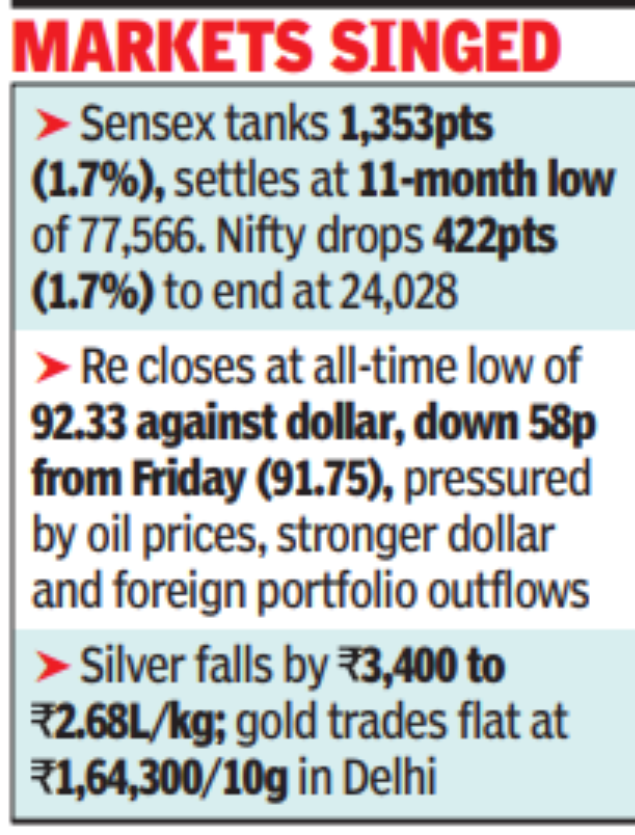
Iran conflict sends Brent soaring 65% since Feb 28
The Indian basket was on the verge of hitting $100 a barrel after having reached $99.12 on Friday, almost 40% higher than the Feb 27 level of $71.19. Since Feb 28, when the US and Israel bombed Iran, global benchmark Brent has surged as much as 65%.The statement came amid reports that Saudi Aramco had begun reducing production from two of its fields, joining Iraq, Kuwait, Qatar and the UAE, as they ran out of storage due to blocked shipments.Govt officials, however, reiterated that India has sufficient stock of oil and gas to meet domestic requirements. They also sought to dispel rumours of a scarcity of fuel and dismissed reports of shortages anywhere in the country. Officials also maintained there are adequate stocks of aviation turbine fuel. “India is also a producer and exporter of ATF; there is no need to worry,” said one of them.The disruptions have prompted govts to initiate emergency action. For instance, Japan, which imports around 95% of its oil from West Asia, has instructed a national oil reserve storage site to prepare for a possible crude release, while China has asked refiners to halt fuel exports. South Korea has capped prices for the first time in 30 years, while Vietnam removed import tariffs on fuels. Bangladesh has shut universities to conserve electricity and fuel.Panic across markets prompted G7 finance ministers to consider releasing crude from strategic reserves, a step officials said was not being considered by India as it sought to secure its supply lines.India, world’s third-largest oil-importing and consuming nation, has 5.3 million tonnes of underground strategic reserves, which are at 80% of their capacity. “The crisis (that led to a rise in prices) is not our creation. Those responsible have to deal with it and create situations to ease (prices). Ours is an India first policy,” said a govt functionary.India is not a full member of IEA and does not have an obligation to follow the diktat of the international body, officials added.
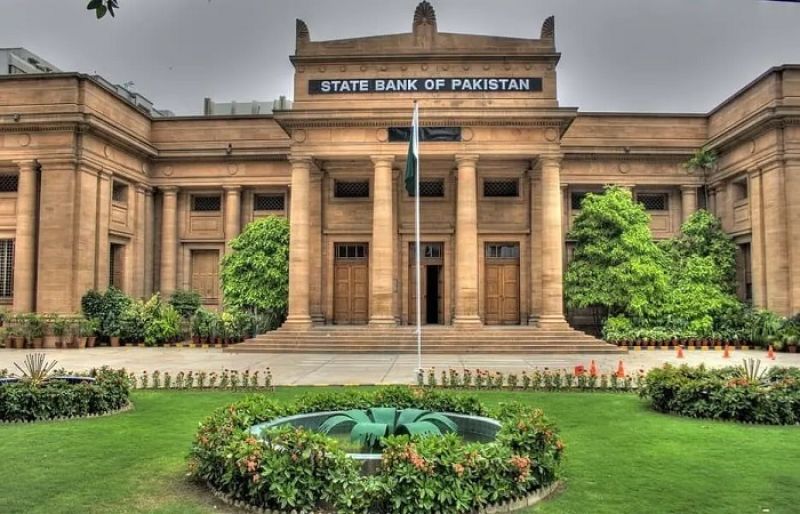
The State Bank of Pakistan’s (SBP) Monetary Policy Committee (MPC) on Monday maintained its key interest rate at 10.5%, pausing its easing cycle as rising global energy prices and regional tensions pose new inflation risks for the import-dependent economy.
“The Monetary Policy Committee has decided to keep the policy rate unchanged at 10.5%,” the State Bank of Pakistan (SBP) said on its website, adding that a detailed statement would be released soon.
The SBP has cut the key rate by a cumulative 1,150 basis points since mid-2024, from a record 22% in 2023, as inflation cooled sharply from multi-decade highs.
In its policy statement, the SBP said that the MPC decided to keep the policy rate unchanged as it observed that the macroeconomic outlook has “become quite uncertain following [the] outbreak of the war in the Middle East”.
During the meeting, the MPC noted that “the conflict in the Middle East has led to a sharp increase in global fuel prices as well as freight and insurance costs, while also affecting cross-border trade and travel.”
“The MPC observed that the intensity and duration of the conflict will both be important determinants of the impact on the domestic economy.”
However, the committee noted that macroeconomic fundamentals, especially in terms of inflation, foreign exchange reserves, and fiscal buffers, were better compared to the time of the start of the Russia-Ukraine war in early 2022.
The MPC’s initial assessment of the evolving geopolitical situation indicated that the outlook for key macroeconomic variables for fiscal year 2026 was within the earlier projected ranges. However, risks for the macroeconomic outlook have increased significantly.
Meanwhile, on the domestic front, inflation rose to 5.8% in January and further to 7% in February 2026.
The current account recorded a surplus in January, which, amidst weak official inflows, led to continued interbank FX purchases by the SBP and the buildup in FX reserves to $16.3 billion as of February 27.
Large-scale manufacturing (LSM) grew by 0.4% year-on-year in December 2025, with cumulative growth reaching 4.8% in July-December FY26.
Additionally, consumers’ inflation expectations and confidence improved, while those of businesses remained broadly stable in February.
The Federal Board of Revenue (FBR) tax collection remained below target in both January and February, further widening the cumulative shortfall during July-February FY26.
“The Committee noted the high degree of uncertainty in the outlook for international commodity prices and supply-chain disruptions in the backdrop of the war in the Middle East. In this context, the MPC deemed today’s decision as appropriate, and reaffirmed its commitment to ensure the hard-earned price stability,” read the statement.
However, the MPC stressed the need for expediting structural reforms to ensure sustainable economic growth.
The committee noted that the headline inflation rose to 7% year-on-year in February, attributed to the phasing out of the low base effect from food and energy prices, along with the rationalisation of fixed charges on households’ electricity bills.
The MPC assessed that the impact of higher expected domestic energy prices is likely to be partially offset by recent favourable movement in food prices amidst improved supply of key items and better prospects of agriculture produce.
It is expected that inflation may remain above 7% in the remaining months of FY26 and into FY27.
Mumbai: Warburg Pincus-backed housing finance company Truhome Finance ( formerly Shriram Housing) has filed draft papers with capital markets regulator SEBI to raise Rs 3,000 crore through an initial public offering.The IPO will comprise a fresh issue of equity shares of face value Rs 10 aggregating up to Rs 1,500 crore and an offer for sale of equity shares of face value Rs 10 aggregating up to Rs 1,500 crore, according to the draft red herring prospectus filed with SEBI. The offer for sale will be undertaken by promoter selling shareholder Mango Crest Investment, which plans to offload shares worth up to Rs 1,500 crore.Truhome Finance plans to use the net proceeds from the fresh issue to augment its capital base to support future capital requirements, including onward lending and general corporate purposes. The funds will also help the company comply with RBI’s capital adequacy norms as its business expands.The company said the proceeds are expected to be deployed over the financial years ending March 31, 2027 and March 31, 2028.JM Financial, IIFL Capital Services, Jefferies India and Kotak Mahindra Capital Company are the book running lead managers to the issue.Warburg Pincus completed its acquisition of Shriram Housing Finance (SHFL) from Shriram Finance and other sellers in December 2024 for approximately Rs 4,630 crore, marking a strategic shift in India’s housing finance sector.


Milan’s big derby win; Arsenal’s FA Cup scare; Yamal stars again; more

Steve Carell shares ‘favorite part’ of ‘life’: ‘Aww’

Nvidia Is Planning to Launch an Open-Source AI Agent Platform

-

 Sports3 days ago
Pakistan set for FIH Pro League debut | The Express Tribune
-

 Politics3 days ago
India let Iran warship dock the day US sank another off Sri Lanka, say officials
-

 Entertainment3 days ago
Harry Styles kicks off new era with ‘One Night Only’ comeback show
-
 Business1 week ago
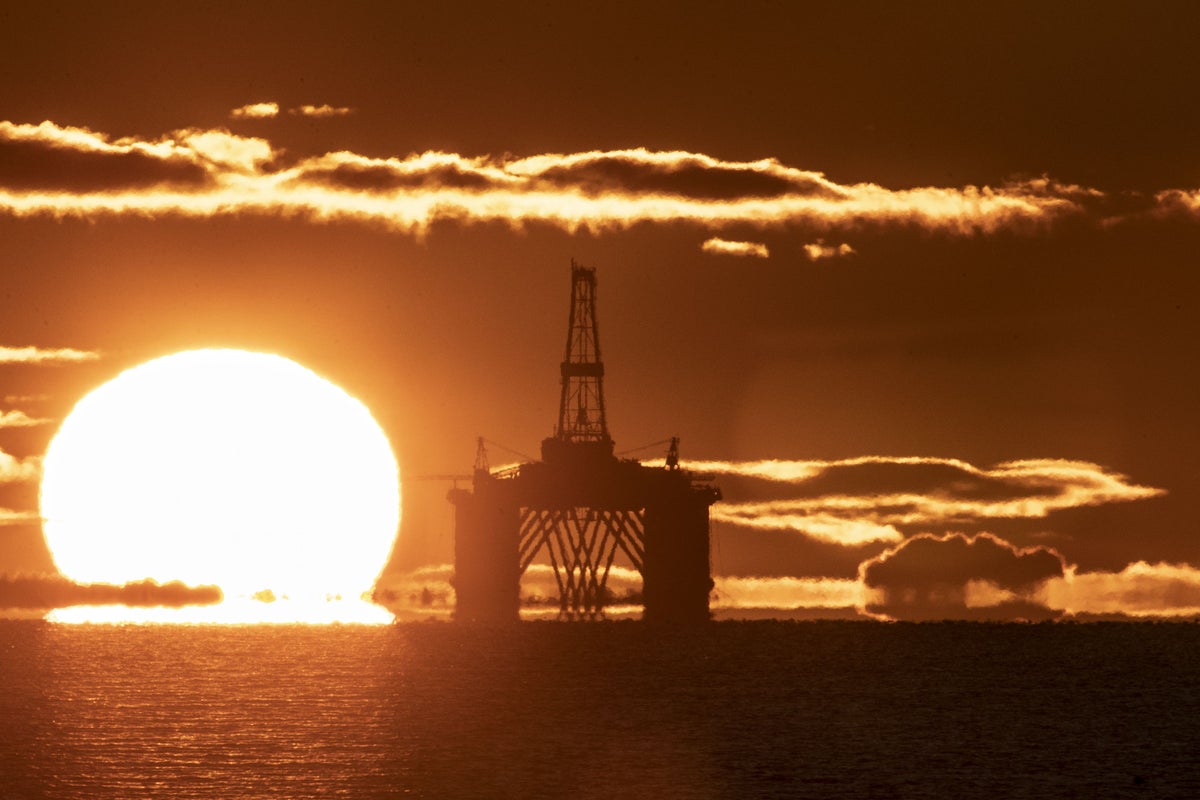
Labour parliamentarians urge UK Government to oppose Rosebank oil field
-

 Sports1 week ago
Michigan loses L.J. Cason for rest of season with torn ACL
-
 Business3 days ago
Home heating oil: ‘Most of my pension has gone on home heating oil’
-
 Business3 days ago
Restaurant group changes name after bid to buys pubs across the UK
-
 Tech1 week ago
The 5 Big ‘Known Unknowns’ of Donald Trump’s New War With Iran