

Entertainment
Keith Urban gave hint to fan before major change in life

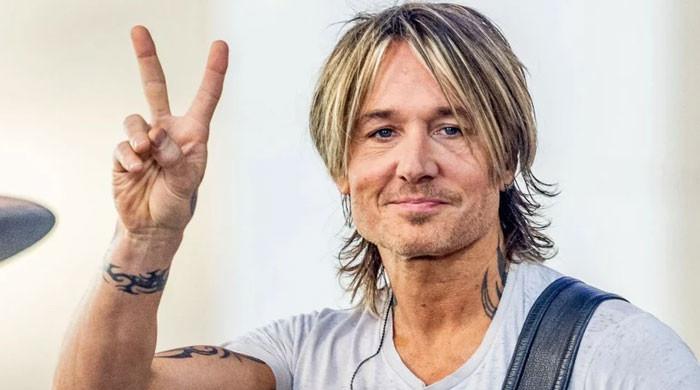
Dale Whiteside, a look-alike fan of Keith Urban, claims the musician gave him a hint about his divorce from Nicole Kidman before it happened.
In an interview with TMZ, he shares that he told the hitmaker during his concert in Saskatoon, Canada, how he was mistaken for him by a couple at a recent music festival.
But the couple came to realize that Dale was a look-alike after realizing he didn’t have Keith’s tattoos and wasn’t wearing a wedding ring.
“Next time, it’ll probably be just the tattoos,” the Let It Roll singer reportedly told his fan.
Two weeks later, the announcement came that the couple, who had been married for nearly two decades, called it quits.
Meanwhile, a source previously told Us Weekly, “Keith has moved on and has been open with Nicole about where he stands.”
“The two had grown apart quietly over time, and by the end, the decision to separate was more about acceptance than surprise,” the source shared at the time.
It is worth noting that Keith and Nicole married in 2006.
- Interbank rate stays range-bound through the week.
- IMF review talks begin under EFF and RSF.
- Remittances rise year-on-year, dip month-on-month.
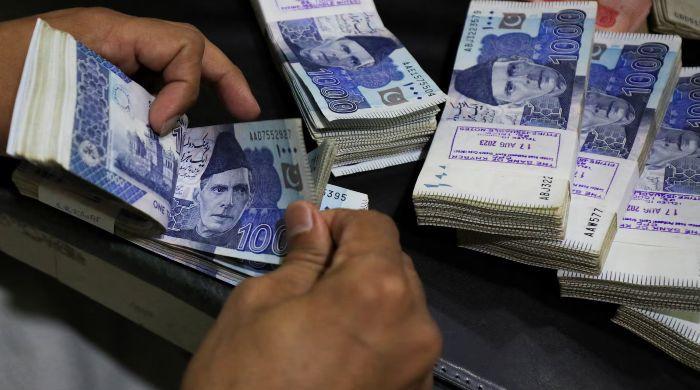
KARACHI: The Pakistani rupee is expected to stay stable and may strengthen slightly in the near term, supported by seasonal remittance inflows during Ramadan and ahead of Eid, The News reported, citing a report released on Saturday.
The currency traded in a tight band in the interbank market this week, closing at 279.55 to the dollar on Monday and at 279.47 on Friday.
The International Monetary Fund (IMF) team began talks with Pakistani authorities on Wednesday for the third review under the $7 billion Extended Financing Facility (EFF) and the second review of the $1.1 billion Resilience and Sustainability Facility (RSF).
Upon successful completion, Pakistan would become eligible by the end of April for about $1 billion under the EFF and an additional $200 million under the RSF.
The geopolitical situation has worsened as the United States and Israel launched strikes on Iran, plunging the region into a new conflict.
The rupee has appreciated by approximately 60 paisa since the beginning of the year, said Tresmark, a platform that provides live financial rates, in a client note. While this increase is modest on its own, it is more significant when considering the broader context, it said.
The rupee has strengthened despite several challenges, including rising geopolitical risks and US posturing in the region, escalating tensions along the western border, isolated internal security incidents, Brent crude prices trading above $72 a barrel, a steady decline in exports, a widening trade deficit, tariff pressures and a persistent inflation differential with the US.
“Seasonal remittance inflows around Ramadan and Eid are likely to keep the rupee well bid in the near term,” the Tresmark’s report said.
“That said, most economists argue that further appreciation offers limited structural benefit, which makes the recent firmness somewhat counterintuitive,” it added.
Pakistan’s remittances rose 15.4% year-on-year (YoY) in January to $3.5 billion. However, these flows dropped 4% on a month-on-month (MoM) basis. Remittances increased 11.3% to $23.2 billion in the first seven months of the fiscal year 2026.
“Premiums have marginally improved. If costing is tight, exporters should opt for forwards, as rupee outlook continues to look stable to slightly stronger,” it said.
According to the report, the rupee’s stability is not isolated. Several high-carry or reform-backed EM currencies have also held firm despite geopolitical noise, including the Egyptian pound, Thai baht, South African rand, Brazilian real, Mexican peso, and Indonesian rupiah.
- Pakistan urges immediate halt to regional escalation.
- Condemns violations of sovereignty and international law.
- Calls for urgent return to diplomatic talks.
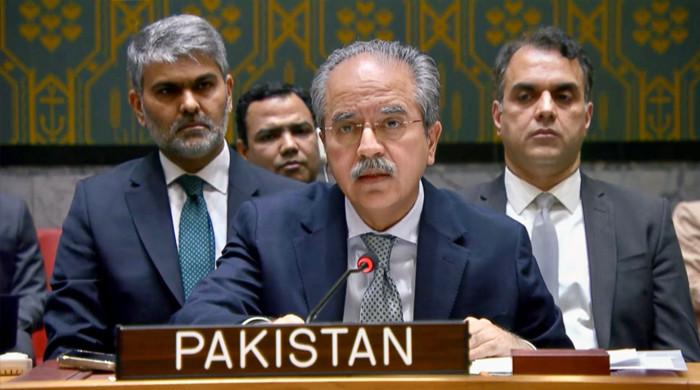
Pakistan has warned the United Nations Security Council (UNSC) that the US-Israeli attack on Iran, and the ensuing retaliatory strikes, could undermine the security of the entire region “with far-reaching consequences”.
“We are deeply alarmed at the risk of regional conflagration,” Ambassador Asim Iftikhar Ahmad, Pakistan’s permanent representative to the United Nations, told the 15-member Council, which met in emergency session at the request of France, China, Russia, Bahrain and Colombia on Saturday evening.
Israel and the United States launched strikes on Iran on Saturday, plunging the Middle East into a renewed military confrontation as President Donald Trump vowed to destroy Tehran’s missile arsenal and prevent it from developing a nuclear weapon.
Tehran responded with a sweeping barrage of missiles targeting Gulf states and Israel, marking a sharp escalation in regional hostilities.
The Pakistani envoy, in his address, regretted that the joint attacks — which he said were in violation of international law — took place at a time when renewed diplomatic efforts were underway to reach a peaceful and negotiated solution.
At the same time, Ambassador Ahmad condemned Iran’s strikes on Saudi Arabia, Bahrain, Jordan, Kuwait, Qatar and the United Arab Emirates, stressed that Pakistan stands in solidarity with them, and underscored the need for all sides to exercise maximum restraint.
He said it was especially unfortunate that some of these countries had been supporting efforts to find a diplomatic solution between the United States and Iran, and particularly lauded Oman’s role in facilitating and mediating dialogue between the two sides.
He also condemned the death of a Pakistani national in the United Arab Emirates during the attacks.
“We urge all sides to refrain from any further actions that may undermine the security and territorial integrity of other regional countries,” the Pakistani envoy said.
Ambassador Ahmad noted that diplomacy had once again been “derailed” in the middle of efforts to reach a negotiated settlement, further eroding already fragile trust. He called on all sides to immediately halt escalation and urgently resume diplomacy with a view to achieving a peaceful resolution of the crisis.
Expressing condolences to civilians caught in the violence, he said Pakistan’s thoughts were with schoolchildren in Iran, civilians elsewhere in the region, and the family of the Pakistani national killed in the UAE.
“The purposes and principles of the United Nations Charter are inviolable and sacrosanct,” he said, noting that the Charter prohibits the threat or use of force against the territorial integrity or political independence of states. Pakistan, he added, calls for full respect for international law, including international humanitarian law.
Reiterating that the safety of millions of people across the region remained a top priority, Ambassador Ahmad said Pakistan was maintaining close contact and coordination with brotherly and neighbouring countries, including at the leadership level, and stood ready to support efforts aimed at a peaceful resolution of outstanding issues.
He said Pakistan has consistently advocated the primacy of peaceful dispute resolution and the need to avoid confrontation and conflict in a region already beset by tensions and volatility, stressing that dialogue and diplomacy must remain the guiding principles for any negotiated settlement.
Opening the debate, UN Secretary-General António Guterres focused his remarks on principles, facts and “the way out”.
Quoting the UN Charter, he said all member states must refrain from the threat or use of force against the territorial integrity or political independence of any state, and stressed that international law and international humanitarian law must always be respected.
He condemned the large-scale military strikes by the United States and Israel against Iran and the subsequent Iranian attacks that violated the sovereignty and territorial integrity of Bahrain, Iraq, Jordan, Kuwait, Qatar, Saudi Arabia and the United Arab Emirates.
“We are witnessing a grave threat to international peace and security,” the UN chief warned, stressing that there is no viable alternative to the peaceful settlement of international disputes.
Describing the situation on the ground as “very fluid”, Guterres said around 20 cities across Iran — including Tehran, Isfahan, Qom, Shahriar and Tabriz — were reportedly targeted, with large explosions reported in parts of Tehran, including districts housing key state facilities.
Several senior officials were reported killed, including — according to Israeli sources — Iran’s Supreme Leader, he said.
Citing Iranian media, the UN chief said at least 85 people were killed in air strikes, while military action was rapidly expanding across the region. He added that people were injured in Iran’s subsequent strikes on Israel, with impacts also felt in the occupied West Bank, and that Iran had announced it had targeted US military assets in the region in response to the attacks.
Indirect impact from falling debris was reported in Lebanon and Syria, while most Gulf states intercepted the incoming strikes. The United Arab Emirates reported that one civilian was killed by debris.
Guterres noted that the US and Israeli attacks followed a third round of indirect talks between Washington and Tehran mediated by Oman.
“I deeply regret that this opportunity for diplomacy has been squandered,” he said, calling for immediate de-escalation, cessation of hostilities and a swift return to negotiations, including on the Iranian nuclear programme.
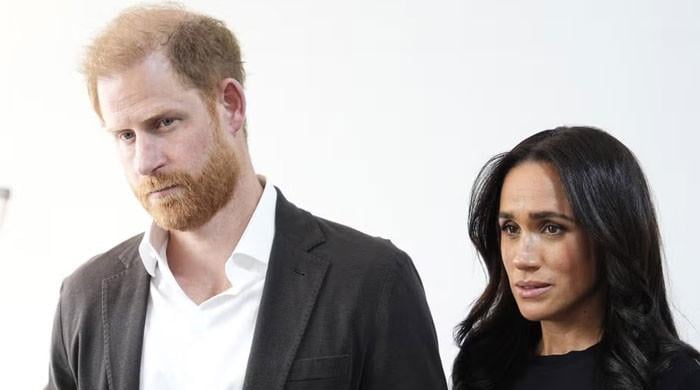
Prince Harry and Meghan Markle, who had wrapped an important two-day visit to Jordan this week, seemed to have received a mixed reaction from the British public and royal fans.
While some had praised the couple for their efforts, the others heavily criticised the ‘quasi-royal’ tour, calling them out for copying the royals. However, the Duke and Duchess of Sussex received a rather wistful verdict on the matter.
According to royal experts, Harry and Meghan have landed themselves in a tricky spot following their exit from the senior positions and the rift with the royals, but the criticism this time around had been “largely unfair” for the couple.
The Jordanian royals have very close ties with the British royal family, pointed out royal expert Russell Myers, who has written a joint biography on Prince William and Princess Kate. He also pointed out that Jordan is “pretty much in the royal family’s backyard”.
Although, he maintained that Harry and Meghan didn’t deserve the intense criticism as they had been in the country for a humanitarian visit on the invitation on the World Health Organisation’s director-general, Dr Tedros Adhanom Ghebreyesus.
He suggested that even if Harry and Meghan were being followed by a camera crew or filming a new documentary for Netflix, they are still using their profile for “public good”. Russell went on to urge the people to “calm down a little bit” in the Sussexes case.

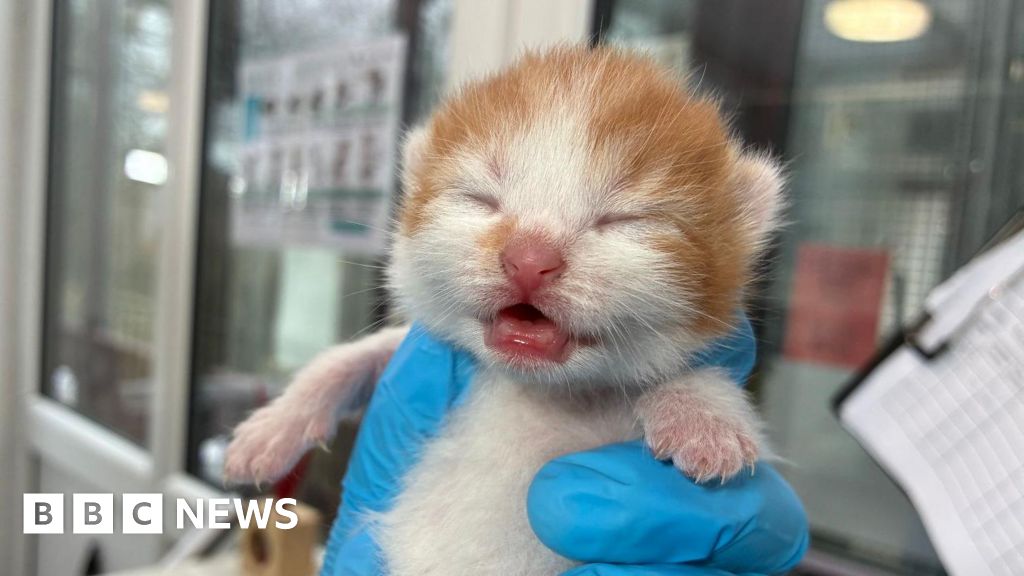
Yorkshire Cat Rescue sees rise in abandoned cats as costs increase

Ramadan, Eid remittances to keep rupee stable

Protests erupt in Iran after Khamenei martyred in US-Israel attack

-
 Business1 week ago
US Top Court Blocks Trump’s Tariff Orders: Does It Mean Zero Duties For Indian Goods?
-

 Fashion1 week ago
ICE cotton ticks higher on crude oil rally
-

 Entertainment1 week ago
The White Lotus” creator Mike White reflects on his time on “Survivor
-
 Politics1 week ago
Pakistan carries out precision strikes on seven militant hideouts in Afghanistan
-
 Business1 week ago
Eye-popping rise in one year: Betting on just gold and silver for long-term wealth creation? Think again! – The Times of India
-

 Sports1 week ago
Brett Favre blasts NFL for no longer appealing to ‘true’ fans: ‘There’s been a slight shift’
-

 Sports1 week ago
Kansas’ Darryn Peterson misses most of 2nd half with cramping
-

 Fashion1 week ago
Climate risks could impact fashion industry by 34% in 2030: Aii