

Business
Key economic data and trends that will shape Rachel Reeves’ Budget

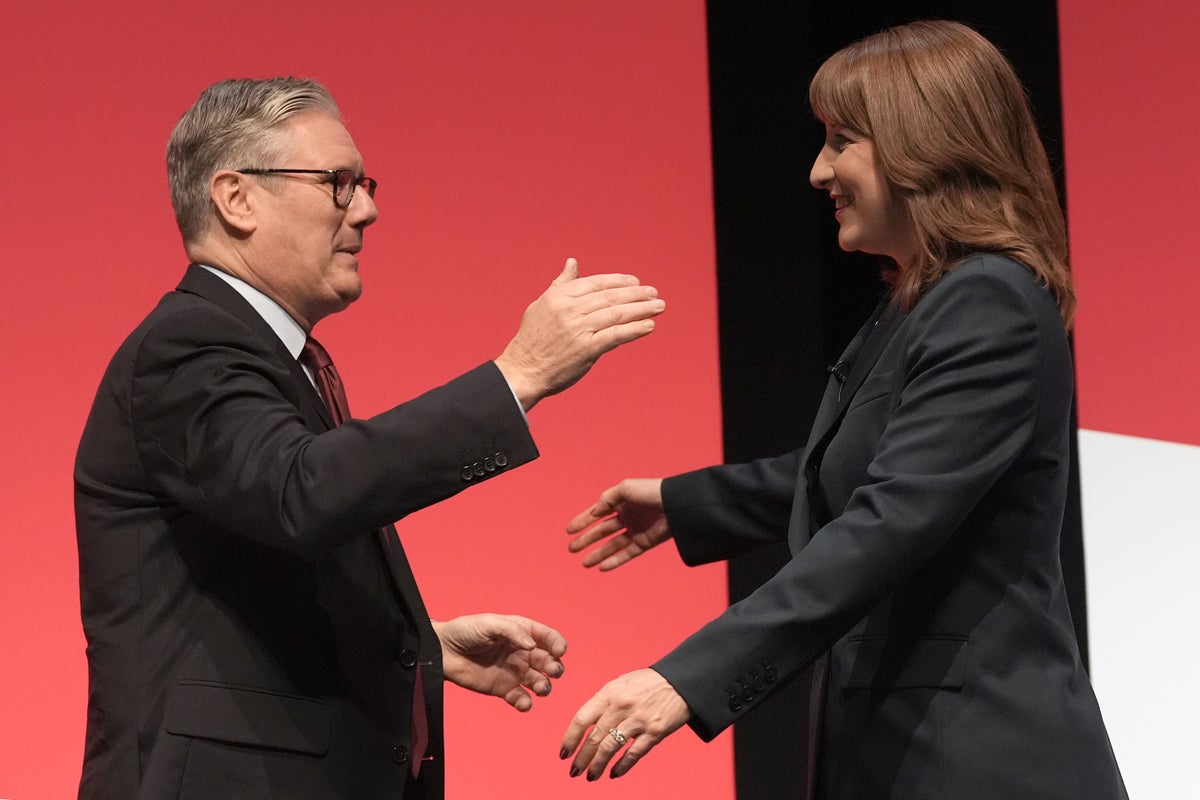
Chancellor Rachel Reeves will deliver her Budget on Wednesday against a backdrop of rising unemployment and higher-than-forecast Government borrowing, but amid signs this year’s spike in inflation may have peaked.
Here, the PA news agency looks at five key economic indicators that are likely to shape both the content and the tone of Ms Reeves’ speech.
– Borrowing
Government borrowing for the current financial year is running at a higher level than forecast and is the highest on record outside the Covid-19 pandemic.
Borrowing stood at £116.8 billion for the seven months from April to October 2025, according to figures published last week by the Office for National Statistics (ONS).
This is £9.9 billion more than the £106.9 billion forecast for this period by the Office for Budget Responsibility (OBR) in March.
It is also the second-highest borrowing figure for April-October since comparable data began in 1993, behind only 2020.
The Government has overshot forecasts this year due to “a combination of lower-than-expected tax receipts and higher-than-expected borrowing by councils and other bodies outside of central government control”, according to the Institute for Fiscal Studies think tank.
It means that when the OBR publishes its new economic forecasts alongside the Budget on Wednesday, total borrowing for the current financial year is likely to be revised up, as it may be for subsequent years.
It is not unusual for a government to borrow in order to spend more than it receives in taxes and other income.
The last time the government spent less than it received was 25 years ago, in 2000/01.
However, borrowing is now running at a comparatively high level and the latest figures are a reminder of how economic forecasts can be subject to a lot of uncertainty.
Should borrowing continue to be higher than expected, Rachel Reeves may need to find additional ways to ensure she has enough “headroom” in her Budget to balance the nation’s finances.
– Economic growth
The OBR’s new forecasts on Wednesday are also likely to include revised estimates for economic growth in the UK.
Growth in 2025 has slowed as the year has gone on.
The size of the economy grew by 0.7% in January-March, by 0.3% in April-June and by just 0.1% in July-September, according to estimates by the ONS.
In addition, the economy is estimated to have contracted by 0.1% in September, driven by a fall in motor manufacturing due partly to the cyber attack on Jaguar Land Rover.
The OBR’s current forecast for growth across the whole of 2025 – published back in March – is 1.0%, rising to 1.9% in 2026.
The UK has recorded annual growth of less than 1% only five times in the past 30 years: in 2008 and 2009 (zero and -4.6% respectively, during the financial crash); 2011 (0.9%), 2020 (-10.0%, during the pandemic) and 2023 (0.3%).
The Chancellor already knows the new GDP forecast for 2025 and this will undoubtedly shape some of the tone of her Budget speech.
Responding earlier this month to the GDP figures for July-September, Ms Reeves said: “We had the fastest-growing economy in the G7 in the first half of the year, but there’s more to do to build an economy that works for working people.
“At my Budget later this month, I will take the fair decisions to build a strong economy that helps us to continue to cut waiting lists, cut the national debt and cut the cost of living.”
– Inflation
The UK’s overall rate of inflation stood at 3.6% last month, down from 3.8% in September, but above the Bank of England’s target of 2%.
It was the first time the rate had fallen month on month since May, suggesting inflation this year may have peaked.
The figure – based on the ONS Consumer Prices Index – is a measure of how much prices have risen on average year on year.
A fall from 3.8% to 3.6% means prices are not rising quite as fast as they were.
Any evidence that the cost of living is easing is good news for the Government and the latest figures will almost certainly be welcomed by Ms Reeves during her speech.
It could also mean the Bank of England is more likely cut interest rates from their current level of 4%, when it makes its next decision in December.
The Bank of England’s own forecasts suggest inflation is on track to fall to the 2% target by 2027.
This would mark a return to relatively low inflation in the UK and the end of a turbulent few years that saw the rate hit 11.1% in autumn 2022.
– Unemployment
Estimates of unemployment in the UK are produced by the ONS but are currently not classed as official statistics.
This is because the figures are based on a survey that has had a low response rate since the pandemic, meaning the data is unreliable and has to be treated with caution.
The trend suggested by the latest figures is that unemployment has risen over the past year, from 4.3% of people aged 16 and over in July-September 2024 to 5.0% in July-September 2025.
This is the highest rate outside the Covid-19 pandemic since 2016.
The OBR’s current forecast for the unemployment rate across 2025 is 4.5% and, given the data from the ONS, it seems likely this figure will be revised upwards on Wednesday.
Rising unemployment is not a backdrop any chancellor would choose for a Budget speech, especially given the confusion over how many people may or may not be out of work.
The unreliability of the unemployment figures has been criticised by many economists and statisticians – including Bank of England governor Andrew Bailey.
Ms Reeves is also facing other signs that point to a weakening jobs market, with the number of people on employee payrolls falling in most of the last 12 months, along with a slowdown in wage growth.
However, the proportion of the workforce classed as economically inactive – who are of working age and not in employment but not currently looking for work – has fallen slightly.
It stood at an estimated 21.0% in July-September 2025, down from 21.6% in the same period a year earlier.
– Retail sales
Lastly, the Chancellor is sure to have noted the latest retail sales figures.
The volume of sales fell 1.1% in October, the first monthly drop since May, according to the ONS.
It follows a strong rise of 0.7% in September, but the fall was larger than economists had forecast and could point to consumers being cautious with their money ahead of the Budget.
There was some feedback from retailers that people were waiting for November’s Black Friday deals, the ONS added.
Rob Wood, chief UK economist at Pantheon Macroeconomics, said: “We expect retail sales volumes growth to remain subdued in November as pre-Budget speculation reaches a fever pitch.
“We still think consumers should return to the high street when the Budget is passed and there is a little more clarity over fiscal policy.”
Some clarity should come on Wednesday, when the Chancellor gets to her feet in the House of Commons to deliver one of the most keenly-awaited Budgets in recent years.

The supply chain risk designation of the artificial intelligence firm is a first for a US company.
Source link

Thomas Fuller | SOPA Images | Lightrocket | Getty Images
UniQure needs to run another study to prove that its gene therapy “actually helps people with Huntington’s disease,” a senior U.S. Food and Drug Administration official said on a call with reporters Thursday.
The official, who requested anonymity before discussing sensitive information, confirmed the agency has asked the company to run a placebo controlled trial of its treatment, which is administered directly into the brain. UniQure has said that type of study isn’t ethical because it would require putting people under general anesthesia for hours, a characterization the official disputed.
“So what is really going on? UniQure is the latest company to make a failed therapy for Huntington’s patients,” the official said. “They likely acknowledge or understand at some deep level that their trial failed years ago, and instead of doing the right thing and running the correct clinical study, UniQure is performing a distorted or manipulated comparison in the mind of FDA.”
The comments mark the latest development in a messy public spat between UniQure and the FDA, and as the agency comes under fire for a number of recent drug approval application rejections, including some where companies have accused it of going back on previous guidance. FDA Commissioner Marty Makary in an interview with CNBC’s Becky Quick last week seemingly criticized UniQure’s gene therapy for Huntington’s disease. Makary didn’t name UniQure but described its treatment.
UniQure then accused the FDA of reversing its stance that the company’s clinical trial data would be sufficient to seek approval. UniQure’s study used an outside database to measure how patients with Huntington’s disease might decline without treatment, known as an external control. UniQure has said it wouldn’t be feasible to run a true randomized, double-blind placebo-controlled study, considered the gold standard, because it wouldn’t be ethical to make people undergo a sham hours-long brain surgery.
The FDA official said the agency “never agreed to accept this distorted comparison” and the FDA “never makes such assurances.” Instead, the “FDA will always say, ‘Well, we have to see the data when we get it.'”
UniQure didn’t immediately comment.
The company’s stock rose more than 10% on Thursday and has fallen 58% this year as of Thursday afternoon.
Business
US mortgage rates rise to 6% after three-week slide as oil-driven bond yields climb – The Times of India

The average long-term US mortgage rate edged higher this week, ending a three-week decline as bond yields rose amid oil-price pressures linked to the war with Iran.The benchmark 30-year fixed mortgage rate increased to 6% from 5.98% last week, mortgage buyer Freddie Mac said on Thursday. A year ago, the average rate stood at 6.63%, AP reported.The modest uptick breaks a three-week slide in borrowing costs, with mortgage rates having hovered close to the 6% mark for most of this year. Last week’s average had marked the first time the rate dipped below 6% since September 2022, reaching its lowest level in nearly three and a half years.Mortgage rates are influenced by several factors, including the Federal Reserve’s interest-rate policy, investor expectations about inflation and economic growth, and movements in the bond market.They typically track the direction of the 10-year US Treasury yield, which lenders use as a benchmark for pricing home loans.The 10-year Treasury yield rose to 4.14% at midday Thursday, up from around 4% a week earlier.Treasury yields have moved higher in recent days as rising oil prices added fresh inflation concerns, potentially complicating the Federal Reserve’s plans to cut interest rates.


US Senate backs Trump’s Iran operations after House vote

Harry Kane calf injury imperils Bundesliga record chase

Here’s Every Country Directly Impacted by the War on Iran

India Us Trade Deal: Fresh look at India-US trade deal? May be ‘rebalanced’ if circumstances change, says Piyush Goyal – The Times of India

Attock Cement’s acquisition approved | The Express Tribune

What are Iran’s ballistic missile capabilities?

-
Business1 week ago
Attock Cement’s acquisition approved | The Express Tribune
-
 Politics1 week ago
What are Iran’s ballistic missile capabilities?
-
Business7 days ago
India Us Trade Deal: Fresh look at India-US trade deal? May be ‘rebalanced’ if circumstances change, says Piyush Goyal – The Times of India
-

 Politics1 week ago
US arrests ex-Air Force pilot for ‘training’ Chinese military
-

 Fashion1 week ago
Policy easing drives Argentina’s garment import surge in 2025
-
 Business6 days ago
Greggs to reveal trading amid pressure from cost of living and weight loss drugs
-

 Sports1 week ago
Sri Lanka’s Shanaka says constant criticism has affected players’ mental health
-

 Sports6 days ago
LPGA legend shares her feelings about US women’s Olympic wins: ‘Gets me really emotional’