

Politics
Key oil route in middle of US-Iran crisis

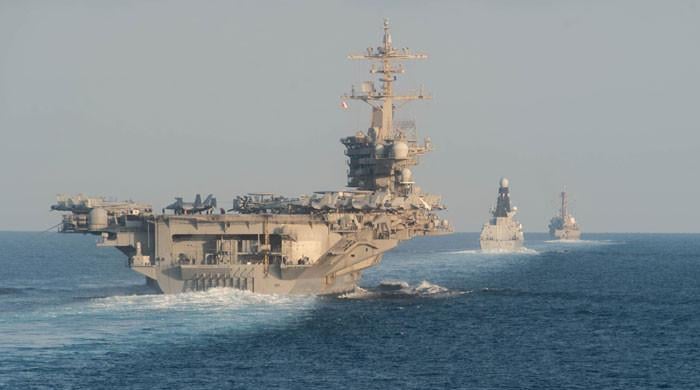

The Strait of Hormuz is a strategic route for seaborne oil that has long been used by Iran as a geopolitical bargaining chip, with Tehran repeatedly threatening to close it during times of crisis.
A senior naval commander of Iran’s Revolutionary Guards in late January again threatened its closure in the event of an attack, as US President Donald Trump warned of military action should the Islamic republic fail to cut a deal to curb its nuclear programme.
Despite its frequent warnings of a blockade, Tehran has never acted on them, though it closed part of the strait briefly for “safety” reasons during recent military drills.
Here are the key points to know about the waterway.
Gateway to the Gulf
The Strait of Hormuz links the Gulf to the Indian Ocean and is situated between Iran and Oman’s Musandam exclave, situated at the tip of a peninsula.
Its narrowness, at around 50 kilometres (30 miles), and shallow waters, at no more than 60 metres (200 feet) deep, make it vulnerable to being sealed off militarily.
The strait is dotted with sparsely inhabited or desert islands, which are strategically important, notably the Iranian islands of Hormuz, Qeshm and Larak.
Also among them are the disputed islands of Greater Tunb, Lesser Tunb and Abu Mussa, which lie between the UAE and Iran and provide a vantage point over the Gulf, and have been under Iranian control since 1971.
Oil transit hotspot
The strait is a vital corridor connecting the oil-rich Gulf with markets in Asia, Europe, North America and elsewhere.
According to the US Energy Information Administration (EIA), the Strait of Hormuz is “one of the world’s most important oil chokepoints”.
About one-fifth of global oil and petroleum product consumption flows through the strait, averaging 20 million barrels per day in 2024, according to the EIA.
Around one-fifth of global liquefied natural gas trade also transited the Strait of Hormuz in 2024, primarily from Qatar, it said.
Saudi Arabia and the UAE have infrastructure to bypass the strait, potentially mitigating disruption, but their transit capacity remains very limited — around 2.6 million barrels a day.
“Large volumes of oil flow through the strait, and very few alternative options exist to move oil out of the strait if it is closed,” the EIA warned.
More than 80% of the oil and gas moving through the strait is destined for markets in Asia, according to the EIA.
China, a key backer of Tehran, buys more than 90% of Iran’s oil exports, according to the analysis firm Kpler.
Military presence
Iran’s Revolutionary Guard, the ideological arm of the Islamic republic’s military, controls naval operations in the Gulf and the Strait of Hormuz.
Tehran has repeatedly criticised the presence of foreign powers in the region — home to the US Fifth Fleet in Bahrain and the Middle East’s largest US base in Qatar.
In 2023, Western naval forces operating in the Gulf warned ships sailing in the strait against approaching Iranian waters to avoid the risk of seizure.
There have been a series of such incidents since 2018, when US president Donald Trump pulled out of a landmark nuclear deal with Iran and reimposed crippling sanctions on the Islamic republic, sending tensions soaring.
Oil transit was disrupted in 1984 during the Iran-Iraq War when both sides attacked each other’s shipping, damaging or destroying more than 500 vessels in the so-called “Tanker War”.
And after Tehran laid mines in the strait, the frigate USS Samuel B. Roberts struck one in April of 1988 and nearly sank.
In July of that year, an Iran Air Airbus A300 flying the Bandar Abbas-Dubai route was shot down by two missiles fired from a US frigate, killing 290 people.
The crew of the USS Vincennes said it had mistaken the airliner for an Iranian fighter jet with hostile intent.
Maritime incidents
The Strait of Hormuz is frequently the scene of ship seizures and attacks.
Incidents multiplied after the United States withdrew in 2018 from the international agreement on Iran’s nuclear programme.
In 2019, unclaimed attacks on ships in the Gulf region, a downed drone and seized tankers raised fears of an escalation between Tehran and Washington.
On July 29, 2021, an attack in the Gulf of Oman on a tanker operated by a company owned by an Israeli billionaire killed two people. Israel, the United States, Britain and Romania accused Tehran, which denied any involvement.
In April 2024, the Revolutionary Guards seized the Portuguese-flagged container ship MSC Aries, accusing its owner of being “linked to Israel”.
In early February, a US-flagged tanker was approached and challenged by Iranian gunboats in the strait, before continuing on its way, US Central Command said.
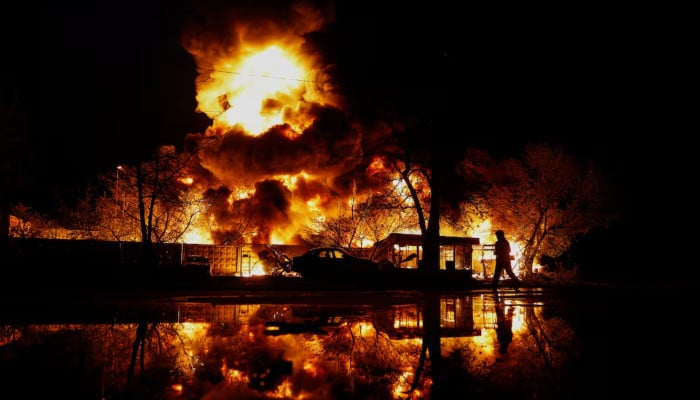
At least 16 people, including a 12-year-old child, were killed and several others were injured Russia’s drone and missile strikes in Ukrainian capital Kyiv, officials said on Thursday.
Fires burned out of control in parts of the capital, sending black smoke billowing into the night sky, as firefighters struggled to control multiple blazes. The morning saw residents and emergency crews cleaning debris scattered around heavily damaged buildings in the city.
Four people, including the child, died in Kyiv, mayor Vitali Klitschko said. Nine people were killed in Odesa, and two in the southeastern city of Dnipro, where Russian attacks set residential buildings ablaze, according to regional officials.
President Volodymyr Zelenskiy said the night had proven that Russia did not deserve any easing of global policy or lifting of sanctions, with 100 people wounded alongside those killed.
“There can be no normalisation of Russia as it is today. Pressure on Russia must work. And it is important to fulfill every promise of assistance to Ukraine on time,” he said.
Air force units shot down or neutralised 31 missiles and 636 drones, but 12 missiles and 20 drones hit in the 24 hours to 7 am (0500 GMT) on Thursday, the air force said.
Deputy Prime Minister Oleksiy Kuleba said rescue operations were ongoing and the toll could rise, while Foreign Minister Andrii Sybiha urged the international community to act.
“All decisions required to increase pressure on the aggressor must be unblocked now,” he said on X. “It is immoral, counterproductive, and dangerous to delay sanctions against Russia or packages of support for Ukraine.”
Klitschko said that Kyiv came under another attack early on Thursday, adding that a drone, flying very low, slammed into an 18-storey building.
Prosecutors put the number of injured in the city at 54.
Klitschko said rescue teams had rescued a mother and child from a building in a central district where the ground floor was badly damaged. He also said missile debris had hit the sixth floor of an apartment building in the central Podil district.
A large fire had broken out in a building in a district in the north of the capital and four emergency medical workers were injured, while debris had fallen in several locations, Klitschko said.
Dnipro, Odesa under attack
Nine people were killed and 23 injured in an attack on a high-rise building in the southern city of Odesa, officials said.
“Last night, the city came under several waves of missile and drone attacks,” Serhiy Lysak, the head of the local military administration, wrote on Telegram, reporting damage to infrastructure facilities and a residential building.
The regional governor said that port and critical infrastructure facilities in the city had also been damaged.
In Dnipro, regional governor Oleksandr Ganzha said that two people were killed and 30 injured in an evening and overnight attack on the city; he posted pictures showing residential buildings ablaze. Another man was killed and four people injured in the surrounding region, Ganzha added.
In Kharkiv, Ukraine’s second-largest city in the northeast, officials said two people had been injured in drone strikes.
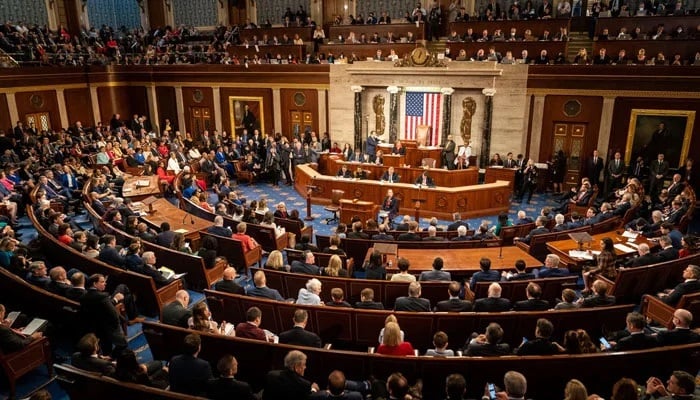
- Senate Republicans have blocked war powers measures four times.
- Almost all Republicans remain firmly behind Trump.
- Democrats warn conflict could escalate.
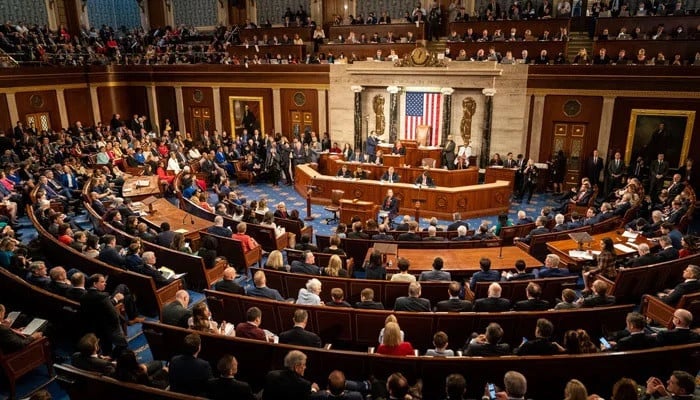
A majority of the US Senate backed President Donald Trump’s military campaign against Iran on Wednesday, voting to block a Democratic-led resolution aiming to stop the war until hostilities are authorised by Congress.
The Senate voted 52-47 not to advance the war powers resolution, underscoring his party’s continuing support for the Republican president’s war policy more than six weeks after the US and Israel launched airstrikes on Iran.
Trump said in an interview with Fox Business Network conducted on Tuesday and aired on Wednesday that the war was close to over. Also on Wednesday, the army chief of mediator Pakistan arrived in Tehran to try to prevent a renewal of the conflict, after weekend peace negotiations ended without an agreement.
It was the fourth time Democrats have forced Senate votes on war powers measures since the war began. All of them have failed in the face of opposition from every Senate Republican except Rand Paul of Kentucky.
The libertarian-leaning Paul, who often advocates against excessive military spending and for a strict interpretation of the Constitution, was the only Republican vote in favour of the resolution in the latest vote. The only Democratic “no” came from Pennsylvania Senator John Fetterman. Republican Senator Jim Justice of West Virginia did not vote.
Although the US Constitution says that Congress, not the president, can declare war, presidents from both parties have long held that the restriction does not apply to short-term operations or if the country is under immediate threat.
‘Nobody is coming to help you, Iran’
The White House, and almost all of Trump’s fellow Republicans in Congress, say Trump’s actions are legal and within his rights as commander-in-chief to protect the US by ordering limited military operations.
Opinion polls show the war is broadly unpopular, although views differ along partisan lines. A Reuters/Ipsos poll published on March 31 found that 60% of Americans opposed US military strikes on Iran, with 74% of Republicans supporting the action, compared with 7% of Democrats.
Senator Jim Risch of Idaho, the Republican chairman of the Foreign Relations Committee, accused backers of the war powers resolution of supporting Iran in a speech before the vote.
“Nobody is coming to help you, Iran, except for the 47 people over here,” he said, referring to senators who back the resolution.
Democrats said they wanted Congress to retake its constitutionally mandated power to declare war, and pull the country back from what they warned could become a long conflict.
“I urge my colleagues … to choose the path of peace before President Trump’s war becomes irreversible,” Senator Jack Reed of Rhode Island, the top Democrat on the Armed Services Committee, said in a speech urging support for the vote.
Democratic Party leaders have vowed to keep bringing war powers resolutions until the conflict ends or Congress authorises continued fighting.
The House of Representatives is expected to consider a similar measure later this week.
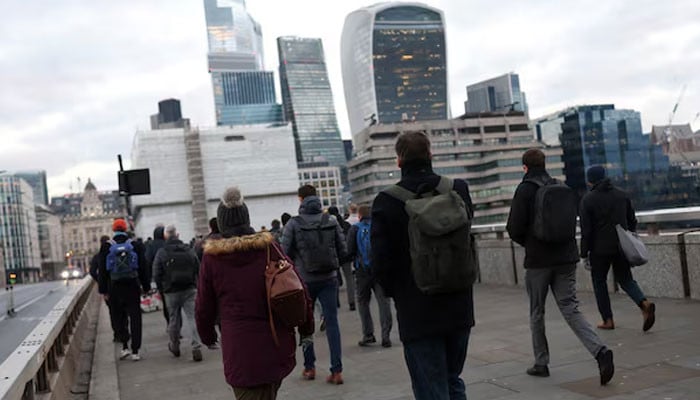
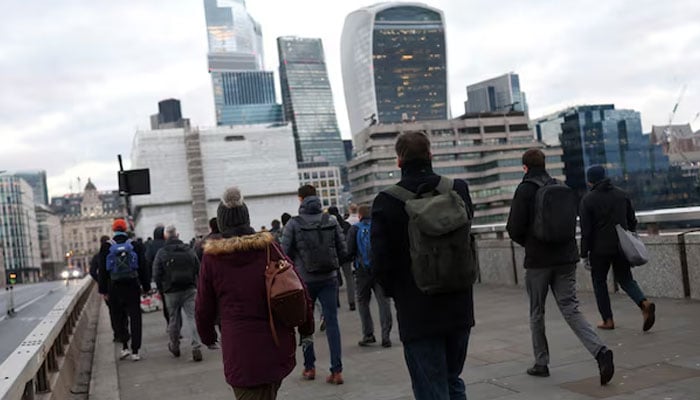
LONDON: A BBC undercover investigation has alleged that a network of immigration advisers, paralegals and associated intermediaries has been helping migrants fabricate asylum claims in the UK by falsely presenting themselves as gay, charging thousands of pounds for false narratives, staged evidence and interview coaching.
At least three law firms – one of these owned by Pakistanis – have been accused by the BBC of fabricating the asylum claims through illegal means.
The law firms include Law and Justice Solicitors and Connaught Law. Law and Justice is owned by Michael Oluyemi Makinde and Connaught Law is owned by Nauman Javid, Sheryar Khan, Zehra Tamkan and Awais Javed.
According to the BBC investigation, the abuse centres on migrants, particularly from Pakistan and Bangladesh, whose student, work or tourist visas are close to expiring and who are then allegedly advised to seek asylum on the basis of sexual orientation, as being gay or lesbian.
Using undercover reporters posing as international students from Pakistan and Bangladesh, the BBC said it tested whether immigration advisers would encourage false sexuality-based asylum claims.
It reported finding multiple individuals willing to discuss fake claims, suggest supporting evidence and quote fees for handling such cases. Among the findings were allegations that Connaught Law firm quoted up to £7,000 for a fabricated claim and described the chances of refusal as “very low”, while another adviser allegedly offered to arrange fake supporting letters, photographs and even a supposed sexual partner to back up an asylum application.
The BBC undercover reporter made an appointment with Aqeel Abbasi, a senior legal adviser at Connaught Law, which has its offices in Central London on Gray’s Inn Road.
Abbasi told the BBC reporter that he could help him stay in the country and appeared to be willing to direct him on how to fabricate evidence for a fake claim. He promised that the chance of refusal by the Home Office was “very low”.
He said his fee would be £7,000 and, once that had been paid, his office would contact the undercover reporter to guide them through the process and the kind of evidence required.
This would include advising him on “where to go or what specific actions to take”.
The legal adviser also suggested the undercover reporter would need to find someone willing to pretend to be his male/gay partner. When the reporter said he had a wife in Pakistan, Abbasi was quick to suggest a cover story to explain this, by saying that things were “more open” in the UK than in Pakistan and that he now had a male partner.
“We will prepare a statement for you, and once you read it, you will understand exactly how it is,” said Abbasi.
A significant part of the investigation focused on Worcester LGBT, a support organisation for gay and lesbian asylum seekers, which holds monthly meetings attended by large numbers of migrants from across the country.
The BBC traced the undercover reporter’s route to the group through Mazedul Hasan Shakil, a paralegal at Law and Justice Solicitors, an immigration firm based in Birmingham and London, who is also described as founder and chairman of Worcester LGBT.
The reporter received a call from a woman identified as Tanisa (Shakil’s associate), who, in Urdu, allegedly became much more direct about using a “gay case” as the only realistic route to stay in Britain.
When told the reporter was not gay, Tanisa replied: “There is nobody who is real. There is only one way out in order to live here now and that is the very method everyone is adopting.” The BBC identified her as Tanisa Khan, an adviser linked to Worcester LGBT.
The broadcaster then described an initial meeting in Forest Gate, east London, which took place in Tanisa’s home.
According to the report, she laid out a plan to fabricate an asylum claim on the grounds of same-sex orientation, warning that the applicant would have to memorise a false story convincingly for Home Office interviews. The report said she offered to obtain a letter from someone claiming to have had sexual relations with the applicant and said she would fully prepare him for the Home Office process.
She charged £2,500, with additional costs if the claim failed and went to appeal. The BBC also said she suggested that if the reporter later brought his wife from Pakistan to Britain, she too could make a false asylum claim by pretending to be lesbian.
The BBC showed its footage to immigration lawyer Ana Gonzalez, who has 30 years of experience. She said Tanisa appeared to be “committing fraud by manufacturing a claim” and warned that such conduct makes life harder for genuine asylum seekers, especially LGBT claimants whose cases are often difficult to prove objectively.
The report said precise figures for fabricated claims are impossible to establish, but Home Office data suggests a disproportionate number of sexuality-based asylum claims come from Pakistani nationals.
In 2023, there were 3,430 initial decisions on LGBT asylum claims and nearly 1,400 new claims based on sexual orientation. Of these, 42% were lodged by Pakistani nationals, who also accounted for the highest number in each of the previous five years. The article noted that Pakistanis were only the fourth most common nationality across all asylum applications and made up just 6% of total claims overall.
Nearly two-thirds of asylum seekers claiming persecution on grounds of sexual orientation had their claims granted at initial decision stage in 2023.
The Home Office told the BBC that making an asylum claim through deception is a criminal offence and that anyone convicted can face prison and deportation.
It said misuse of protections designed for people fleeing genuine persecution because of their sexuality was deplorable, but insisted that the asylum system includes safeguards and that claims are rigorously assessed.
The department added that abuse is actively investigated and procedures are continually reviewed.


PepsiCo earnings beat estimates as North American food business improves

France’s LVMH Q1 revenue falls 6%, shows resilience amid Iran war

Khloé Kardashian hits back at Lamar Odom over fame claim

-

 Fashion1 week ago
India’s exports face reset as EU links trade to carbon metrics: EY
-

 Entertainment1 week ago
Queen Elizabeth II emotional message for Archie, Lilibet sparks speculation
-

 Tech1 week ago
Azure customers up in arms over ‘full’ UK South region | Computer Weekly
-

 Tech1 week ago
As the Strait of Hormuz Reopens, Global Shipping Will Take Months to Recover
-

 Fashion1 week ago
CII submits 20-pt agenda to Indian govt to back firms hit by Iran war
-

 Tech1 week ago
This AI Button Wearable From Ex-Apple Engineers Looks Like an iPod Shuffle
-

 Politics6 days ago
Indian airlines hit hardest after Dubai limits foreign flights until May 31
-

 Fashion1 week ago
ICE cotton hits 11-month high on drought concerns, demand boost