

Politics
Khalistani activist’s life at risk from India, warns UK intelligence



LONDON: The UK intelligence has advised a high-profile Khalistani Sikh activist in the UK that he faces a threat to his life from the Indian government agents in the UK.
Paramjeet Singh Pamma — the UK and Europe coordinator for Khalistan Referendum campaign and a close associated of slain Hardeep Singh Nijjar and Gurpatwant Singh Pannun — has been advised by the UK intelligence through several visits to increase his security due to intelligence suggesting threats to his safety. Its understood the security warning to Pamma has come from MI5 — the UK premier intelligence agency for the domestic security.
The Guardian newspaper reported that the threat level to Pamma is so serious that he doesn’t live with his family in West London near Southall Gurdwara on the police advice and is not allowed to share his location with anyone due to the imminent threat he is facing due to his activism for Khalistan and the Khalistan Referendum campaign.
It’s understood that Pamma received the latest safety warning from the UK intelligence – that Indian state agents operating on UK soil are out to kill him — consistently over the last several months.
Pamma told The Guardian the threats were linked to the Indian government as part of the relentless transnational repression by the Indian state. The Indian embassy declined to comment.
“The repression we are going through has been relentless, it is crossing borders and reaching into our families now. This is terror, basically, by the Indian government,” said Pamma, who has been forced to live separately from his family after threats.
Pamma said he has regularly been reporting threats to the UK police but they only began to take his complaints seriously after the 2023 killing of Nijjar, a prominent Sikh activist, in Canada, which the country’s then-prime minister, Justin Trudeau, said intelligence agencies had linked to Indian government agents.
In the same year, US prosecutors accused an agent of the Indian government of directing the attempted assassination of SFJ Counsel General Pannun, an American citizen, on US soil.
A Home Office spokesperson said they did not comment on individual cases or intelligence matters. “We are proud of our diverse communities, and British Sikhs make an immense contribution to the strength of our society. Their safety, like that of everyone in the United Kingdom, remains our highest priority,” the spokesperson said.
The Indian government has long been concerned about the Sikh nationalist movement, which is largely diaspora-led, and campaigns for a Sikh homeland known as Khalistan to be created in the Punjab, in north-west India.
In 1985, Khalistani militants smuggled a bomb onto Air India flight 182, which exploded off the coast of Ireland, killing all 329 people onboard — the worst act of aviation terrorism before the 9/11 attacks.
Pamma is reported in Indian media to have previously been a fundraiser for Babbar Khalsa International, which investigators believe was responsible for the bombing. He called the allegations “fake propaganda”, condemned the act of terrorism, and welcomed “any inquiry in any case” against him.
Pamma’s elder brother was killed by Indian police for his Khalistan activism in 1991. Pamma was picked up multiple times and tortured by police before leaving India and being given political asylum in the UK in 2000. He was arrested in 2010 after authorities in Punjab said they suspected him of involvement in a murder but UK counter-terrorism police could find no evidence against him.
In 2015, he was detained while on holiday in Portugal, but a judge threw out India’s attempt to make him stand trial on terrorism charges.
In the same year, senior Indian diplomat Samant Goel approached Pamma in London and asked him to quit Khalistan or face dire consequences. Pamma refused and reported the threats to the UK intelligence. After returning from London, Goel became the chief of India’s external intelligence agency, Research and Analysis Wing (RAW). From his new position, Goel ordered assassination plots of Khalistan Referendum activists in USA, Canada and UK.
According to MI5, foreign governments are increasingly targeting dissidents on UK soil, and the number of investigations into state threats has grown by 48% since 2022. In its 2024-25 report on transnational repression, the Joint Committee on Human Rights listed India as a country of concern.
The Guardian wrote that Pamma’s threat issue has risen as the UK pursues a closer relationship with Narendra Modi’s Hindu nationalist government, seeing it as a key partner to balance China’s growing power.
In 2023, a Birmingham-based Sikh activist, Avtar Singh Khanda, died suddenly after complaining that Indian police were harassing him over the phone and threatening his family in Punjab. A pathologist found that the result of the postmortem did not mean “that a poisoning can be completely excluded”.
Gurcharan Singh, a Sikh nationalist activist, has also been told by UK police that they know of credible threats to his safety.
In West London’s Slough, Singh has a private security team and receives visits from officers nearly every two months. Two days before a planned protest in March against the Indian foreign minister’s visit to London, Singh said he was told in person by two officers that it was not safe to attend and that his safety could not be guaranteed, the Guardian wrote.
Singh’s wife died in May 2023, and he feels there are striking similarities between the circumstances of her death and those of Avtar Singh Khanda.
The High Commission of India in London did not respond to a request for comment.
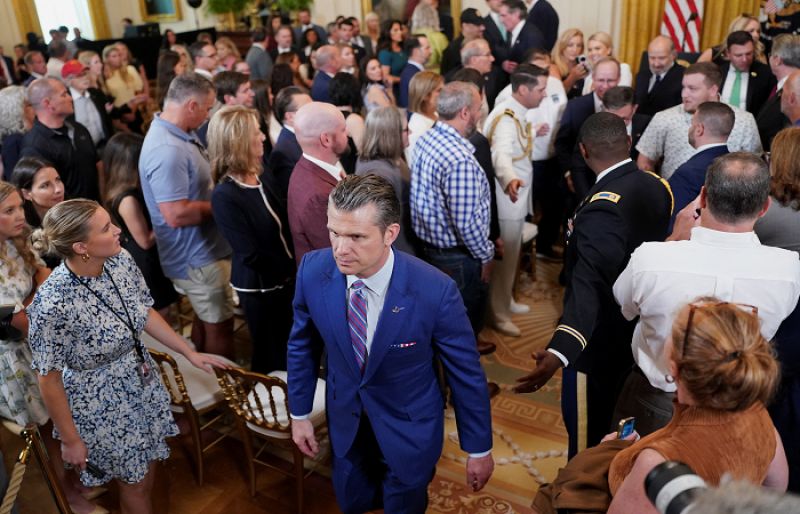

WASHINGTON: The United States Senate has rejected a resolution aimed at limiting President Donald Trump’s authority to continue military strikes against Iran.
The bipartisan measure, introduced by Tim Kaine and Rand Paul, sought to require the withdrawal of US forces from hostilities with Iran unless Congress formally authorized the campaign.
However, the resolution failed in a 53–47 vote, reflecting strong support from Republican lawmakers for the president’s military actions.
Debate Over War Powers
Democratic lawmakers argued that the president had bypassed Congress by ordering airstrikes on Iran without prior authorization.
Senator Tim Kaine said that classified briefings provided to lawmakers did not present evidence of an imminent threat from Iran to the United States.
Republicans, meanwhile, defended the military action, saying Iran had long posed a threat to US forces and interests in the region.
Growing Conflict in the Middle East
The vote comes amid an escalating conflict following US-Israeli strikes on Iran, which triggered retaliatory missile and drone attacks across the Gulf region.
The conflict has already resulted in the deaths of senior Iranian officials, including Ali Khamenei, and casualties among US troops stationed in the Middle East.
War Powers Act
The resolution invoked the War Powers Resolution, a law passed after the Vietnam War to limit the president’s ability to conduct military operations without congressional approval.
Even if the measure had passed both the Senate and the House of Representatives, President Trump could have vetoed it, requiring a two-thirds majority.
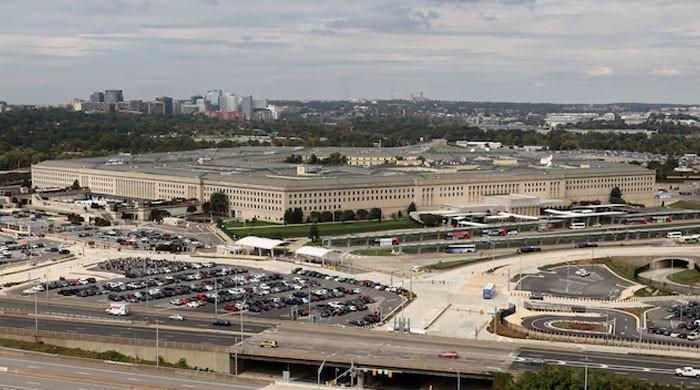
The US military asked mining companies last Friday to help boost domestic supplies of 13 critical minerals used to make semiconductors, weapons and other products, a document reviewed by Reuters showed.
The request, the day before the US and Israel launched strikes on Iran, is the latest example of Washington’s push for more access to the materials used widely in warfare.
The Pentagon asked members of the Defence Industrial Base Consortium (DIBC), a group of more than 1,500 companies, universities and others that supply the military, for proposals to be submitted by March 20 for projects that could mine, process or recycle select minerals, the document showed.
While the DIBC has worked on minerals-related issues for some time, there was no immediate indication as to whether the timing was intentionally coordinated to coincide with the start of the strikes on Iran.
The list of 13 minerals sought includes arsenic, bismuth, gadolinium, germanium, graphite, hafnium, nickel, samarium, tungsten, vanadium, ytterbium, yttrium and zirconium.
The US is reliant on imports for most of the 13. China is a dominant global producer of all of them.
DIBC member Guardian Metal Resources plans to apply for funding for its two tungsten projects in Nevada, said J.T. Starzecki, the company’s executive chairman. Tungsten is used to harden steel and China is the world’s largest producer.
“This is the opportunity we’ve been waiting for,” Starzecki told Reuters. “Our plan is to look for an application that would give us a funding package to allow us to get to full production at both sites.”
American Tungsten, which is developing an Idaho mine for that metal, plans to apply for funding next week that would complement a loan it has applied for from the US Export-Import Bank, said CEO Ali Haji.
The Pentagon asked for detailed information on the costs, including labour and material, needed to build a mine or processing facility. Projects could be awarded development funds ranging from $100 million to over $500 million, according to the request.
The document did not specify why only those 13 minerals were chosen. Some — including germanium, graphite and yttrium — have been subject to export restrictions by China, the top global producer.
Yttrium shortages, especially, have set off alarm bells throughout the aerospace industry. One of the 17 rare earths, yttrium is used in coatings that keep engines and turbines from melting at high temperatures. Without regular application of these coatings, engines cannot be used.
Colorado-based Energy, also a DIBC member, said it is developing facilities to process gadolinium and samarium by 2027, and is considering processing yttrium.
“The domestic supply of critical minerals remains essential to safeguarding both national security and economic stability,” said Mark Chalmers, the Energy Fuels CEO.
Nickel is a widely traded metal and Indonesia is the top global producer. Yet Jakarta has been throttling exports of the metal used widely in stainless steel and battery production.
The White House, DIBC and Pentagon did not immediately respond to requests for comment.
Latest request
DIBC’s request is just the latest attempt by the Trump administration to increase US supply of key critical minerals. China has been using its market control as diplomatic leverage in ongoing trade disputes with Washington.
Last month, Trump officials launched a $12 billion minerals stockpile backed by the US Export-Import Bank and proposed a preferential minerals trading bloc with more than 50 allies.
That trading bloc would aim to use reference prices for minerals derived in part by a Pentagon-created artificial intelligence programme, Reuters reported last week.
The administration has also taken equity stakes in rare earths miner MP Materials, Lithium Americas, and copper-and-cobalt developer Trilogy Metals.
Separately on Wednesday, the Defence Logistics Agency, which buys a range of goods for the US military, asked for information from miners on potentially acquiring lithium, chromium and tellurium for military stockpiles.
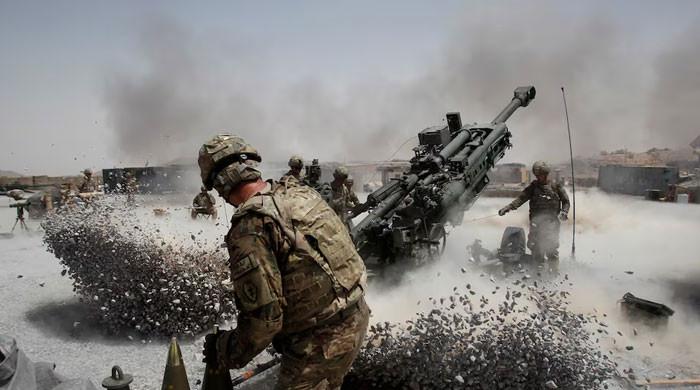
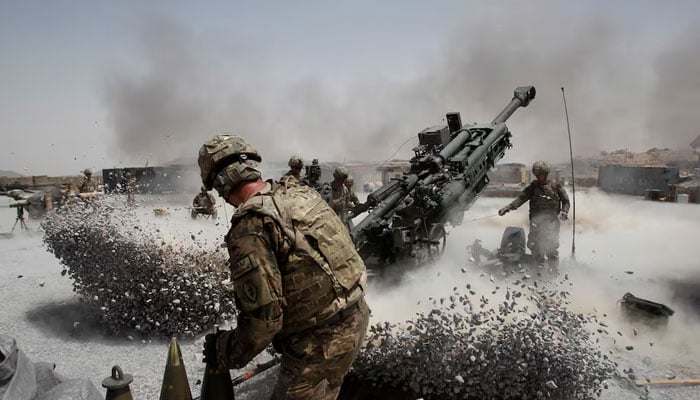
Despite promising to end United States’ involvement in costly and destructive foreign wars, President Donald Trump, together with Israel, has launched a massive military assault on Iran, targeting its leadership as well as its nuclear and missile infrastructure.
Since the September 11, 2001, attacks on New York and Washington DC, the United States has engaged in three full-scale wars and conducted bombing operations in at least 10 countries. These operations have ranged from large-scale invasions to targeted air strikes and drone campaigns, often carried out over multiple years.
In the immediate aftermath of 9/11, then-President George W Bush declared a “war on terror”, launching a global military campaign that reshaped US foreign policy.
The wars in Afghanistan and Iraq were followed by military operations in Pakistan, Syria, Yemen and other regions, as successive administrations expanded or sustained counterterrorism efforts.
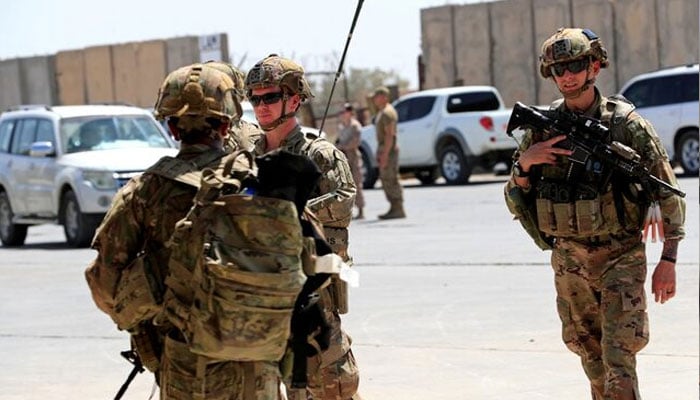
Two decades of war and its costs
Research by Brown University’s Watson Institute for International and Public Affairs estimates that US-led wars since 2001 have directly caused approximately 940,000 deaths across Afghanistan, Pakistan, Iraq, Syria, Yemen and other conflict zones, according to Al Jazeera report.
The figure excludes indirect deaths resulting from displacement, destruction of infrastructure, limited access to healthcare and food shortages, the report said.
According to the report, the United States has spent an estimated $5.8 trillion on post-9/11 wars. This includes $2.1 trillion allocated by the Department of Defence, $1.1 trillion by the Department of Homeland Security, $884 billion added to the Pentagon’s base budget, $465 billion for veterans’ medical care and roughly $1 trillion in interest payments on war-related borrowing.
In addition, the US is projected to spend at least another $2.2 trillion on veterans’ care over the next three decades, bringing the total estimated cost of its post-2001 wars to approximately $8 trillion.


Canada’s Gildan posts $3.6 bn 2025 sales, growth supported by Hanes

Steve Kerr, Doc Rivers join ‘political interference’ letter

US Senate Rejects Resolution to Limit Trump’s Iran War Powers

India Us Trade Deal: Fresh look at India-US trade deal? May be ‘rebalanced’ if circumstances change, says Piyush Goyal – The Times of India

What are Iran’s ballistic missile capabilities?

US arrests ex-Air Force pilot for ‘training’ Chinese military

-
Business6 days ago
India Us Trade Deal: Fresh look at India-US trade deal? May be ‘rebalanced’ if circumstances change, says Piyush Goyal – The Times of India
-
 Politics7 days ago
What are Iran’s ballistic missile capabilities?
-
 Business1 week ago
Households set for lower energy bills amid price cap shake-up
-
 Politics7 days ago
US arrests ex-Air Force pilot for ‘training’ Chinese military
-
 Fashion1 week ago
OECD GDP growth slows to 0.3% in Q4 amid mixed trends
-

 Fashion6 days ago
Policy easing drives Argentina’s garment import surge in 2025
-
 Business6 days ago
Attock Cement’s acquisition approved | The Express Tribune
-

 Fashion6 days ago
Texwin Spinning showcasing premium cotton yarn range at VIATT 2026