

Politics
Knife attacker wounds teacher, student in southern France

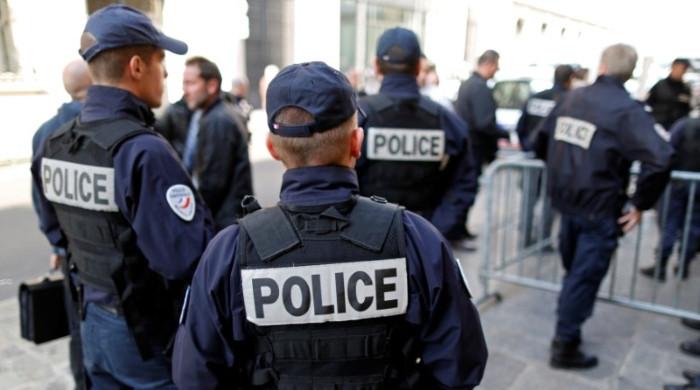
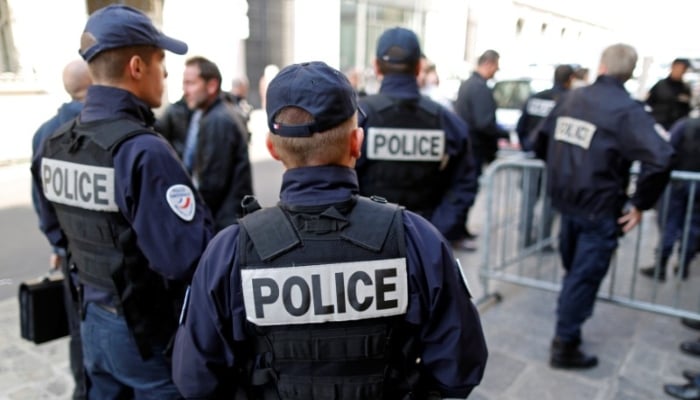
A knife attacker in the southern French city of Antibes wounded a teacher and a student at a horticultural college Wednesday, police said, the latest attack to hit an educational establishment in the country.
The victims are a 16-year-old student and a 52-year-old teacher, who was seriously injured, officials said, adding their lives were not in danger.
“Thank you to the national and municipal police, as well as the fire brigade, for their rapid response and exemplary commitment in this extremely tense situation, symbolic of the tragic rise in violence in our country,” Eric Pauget, a lawmaker who represents Antibes, posted on X.
France has seen several knife attacks on teachers and students in recent years.
Last week, a teacher was wounded by a colleague who stabbed him twice during an altercation in the staff room of a high school in Martigues, northwest of the southern port city of Marseille.
In June, a 14-year-old secondary school student stabbed to death a 31-year-old teaching assistant in the eastern town of Nogent.
In April, a student killed a 15-year-old girl and wounded three other people at a college in the western city of Nantes.
In March, police began carrying out random searches for concealed weapons in and around schools.
Contacted by AFP, the education ministry did not immediately comment.


DUBAI: Dubai Police have seized several motorbikes after groups of young riders were reported performing dangerous stunts and causing disturbance in residential neighbourhoods following iftar during Ramadan.
Authorities said residents complained about loud noise, reckless riding and youths using motorbikes and quad bikes to carry out risky manoeuvres on public roads.
Police summoned the parents of the minors involved and took legal action, stressing that such behaviour poses a serious risk not only to the riders themselves but also to other road users and pedestrians.
“Reckless driving and stunts endanger lives and disturb community safety,” Dubai Police said, urging the public to report similar violations through the 901 helpline or via the Dubai Police mobile app.
A video shared by Dubai Police on social media showed some of the confiscated bikes and officers addressing the issue as part of ongoing efforts to ensure road safety during the holy month.
- Canadian PM to address finance leaders before meeting Indian PM.
- Carney wants more than double two-way trade with India by 2030.
- India hopes Canada to support to expand nuclear power capacity.
Canada PM begins key India visit, seeking to boost trade
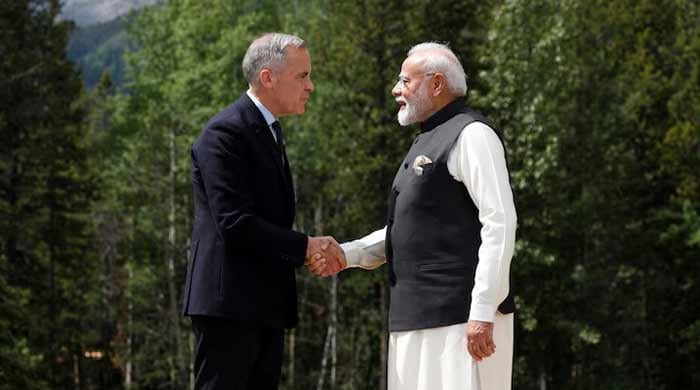
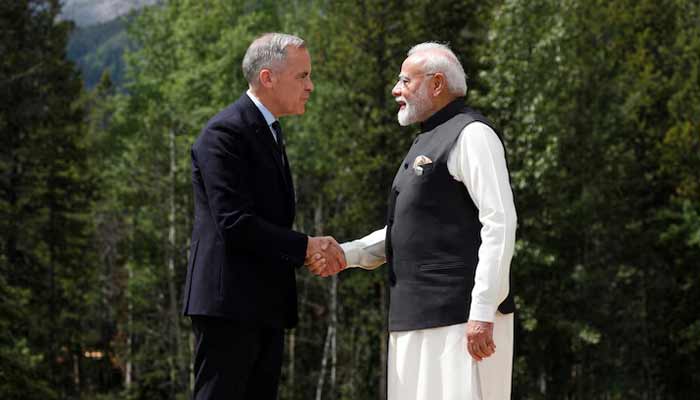
Canadian Prime Minister Mark Carney landed in India on Friday for a visit he hopes would reset ties and double trade, offsetting the damage from his country’s fracturing relations with the United States.
Carney’s visit is a key step forward in ties that effectively collapsed in 2023 after Ottawa accused New Delhi of orchestrating a deadly campaign against Sikh activists in Canada.
He arrived in the financial hub of Mumbai, where he is expected to address business leaders before travelling to the capital and meeting with Prime Minister Narendra Modi on Monday, the final day of his visit.
Indian broadcasters showed a police convoy as Carney was whisked through Mumbai.
Carney’s office said discussions would focus on “ambitious new partnerships in trade, energy, technology and artificial intelligence (AI), talent and culture, and defence”.
Last year, the two countries agreed to resume negotiations on a proposed free-trade agreement.
Carney has said he wanted to more than double two-way trade with India by 2030, eyeing an annual target of $51 billion.
Before Carney took office last year, Ottawa accused Modi’s government of direct involvement in the 2023 killing of Hardeep Singh Nijjar, a naturalised Canadian citizen who was part of a fringe group that advocated for an independent Sikh state called Khalistan.
Khalistan members have been blamed for the assassination of an Indian prime minister and the bombing of a passenger jet.
Former prime minister Justin Trudeau’s government further alleged India had directed a campaign of intimidation against Sikh activists across Canada.
India has repeatedly dismissed the allegations, which sent diplomatic relations into freefall, with both nations expelling a string of top diplomats in 2024.
Ties improved after Carney took office in March 2025, and envoys have since been restored.
Asked whether Canadian concerns about transnational repression would feature at the New Delhi talks, Foreign Minister Anita Anand told reporters: “That is always at the forefront of our minds.”
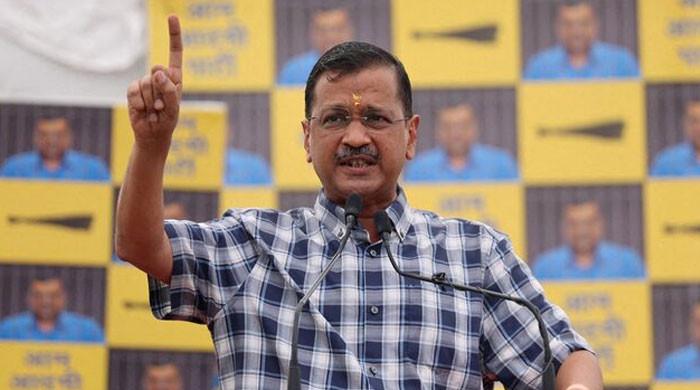
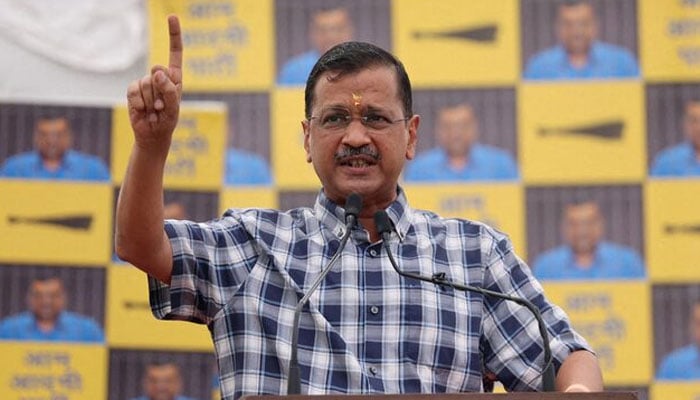
An Indian court acquitted the former chief minister of the capital Delhi on Friday in a long-running corruption probe the man had called a “political conspiracy” by the ruling party.
Opposition Aam Aadmi Party (AAP) leader Arvind Kejriwal was Delhi’s chief minister before losing elections in 2025 in the midst of the judicial proceedings.
Kejriwal, 57, who spent several months in jail after he was arrested in March 2024 on accusations that his administration received kickbacks from the allocation of liquor licenses, wept as he left court.
“Truth has won,” Kejriwal told reporters after the verdict, accusing Prime Minister Narendra Modi and Home Minister Amit Shah of using a “political conspiracy” to finish AAP.
On Friday, a Delhi court cleared him, his former deputy Manish Sisodia and 21 others of all charges.
A key opponent to Modi, he had consistently denied wrongdoing.
Rekha Gupta, a member of Modi’s Hindu-nationalist Bharatiya Janata Party, was elected as chief minister of the sprawling megacity of more than 30 million people in February 2025.
Kejriwal began his career as a tax collector but quit his civil service job to become an anti-corruption crusader, bringing him national fame.
Several of Modi’s opponents have faced criminal investigation or trial in recent years, including two state chief ministers.
In August 2025, the government introduced a bill to remove politicians if they are arrested and detained for 30 days, which opponents called a “chilling” bid to crush constitutional safeguards.


Just in Time for Spring, Don’t Miss These Electric Scooter Deals

Haaland, Rice, Semenyo: Who is your Premier League Player of the Year?

What the Warner Bros deal could mean for streaming, cinemas and news

-

 Tech1 week ago
A $10K Bounty Awaits Anyone Who Can Hack Ring Cameras to Stop Sharing Data With Amazon
-
 Business1 week ago
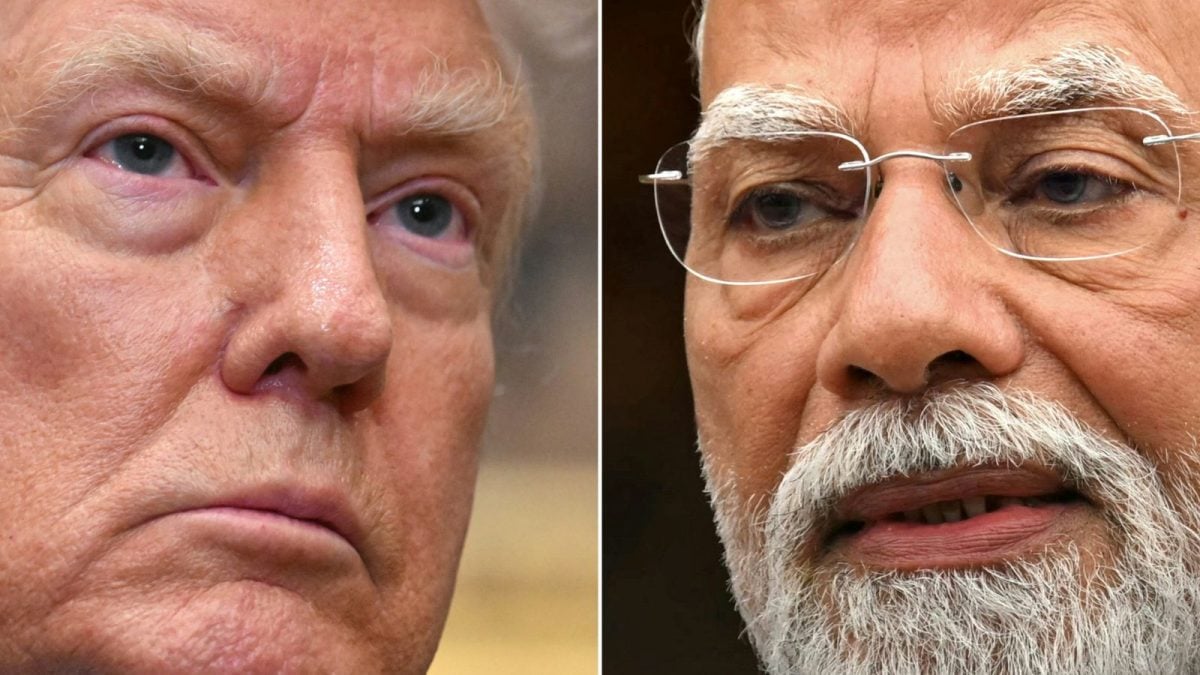
US Top Court Blocks Trump’s Tariff Orders: Does It Mean Zero Duties For Indian Goods?
-

 Fashion1 week ago
ICE cotton ticks higher on crude oil rally
-
 Business6 days ago
Eye-popping rise in one year: Betting on just gold and silver for long-term wealth creation? Think again! – The Times of India
-

 Tech1 week ago
Donald Trump Jr.’s Private DC Club Has Mysterious Ties to an Ex-Cop With a Controversial Past
-
 Politics1 week ago
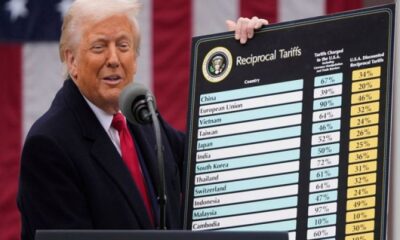
US Supreme Court strikes down Trump’s trade tariff measures
-

 Fashion1 week ago
India’s $28 bn reset: How 5 trade deals will reprice its T&A exports
-

 Sports1 week ago
Brett Favre blasts NFL for no longer appealing to ‘true’ fans: ‘There’s been a slight shift’