Connect with us

Business

KP Governor calls on PM to end ‘unconstitutional’ wheat supply restrictions – SUCH TV

Published

on

KP Governor calls on PM to end ‘unconstitutional’ wheat supply restrictions – SUCH TV


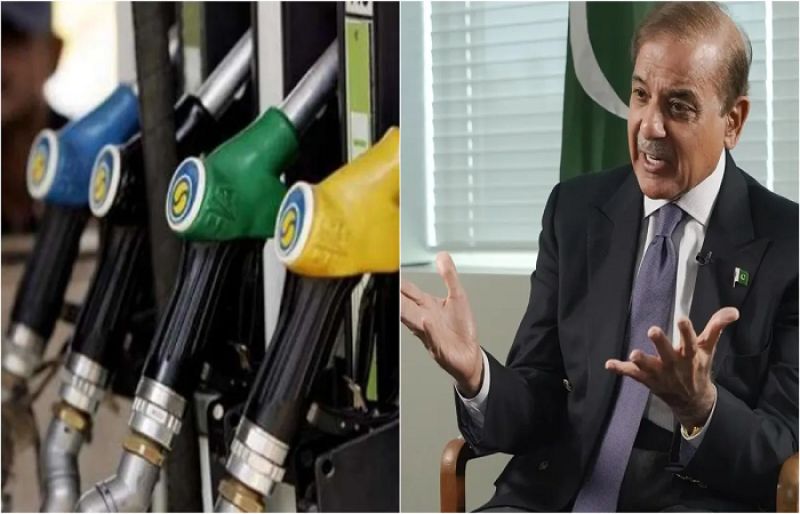
Khyber Pakhtunkhwa (KP) Governor Faisal Karim Kundi has urged Prime Minister Shehbaz Sharif to lift what he described as “unconstitutional restrictions” on the inter-provincial movement of wheat, warning that such curbs are jeopardising the province’s food security.

In a formal letter addressed to the premier, Governor Kundi argued that the existing limitations violate the constitutional spirit of federal cooperation and are creating unnecessary hurdles in the smooth flow of essential food commodities.

He appealed to the Prime Minister to take immediate notice and direct the concerned authorities to ensure uninterrupted wheat supply to Khyber Pakhtunkhwa.

The governor’s plea comes shortly after the federal government approved the National Wheat Policy 2025–26 — a comprehensive plan designed to strengthen food security and standardise the wheat supply chain nationwide.

The policy was finalised in a high-level meeting chaired by Prime Minister Muhammad Shehbaz Sharif on October 19, which was attended by chief ministers, provincial representatives, and key stakeholders from the agriculture sector.

During the meeting, the Prime Minister underscored the central role of wheat in Pakistan’s economy and highlighted that the policy had been formulated with broad-based consultation involving provinces, farmer groups, and industry experts.

According to the plan, both federal and provincial governments will jointly procure 6.2 million tonnes of wheat from the upcoming 2025–26 harvest at a support price of Rs3,500 per maund, consistent with global import benchmarks.

Significantly, the new policy also lifts restrictions on inter-provincial wheat movement, ensuring smooth distribution across the country.

To oversee its implementation, a National Wheat Monitoring Committee headed by the Federal Minister for National Food Security and comprising provincial representatives will meet weekly to report progress directly to the Prime Minister.

However, amid ongoing political tensions between provinces, Punjab’s Information Minister Azma Bokhari clarified on Sunday that there is no restriction on the transport of flour in Punjab.

In a statement, Bokhari said that if there is a flour shortage in Khyber Pakhtunkhwa, the provincial government should release its own wheat stocks from godowns or procure supplies from the Pakistan Agricultural Storage and Services Corporation (PASSCO).

“Punjab cannot sacrifice the rights of its people for the political spectacles of another province,” she asserted, adding that nearly 200 flour mills in Khyber Pakhtunkhwa are currently closed.

The federal government has yet to issue an official response to Governor Kundi’s letter.


Source link

Continue Reading
Click to comment

Leave a Reply

Your email address will not be published. Required fields are marked *

Business

Thousands of drivers wrongly fined for speeding since 2021

Published

on

Thousands of drivers wrongly fined for speeding since 2021


Thousands of drivers could have speeding fines cancelled after a fault saw some cameras falsely triggered on English motorways and A roads.

And tens of thousands of drivers will have speed awareness courses cancelled as the government orders National Highways to look back at six years of speed camera data.

National Highways said it had found 2,650 wrongful speed camera activations since 2021 due to a delay between cameras and variable speed signs.

Not all camera activations are enforced, so not all of the wrongful activations will have resulted in fines.

Affected drivers will be contacted by police and be reimbursed for any fines while points will be removed from their licences where needed.

More than 36,000 drivers have been told by police their speed awareness courses are being cancelled as a precaution while the speed camera issue is investigated.

Police forces are also thought to be discontinuing thousands of other prosecutions, regardless of whether they were affected by the issue.

Transport minister Simon Lightwood said the government will compensate any affected drivers, refunding speeding fines and rescinding points from licences.

“Steps will be taken to remedy any incorrect prosecutions,” he said in a written statement to parliament.

National Highways apologised for the error.

“Safety is our number one priority,” said chief executive Nick Harris.

“All drivers should continue observing the posted speed limits as normal. Anyone who has been impacted will be contacted by the relevant police force.”

The agency said a temporary fix had been rolled out, providing an extra layer of data from the cameras to police forces so they can filter out any faulty captures.

But the agency gave no clear timeline as to when a permanent fix would be in place.

National Highways, which runs England’s motorways, blamed an “anomaly” in how variable speed cameras were interacting with signs on some A roads and motorways.

It meant a delay of around 10 seconds between cameras and relevant variable speed signs, meaning some drivers were incorrectly identified as speeding after the limit had changed.

So on a road where the speed limit increases, a driver may see a sign saying 60mph, but the camera recording it may still be working on the basis of a previous 40mph speed limit.

National Highways said the 2,650 incidents since 2021 represent fewer than two each day, compared with more than six million activations of speed cameras on the affected roads over the same period.

It said the anomaly has impacted 10% of England’s motorways and major A roads.

The fault affects 154 cameras out of a total of 400 across the entire motorway networkall of the variable speed cameras on smart motorways, and a section of the A14 between Huntingdon and Cambridge plus the A1 approach junction to the A14.

Andy Walpole, 55, from Swindon was one of those who was incorrectly landed with a ticket for speeding on the M25 between junction 9 and Cobham services.

“I was adamant I wasn’t speeding. I drive for a living, so I adhere to the variable speed limits within a mile an hour, so I knew I wasn’t,” he told the BBC.

He opted to pay for a speed awareness course rather than challenge the penalty, because he felt it was difficult to mount a successful appeal.

Though he was refunded the cost of the course, he says: “How can we have trust and faith in the system now?”

He also wonders how many people who chose to take points on their licence would have ended up with higher insurance premiums as a result of an unsafe conviction.

“What if you took your car insurance out the day after you’d taken the points? You declared those points on your insurance — where do you stand then?”

National Highways is working with police to check activations and promised nobody would now be wrongly prosecuted.

Meanwhile, police forces have stopped issuing fines from variable cameras until they have confidence in their accuracy.

National Highways said it will increase the use of traffic patrol officers to enforce speed limits in the meantime.

Lightwood warned drivers that “if you break the law, you can expect to be punished”.

A Department for Transport spokesperson said: “We apologise to anyone who has been affected. Safety was never compromised, and we are working with policing to ensure nobody is incorrectly prosecuted in future.

“Enforcement is still in place, and the public can remain confident that only motorists who break the rules will be penalised.”


Source link

Continue Reading

Business

Wisdom beyond markets: What is Warren Buffett’s success mantra & how to recreate it? – The Times of India

Published

on

Wisdom beyond markets: What is Warren Buffett’s success mantra & how to recreate it? – The Times of India


Warren Buffett’s lessons don’t just extend to markets and investment – they are often regarded as pearls of wisdom for dealing with life’s ups and downs. (AP file photo)

Warren Buffett is known for many things – he is one of the richest persons in the world, a master of investment, the ‘Oracle of Omaha’, Zen master and more. When it comes to business acumen and mastering the stock markets, Buffett’s mantras are cited as near-gospel by investors.As the 95-year-old approaches his retirement as Berkshire Hathaway’s CEO later this year, his remarkable investment acumen has garnered widespread recognition. His achievements have established him amongst history’s most accomplished investors, accumulating wealth estimated at $150 billion.But Buffett’s lessons don’t just extend to markets and investment – they are often regarded as pearls of wisdom for dealing with life’s ups and downs.According to a CNN report, Buffett’s teachings incorporate diverse philosophical traditions, drawing from Zen Buddhism, Confucian thought, Stoic philosophy and New Testament teachings. These principles provide guidance for navigating both financial markets and personal difficulties.

Warren Buffett’s Zen-like principles

Although not religious himself, Buffett’s career reflects substantial engagement with spiritual principles. Religious scholars and practitioners studying Buffett’s approach recognise him not only as a business leader but also as someone who embodies Zen-like wisdom in his methods and teachings, says CNN.Warren Buffett’s spiritual influence has extended globally over the years. His followers attend Berkshire Hathaway shareholder meetings to see the individual whom a financial expert described as “the God of investing.”Buffett himself serves as the primary source of his spiritual wisdom, having developed his own philosophical perspective. Both investors and non-investors study his sayings and teachings, including statements like “Someone is sitting in the shade today because someone planted a tree a long time ago.” He also notes that wealth “lets you be in more interesting environments, but it can’t change how many people love you or how healthy you are.Such philosophical observations from Buffett have led Leo Babauta, who practises Zen Buddhism, to recognise Buffett’s alignment with Zen principles.“He’s one of the richest men in the world, and yet I really don’t feel like he has made that a central part of who he is,” Babauta, author of “The Power of Less: The Fine Art of Limiting Yourself to the Essential…in Business and in Life,” tells CNN.“He’s surrounded by people who are focused on making money, and he sees how people are deluded (by that). That’s one of the central ideas of Zen: We’re all living these illusions of what’s going to make us happy.”In Buffett’s perspective, excellence in investing and personal integrity are inseparable. He suggests that one can always be in a bull market by adhering to three spiritual guidelines, which he articulates in his own words: ‘Envy and greed go hand in hand’The Ten Commandments include the directive against coveting, whilst envy features amongst the seven deadly sins. According to Buffett, amongst the seven deadly sins, envy stands alone as the only one devoid of pleasure. He has said, “Being envious of someone else is pretty stupid. Wishing them badly, or wishing you did as well as they did — all it does is ruin your day. Doesn’t hurt them at all, and there’s zero upside to it. If you’re going to pick a sin, go with something like lust or gluttony. That way at least you’ll have something to remember the weekend for.”This mindset has implications for investment strategies. Babauta’s analysis of Buffett’s investment approach reveals a conservative methodology rooted in Zen principles. Buffett acknowledges his own boundaries, particularly regarding technology investments, due to his limited understanding of the sector.“You would never find him chasing after cryptocurrency or the latest AI thing,” Babauta says according to CNN. “He looks for things that are fundamentally sound and that kind of discipline can only happen if he didn’t need to chase after things because of his contentment. That contentment, in his case, led to a lot of discipline.”‘More blessed to give than to receive’In June 2006, Buffett announced a big philanthropic commitment through a series of letters, pledging most of his wealth to foundations and charitable organisations. This philanthropic spirit continued in his recent shareholder letter, where he discussed plans to accelerate his charitable giving, allocating approximately a billion dollars to four family foundations.According to the CNN report, Buffett exemplifies the New Testament principle of giving over receiving, setting him apart amongst America’s wealthy. This characteristic inspired Robert L. Bloch, whose father established H&R Block, to compile “The Warren Buffett Book of Investing Wisdom: 350 Quotes from the World’s Most Successful Investor”. Speaking to CNN, Bloch identifies Buffett’s gratitude and generosity as essential spiritual values.Buffett demonstrates genuine concern for underprivileged and ordinary citizens, expressing a desire to contribute to society’s welfare, as Bloch notes. “That’s very spiritual. Not many billionaires are like that.”His charitable nature aligns with ancient Greco-Roman Stoic principles. Philosophers like Epictetus and Marcus Aurelius advocated that virtuous living was essential for happiness, whilst viewing material attachments as obstacles to self-control. As documented by Ryan Holiday, author of popular books on Stoicism, Aurelius, whilst serving as Roman emperor, liquidated palace possessions to reduce empire debt and support Roman citizens.According to Bloomberg Opinion columnist Beth Kowitt, Buffett credits his success to luck. “He is very clear that a lot of his success comes from being born a white male American in the year 1930. I think he believes that his wealth is a product of the system. It’s not all. He doesn’t buy into his own hype. And I think that is really different from what we see from a new cohort of Silicon Valley CEOs who seem to feel that they’ve contributed so much more to society than they’ll get back,” she tells Bloomberg. “This is a little bit of the secret of his success. It’s kind of helped him avoid hubris and the mistakes that come with it. And I think, you cannot recreate Warren Buffett’s luck, but you can certainly try to recreate this mentality,” she says.

Keeping the faith

People in the US have faced significant challenges recently. A Politico survey reveals nearly 50% of citizens struggle with essential expenses like food and healthcare. Various polls indicate that over half of Americans believe the country’s peak has passed.Nevertheless, Buffett maintains optimism in America. This optimistic outlook mirrors the Christian virtue of faith, despite his non-religious stance. According to Christianity’s central figure, faith possesses transformative power. Another New Testament author defines it as “confidence in what we hope for and assurance of what we do not see.”Warren Buffett stands as America’s foremost optimist. During challenging economic periods and political turmoil, he has maintained his positive outlook with statements like, “For 240 years, it’s been a terrible mistake to bet against America, and now is no time to start.” And: “We always live in an uncertain world. What is certain is that the United States will go forward over time.”This unwavering confidence motivated Bloch to explore Buffett’s statements in detail.“You got to have faith that it’s going to get better and we will come out of this,” Bloch explains to CNN, referring to the current political and economic climate in the US. “Look at 1776, 1820, and the Great Depression. America just got bigger and better throughout history.”This steadfast belief appears to be the source of Buffett’s consistent positive attitude. His wholesome Midwestern outlook is captured in his retirement letter: “Kindness is costless, but also priceless.”Unlike many billionaires who display domineering attitudes, Buffett maintains courtesy even towards critical voices at shareholder meetings and avoids associations with questionable individuals. As he stated, “You can’t make a good deal with a bad person.”He frequently discusses an unexpected topic in the competitive investment world: love.His perspective on love is clear: “The only way to get love is to be lovable” as money cannot purchase genuine affection. He believes in the reciprocal nature of love, stating, “The more you give love away, the more you get.”This approach, rather than his successful investments in Coca-Cola, Wells Fargo and Kraft Heinz, might be considered his most significant contribution. He has earned widespread respect in America not solely for his financial success but for his consistent consideration of others.His investment in human relationships may prove to be his most valuable achievement.


Source link

Continue Reading

Business

Inflation to cool further in November as food prices dip, economists think

Published

on

Inflation to cool further in November as food prices dip, economists think


Inflation is set to have eased further last month after a dip in food costs helped offset a jump in hotel prices, economists think.

The rate of Consumer Prices Index (CPI) inflation is widely expected to fall to 3.5% in November, from 3.6% in October.

It would mean prices across the UK are continuing to rise, but at a slower rate than before.

Inflation remained elevated throughout the summer, but October marked a turning point with the CPI rate dropping for the first time in five months.

Economists think that slightly lower prices in supermarkets will have helped inflation cool further last month.

Rob Wood and Elliott Jordan-Doak, economists for Pantheon Macroeconomics, said that “food prices falling month-on-month” will help “drag inflation down” in November.

Food prices had risen sharply in October, official data showed, with inflation for everyday groceries such as bread, cereal, milk and coffee accelerating.

The economists predicted that this will help offset a “chunky hotel price rise” and inflation across catering, leisure and hospitality firms remaining elevated during the month, “likely as continued strong labour costs – in part due to payroll tax hikes – boost prices”.

Sanjay Raja, chief UK economist for Deutsche Bank, also projected the rate of CPI to fall to 3.5% in November.

“After peaking in August, we expect inflation to continue on its downward trajectory,” he said.

Autumn Budget measures have lowered our projections for inflation for next year – particularly in the spring. Lower energy prices have also helped lower our projections.

“We see CPI landing pretty close to target from spring next year before more sustainably returning to target in 2027.”

The Bank of England is tasked with keeping inflation at its 2% target level.

The next set of inflation data will be published a day before the Bank announces its decision on interest rates.

Most economists are expecting rates to be cut as slowing inflation, rising unemployment and a flatlining economy encourage policymakers to ease borrowing costs before Christmas.


Source link

Continue Reading

Trending