

Business
Labour Force Participation Rate spikes to 55.8%, unemployment rate declines: MoSPI data


New Delhi: The Labour Force Participation Rate (LFPR) among persons aged 15 years and above increased to 55.8 percent during October–December 2025, up from 55.1 percent in the July–September 2025 quarter, according to the latest Periodic Labour Force Survey (PLFS) quarterly bulletin released by the National Statistics Office (NSO) under the Ministry of Statistics and Programme Implementation (MoSPI) on Wednesday.
The data showed a rise in female labour force participation, with the overall female LFPR increasing to 34.9 percent in October–December 2025 from 33.7 percent in the previous quarter. The growth was largely driven by rural female participation, which climbed from 37.5 percent to 39.4 percent during the same period, while urban female LFPR remained largely unchanged.
On the employment front, the unemployment rate (UR) declined in both rural and urban areas. In rural areas, the UR fell to 4.0 percent in October–December 2025 from 4.4 percent in the previous quarter, supported by lower unemployment among both men and women. In urban areas, the UR eased to 6.7 percent from 6.9 percent, mainly due to a reduction in urban male unemployment from 6.2 percent to 5.9 percent.
The Worker Population Ratio (WPR) for persons aged 15 years and above also improved, rising to 53.1 percent in October–December 2025 from 52.2 percent in the previous quarter, largely due to increased participation in rural areas. Female WPR continued to show improvement, indicating a steady rise in women’s workforce engagement.
Self-employment recorded a modest increase in rural areas, with the share of self-employed persons rising to 63.2 percent from 62.8 percent in the previous quarter, while urban self-employment stood at 39.7 percent. Agriculture remained the dominant source of rural employment, accounting for 58.5 percent of workers, up from 57.7 percent earlier, whereas in urban areas the tertiary sector continued to be the largest employer, engaging 61.9 percent of workers.








“Today’s policymaking is constrained by a more volatile external environment with more frequent and overlapping shocks, a rising public interest bill, in part reflecting market concerns with countries’ elevated debt, and the long-standing challenge of weak productivity growth,” he said.
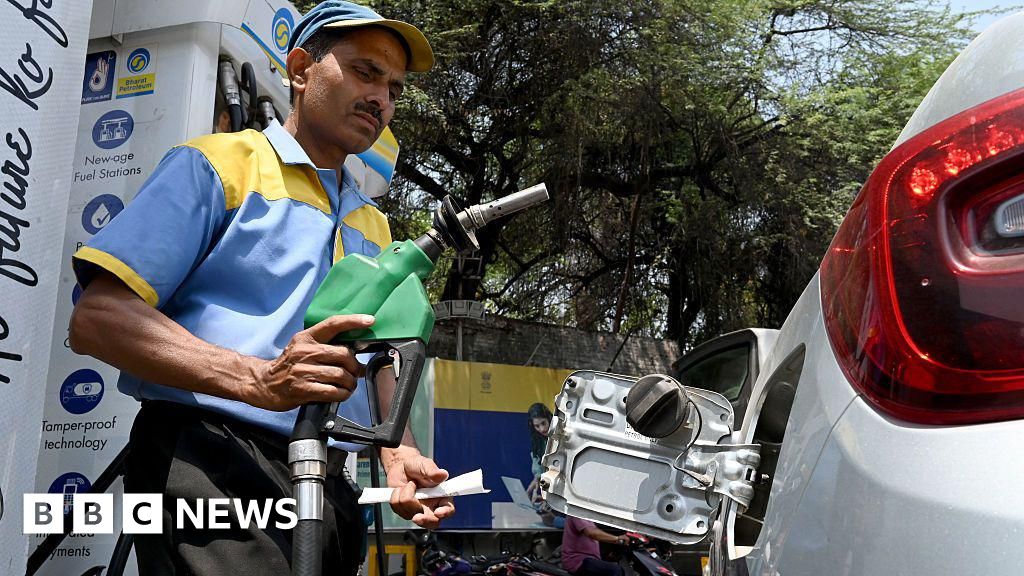
Energy markets have been on a wild ride as the key Strait of Hormuz waterway remains effectively closed.
Source link

Paddy Rodgers said the Observatory’s rich history showed the power of human knowledge and the need to avoid “dependence” on AI.
Source link

UK growth forecast upgraded by IMF but ‘risks’ remain

Cardi B nearly passes out during parenting moment: ‘I can’t handle it’

The Backward Logic of Chickenpox Parties

-

 Entertainment5 days ago
Conan O’Brien hat tricks as Oscar host
-

 Tech1 week ago
Could Contact-Tracing Apps Help With the Hantavirus? Not Really
-

 Fashion5 days ago
Italy’s Zegna Group’s Q1 growth boosted by strong organic performance
-

 Sports1 week ago
Bobby Cox, legendary Atlanta Braves manager who led 1995 World Series champions, dead at 84
-

 Entertainment1 week ago
Tom Brady gets back at Kevin Hart during Netflix roast
-

 Entertainment1 week ago
Martin Short: Facing tragedy with joy
-

 Entertainment1 week ago
Martha Stewart: How to make an omelet
-
 Business1 week ago
Govt mulls incentives for priority sectors | The Express Tribune