

Business
Lego’s most popular sets as sales hit record high


Lego, the Danish toy giant, has achieved another sales record, attributing its robust growth to an unprecedented number of new product launches and substantial global investment.
For the first half of 2025, the company reported a 12 per cent surge in revenues, reaching a record 34.6 billion Danish kroner (£4 billion). Consumer sales climbed by 13 per cent.
Operating profits also saw a healthy increase of 10 per cent to 9 billion kroner (£1.04 billion), consistent with the growth trajectory observed across 2024.
A record 314 new sets were introduced, with bestsellers including Lego City, Technic, and Botanicals, which saw increased demand for flower and succulent-themed builds. Star Wars sets also remained popular.
Further bolstering its expansion, Lego invested an additional 4.2 billion kroner (£485 million) in new factories and sites over the first six months of the year.
Niels Christiansen, chief executive of Lego, said: “We are very pleased to have maintained our strong performance in the first half of 2025, winning share in the global toy market.
“This growth is driven by our large and innovative range of products that continues to be relevant across ages and interests.
“With the solid financial foundation we have built over several years, we continue to invest in capacity expansions and strategic initiatives that fuel our growth.”
In April, Lego opened a new state-of-the-art factory in Vietnam – its sixth globally – to support long-term growth in the Asia-Pacific region, which it also hailed as its most “environmentally sustainable facility to date”.
The company is also investing more than 1.5 billion US dollars (£1.1 billion) in building a factory and regional distribution centre in Virginia, US, which are set to open in 2027, while it has opened a new Americas head office in Boston.

Lego’s store footprint expanded further, with another 24 sites opened in the first six months of 2025, taking its global total to 1,079 across 54 markets.
Business
American Eagle stock jumps 10% as it expects a big holiday, raises forecast after Sydney Sweeney ads

An American Eagle advertisement featuring actress Sydney Sweeney on a billboard in Times Square in New York, US, on Thursday, Aug. 7, 2025.
Michael Nagle | Bloomberg | Getty Images
American Eagle issued bullish holiday guidance and raised its full-year forecast on Tuesday after posting better-than-expected quarterly results.
The apparel company is expecting fiscal fourth quarter comparable sales to grow between 8% and 9% – about four times better than the 2.1% analysts had anticipated, according to StreetAccount.
American Eagle is now expecting its full year adjusted operating income to be between $303 million and $308 million – up from its previous range of $255 million to $265 million.
American Eagle shares rose as much as 15% in extended trading.
The company beat third-quarter expectations on the top and bottom lines.
Here’s how American Eagle did during the quarter compared with what Wall Street was anticipating, based on a survey of analysts by LSEG:
- Earnings per share: 53 cents vs. 44 cents expected
- Revenue: $1.36 billion vs. $1.32 billion expected
The company’s reported net income for the three-month period that ended Nov. 1 was $91.34 million, or 53 cents per share, compared with $80.02 million, or 41 cents per share, a year earlier.
Sales rose to $1.36 billion, up about 6% from $1.29 billion a year earlier.
The results are the first time investors are seeing a full quarter of impact from American Eagle’s splashy campaigns with Sydney Sweeney and Travis Kelce.
Companywide, American Eagle saw comparable sales grow 4%, better than the 2.7% analysts had expected, according to StreetAccount. While the business’s overall results topped expectations, they were primarily driven by Aerie, which saw comparable sales rise 11% and revenue jump about 13%.
At American Eagle, where the campaigns were focused, comparable sales grew just 1%, worse than the 2.1% analysts had expected, according to StreetAccount.
The company told CNBC the campaigns are “attracting more customers” and creating more attention around the brand, but the results show they have not yet been a major revenue driver.
However, they’re not having a major impact on profits, either. During the quarter, American Eagle’s operating margin was 8.3%, better than the 7.5% analysts had expected, according to StreetAccount.
Beyond its marketing campaigns, American Eagle told CNBC it saw record revenue in its third quarter and that “strong momentum” carried into the current quarter, where it saw a “record breaking Thanksgiving weekend.”
The rosy holiday commentary comes after peers like Abercrombie & Fitch, Gap and Urban Outfitters posted better than feared results ahead of the crucial holiday shopping season. Investors have been watching discretionary retailers closely to look for slides in consumer demand because of tariffs, but many have proven resilient so far. They’re showing that for now, higher prices aren’t stopping consumers from shopping, as long as they feel like they’re getting good value for their money.
Industrywide holiday outlooks from outside consulting firms have been relatively murky, but the latest slate of earnings from discretionary retailers have been a positive omen for holiday sales. Plus, turnout during the so-called Turkey 5 shopping weekend, the five day stretch between Thanksgiving and Cyber Monday, was stronger than expected, according to the National Retail Federation.

New Delhi: Credit card spending eased by Rs 2.5 billion in October to Rs 2,142 billion, a moderation of 1.1 per cent month‑on‑month but an increase of 6.1 per cent year‑on‑year, driven by a sharp shift toward point‑of‑sale transactions, a report said on Tuesday.
“The strong POS growth can likely be attributed to festive (Diwali) spending, whereas muted online spends are due to the elevated base of the previous month,” the report from Asit C. Mehta Investment Intermediates Limited said.
Point‑of‑sale transactions grew 22 per cent month‑on‑month and 11.4 per cent year‑on‑year, while online spending declined 12.7 per cent MoM and rose 2.7 per cent YoY. The top 10 banks accounted for 94 per cent of total spending, with HDFC Bank recording the highest MoM spending market share gain in October.
An increase of 6.7 per cent is seen in the total number of cards outstanding on a YoY basis, adding a total of 0.63 million cards, the report said. Transaction volumes saw a healthy growth of 4.6 per cent MoM and 19.2 per cent YoY. The YoY growth is lower than the historical average due to a high base last year.
Since volume growth outpaced spend growth, the average spend per transaction declined by 6 per cent MoM and 11 per cent YoY. With card issuance rising and overall spending remaining flat, the average spend per card declined 1.7 per cent MoM and 0.5 per cent YoY.
IndusInd Bank reported a steep 36 per cent MoM decline in average spend per card, due to a sharp fall of 34 per cent in its total spends. Among major banks, HDFC Bank led with 0.14 million new cards, followed by SBI (0.13mn), ICICI Bank (0.1mn), and Axis Bank (0.08mn). HDFC Bank reported the highest YoY gain of 1.12 per cent.

A version of this article first appeared in the CNBC Property Play newsletter with Diana Olick. Property Play covers new and evolving opportunities for the real estate investor, from individuals to venture capitalists, private equity funds, family offices, institutional investors and large public companies. Sign up to receive future editions, straight to your inbox.
A slew of new supply is still making its way through the multifamily housing market. That, coupled with weakening demand, especially from the youngest workers, is pushing vacancies up and rents down.
The national median rent for apartments fell 1% in November from October, and now stands at $1,367, according to Apartment List. It was the fourth consecutive month-over-month decline. Apartment rents are down 1.1% from November 2024 and have fallen 5.2% from their 2022 peak.
“Earlier this year, it appeared that annual growth was on track to flip positive for the first time since mid-2023; however, that rebound stalled out and reversed course during a particularly slow summer,” according to Apartment List researchers.
After hitting a record high for this index, which dates back to 2017, in October, the national multifamily vacancy rate remained at 7.2% in November.
The historic surge in multifamily construction over the past few years is now pulling back, but a good supply of new units is still coming online at a time of much weaker demand.
The fall historically sees the biggest slowdown in multifamily rents, but this year it’s even more pronounced. CoStar reported the biggest monthly drops in median rent it had seen in 15 years of tracking. The primary reason is that more young people are struggling to form new households.
“That 18- to 34-year-old group … I think it’s up to 32.5% of those now are living with family, and that’s the highest it’s been in a while,” said Grant Montgomery, CoStar’s national director of multifamily analytics. “I think it reflects high rental costs that have risen over the years, as well as the tougher job market for young folks just coming out of college.”
“That is where a lot of demand traditionally comes from, the core renter demand is from that sort of younger base,” he said.
The weakness is showing up in stocks of the major public apartment REITs. Names like AvalonBay, Equity Residential and Camden Property Trust are all down year to date.
Some markets are seeing rents drop faster than others, due to local economic factors. Las Vegas, for example, is experiencing slower tourism, which in turn hits jobs there. Boston has seen a decline in federal funding for biotech as well as a drop in foreign students for its colleges and universities; both are impacting its rental sector hard. Austin, Texas, is seeing the biggest hit to rents, thanks to still more construction of multifamily units.
While rents are softening nationally, and landlords are boosting concessions, renters are increasingly searching in more affordable markets.
Cincinnati was the market most searched for, followed by Atlanta and Kansas City, Missouri, according to a Yardi report that looked at where apartment hunters were active last summer, the traditionally busiest time for new leasing. St. Louis saw the biggest quarterly jump in tenant interest, and Washington, D.C., dropped from the top spot to No. 4.
“The Midwest, in particular, drew more attention than ever, signaling that many of its ‘hidden gem’ markets are no longer a secret,” according to the report, which found 11 of the top 30 cities for renter demand were in the Midwest.
Yardi also revised its expectations for 2026 supply, saying that while new supply will decline through 2027, a larger-than-expected under-construction pipeline caused it to increase its previous quarterly estimates for 2025 and 2026 by 6.8% and 2.5%, respectively.
As construction continues to slow into next year, the overall market should stabilize somewhat, according to the Apartment List report.
“That said, the supply boom still has a bit of runway remaining, and the demand outlook has begun to appear weaker amid a shaky labor market,” researchers wrote.


Week 15 Anger Index: The case for Texas and monthlong gripes for Miami, BYU

KU deals Vols 1st loss, finds momentum in Vegas

Russia Wants This Mega Missile to Intimidate the West, but It Keeps Crashing

-

 Sports1 week ago
WATCH: Ronaldo scores spectacular bicycle kick
-

 Entertainment1 week ago
Welcome to Derry’ episode 5 delivers shocking twist
-

 Politics1 week ago
Washington and Kyiv Stress Any Peace Deal Must Fully Respect Ukraine’s Sovereignty
-
 Business1 week ago
Key economic data and trends that will shape Rachel Reeves’ Budget
-

 Tech2 days ago
Get Your Steps In From Your Home Office With This Walking Pad—On Sale This Week
-

 Tech1 week ago
Wake Up—the Best Black Friday Mattress Sales Are Here
-

 Politics1 week ago
53,000 Sikhs vote in Ottawa Khalistan Referendum amid Carney-Modi trade talks scrutiny
-
 Fashion2 days ago
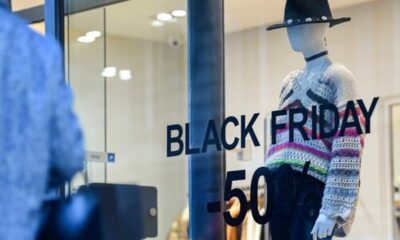
Results are in: US Black Friday store visits down, e-visits up, apparel shines