

Business
Lululemon CEO Calvin McDonald to depart in January as retailer struggles to compete, woo shoppers


Lululemon announced Thursday its CEO Calvin McDonald will step down effective Jan. 31 following more than a year of underperformance at the athleisure company.
The company’s board of directors is working with a “leading executive search firm” to identify its next CEO, it said in a news release. McDonald will stay on as a senior advisor through March 31.
“The timing is right for a change,” McDonald said on a call with analysts, “I’ve described being CEO of Lululemon as my dream job. It truly has lived up to every expectation and given me the opportunity of a lifetime.”
Lululemon’s CFO Meghan Frank and Chief Commercial Officer André Maestrini will serve as interim co-CEOs during the search process. The company’s board chair Marti Morfitt will also take on the expanded role of executive chair. In a statement, she said the company has a strong foundation in place but needs a new leader that can guide it through a transition.
“As we look to the future, the Board is focused on identifying a leader with a track record of driving companies through periods of growth and transformation to guide the company’s next chapter of success,” said Morfitt.
Shares rose about 10% in extended trading.
The leadership change follows more than a year of underperformance at Lululemon and calls for change from its founder and its largest independent shareholder Chip Wilson. Two months ago, he took out a full page ad in the Wall Street Journal saying the company is “in a nosedive” and it needed to “stop chasing Wall Street at the expense of customers.”
Lululemon announced McDonald’s departure on the same day it posted fiscal third-quarter earnings and another round of weak guidance.
Here’s how the company did compared with what Wall Street was anticipating, based on a survey of analysts by LSEG:
- Earnings per share: $2.59 vs. $2.25 expected
- Revenue: $2.57 billion vs. $2.48 billion expected
The company’s reported net income for the three-month period that ended Nov. 2 was $306.84 million, or $2.59 per share, compared with $351.87 million, or $2.87 per share, a year earlier.
Sales rose to $2.57 billion, up from $2.40 billion a year earlier.
For Lululemon’s current quarter, McDonald said the company is “encouraged” by its early performance so far this holiday season — though guidance fell short of Wall Street estimates. It anticipates sales will be between $3.50 billion and $3.59 billion, largely below expectations of $3.60 billion, according to LSEG.
It’s expecting earnings per share to be between $4.66 and $4.76, well short of expectations of $5.03, according to LSEG.
In the previous two quarters, Lululemon cut its full-year guidance. On Thursday, more than a month into the final quarter of the year, it raised its full-year expectations.
It now anticipates sales will be between $10.96 billion and $11.05 billion, in line with expectations at the low end, according to LSEG. It expects earnings per share to be between $12.92 and $13.02, roughly in line with estimates of about $13, according to LSEG.
The company saw strong demand during its Thanksgiving weekend, which allowed it to clear through stale inventory at a discount, said McDonald.
“I also want to acknowledge we’ve seen trends slow a bit since Thanksgiving, which we’ve taken into account in our Q4 guidance,” said McDonald. “However, despite this, we expect revenue trends in the U.S. and Q4 to be modestly improved relative to Q3.”
Lululemon’s business has been under pressure over the last year as it navigates the impact of tariffs, a shaky U.S. consumer and a product assortment that’s failed to wow shoppers in the same way it once did. It’s also facing steep competition in the athleisure space from upstarts like Vuori and Alo Yoga as well as a change in consumer preferences. Instead of yoga pants, these days many shoppers are reaching for denim.
To drive growth and reach a wider audience, Lululemon has been working to expand its business internationally and offer shoppers a wider assortment. Instead of just workout gear, Lululemon has expanded into shoes, outerwear like coats and jackets and casual pants that can be worn at work.
The company’s overall business is growing, but the expansion has largely come from its international business and new store openings. Its largest market, the Americas, has been declining.
During the quarter, revenue in the Americas decreased 2%, with comparable sales down 5%, while international sales jumped 33%. Comparable sales abroad increased 18%.
Lululemon is also being hit by the end of the de minimis exemption, which allowed low value packages to enter the U.S. duty free, a bit more acutely than its peers.
In September, it said it expects tariffs to hit its full year profits by $240 million and most of those costs will come from the de minimis exemption ending. Following progress with vendor negotiations and other mitigation efforts, it now expects tariffs to reduce its profits by $210 million.


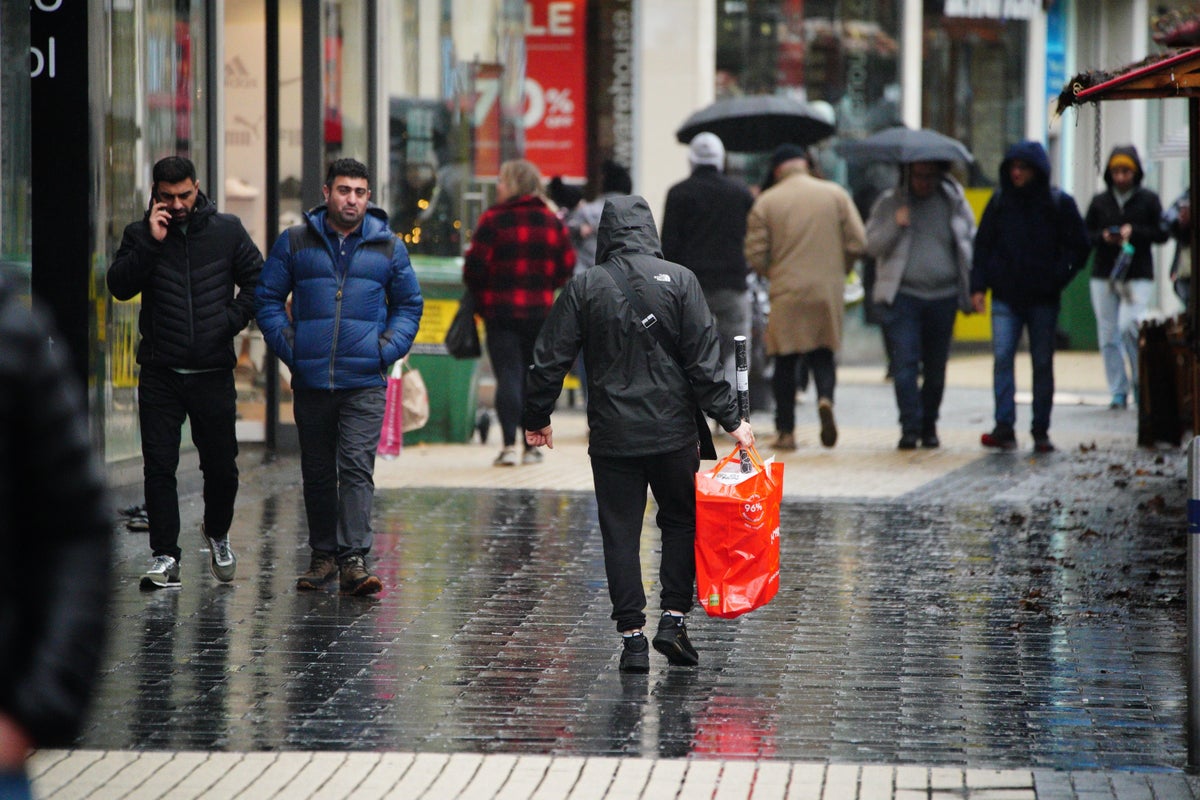
UK inflation held steady at 3% in February before the impact of an energy shock linked to war in the Middle East, official figures have revealed.
Economists have said data showing flatlining inflation highlights “the calm before the storm”, with inflation expected to accelerate again in the coming months.
The rate of Consumer Prices Index (CPI) inflation was unchanged from the level reported in January, the Office for National Statistics (ONS) said.
It was in line with predictions from economists.
However, the steady picture for inflation does not yet reflect the impact of the conflict in the Middle East on the cost of living, with the first attacks taking place at the very end of February.
Oil and gas prices have jumped in recent weeks due to the conflict and other goods prices could also be affected by disruption to shipping through the Strait of Hormuz.
Economists said inflation could lift as high as 4% in the third quarter of 2026 due to the projected surge in energy costs.
ONS chief economist Grant Fitzner said: “After last month’s slowdown, annual inflation was unchanged in February as various price movements offset each other.
“The largest upwards driver was the price of clothing, which rose this month but fell a year ago.
“This was offset by falls in petrol costs, with prices collected before the start of the conflict in the Middle East and subsequent rise in crude oil prices.”
The February data showed clothing and footwear prices contributed to inflation, with prices up 0.9% for the month – its highest level since March 2025 – after previously staying flat in January.
However, this upward impact on inflation was cooling inflation in other areas.
Inflation across the services sector eased slightly to 4.3% for the month, dipping to its lowest level for almost four years.
Slower alcohol and tobacco price rises were also a drag on inflation, easing to 3.6% for the month – the lowest since February 2022.
The slowdown was driven by falling inflation for the prices of beers, wines and spirits over the month.
Elsewhere, motor fuel inflation also eased back, with the average price of petrol falling by 1.6p per litre between January and February.
However, petrol and diesel prices have risen significantly since the latest data after the price of crude oil jumped due to the conflict in the Middle East.
Economists said on Wednesday that inflation is now set to accelerate over the coming months as the impact of the conflict feeds into the price of goods.
Stuart Morrison, research manager at the British Chambers of Commerce, said: “For businesses across the UK, today’s inflation data represents the calm before the storm.
“UK firms are particularly exposed to the economic impact of the crisis in the Middle East as our electricity prices are tightly tethered to global gas prices.
“This will feed directly into higher costs and renewed inflationary pressure in the months to come.”
Luke Bartholomew, deputy chief economist at Aberdeen, said: “Today’s inflation report is little more than a relic of the world before the Iran conflict.
“While the February report was broadly in line with expectations, and confirms that inflation was on a path back to 2%, the outlook for inflation has radically changed.”
Experts also indicated previous expectations that interest rates would be cut further this year have been scuppered, with many predicting the Bank of England will continue to hold them at 3.75% in an effort to diminish further price rises.
Matt Swannell, chief economic adviser to the EY ITEM Club, said: “With the growth outlook weak, unemployment high and rising, and policy already restrictive, we think a prolonged hold for bank rate is the most likely outcome.”
Chancellor Rachel Reeves said: “In an uncertain world we have the right economic plan, taking a responsive and responsible approach to supporting working people in the national interest.
“We’re taking £150 off energy bills and providing targeted support for those facing higher heating oil costs.
“We’re also acting to protect people from unfair price rises if they occur, bring down food prices at the till, and cut red tape to boost long-term energy security – building a stronger, more secure economy.”
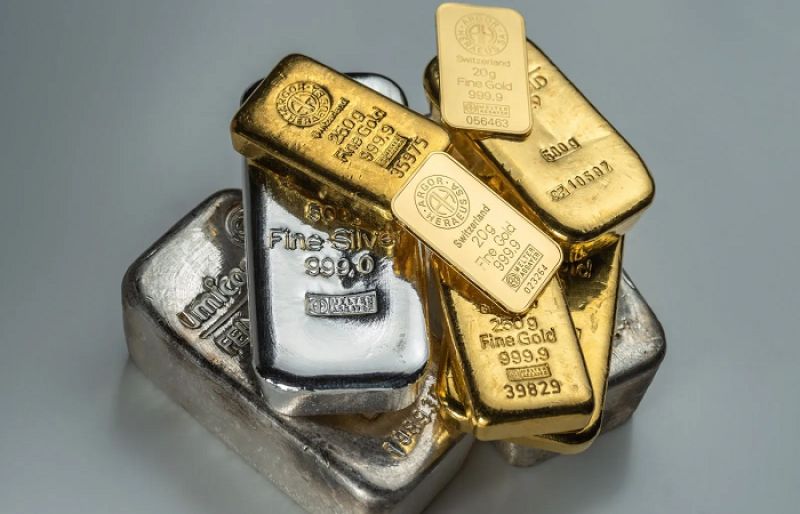
Prices of gold and silver witnessed a significant increase in both the global market and Pakistan’s local bullion market, reflecting continued volatility in precious metals.
According to market data, the price of one tola of gold surged by Rs15,200, reaching Rs479,262, while the rate for 10 grams of gold increased by Rs13,031 to settle at Rs410,889.
In the international market, gold prices also recorded a substantial rise, climbing by $152 to reach $4,565 per ounce, indicating strong global demand and investor interest in safe-haven assets.
Meanwhile, silver prices followed a similar upward trend, with one tola increasing by Rs370 to reach Rs7,824 in the local market.
Market analysts attribute the rise in prices to ongoing global economic uncertainties and increased demand for precious metals as a hedge against inflation and currency fluctuations.
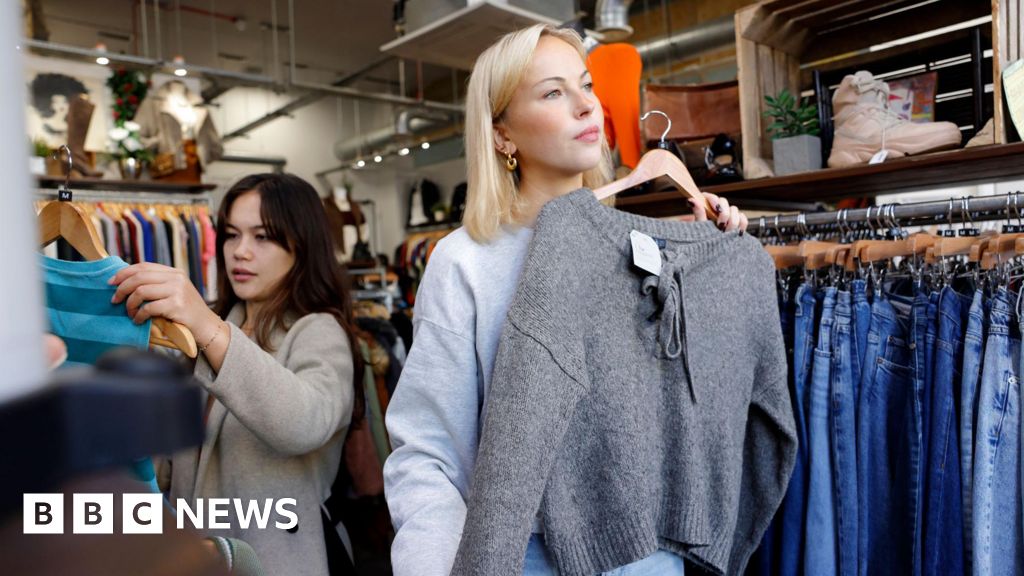
The speed of price rises in the UK has stayed the same, according to data which was collected before the US-Israel war with Iran began.
Source link


Who’s next at UNC? Potential candidates to replace Hubert Davis, their priorities

WTO should change if trading system shifts to reciprocity, balance: US
Inflation holds at 3% in ‘calm before the storm’ of Iran war

-
 Fashion1 week ago
Sales at US apparel, clothing accessories stores up 4% YoY in Jan 2026
-
 Business1 week ago
Peloton is launching bikes and treadmills for gyms, accelerating commercial strategy
-

 Tech1 week ago
Justice Department Says Anthropic Can’t Be Trusted With Warfighting Systems
-

 Fashion1 week ago
Trump signs order to combat fraudulent ‘Made in America’ labels
-
 Business1 week ago
Stocks and pound rise as US rate call approaches
-

 Entertainment7 days ago
Val Kilmer revived 1 year after death through AI
-

 Sports1 week ago
PCB files complaint over allowing Bangladesh to take review on penultimate ball – SUCH TV
-

 Sports1 week ago
March Madness 2026 – How to watch in SA, start time, schedule, TV channel for NCAA championship basketball tournament