

Fashion
Lululemon CEO exit sparks hopes of reset at athleisure pioneer


Published
December 15, 2025
Lululemon Athletica’s CEO shake-up has put the spotlight on the once-dominant yoga pants maker’s race to wrest back younger and affluent shoppers from rivals and revive its sagging U.S. business.
Its shares, which have halved in value this year, rose 10% on Friday following the departure of CEO Calvin McDonald after about seven years in the role.
An athleisure pioneer known for its premium yoga apparel, Lululemon lost ground as newer rivals such as Alo Yoga and Vuori weaned away its core younger shoppers with trendier styles, marketing campaigns and celebrity partnerships.
Meanwhile, established players like Nike and Gap also entered the market with lower-priced styles.
Lululemon “caught the perfect wave in fashion, becoming the trend for the last five years,” said Brian Mulberry, senior client portfolio manager at Zacks Investment Management.
“But as its core customers graduate college and face tighter budgets, affordability is a challenge and a new outfit at Lulu can cost as much as a month’s groceries.”
Lululemon sells a range of yoga, running and training apparel such as Align yoga pants priced at $108 and men’s joggers at $128.
The slow refresh to core styles and product missteps, such as its decision to pull its $98 “Breezethrough” leggings from shelves last year, have led to heavy discounting to clear aged inventory.
At an earnings call late on Thursday, company executives said the board is “focused on a leader with experience and growth and transformation”.
“It’s understandable to think that a strategic overhaul with a new leader at the helm will be a positive, but this opens the door to more questions as to what direction the board will go with a replacement,” said Jay Woods, chief market strategist at Freedom Capital Markets.
Lululemon is the latest global consumer company facing leadership churn as macroeconomic uncertainty fuels increasingly divergent spending patterns.
Lululemon is making efforts to speed up product development, launch fresh styles and drive company-wide efficiencies to offset cost inflation and protect margins.
The company beat third-quarter results, lifted by strong China sales, but issued a weaker-than-expected holiday forecast as higher promotions and increased spending on marketing weigh on margins.
Founder Chip Wilson, who is also Lululemon’s largest independent shareholder, in a statement on Friday slammed the board for “poor succession planning” and value erosion.
He called for an urgent CEO search led by new, independent directors with deep company knowledge to restore a product-first focus.
Lululemon did not immediately respond to a Reuters request for comment on Wilson’s statement.
The company’s forward price-to-earnings multiple, a common benchmark for valuing stocks, is 14.66, compared to 31.26 for Nike and Abercrombie & Fitch‘s ratio of 10.8, according to LSEG data.
“The main challenge I foresee for the new leadership is not how consumers see Lulu, but how does it see itself?” said Mulberry.
Copyright © 2025 FashionNetwork.com All rights reserved.








The rise was largely driven by a rebound in energy costs. Prices of non-regulated energy products surged from a 2 per cent decline to a 9.9 per cent increase, while regulated energy prices rose 5.7 per cent after previously contracting, Istat said in a press release.
Italy’s inflation rose to 2.8 per cent YoY in April 2026 from 1.7 per cent in March, driven by a sharp rebound in energy prices, Istat said.
Monthly inflation stood at 1.2 per cent.
Goods inflation strengthened, while services inflation eased.
Transport costs increased notably.
The harmonised index (HICP) rose 2.9 per cent YoY, reflecting higher prices and seasonal factors.
In contrast, services inflation showed signs of moderation. Prices for recreation-related services eased to 2.6 per cent YoY, while transport services slowed sharply to 0.5 per cent. Overall services inflation decelerated to 2.4 per cent from 2.8 per cent in March.
Goods inflation, however, strengthened significantly, rising 3.2 per cent YoY compared with 0.8 per cent in the previous month. This narrowed the inflation gap between goods and services to -0.8 percentage points, down from +2 percentage points in March.
The monthly increase in the index was primarily led by higher prices for non-regulated energy (+5.7 per cent), transport services (+1.6 per cent), and recreation-related services (+1.4 per cent).
Among major consumption categories, water, electricity and fuels recorded a sharp 5.3 per cent annual increase, while transport prices rose 3.8 per cent.
Italy’s harmonised index of consumer prices (HICP), which allows comparison across the euro area, rose 2.9 per cent YoY in April, up from 1.6 per cent in March. On a monthly basis, HICP increased 1.7 per cent, partly reflecting the end of seasonal discounts in clothing and footwear.
Fibre2Fashion News Desk (SG)

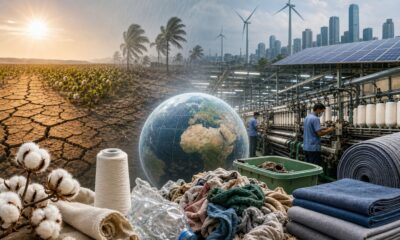
The apparel climate story has moved out of the ESG report and into the cost sheet. In ****–****, climate risk is showing up as cotton quality loss, import dependence, energy volatility, cooling capex, carbon-price exposure and mandatory textile-waste fees. For brands and suppliers, the question is no longer whether climate action is ‘responsible’. It is whether delay will make product margins uncompetitive.
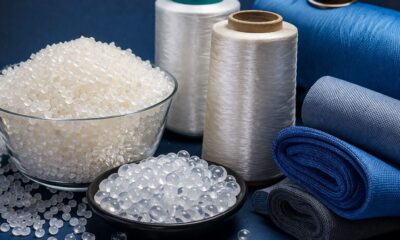
The latest data makes the shift visible. Textile Exchange says global fibre production reached *** million tonnes in **** and could hit *** million tonnes by **** if business continues as usual. Polyester alone now makes up ** per cent of global fibre output, with ** per cent still fossil-based. That scale gives apparel a low-cost material engine, but it also ties the sector to fossil energy, petrochemical volatility and future carbon accounting.
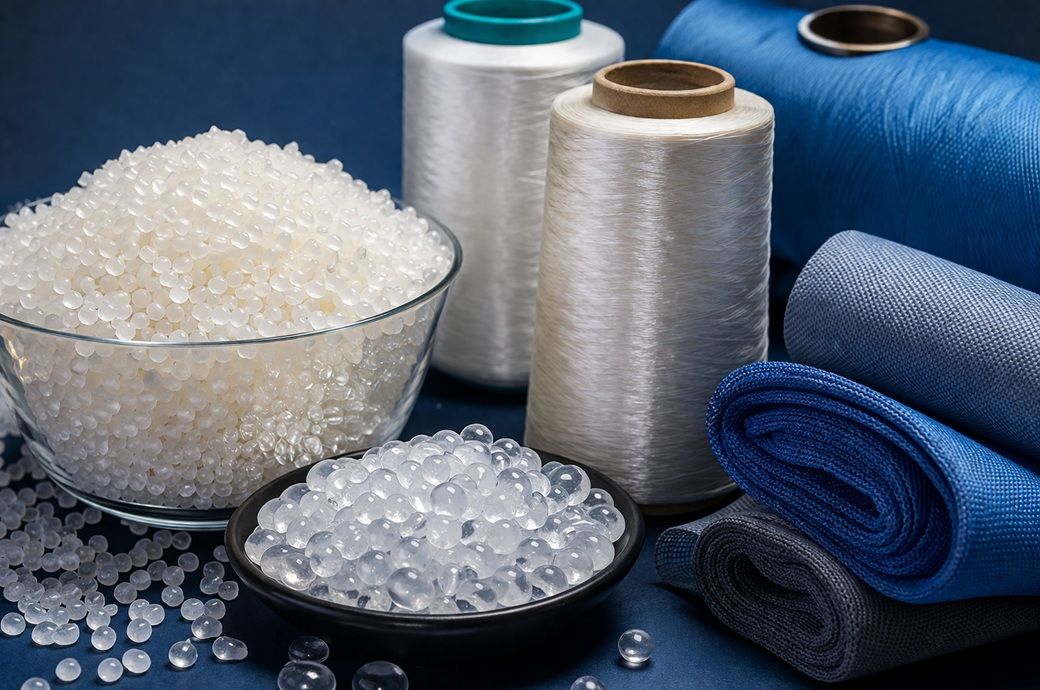
Caprolactam (CPL) prices initially held near $*.**–*.**/kg with minimal movement, while nylon chips saw uptick to ~$*.***/kg (+*.* per cent WoW) driven by short-term restocking. Nylon filament yarn (DTY **D/**F) prices remained stable at ~$*.**–*.**/kg, supported by existing inventory and steady downstream textile operations.
By the second week (April * to April **), benzene stabilised, but caprolactam began to weaken to ~$*.**–*.**/kg (−*.* per cent WoW), signalling the start of broader chain pressure. Nylon chips responded with a mild correction to ~$*.***/kg (−* per cent WoW), while filament yarn prices continued to hold steady due to inventory buffers and ongoing execution of prior textile orders. In the third week (Apr **–**), caprolactam stable to ~$*.*/kg, and chips followed to ~$*.***/kg (Stable WoW).


Italy’s inflation rises to 2.8% in April on energy spike

Oil prices ease as US pauses Project Freedom to seek Iran deal

Kadeem Hardison calls ‘Euphoria’ costar Zendaya ‘a boss’

-

 Tech1 week ago
A Brain Implant for Depression Is About to Be Tested in Humans
-

 Tech1 week ago
Almost 90% of women leave tech industry within 10 years | Computer Weekly
-

 Sports1 week ago
Pro wrestling star Steph De Lander reveals how colleague’s advice helped lead her to title triumph at ACW
-
 Business1 week ago
‘I had £20,000 stolen and had to fight a 13-month fraud reporting rule to get it back’
-

 Entertainment1 week ago
Norway joins Type 26 Frigate Programme to boost NATO naval power
-

 Entertainment1 week ago
Melania Trump says ABC should ‘take a stand’ on late-night host Kimmel
-

 Tech1 week ago
Are tech leaders risking a cyber resourcing crisis? | Computer Weekly
-
 Business6 days ago
PSX plunges over 4,800 points | The Express Tribune