

Fashion
Lululemon shares tumble on weak US demand and tariff pressure

By
Reuters
Published
September 5, 2025
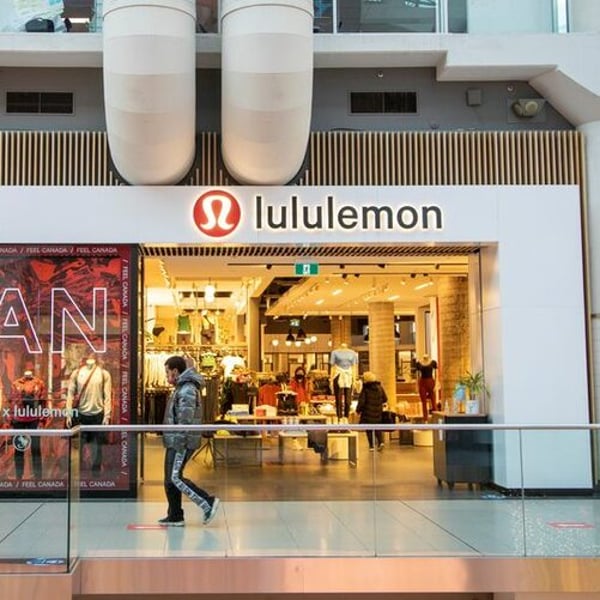
Shares of Lululemon Athletica fell more than 17% in premarket trading on Friday after the athleticwear maker lowered its annual profit and sales forecasts, citing weak US demand and increased tariff costs.
The company reduced its annual profit outlook for the second consecutive quarter on Thursday, as it contends with shrinking market share, rising competition, a volatile economic environment, and tariffs that are impacting discretionary consumer spending.
Lululemon’s shares have declined more than 40% this year. Weekly product launches have had little effect on reviving sales as American shoppers approach the holiday season cautiously.
“We have let our product life cycles run too long within many of our core categories,” CEO Calvin McDonald said during a post-earnings call on Thursday.
Comparable sales for the Americas segment—its largest—declined by 1%, while international sales grew by 15%.
“The US drives the earnings and the US is fading fast here,” Jefferies analyst Randal Konik said in a note.
“Rising competition won’t stop either, which means Lululemon’s earnings per share are permanently impaired,” Konik added.
The company now expects annual profit per share between €12.77 and €12.97, down from its previous guidance of €14.58 to €14.78.
Lululemon estimates a €240 million impact on its 2025 gross profit due to increased tariffs and the removal of the de minimis exemption.
The yogawear maker, which relies heavily on sourcing and manufacturing in Vietnam and mainland China, remains vulnerable to the tariffs introduced under former President Donald Trump’s trade policies.
Lululemon’s forward price-to-earnings ratio—a common stock valuation metric—currently stands at 13.82, significantly lower than Nike’s 39.21, according to data from LSEG.
© Thomson Reuters 2025 All rights reserved.











China’s shipment of garments and accessories increased **.* per cent year on year to $**.*** billion from $**.*** billion, driven by steady demand from key markets such as the US and EU, where retailers have begun restocking after cautious inventory management in ****. Meanwhile, exports of textile products, including yarns, fabrics and related articles, rose at a faster pace of **.* per cent to $**.*** billion from $**.*** billion, supported by stronger downstream manufacturing activity across Asia and improved order flows from emerging sourcing hubs.
In February **** alone, exports of textile yarns, fabrics and related articles were valued at $**.*** billion, while garment shipments stood at $**.*** billion, taking the combined monthly total to $**.*** billion. The relatively balanced contribution of textiles and apparel highlights a synchronised recovery across the value chain, from raw materials to finished goods.

Fiscal support measures to cushion households and firms could weigh on budget deficit and government debt trajectories, while financing conditions could become less favourable if risk sentiment deteriorates, it noted.
A prolonged Iran war could create new credit challenges for developed countries in Europe and Asia, Fitch Ratings said.
Fiscal support measures could weigh on budget deficit and government debt trajectories, while financing conditions may turn less favourable.
Sovereigns with higher debt and structural deficits, and those facing worse inflation-growth trade-offs, are more prone to a longer shock, it said.
Sovereigns with higher debt and structural deficits, and those facing worse inflation-growth trade-offs, are more vulnerable to a sustained shock, it said.
Higher-than-expected oil and gas prices, feeding into higher inflation, would be the most direct channel of contagion, with spillover effects for real incomes and domestic demand.
“Our baseline is that Brent oil prices remain close to current levels through March, before easing to average $70 a barrel (bbl) for 2026. A simulation using the Oxford Economics Global Economic Model suggests that an alternative scenario of oil at $95-$100/bbl for the whole of 2026 would slow growth across DMs [developed markets], potentially bringing some countries close to recession,” it said in a release.
“Our simulation suggests that inflation risks are most acute in Italy, the UK, Japan and France among the large DMs, given their energy supply composition. The adverse economic growth impact is greatest for Korea, Japan, the UK and Italy, reflecting a larger hit to household consumption as higher energy and transport costs erode real incomes,” it noted.
Among smaller DMs, the growth impact varies more widely, with the greatest effects in parts of central and eastern Europe, including the Baltic states and Slovenia, as well as Taiwan.
In Western Europe, Norway is the only country that is insulated, reflecting its energy-exporter position and stronger terms of trade under higher hydrocarbon prices.
Monetary policy responses will depend on the balance between higher inflation and weaker activity.
Under Fitch Ratings’ alternative higher oil price scenario, central banks’ willingness to raise interest rates to curb energy-led inflation effects would be constrained by the weaker demand and employment outlook. Consequently, rate paths may not differ dramatically from the current baseline, it added.
Fibre2Fashion News Desk (DS)
The US apparel import market—already compressed to $**.** billion in **** from its $*** billion peak in ****—is now absorbing the most severe logistics and energy shock since the pandemic. Sixteen days into the US-Israel-Iran war, the Strait of Hormuz remains effectively closed to commercial shipping, the Red Sea corridor has been shut down by resumed Houthi attacks, and Brent crude has breached $*** per barrel for the first time since ****. For an industry where more than ** per cent of clothing sold in America is imported, and where tariffs had already driven China’s share from **.* per cent to **.* per cent in four years, this war-driven supply chain rupture arrives at the worst possible moment.
Container freight rates from Asia have surged **–** per cent since February **, emergency war surcharges of $***–$*,*** per container are being levied by all major carriers, and polyester fibre costs are climbing **–** per cent as the petrochemical chain absorbs crude price shocks.


Arne Slot: Liverpool’s defeat to Brighton ‘hurts a lot’

Men’s March Madness live tracker: Updates on Saturday’s games

Dua Lipa pouts with director pal after locking major deal

-
 Business1 week ago
US issues 30-day waiver for Russian oil shipments stranded at sea | The Express Tribune
-

 Fashion1 week ago
Chinese firm to invest $15.34 million in garment factory at BEPZA
-

 Tech1 week ago
Tips and Advice for Buying Used or Refurbished Electronics
-
 Fashion1 week ago
US unemployment rate 4.4% in Feb 2026, LFPR 62%: BLS
-

 Sports1 week ago
Bilas’ All-America teams: My top 20 men’s college basketball players of 2025-26
-
 Business1 week ago
Oil holds above $100 as tensions escalates between Iran, US and Israel – SUCH TV
-
 Business1 week ago
UAE savings strategies 2026 explained: Best apps, tools, budget rules and smart money hacks to beat rising cost of living in emirates – The Times of India
-
 Entertainment6 days ago
Strategic oil stocks to be released ‘immediately’ in Asia and Oceania: IEA