

Fashion
LVMH expands in South Korea as luxury demand shifts from China and the US


By
Bloomberg
Published
September 25, 2025
LVMH is ramping up its expansion in South Korea, with the luxury conglomerate seeking to diversify its global footprint amid geopolitical and economic uncertainties that are clouding the consumer spending outlook in the United States and China.
The group’s two largest fashion labels — Louis Vuitton and Christian Dior — are both planning to expand their flagship maison-style stores in Seoul’s Cheongdam district within the next few years, according to people familiar with the matter who asked not to be identified discussing private deliberations. Dior’s revamp may take place as early as 2027 and is expected to feature a permanent restaurant, according to the report.
LVMH Moët Hennessy Louis Vuitton SE’s watch and jewelry house Bulgari is reportedly eyeing its first flagship location in South Korea, as the group strengthens its regional presence. Meanwhile, Tiffany & Co. is expected to open a flagship store in Seoul’s Cheongdam district in 2027, according to the same sources.
A representative for LVMH did not respond to a request for comment.
South Koreans’ enduring love for luxury, combined with a resilient economy and rising consumer confidence, has made the country a bright spot for top industry names amid an increasingly uncertain global retail landscape. Louis Vuitton, Hermès and Chanel posted almost 10% growth in their combined sales in the country last year, reaching $3.3 billion, according to government data.
Beyond domestic shoppers, a surge in visitors — mainly from China and Japan — along with the weaker won, has further boosted sales. Tourist spending rose by about a third to a record 9.26 trillion won ($6.6 billion) last year, according to the Korea Herald.
At the same time, China’s premium goods market shrank the most in a decade last year, while U.S. import tariffs have prompted fashion houses to hike prices, potentially driving wealthy shoppers to buy luxury items abroad. Even Japan, where a weak yen had fueled a boom in luxury spending, is now showing signs of a slowdown.
LVMH, founded by billionaire Bernard Arnault, has already been expanding its presence in South Korea. Celine opened its first boutique there in December last year, and Fendi launched its first flagship in 2023.
Other luxury groups are also betting on the South Korean market. Cie Financière Richemont SA — which saw its sales rise 20% in the country for the financial year ended in March — opened a new flagship for Swiss watchmaker Vacheron Constantin in Seoul in June. The store features Korean artworks, a digital archive, a private lounge, and a dedicated space for exhibitions and events. Hermès also relocated and expanded its flagship in the capital, reopening the location in August.












The company said the agreement marks a key milestone in its transformation journey, reflecting continued support from capital partners.
Saks Global has secured $500 million in exit financing under a restructuring support agreement as it progresses through Chapter 11, targeting emergence by summer.
The company is advancing its reorganisation plan, strengthening brand partnerships and inventory flows, with over 650 brands resuming shipments.
Improved inventory has boosted customer engagement, while it aims for double-digit EBITDA margins.
“Achieving this important milestone underscores the progress we are making on our transformation and reflects our capital partners’ confidence in our go-forward vision,” said Geoffroy van Raemdonck, CEO at Saks Global.
Saks Global is currently engaging with stakeholders on a formal Plan of Reorganisation, expected to be filed in the coming weeks. The retailer aims to emerge from Chapter 11 by summer with a strengthened financial structure, targeting double-digit adjusted EBITDA margins and long-term sustainable growth, the company said in a press release.
The company plans to leverage an integrated retail model, combining optimised physical stores in key luxury markets with distinct e-commerce platforms and remote selling capabilities. It also intends to enhance its curated product offering through stronger brand partnerships and deeper customer insights.
Operationally, Saks Global reported progress since filing for bankruptcy protection. Over 650 brand partners have resumed shipments, unlocking $1.5 billion in retail receipts and covering more than 90 per cent of expected inventory for the first quarter of fiscal 2026. March inventory receipts rose 18 per cent year on year (YoY).
Improved inventory flow has translated into stronger customer engagement, with spend per store visit increasing 6 per cent and online conversion rising 11 per cent. The company also noted gains in full-price selling across its banners, including Saks Fifth Avenue, Neiman Marcus and Bergdorf Goodman.
“As we advance the restructuring process, our focus remains on strengthening brand relationships and delivering personalised luxury experiences,” added van Raemdonck, highlighting confidence in completing the restructuring with sufficient liquidity and positioning the business for future growth.
Fibre2Fashion News Desk (SG)
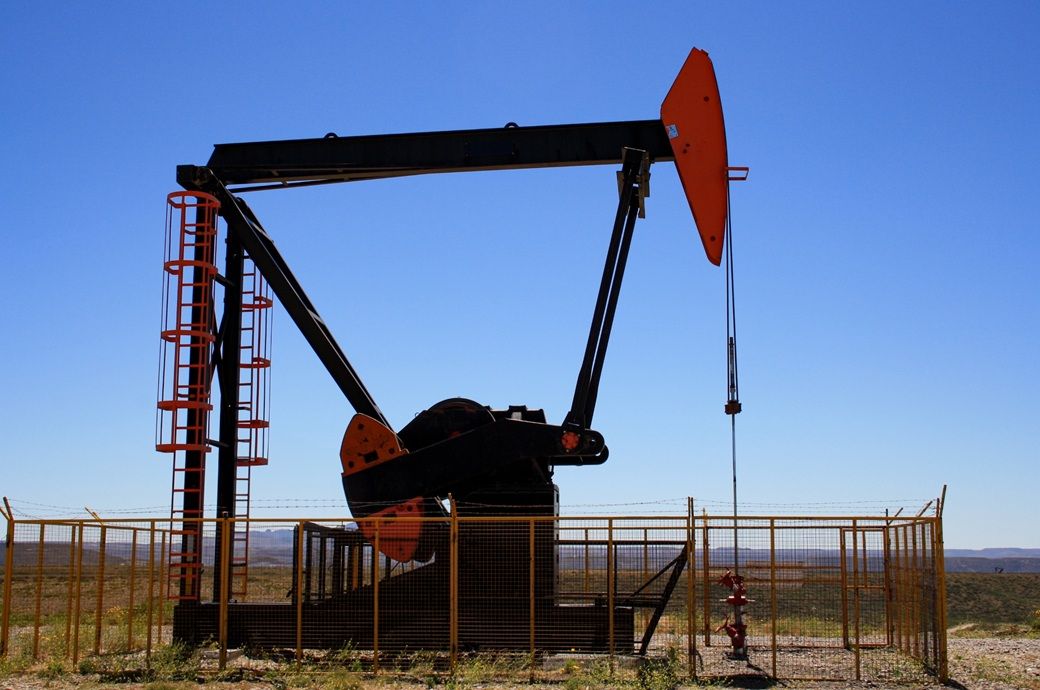
Following talks between his CDU party and its coalition partners, Chancellor Friedrich Merz said his government has decided to cut the tax on petrol and diesel by around 17 euro cents ($0.19) for two months.
Germany yesterday announced a €1.6-billion ($1.9-billion) fuel price relief package for households and businesses struggling with the energy shock triggered by the Middle East conflict.
Chancellor Friedrich Merz said his government has decided to cut the tax on petrol and diesel by around $0.19 for two months.
The funds for the relief measures would be financed by higher taxes on tobacco.
The announcement followed another surge in oil prices after the US-Iran peace talks collapsed and US President Donald Trump’s decision to blockade the Strait of Hormuz.
The war “is the root cause of the problems we face in our own country”, said Merz, stressing that Berlin is doing all it could to try to end the conflict.
“This will very quickly improve the situation for drivers and businesses in the country, and above all for those who, mainly for professional reasons, spend a great deal of time on the road,” he told a news conference in Berlin.
The funds for the relief measures would be financed by higher taxes on tobacco, a finance ministry spokesman was cited as saying by global newswires.
Employers can also pay staff tax-free bonuses of up to €1,000 ($1,170) to mitigate the impacts of inflation, which has already started rising in Germany, the government announced.
“At the same time, we cannot offset every single outcome on the market with government funds… The state cannot absorb all uncertainties, not all risks, not all disruptions in global politics,” Merz cautioned.
He said the war’s effects are likely to last long. “The German economy will face a significant burden over an extended period,” he added.
Fibre2Fashion News Desk (DS)
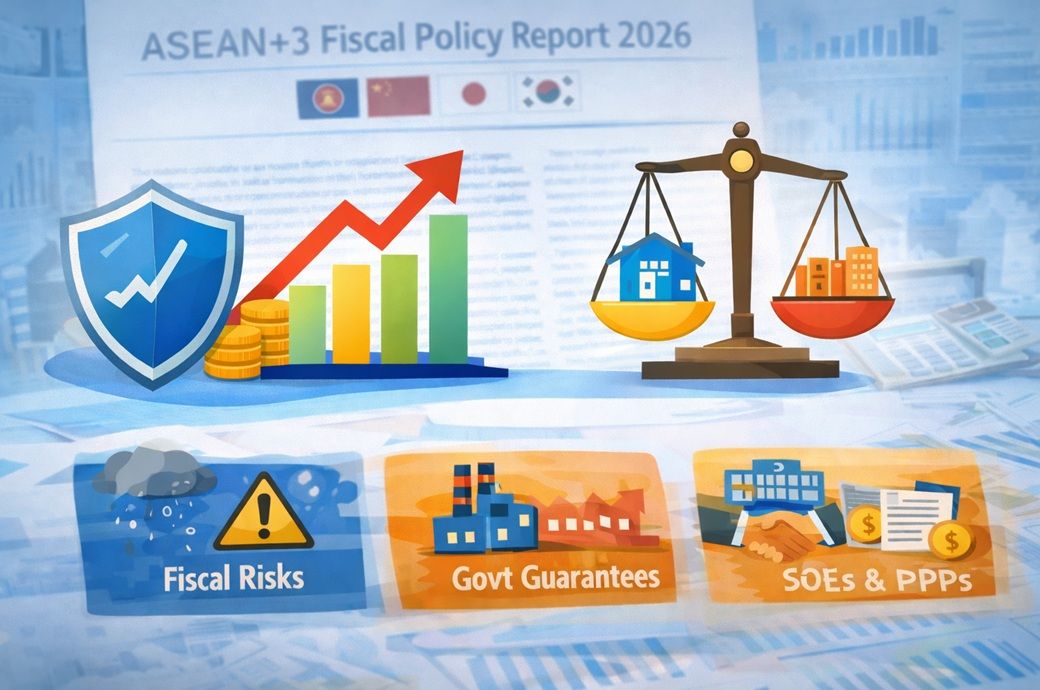
At the same time, growing demands on fiscal policy require governments not only to respond to immediate shocks, but also to support growth, facilitate structural transformation and reduce poverty and inequality over the medium to long term, it noted.
With fiscal positions weakened and policy space narrowed, ASEAN+3 policymakers must safeguard fiscal sustainability and rebuild buffers, the ASEAN+3 Fiscal Policy Report 2026 said.
Governments should also support growth, facilitate structural transformation and reduce poverty and inequality over the medium to long term, it noted.
Particular attention should be given to liabilities outside the budget.
ASEAN+3 comprises members of the Association of Southeast Asian Nations, along with China, South Korea and Japan.
These competing demands are compounded by sluggish revenue growth and rigid budget structures. Addressing these challenges will require stronger fiscal management frameworks, including improvements in risk management, fiscal aggregate management, strategic resource allocation, spending efficiency and revenue mobilisation.
The report also highlights the importance of comprehensive fiscal risk management, urging policymakers to strengthen the identification, assessment and disclosure of fiscal risks.
Particular attention should be given to liabilities outside the budget, including borrowing by off-budget public entities and government arrears.
Systematic monitoring and proactive management of contingent liabilities are essential, especially those related to government guarantees, public-private partnerships, state-owned enterprises and social security obligations, the report remarked.
Enhancing fiscal aggregate management, alongside improving strategic resource allocation and spending efficiency, will be critical to meeting rising expenditure demands in line with national priorities, while safeguarding fiscal sustainability and rebuilding buffers, it added.
The report further encourages policymakers to implement comprehensive and durable revenue-enhancing measures, including strengthening tax administration—particularly through digitalisation—rationalising tax expenditures and advancing structural reforms to major taxes.
Fibre2Fashion News Desk (DS)


US’ Saks Global secures $500 mn as it eyes post-bankruptcy exit

Trump doubles down in criticising Pope Leo over Iran
Lidl and Iceland ads banned under new ‘less healthy’ food rules

-

 Fashion1 week ago
India’s exports face reset as EU links trade to carbon metrics: EY
-

 Entertainment1 week ago
Queen Elizabeth II emotional message for Archie, Lilibet sparks speculation
-

 Tech7 days ago
As the Strait of Hormuz Reopens, Global Shipping Will Take Months to Recover
-

 Entertainment1 week ago
Lamar Odom shocking response to Khloé Kardashian account of his overdose
-

 Tech7 days ago
Azure customers up in arms over ‘full’ UK South region | Computer Weekly
-

 Fashion1 week ago
CII submits 20-pt agenda to Indian govt to back firms hit by Iran war
-

 Tech6 days ago
This AI Button Wearable From Ex-Apple Engineers Looks Like an iPod Shuffle
-

 Tech1 week ago
A Single Strike Won’t Shut Off the Gulf’s Desalination System