

Fashion
LVMH posts $67.4 bn revenue in 9M, shows resilience amid volatility

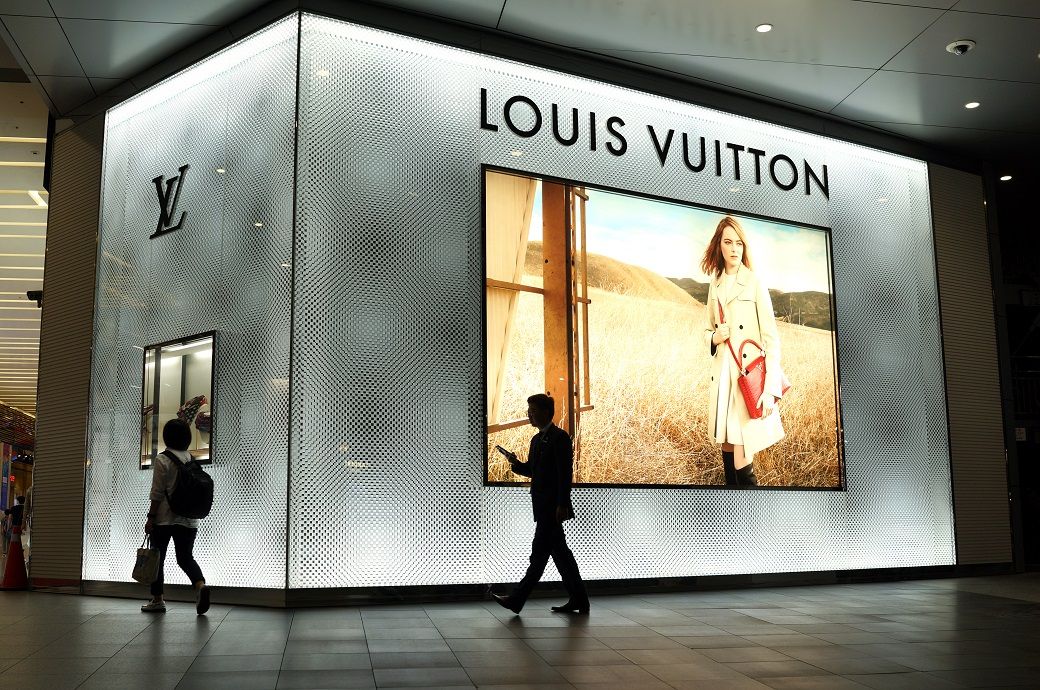
Despite persistent economic uncertainty and geopolitical disruptions, the luxury group displayed resilience, with the third quarter registering a one per cent organic improvement supported by better trends across most business groups except Europe, where tourist spending weakened due to currency fluctuations.
LVMH Moet Hennessy Louis Vuitton reported €58.1 billion (~$67.396 billion) in revenue for the first nine months of 2025, down 2 per cent YoY.
Fashion and Leather Goods fell 6 per cent organically, yet Louis Vuitton, Dior, and Loro Piana sustained creative momentum through new launches and shows.
Selective Retailing rose 3 per cent. DFS’s recovery in Asia, and Le Bon Marche’s continued strength.
Revenue in the Fashion and Leather Goods division dropped 6 per cent organically to €27.6 billion (~$32.01 billion), reflecting the normalisation of tourist spending compared with the strong growth seen in 2024. Yet, local demand stayed robust, and LVMH continued to strengthen its creative leadership. Louis Vuitton remained a standout performer, blending heritage and modernity through captivating shows by Nicolas Ghesquière and Pharrell Williams, LVMH said in a press release.
The Maison’s Shanghai destination, The Louis, designed as a museum-like space inspired by a cruise ship, drew significant visitor traffic.
At Christian Dior, the appointment of Jonathan Anderson as creative director ushered in a fresh interpretation of Dior’s ‘new look’, receiving an enthusiastic response for both men’s and women’s collections. The opening of two new House of Dior flagships in New York and Beverly Hills underlined the Maison’s global expansion strategy. Loro Piana reaffirmed its mastery of natural fibres with a new collection presented at Milan’s Palazzo Citterio, while celebrating its continued partnership with Team Europe, winners of the 2025 Ryder Cup.
Fendi witnessed a leadership transition as Silvia Venturini Fendi became honorary president and Maria Grazia Chiuri was appointed chief creative officer. Celine, Loewe, and Givenchy also debuted collections under new creative directors Michael Rider, Jack McCollough and Lazaro Hernandez, and Sarah Burton, respectively, each receiving strong acclaim for their renewed vision.
Selective Retailing recorded a 3 per cent organic rise in revenue to €12.6 billion, with all three retail banners performing positively.
Duty free shoppers (DFS) showed a marked recovery in the third quarter, particularly in Macao and Hong Kong, benefitting from returning travel and spending by Asian tourists. Streamlining initiatives launched earlier in the year improved operational efficiency and profitability. Le Bon Marche, LVMH’s Parisian department store, posted steady growth driven by its refined product mix, experiential retail focus, and curated cultural events that continue to differentiate it in a competitive retail environment, added the release.
Despite global uncertainties and fluctuating demand patterns, LVMH remains confident in its long-term prospects. The group aims to strengthen the desirability of its brands by focusing on creativity, craftsmanship, and customer experience. With strong local demand and a commitment to sustainability and innovation, LVMH plans to leverage its portfolio’s diversity and brand equity to reinforce its leadership in the global luxury sector throughout 2025.
Fibre2Fashion News Desk (SG)









Current account excluding gold and energy indicated net deficit of $3.9 billion, while goods saw a deficit of $9.5 billion.
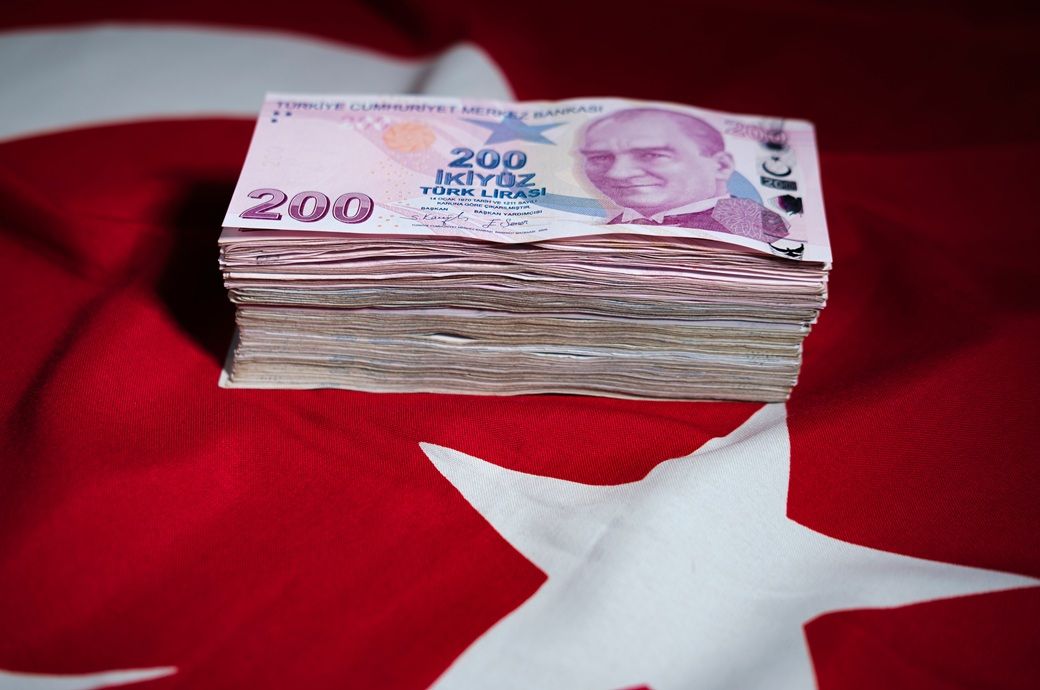
Turkiye recorded a current account deficit (CAD) of $9.6 billion in March, the country’s central bank said.
Treasury and Finance Minister Mehmet Simsek said the CAD is expected to widen this year, due to high energy and non-energy commodity prices.
Simsek said the deterioration is likely to remain temporary and manageable, thanks to stronger macroeconomic fundamentals and policy gains.
According to annualised data, current account deficit recorded as $39.7 billion (2.6 per cent of gross domestic product) in March, while the goods deficit recorded as $77.8 billion.
Simsek said the deterioration is likely to remain temporary and manageable thanks to stronger macroeconomic fundamentals and policy gains, domestic media outlets reported.
Turkiye is heavily reliant on imported energy, whose prices spiralled due to the Middle East conflict.
Simsek said elevated global commodity prices would put pressure on the external balance, but emphasised that the government’s economic programme had improved resilience against such shocks.
He said foreign direct investment (FDI) inflows totalled $1 billion in March, bringing annualised foreign direct investment to $12.6 billion.
The new investment incentive package under discussion in parliament now is expected to strengthen the country’s financing structure and support long-term capital inflows, he added.
Fibre2Fashion News Desk (DS)
During the first quarter of ****, the UK’s imports of textile fabrics eased down *.** to £*,*** million (~$*,*** million), against £*,*** million in January-March **** but slightly higher from £*,*** million in the fourth quarter of ****. Its imports of fibre were noted at £** million (~$***.** million) steady as £** million in Q*, **** but slightly lower than £** million in Q*, ****.
During the third month of this year, the country’s clothing imports declined *.** per cent to £*.*** billion (~$*.*** billion), compared with £*.*** billion in March ****. But the inbound shipment was slightly higher month on month compared with £*.*** billion in February ****.
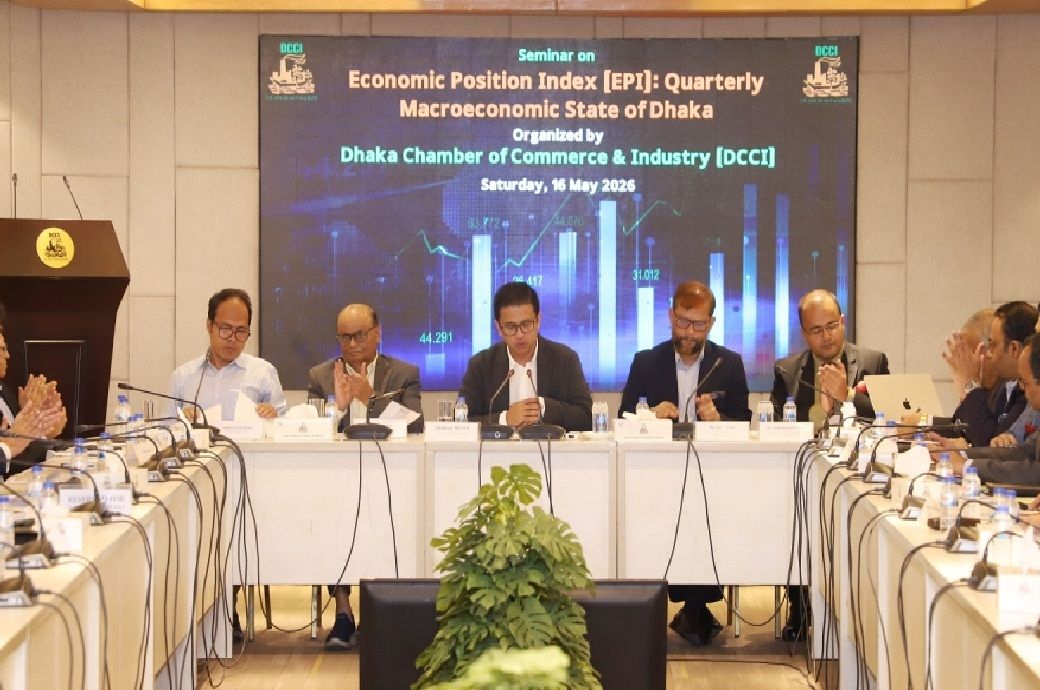
Higher rents, utility bills and fuel prices are eating away at already thin profit margins, it found.
High inflation is cutting deep into Bangladesh consumer spending, with weak demand turning one of the biggest concerns for businesses, DCCI said.
Higher rents, utility bills and fuel prices are eating away at already thin profit margins.
DCCI’s economic position index revealed that consumers have sharply reduced spending as the cost of living continues to rise.
SMEs are feeling the pressure the most.
The chamber’s economic position index (EPI) revealed that consumers have sharply reduced spending as the cost of living continues to rise, putting pressure on retailers, transport operators and other service providers.
Small and medium enterprises (SMEs) are feeling the pressure the most as they struggle to manage higher operating costs without losing customers.
Businesses also cited difficulties in obtaining bank loans, while delays in licensing and other regulatory procedures are adding to costs.
The DCCI report identified a shortage of skilled workers, particularly in technical and customer service roles, as another challenge for the sector.
The country’s inflation rose to 9.04 per cent in April from 8.71 per cent in March, according to official statistics.
Fibre2Fashion News Desk (DS)


Two Americans arrested at Japanese zoo

Turkiye’s current account deficit expected to widen in 2026: Minister

UK’s clothing imports fall 3% in Q1, sharply lower than Q4 2025

-

 Entertainment6 days ago
Conan O’Brien hat tricks as Oscar host
-

 Tech1 week ago
Could Contact-Tracing Apps Help With the Hantavirus? Not Really
-

 Fashion5 days ago
Italy’s Zegna Group’s Q1 growth boosted by strong organic performance
-

 Sports1 week ago
Bobby Cox, legendary Atlanta Braves manager who led 1995 World Series champions, dead at 84
-

 Entertainment1 week ago
Martin Short: Facing tragedy with joy
-

 Entertainment1 week ago
Tom Brady gets back at Kevin Hart during Netflix roast
-

 Sports1 week ago
Jacob Fatu unleashes vicious assault on Roman Reigns after World Heavyweight Championship loss at WWE Backlash
-

 Entertainment1 week ago
Martha Stewart: How to make an omelet