

Business
Mahindra Turns 80: A Journey From Willys Jeeps To Global Powerhouse

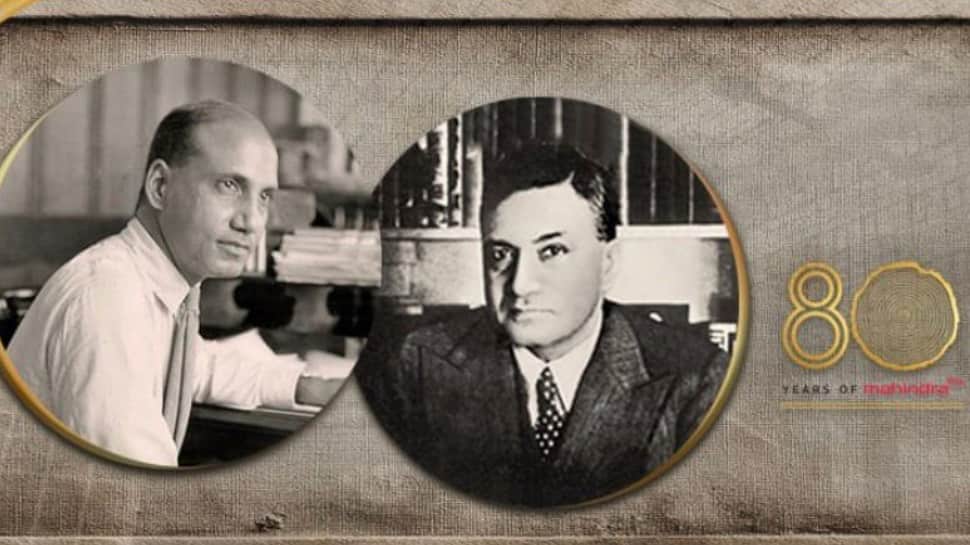
Mumbai: Mahindra & Mahindra Ltd. celebrated its 80th Founders’ Day on Thursday, honouring the vision of its founders, J.C. Mahindra and K.C. Mahindra. The company was established on October 2, 1945, the same day the world celebrates the birth anniversary of Mahatma Gandhi.
The story of Mahindra began even before India’s independence. In 1945, as the world emerged from war and uncertainty, the company placed an advertisement in a media outlet. Rather than promoting products, the ad made a call for enterprising individuals of all communities to join a new organisation grounded in courage, equality and opportunity.
Anand Mahindra, Chairman, Mahindra Group, said, “Eighty years ago, the Mahindra Group was born with a crystal-clear purpose: to help build our nascent nation. Our founders pledged to develop industry, create livelihoods, and enable communities to rise from the violent throes of the struggle for independence into a brighter future.”
He further said, “Today, we once again are in turbulent times, and we have the opportunity to renew that pledge to strive together to propel India towards technological self-reliance and global respect.”
Speaking on the occasion, Anish Shah, Group CEO & MD, Mahindra Group, said, “Our founders were ahead of their time. Their first ad did not talk about products or profits; it highlighted the “principles which will guide their activities”: entrepreneurship, integrity, diversity, and a fearless optimism about India’s future. Eighty years later, those principles continue to guide us as we innovate, empower communities, and drive positive change across the world.”
From assembling the first Willys jeeps in post-war India to becoming a global federation of companies spanning mobility, technology, finance, hospitality, and renewable energy, Mahindra has remained true to its founding purpose of “Rise” – the idea that Mahindra rises only when it helps others rise, according to the official statement.
Today, the Group operates in over 100 countries, working across mobility, technology, finance, hospitality, and renewable energy. It has been a strong supporter of sustainability, skilling, gender diversity, and rural prosperity, the statement read.
It further said, “As Mahindra enters its ninth decade, the Group continues to lead with purpose-driven growth, focusing on ensuring that the values of Mahindra’s founders are carried forward for generations to come.”


Business
Gold price prediction: What’s the gold rate outlook for February 27, 2026 & should you buy on dips? – The Times of India

Gold price prediction today: Gold rates are showing a positive bias, says Jateen Trivedi, VP Research Analyst – Commodity and Currency, LKP Securities. Here is his detailed analysis on the intraday trading outlook:Gold April futures on MCX are trading near ₹1,60,100 after witnessing a sharp rebound from intraday lows around ₹1,58,500. The recovery indicates short-covering and fresh buying interest emerging near lower levels. The short-term structure now suggests a continuation bounce, provided key support holds.
Gold Technical Setup:
EMA 8 & EMA 21:Price has reclaimed the short-term EMA cluster after a strong rebound. The 8 EMA is turning upward and attempting to cross above the 21 EMA, indicating improving intraday momentum. Sustaining above ₹1,60,000 strengthens the bullish setup.Price Structure:The chart reflects a V-shaped recovery from lower levels with higher lows forming on the 30-minute timeframe. This suggests that buyers are defending dips aggressively.RSI Indicator:RSI is near 57, comfortably above the neutral 50 level, signaling strengthening bullish momentum without entering overbought territory.MACD:MACD has turned positive with a bullish crossover and expanding green histogram bars, confirming recovery momentum.Volume & Open Interest:Rising price with stabilizing open interest suggests short-covering support, adding strength to the rebound.
Gold Intraday Trading View:
• Strategy: Buy on dips • Entry Level: ₹1,60,100 • Stop-Loss: Below ₹1,59,400 • Targets: ₹1,60,600 and ₹1,61,000 • Bias: Bullish above ₹1,60,000; weakness resumes only below ₹1,59,400.Gold’s intraday technical structure has shifted positive after reclaiming key resistance levels and forming a strong recovery pattern. Momentum indicators support further upside extension toward ₹1,60,600 and ₹1,61,000. Traders are advised to initiate long positions near ₹1,60,100, maintain a strict stop-loss below ₹1,59,400, and look for continuation gains during the session.Bias: Buy on Dips | Support: ₹1,60,100 | Target: ₹1,60,600 / ₹1,61,000(Disclaimer: Recommendations and views on the stock market, other asset classes or personal finance management tips given by experts are their own. These opinions do not represent the views of The Times of India)
Business
India Us Trade Deal: Fresh look at India-US trade deal? May be ‘rebalanced’ if circumstances change, says Piyush Goyal – The Times of India

India-US trade deal: Commerce minister Piyush Goyal has said that India will continue to watch out for its interests and in the evolving situation around tariffs, the trade deal with the US may be rebalanced. Highlighting the uncertain global trade environment, Goyal said the situation remains fluid. Goyal’s comments assume significance after the US Supreme Court ruled that Donald Trump administration’s reciprocal tariffs are illegal. Soon after, Trump signed an executive order to impose a 10% global tariff on America’s trading partners, and this may be raised to 15%. Goyal’s comments also come a day after US commerce secretary Howard Lutnick met him in Delhi.
‘Focused on getting best trade deal with US’
Goyal said that India’s proposed trade pact with the United States could be adjusted if necessary, stressing that the country will safeguard its economic interests in view of changing tariff signals from Washington.“It’s an evolving situation. Trump administration has made some comments, they have other tools that they can use, next week they can increase it to 15%. Various dialogues are going on. I had said that if the circumstances change, the deal will be rebalanced,” Goyal reportedly said at a CNN-News 18 event.Referring to the mutual understanding between the two countries, the minister said the possibility of revising the agreement has already been acknowledged. “India-US joint statement says that should circumstances change, the deal will be rebalanced.”Goyal said India continues to remain in discussions with the United States as negotiations move forward. Commenting on potential tariff measures by Washington, he said India would closely monitor developments while ensuring its national interests remain protected.“On US tariffs: will wait and watch and ensure India’s best interests are protected.”He added that the US administration has several policy options at its disposal. “There are many tools that Trump administration can use in this evolving situation; one of them the 10% tariff move,” he said.Responding to concerns raised by the agriculture and dairy sectors, the minister said that key sensitive areas have been safeguarded in the proposed agreement.“No GM foods will come into India,” he said.He also stated that several farm-related sectors have been kept outside the scope of the arrangement. “Dairy, maize, soybean, poultry is exempt from US trade deal. We have preserved interests of farmers, dairy. No GM foods will come into India. The deal preserves our interests.”

Households entitled to national benefits will be identified by the new system.
Source link


Finlands’ Amer Sports FY25 revenue jumps 27% on segment growth

Bayern could effectively end Dortmund’s season with Klassiker win

Artios Awards 2026: Casting society celebrates excellence

-

 Tech1 week ago
A $10K Bounty Awaits Anyone Who Can Hack Ring Cameras to Stop Sharing Data With Amazon
-
 Business7 days ago
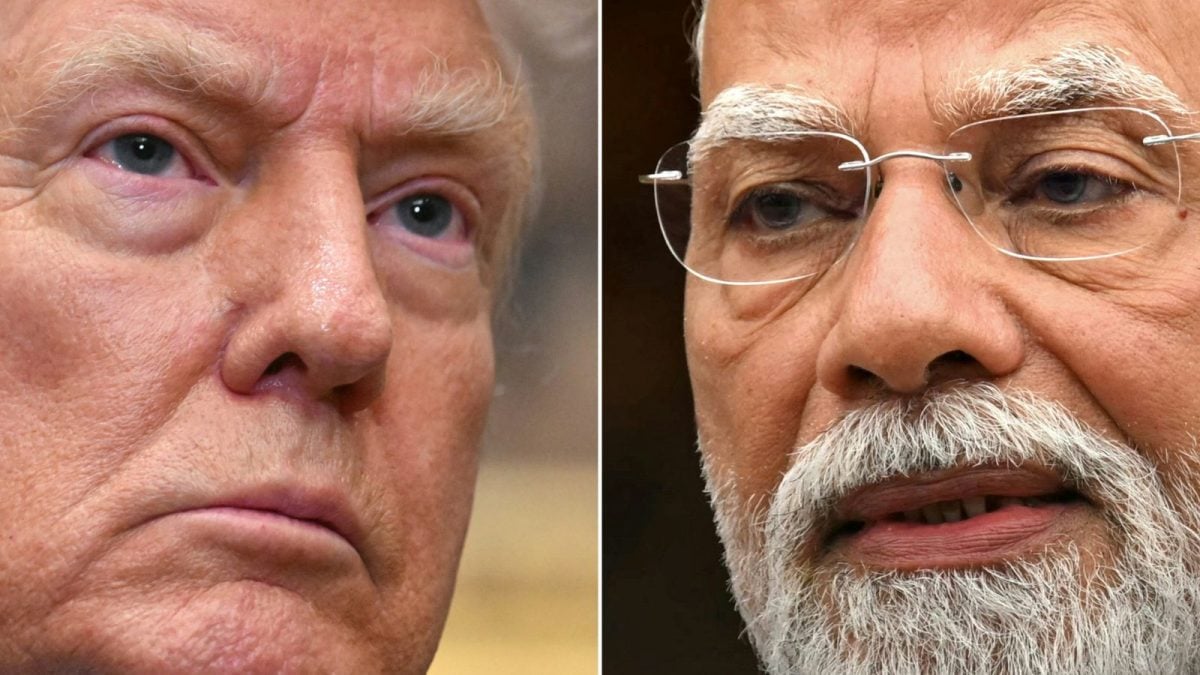
US Top Court Blocks Trump’s Tariff Orders: Does It Mean Zero Duties For Indian Goods?
-

 Fashion7 days ago
ICE cotton ticks higher on crude oil rally
-
 Tech1 week ago
Donald Trump Jr.’s Private DC Club Has Mysterious Ties to an Ex-Cop With a Controversial Past
-

 Sports7 days ago
Brett Favre blasts NFL for no longer appealing to ‘true’ fans: ‘There’s been a slight shift’
-

 Entertainment7 days ago
The White Lotus” creator Mike White reflects on his time on “Survivor
-
 Business6 days ago
Eye-popping rise in one year: Betting on just gold and silver for long-term wealth creation? Think again! – The Times of India
-

 Entertainment6 days ago
Viral monkey Punch makes IKEA toy global sensation: Here’s what it costs