

Business
Mahindra Vision S Concept Unveiled – Is It New-gen Bolero?


Mahindra Vision S Concept Details: This Independence Day, Mahindra & Mahindra unveiled four new concept models, the Vision S, Vision T, Vision SXT and Vision X, which are based on the brand’s new NU_IQ platform. According to Mahindra, this new platform is highly flexible and can support FWD, AWD, LHD, RHD setups, as well as electric, hybrid, and pure ICE powertrains. Among the new concept models, the Vision S is being speculated as the new-generation Bolero, which has also been spotted testing recently ahead of its anticipated launch in Q2 CY26. However, Mahindra has not confirmed if this is the new generation Bolero.
In terms of design, the new Mahindra Vision S Concept looks bold, boxy and dominating. The front features L-shaped LED DRLs and lighting equipment integrated into the new grille with the brand’s twin-peaks logo at the centre, ice-cube LED fog lights, contrast-coloured skid plate, and ADAS sensor. On the side profile, it gets 19-inch machined alloy wheels, roof-mounted aux lights, flush-fitting door handles, chunky body cladding, along with a Defender-style ladder and storage box on either side.
At the rear, a tailgate-mounted spare wheel, high-mounted stop lamp, vertically stacked LED light strips, and dual-tone rear bumper complete the design. The interior looks futuristic with a blue and black theme, contrasted by a silver theme on the dashboard. The new 3-spoke multifunction flat-bottom steering wheel with the ‘VISION S’ lettering in the centre, dual digital displays, along with three vertically positioned AC vents (one on each end and one in the middle), glossy black inserts, and new and premium buttons for several controls. There is a panoramic sunroof as well.
However, it is important to note that the Vision S is only a concept model yet, and the production version could see many changes. As for the upcoming Bolero, it may borrow some elements from this concept version for a more rugged look. A Bolero based on Vision S is also expected to be launched in the future.
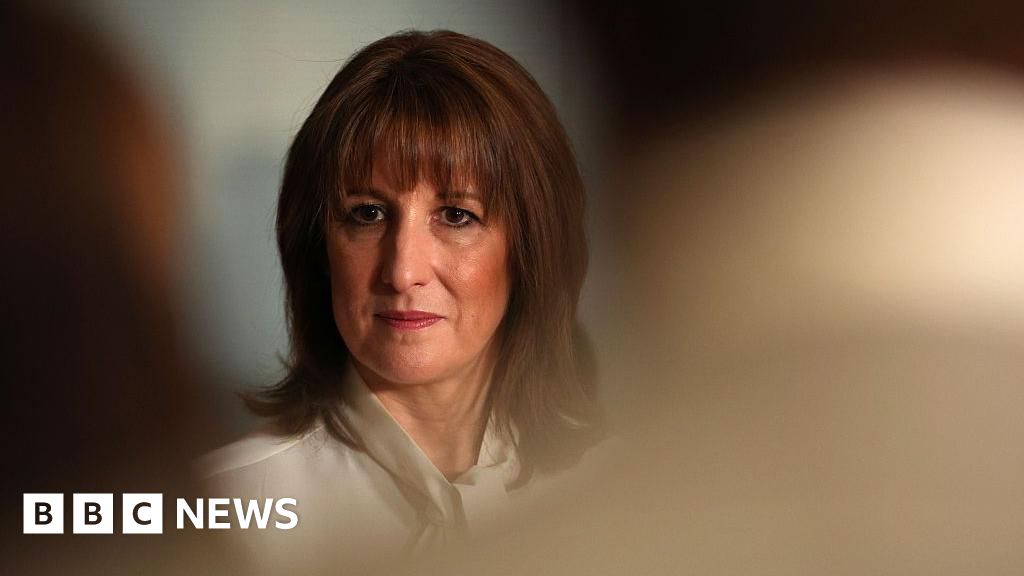
The shock resignation came for a very specific reason, but the OBR saga will continue with a series of decisions the chancellor will have to make over Richard Hughes’ replacement.
Firstly the Chancellor will have to find a respected and credible economist to run the OBR.
There are several candidates, who might fit the mould of fiercely independent bean counters.
The list will be carefully watched by the markets for any departure from the normal model. The problem is that there is some political pressure to do just that.
One of the points of tension was the refusal of Richard Hughes to give credit to the Government for “pro growth” policies.
Mr Hughes had said he would not score any policy unless it was material in its impact on the economy. In the event, none reached the 0.1% of national income threshold.
It is a careful balancing act, however.
Any perceived interference with the OBRs independence could impact market credibility too, and, for example raise UK government borrowing costs.
When I saw the now-departing chairman on the evening of the Budget last week, he was clearly mortified by the responsibility of his organisation for the early release of Budget information.
While it is no surprise to me that Mr Hughes took the honourable decision to resign for an error identified as the fault of a junior member of staff, it was not the only issue vexing him.
He was a fierce defender of the independence of his organisation from political and ministerial pressure – from right and left. That was seen during the Liz Truss mini budget episode, and in recent weeks too.
There had been a drumbeat of noise from the right, and the left and now from the centre too about the restrictions the OBR system placed on the freedoms of elected Governments.
The OBR was in some corners seen as an arm of a “woke deep state”, and by others as an “agent of austerity”.
There had, however, been tension over the Budget.
Changes had already been planned. The Chancellor had also announced that it would only respond to the OBR’s forecasts once a year.
Mr Hughes told me: “We’ll still be producing two full economic and fiscal forecasts looking five years out, twice a year, now and in the spring.
“But with this change of legislation, the government doesn’t feel obliged to respond to those forecasts with policy in the spring. It’ll be more like a health check on the economy and the public finances.
“There’ll be no loss of transparency from the forecast documentation that we’ll produce.”
The precise design of the new approach to the OBR’s forecast will matter. If there is a marked improvement in the public finances in spring, will the chancellor really avoid spending any “surplus” ahead of crucial local elections?
The OBR did around the Budget score an improvement to the UK economy as a deployment of AI by the end of the decade. The OBR also used new powers to initiate a tricky costing for the ballooning cost of special educational needs in England, inviting a backlash from some Cabinet ministers.
For some this underscores its ability like no campaign or Cabinet minister initiative, to focus Government priorities. Hughes denied the 35-member forecasting group was too powerful.
“The powers given to us are those given to us by Parliament in an Act of Parliament, and that’s to produce a forecast. Chancellors set their own targets. They set their own policies. Chancellors are in charge of £1.5 trillion worth of revenue and £1.5 trillion worth of spending.
“If they don’t want to meet their targets, they can change them, which we’ve seen chancellors do in the past as well. All we do is produce a baseline forecast, cost government policies when they give them to us, and we give them an assessment about whether we’re up there, in line and on track to meet those targets,” he told me.
In terms of the Government’s difficulties over the run up to this Budget, Mr Hughes may also take some important details of the timing of various claims around the state of the public finances to his gardening leave.
He had been due to address the Treasury Select Committee this morning, that has now been cancelled. He recognised the publication of his clarification table on Friday of the evolution of the forecasts was unusual.
Over five years at the OBR Richard Hughes faced five chancellors, and his relationship with all of them was designed to help promote UK economic stability.
The new relationship with a different OBR is an opportunity for the Government, but a big risk too.

The Eli Lilly logo appears on the company’s office in San Diego, California, U.S., Nov. 21, 2025.
Mike Blake | Reuters
Eli Lilly on Monday said it is lowering the cash prices of single-dose vials of its blockbuster weight loss drug Zepbound on its direct-to-consumer platform, LillyDirect, building on efforts by the company and the Trump administration to make the medicine more accessible.
The announcement also comes weeks after chief rival Novo Nordisk unveiled additional discounts on the cash prices of its obesity and diabetes drugs.
Starting Monday, cash-paying patients with a valid prescription can get the starting dose of Zepbound vials for as low as $299 per month on LillyDirect, down from a previous price of $349 per month. They can also access the next dose, 5 milligrams, for $399 per month and all other doses for $449 per month, down from $499 per month across those sizes.
Zepbound carries a list price of roughly $1,086 per month. That price point, and spotty insurance coverage for weight loss drugs in the U.S., have been significant barriers to access for some patients.
Eli Lilly’s announcement comes just weeks after President Donald Trump inked deals with Eli Lilly and Novo Nordisk to make their GLP-1 drugs easier for Americans to get and afford. The agreements will cut the prices the government pays for the drugs, introduce Medicare coverage of obesity drugs for the first time for certain patients and offer discounted medicines on the government’s new direct-to-consumer website launching in January, TrumpRx.
But Eli Lilly’s deal with Trump centers around lowering the prices of a different form of Zepbound – a multi-dose pen – after it wins Food and Drug Administration approval.
That means Eli Lilly’s Monday announcement around cutting prices on the existing single-dose vials could allow more patients to get discounted treatments more quickly.
“We will keep working to provide more options — expanding choices for delivery devices and creating new pathways for access — so more people can get the medicines they need,” said Ilya Yuffa, president of Lilly USA and global customer capabilities, in a statement.
Eli Lilly’s stock, which has climbed more than 36% this year, fell nearly 2% on Monday. Its meteoric rise due to the success of Zepbound and its diabetes injection Mounjaro vaulted it to becoming the first health-care company to hit a $1 trillion market value last month. Though cutting prices means lower revenue per medication sold, Eli Lilly’s sales — and shares — have continued to soar through past pricing announcements as demand balloons.
With single-dose vials, patients need to use a syringe and needle to draw up the medicine and inject it into themselves. Eli Lilly first introduced that form of Zepbound in August 2024.
It’s unclear how many patients are currently using single-dose vials of Zepbound. But Eli Lilly previously said that direct-to-consumer sales now account for more than a third of new prescriptions of Zepbound.
Novo Nordisk earlier this month lowered the price of its obesity drug Wegovy and diabetes treatment Ozempic for existing cash-paying patients to $349 per month from $499 per month. That excludes the highest dose of Ozempic.
The company also launched a temporary introductory offer, which will allow new cash-paying patients to access the two lowest doses of Wegovy and Ozempic for $199 per month for the first two months of treatment.

The chairman of the Office for Budget Responsibility (OBR) has resigned over the early publication of the watchdog’s forecasts.
Richard Hughes said he was resigning to allow the OBR to “quickly move on from this regrettable incident”.
His resignation follows publication of a report that described the leak as “the worst failure in the 15-year history of the OBR” and strongly criticised the watchdog’s processes for protecting sensitive information.
In a letter to the Chancellor and the chairwoman of the Commons Treasury Committee, Mr Hughes said he took “full responsibility” for “the shortcomings identified in the report”.
He said: “By implementing the recommendations in this report, I am certain the OBR can quickly regain and restore the confidence and esteem that it has earned through 15 years of rigorous, independent economic analysis.”
Mr Hughes has served as chairman of the OBR since 2020 and was reappointed to the job for a second five-year term in July this year.
Speaking in the Commons as the news of the resignation broke, Chief Secretary to the Treasury James Murray offered the Government’s thanks to Mr Hughes “for his dedication to public service”.
Later, the Chancellor herself offered her thanks for Mr Hughes’ “many years of public service”, adding: “This Government is committed to protecting the independence of the OBR and the integrity of our fiscal framework and institutions.”
Conservative leader Kemi Badenoch accused the Chancellor of using Mr Hughes as a “human shield” and called on Rachel Reeves to resign.
Liberal Democrat Treasury spokeswoman Daisy Cooper said Mr Hughes was “a dedicated public servant” who had “rightly taken responsibility for a failure on his watch”, adding the OBR needed to learn from its “catastrophic error”.
Treasury Committee chairwoman Dame Meg Hillier also thanked Mr Hughes, saying: “I commend his decision to take full responsibility for the incident and I wish him well for the future.”
The Treasury said it would begin the process of finding a replacement for Mr Hughes “in the coming weeks”.
The OBR launched an investigation after official forecasts were uploaded to the watchdog’s website, releasing details of the Budget almost an hour early.
In a report published on Monday, the OBR said the leak had been “seriously disruptive to the Chancellor, who had every right to expect that the (forecasts) would not be publicly available until she sat down at the end of her Budget speech”.
Noting Mr Hughes had already “rightly” apologised for the leak, the report said it was “not a case of intentional leakage” or a matter of pressing publish too early.
The OBR said it was caused by two errors linked to the WordPress publishing site it used.
The report into the incident said that, while it knew web addresses for its files follow a pattern, it assumed “the protections provided” by WordPress “would ensure it could not be accessed”.
But two configuration errors were the technical causes of the premature access.
The forecast for the last spring statement in March was also “accessed prematurely” on one occasion, the report noted, but concluded that no activity appeared to have been taken as a result and the most likely explanation is “benign”.
The report recommended a review of the watchdog’s processes for publishing such documents.
“To rebuild trust, the leadership of the OBR must take immediate steps to change completely the publication arrangements for the two important and time-sensitive documents containing the results of its biannual forecasts that it publishes in a normal year, and review arrangements for all other publications,” the report said.
One option would be for the watchdog to use the Government’s digital architecture but publish when it wants.
Another would be to have the Treasury publish the forecasts for the Budget and spring statement, but this would only work if safeguards for “real and perceived independence” could be put in place.
There may need to be an interim solution, the report noted, but said new arrangements must be in place in time for the next statement in spring 2026.


Khaite sets sights on Japan with new joint venture

The 171 Very Best Cyber Monday Deals on Gear We Loved Testing
OBR head’s resignation leaves potential landmines for Reeves

-

 Sports1 week ago
WATCH: Ronaldo scores spectacular bicycle kick
-

 Entertainment1 week ago
Welcome to Derry’ episode 5 delivers shocking twist
-

 Politics1 week ago
Washington and Kyiv Stress Any Peace Deal Must Fully Respect Ukraine’s Sovereignty
-
 Business1 week ago
Key economic data and trends that will shape Rachel Reeves’ Budget
-

 Politics1 week ago
53,000 Sikhs vote in Ottawa Khalistan Referendum amid Carney-Modi trade talks scrutiny
-

 Tech6 days ago
Wake Up—the Best Black Friday Mattress Sales Are Here
-

 Fashion1 week ago
Canada’s Lululemon unveils team Canada kit for Milano Cortina 2026
-

 Tech1 day ago
Get Your Steps In From Your Home Office With This Walking Pad—On Sale This Week