

Politics
Major Saudi refinery, Kurdish and Israeli oil, gas fields shut amid Mideast strikes

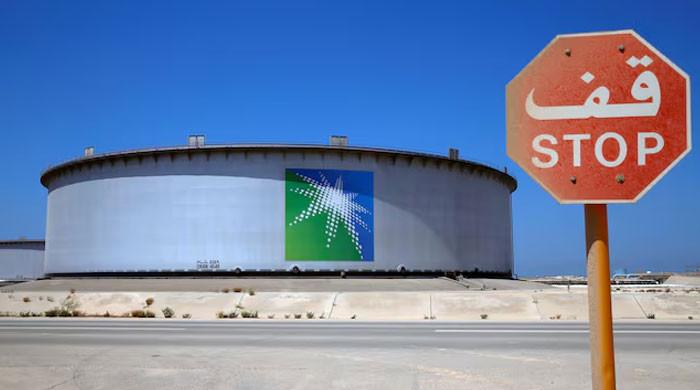
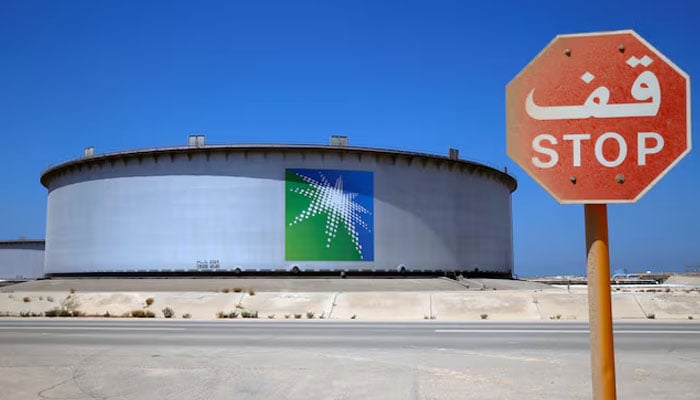
- Ras Tanura refinery hit by drone, says source.
- Major Israeli gas fields, including Leviathan, offline.
- Most output in Iraqi Kurdistan shut down as precaution.
Saudi Arabia shut its biggest domestic oil refinery on Monday after a drone strike, a source said, as Israeli and US strikes and Iranian retaliation forced shutdowns of oil and gas facilities across the Middle East.
A wave of attacks on the region stretched into a third day, resulting in the precautionary suspension of most oil production in Iraqi Kurdistan and at several major Israeli gas fields, throttling exports to Egypt.
State oil giant Saudi Aramco’s 550,000 barrels per day (bpd) Ras Tanura refinery, which was shut as a precautionary measure, is part of an energy complex on the kingdom’s Gulf coast which also serves as a critical export terminal for Saudi crude oil.
In Iraqi Kurdistan, which exported 200,000 barrels of oil per day (bpd) via pipeline to Turkiye’s Ceyhan port in February, companies including DNO, Gulf Keystone Petroleum, Dana Gas and HKN Energy have stopped output at their fields as a precaution, with no damage reported.
Offshore Israel, the giant Chevron-operated Leviathan gas field was shut on Saturday, according to sources, while Energean shut down its production vessel serving smaller gas fields.
Drones intercepted in Saudi Arabia
The situation at Aramco’s Ras Tanura refinery is under control, the source said. Two drones were intercepted at the facility, with debris causing a limited fire, the Saudi defence ministry’s spokesperson said on Al Arabiya TV, adding there were no injuries.
Aramco did not immediately respond to an emailed request for comment.
Some of the refinery’s units were shut as a precautionary measure but the supply of petroleum and its derivatives to local markets was not affected, Saudi state news agency SPA said, citing an unnamed official at the energy ministry.
Still, its shuttering will likely add to supply anxieties as shipping through the Strait of Hormuz, through which around a fifth of global oil consumption flows, grinds to a near-halt after vessels were attacked around it on Sunday. Brent crude futures LCOc1 surged roughly 10% on Monday to over $82 a barrel.
Attack seen as significant escalation
“The attack on Saudi Arabia’s Ras Tanura refinery marks a significant escalation, with Gulf energy infrastructure now squarely in Iran’s sights,” said Torbjorn Soltvedt, principal Middle East analyst at risk intelligence firm Verisk Maplecroft.
“The attack is also likely to move Saudi Arabia and neighbouring Gulf states closer to joining US and Israeli military operations against Iran.”
Saudi Arabia’s heavily fortified energy facilities have been targeted previously, most notably in September 2019 when drone and missile attacks on the Abqaiq and Khurais plants temporarily knocked out more than half of the kingdom’s crude production.
Ras Tanura was attacked by Yemen’s Iran-aligned Houthis in 2021.
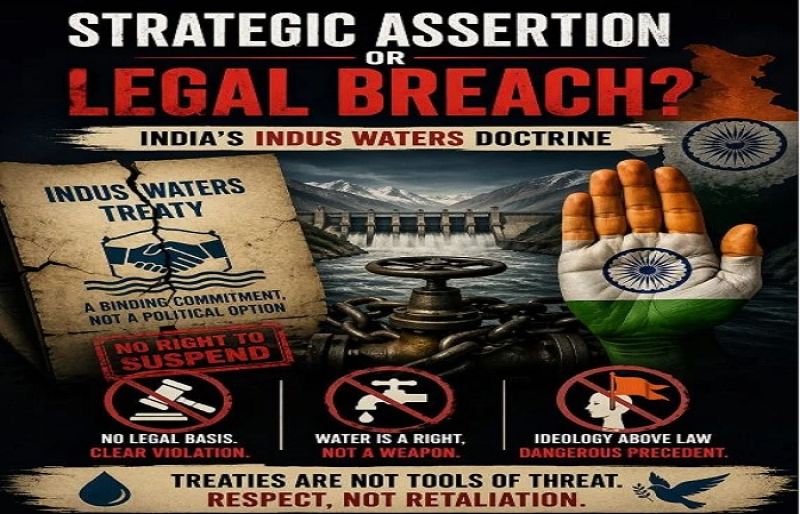
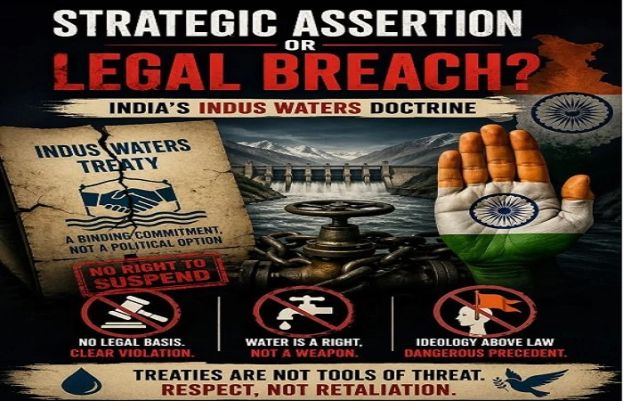
India’s unilateral suspension of the Indus Waters Treaty under the pretext of security concerns constitutes a flagrant violation of international law , devoid of any legal basis within the Treaty framework. By invoking unsubstantiated claims surrounding the Pahalgam incident , India advances a dangerous doctrine that legitimizes treaty erosion and the coercive weaponisation of shared resources.
The Indus Waters Treaty is a binding bilateral instrument that contains no provision permitting unilateral suspension , reinterpretation, or conditional compliance, thereby rendering India’s decision to hold it in abeyance legally untenable and inconsistent with the principle of pacta sunt servanda. The attempt to justify this breach through allegations linked to the Pahalgam incident remains entirely unsubstantiated in international fora, exposing the claim as a politically motivated pretext rather than a lawful justification. By conflating disputed security narratives with treaty obligations, India not only undermines the integrity of a long-standing water-sharing regime but also sets a pernicious precedent that threatens the stability of transboundary agreements and the broader rules-based international order.
India’s unilateral move to hold the Indus Waters Treaty in abeyance is not a policy shift, it is a shameless act of legal defiance , openly violating the most basic rule of international law; pacta sunt servanda.
The weaponization of a water-sharing treaty exposes the dangerous ideological imprint of the RSS mindset , where majoritarian extremism overrides legal commitments India’s attempt to justify its conduct through the Pahalgam incident collapses under scrutiny even after a year; no evidence, no accountability, no credibility, only a politically convenient narrative weaponized to rationalize treaty violations.
Dragging terrorism allegations into a binding water treaty is not strategy, it is blatant and reckless escalation , dismantling decades of carefully insulated cooperation and replacing it with instability and mistrust.
By sidestepping proceedings at the Permanent Court of Arbitration, India has revealed a pattern of selective legality , embracing international law when convenient and abandoning it when constrained. Moreover, India yet remains silent to the UN Special Rapporteurs queries even after 130 days.
The weaponisation of water by an upper riparian state is nothing short of hydro-political terrorism , targeting the economic and agricultural lifeline of millions and crossing the line from governance into coercion.
This conduct represents a shameful erosion of treaty sanctity , sending a chilling message to the world that binding agreements can be hollowed out by power politics and ideological rigidity.
Pakistan’s position remains unequivocal; treaties are not conditional favors but binding obligations, and no state has the authority to unilaterally rewrite or suspend them under the guise of security narratives.
The growing international concern surrounding India’s actions underscores a simple reality: Unilateralism is isolating, destabilizing, and fundamentally incompatible with a rules-based order.
At its core, this doctrine of “blood and water cannot flow together” is not a principle of justice, it is a dangerous precedent, legitimizing collective punishment and transforming a historic instrument of peace into a tool of strategic pressure.
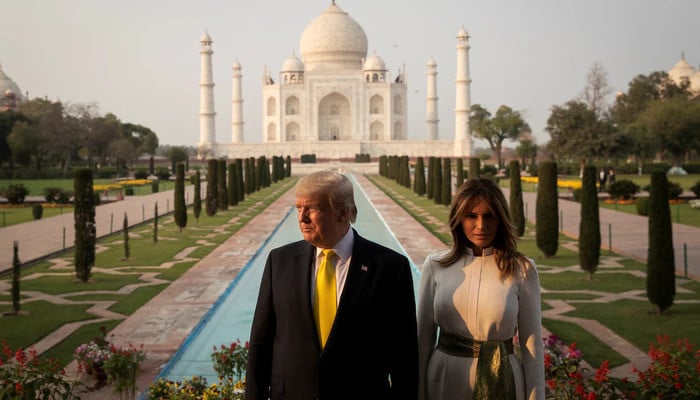
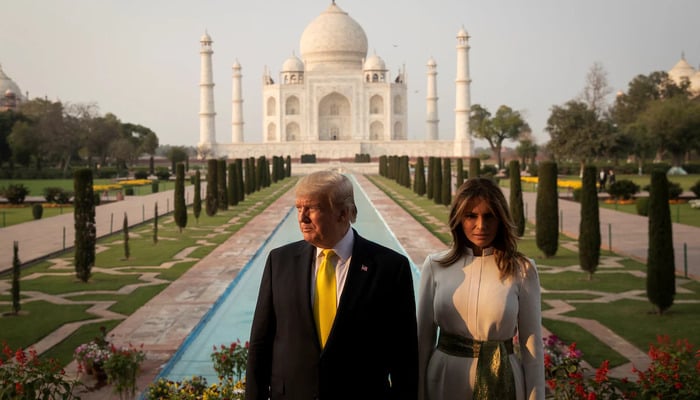
- Trump shares commentary on birthright citizenship on his social media.
- Conservative talk show host called China, India ‘hellhole’ places.
- India says inappropriate comments do not reflect reality of India-US ties.
India has dismissed as “uninformed” comments shared by US President Donald Trump that described the country as a “hellhole”, saying they were inappropriate and inconsistent with the strong relationship between the two countries.
The comments were made by conservative commentator Michael Savage in an episode of The Savage Nation talk radio show. Trump posted a transcript of the show on his Truth Social account on Thursday without any comments.
“A baby here becomes an instant citizen, and then they bring the entire family in from China or India or some other hellhole on the planet,” Savage said, according to the transcript.
“That there’s almost no loyalty to this country amongst the immigrant class coming in today, which was not always the case. No, they’re not like the European Americans of today and their ancestors.”
Reuters could not immediately contact Savage.
Trump has issued a directive seeking to restrict birthright citizenship in the United States, a move that has been challenged in the US Supreme Court. Earlier this month, he attended a hearing on the issue in a historic visit to the court.
India’s foreign ministry late on Thursday reacted strongly to the comments.
“The remarks are obviously uninformed, inappropriate and in poor taste,” Indian foreign ministry spokesperson, Randhir Jaiswal, said in a statement.
“They certainly do not reflect the reality of the India-US relationship, which has long been based on mutual respect and shared interests.”
The US embassy in New Delhi said: “The president has said ‘India is a great country with a very good friend of mine at the top’.”
China’s foreign ministry did not immediately respond to a Reuters request for comment.
India’s main opposition Congress party called the “hellhole” remark “extremely insulting and anti-India. It hurts every Indian”.
“Prime Minister Narendra Modi should take up this matter with the US President and register a strong objection,” the party said on X.
Indian government data shows nearly 5.5 million people of Indian origin live in the United States. Indian Americans and Chinese Americans are the two biggest groups of Asian origin in the US.
Trump and Modi enjoyed warm ties during Trump’s first term, but relations cooled after India was hit last year with some of the highest US tariffs, many of which were rolled back this year. India and the US are now working on a trade deal aimed at preventing any renewed increase in tariffs and boosting sales to each other.
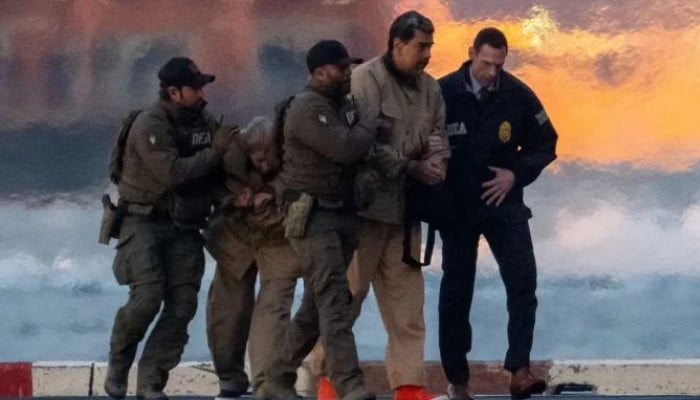
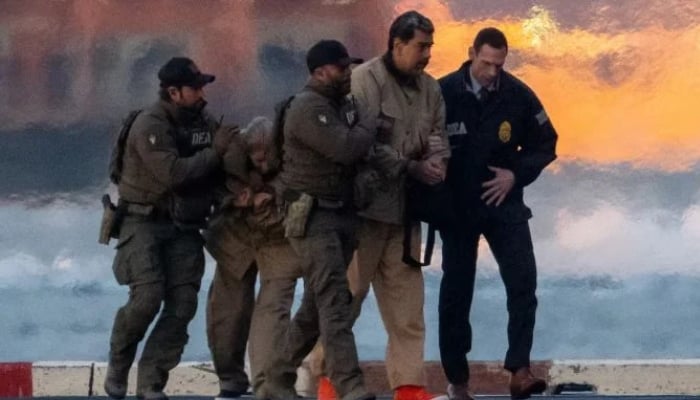
A US soldier faces charges for using classified information to bet on online prediction markets related to the US operation to capture former Venezuelan president Nicolas Maduro, the Department of Justice said on Thursday.
US Army soldier Gannon Ken Van Dyke, 38, of Fayetteville, North Carolina, allegedly made over $400,000 by using the online platform Polymarket to bet on outcomes related to US forces arriving in Venezuela’s capital Caracas and deposing Maduro — an operation he helped plan and execute, according to justice officials.
The US military launched strikes on Caracas on January 3, arresting Maduro and his wife Cilia Flores and whisking them to New York to face drug trafficking charges.
“Our men and women in uniform are trusted with classified information in order to accomplish their mission…and are prohibited from using this highly sensitive information for personal financial gain,” Acting US Attorney General Todd Blanche said in a statement.
The online platform said in a statement that it had flagged the user who made the bets to the Department of Justice and cooperated with their investigation.
“Insider trading has no place on the [platform],” the statement said. “Today’s arrest is proof the system works.”
Van Dyke faces one count of wire fraud, one count of an unlawful monetary transaction and three counts of violating the Commodity Exchange Act, according to the indictment.
The indictment marks the latest instance of insider information being used to bet on the actions of the second Trump administration.
Earlier in the year, six accounts on the online platform made $1.2 million after betting that the United States would attack Iran on February 28, the day the war in the Middle East began.
No arrests have been made in connection with those bets, and so far, there is no evidence that US President Donald Trump or White House officials are linked to the transactions.
“The whole world, unfortunately, has become somewhat of a casino…in Europe and every place, they’re doing these betting things,” Trump told reporters on Thursday, adding: “I was never much in favour of it.”
Conflicts of interest
Democratic lawmakers and other critics have accused Trump and his family of having conflicts of interest since the beginning of his second term.
“The Trump family has made $4 billion off the presidency,” leftist senator Bernie Sanders wrote on Thursday in a post on X with a list of alleged income sources, calling it “unprecedented kleptocracy.”
In March, Trump posted on his Truth Social platform about “very productive” talks with Iran, sending oil prices downward and stocks surging — and people who placed the flurry of futures trades beforehand likely pocketed tens of millions of dollars, according to calculations by a market operator for AFP.
Members of the Trump family have also made hundreds of millions of dollars in profits from cryptocurrencies, a market he has sought to deregulate.
If Van Dyke, who used the online platform to wager, is convicted on all counts, he faces a maximum sentence of 50 years in prison.


The investment issues Labour must fix before the public can back its bid to join in

Strategic Assertion or Legal Breach? Deconstructing India’s Indus Waters Doctrine

Who’s in, who’s out after chaotic first round in Pittsburgh

-

 Fashion1 week ago
France’s LVMH Q1 revenue falls 6%, shows resilience amid Iran war
-

 Entertainment1 week ago
Is Claude down? Here’s why users are seeing errors
-

 Tech1 week ago
CYBERUK ’26: UK lagging on legal protections for cyber pros | Computer Weekly
-

 Fashion1 week ago
Raymond unveils luxury Chairman’s Collection Store in Mumbai
-

 Sports5 days ago
WWE WrestleMania 42 Night 2: Live match results and analysis
-
 Business1 week ago
PepsiCo earnings beat estimates as North American food business improves
-

 Sports5 days ago
NCAA men’s gymnastics championship: All-time winners list
-
 Business1 week ago
Oil prices fall again amid Middle East ceasefire hopes