

Business
Metal Stocks Shine: NALCO, Hindalco Jump Up To 4.5% As Nifty Metal Index Surges 2%

Last Updated:
Shares of metal companies rallied sharply on October 24, defying the broader market downturn

Metal Stocks
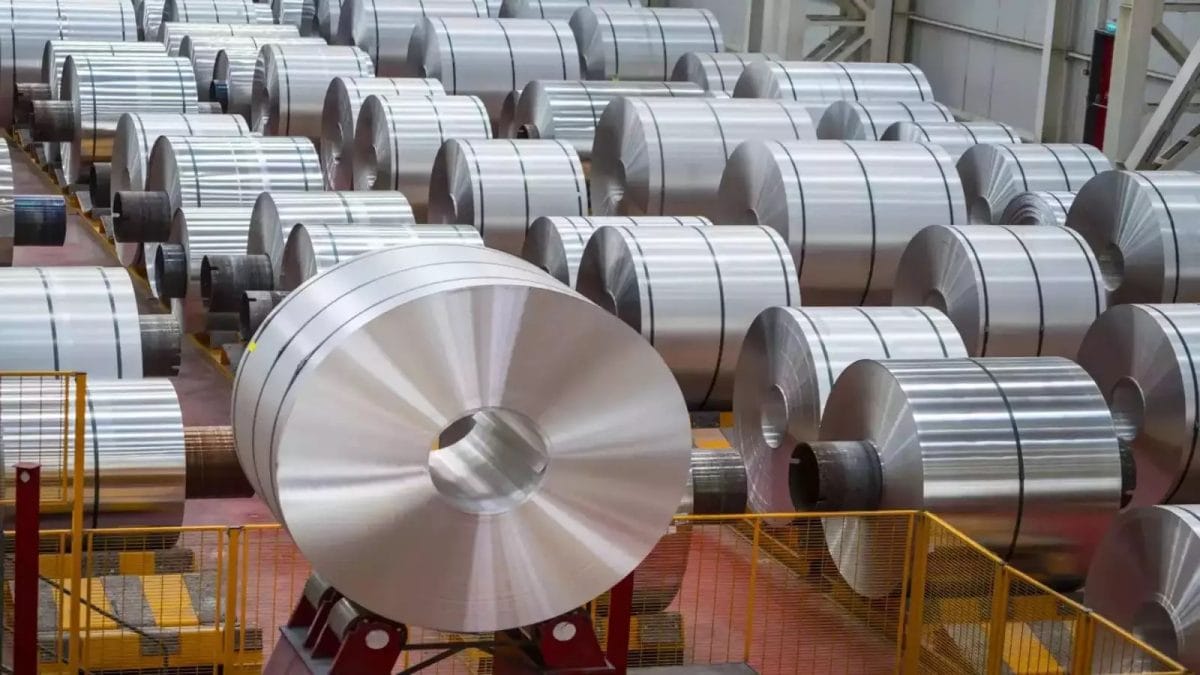
Metal Shares Gain: Shares of metal companies rallied sharply on October 24, defying the broader market downturn. The surge pushed the Nifty Metal index up more than 2% to 10,457.40 in early trade before paring some gains to trade 1% higher at 10,359 around noon.
Here are the key factors driving the rally in metal shares:
1. Trump–Xi Meeting Hopes Ease Trade Concerns
Global metal prices surged after the White House confirmed that U.S. President Donald Trump will meet Chinese President Xi Jinping in South Korea on October 30, as part of Trump’s Asia visit.
The announcement came amid renewed trade tensions following Trump’s plan to raise tariffs on Chinese imports to 155%. Investors are now hopeful that the meeting could ease trade hostilities, improving the global demand outlook for metals.
White House Press Secretary Karoline Leavitt said Trump’s itinerary includes stops in Malaysia, Japan, and South Korea, following his address at the APEC CEO Summit.
2. Metal Prices Rise on Tight Supply and Global Stimulus Hopes
Aluminium prices on the London Metal Exchange (LME) climbed past $2,850 per tonne, supported by strong demand and tightening supply. The rally was further fueled by expectations of monetary easing from major central banks.
Adding to the supply crunch, a smelter in Iceland temporarily shut operations due to equipment failure, likely affecting 100 kt of production. Copper prices also advanced about 2% on the LME.
3. US Fed Rate Cut Expectations Lift Sentiment
Optimism around further rate cuts by the U.S. Federal Reserve added to the positive momentum. According to a Reuters poll, the Fed is expected to cut interest rates by 25 basis points to 3.75–4% on October 29, with another potential cut in December.
Lower rates generally boost non-yielding assets like commodities, supporting investor appetite for metals.
4. Top Metal Gainers
National Aluminium Company (NALCO) shares have gained more than 4 percent, while Hindalco Industries and Hindustan Copper shares have gained more than 3 percent each. Vedanta shares were up nearly 3 percent.
Earlier during the day, Hindalco shares hit a 52-week high of Rs 826.50 apiece. This comes after its subsidiary Novelis said that its fire-damaged plant in Oswego will restart by the end of December, earlier than expected.
Hindustan Zinc shares gained around 2 percent, while NMDC, Jindal Stainless Steel, Steel Authority of India (SAIL) and Jindal Steel and Power shares were up around 1 percent each.
Heavyweights Tata Steel and JSW Steel shares were trading in the green with marginal gains.
Bucking the trend, APL Apollo Tubes, Welspun Corp and Adani Enterprises shares were trading in the red.
Disclaimer: The views and investment tips by experts in this News18.com report are their own and not those of the website or its management. Users are advised to check with certified experts before taking any investment decisions.

Aparna Deb is a Subeditor and writes for the business vertical of News18.com. She has a nose for news that matters. She is inquisitive and curious about things. Among other things, financial markets, economy, a…Read More
Aparna Deb is a Subeditor and writes for the business vertical of News18.com. She has a nose for news that matters. She is inquisitive and curious about things. Among other things, financial markets, economy, a… Read More
October 24, 2025, 13:33 IST
Read More






India’s budget focuses on infrastructure and defence spending and tax breaks for data-centre investments.
Source link
Business
New Income Tax Act 2025 to come into effect from April 1, key reliefs announced in Budget 2026

New Delhi: Finance Minister Nirmala Sitharaman on Sunday said that the Income Tax Act 2025 will come into effect from April 1, 2026, and the I-T forms have been redesigned such that ordinary citizens can comply without difficulty for ease of living.
The new measures include exemption on insurance interest awards, nil deduction certificates for small taxpayers, and extension of the ITR filing deadline for non-audit cases to August 31.
Individuals with ITR 1 and ITR 2 will continue to file I-T returns till July 31.
“In July 2024, I announced a comprehensive review of the Income Tax Act 1961. This was completed in record time, and the Income Tax Act 2025 will come into effect from April 1, 2026. The forms have been redesigned such that ordinary citizens can comply without difficulty, for) ease of living,” she said while presenting the Budget 2026-27
In a move that directly eases cash-flow pressure on individuals making overseas payments, the Union Budget announced lower tax collection at source across key categories.
“I propose to reduce the TCS rate on the sale of overseas tour programme packages from the current 5 per cent and 20 per cent to 2 per cent without any stipulation of amount. I propose to reduce the TCS rate for pursuing education and for medical purposes from 5 per cent to 2 per cent,” said Sitharaman.
She clarified withholding on services, adding that “supply of manpower services is proposed to be specifically brought within the ambit of payment contractors for the purpose of TDS to avoid ambiguity”.
“Thus, TDS on these services will be at the rate of either 1 per cent or 2 per cent only,” she mentioned during her Budget speech.
The Budget also proposes a tax holiday for foreign cloud companies using data centres in India till 2047.
Business
Budget 2026 Live Updates: TCS On Overseas Tour Packages Slashed To 2%; TDS On Education LRS Eased

Union Budget 2026 Live Updates: Union Budget 2026 Live Updates: Finance Minister Nirmala Sitharaman is presenting the Union Budget 2026-27 in Parliament, her record ninth budget speech. During her Budget Speech, the FM will detail budgetary allocations and revenue projections for the upcoming financial year 2026-27. Sitharaman is notably dressed in a Kanjeevaram Silk saree, a nod to the traditional weaving sector in poll-bound Tamil Nadu.
The budget comes at a time when there is geopolitical turmoil, economic volatility and trade war. Different sectors are looking to get some support with new measures and relaxations ahead of the budget, especially export-oriented industries, which have borne the brunt of the higher US tariffs being imposed last year by the Trump administration.
On January 29, 2026, Sitharaman tabled the Economic Survey 2025-26, a comprehensive snapshot of the country’s macro-economic situation, in Parliament, setting the stage for the budget and showing the government’s roadmap. The survey projected that India’s economy is expected to grow 6.8%-7.2% in FY27, underscoring resilience even as global economic uncertainty persists.
Budget 2026 Expectations
Expectations across key sectors are taking shape as stakeholders look to the Budget for support that sustains growth, strengthens jobs and eases financial pressures:
Taxpayers & Households: Many taxpayers want practical improvements to the income tax structure that preserve simplicity while supporting long-term financial planning — including broader deductions for home loan interest and diversified retirement savings options.
New Tax Regime vs Old Tax Regime | New Income Tax Rules | Income Tax 2026
Businesses & Industry: With industrial output and investment showing resilience, firms are looking for policies that bolster capital formation, ease compliance, and expand infrastructure spending — especially in manufacturing and technology-driven sectors that promise jobs and exports.
Startups & Innovation: The startup ecosystem expects incentives around employee stock options and capital access, along with regulatory tweaks that encourage risk capital and talent retention without increasing compliance burdens.
Also See: Stock Market Updates Today
The Budget speech will be broadcast live here and on all other news channels. You can also catch all the updates about Budget 2026 on News18.com. News18 will provide detailed live blog updates on the Budget speech, and political, industry, and market reactions.
We are providing a full, detailed coverage of the union budget 2026 here, with a lot of insights, experts’ views and analyses. Stay tuned with us to get latest updates.
Also Read: Budget 2026 Live Streaming
Here are the Live Updates of Union Budget 2026:


WIRED’s Guide to Actually Fun Valentine’s Day Gifts
Between the sheets at the college Excel championships

The Information Networks That Connect Venezuelans in Uncertain Times

-

 Fashion1 week ago
South Korea tilts sourcing towards China as apparel imports shift
-

 Sports5 days ago
PSL 11: Local players’ category renewals unveiled ahead of auction
-

 Sports1 week ago
Wanted Olympian-turned-fugitive Ryan Wedding in custody, sources say
-

 Tech1 week ago
Strap One of Our Favorite Action Cameras to Your Helmet or a Floaty
-

 Entertainment1 week ago
Three dead after suicide blast targets peace committee leader’s home in DI Khan
-

 Tech1 week ago
This Mega Snowstorm Will Be a Test for the US Supply Chain
-

 Sports1 week ago
Storylines shaping the 2025-26 men’s college basketball season
-

 Fashion1 week ago
Spain’s apparel imports up 7.10% in Jan-Oct as sourcing realigns