

Business
Mixed markets in London as Donald Trump and Xi Jinping talk

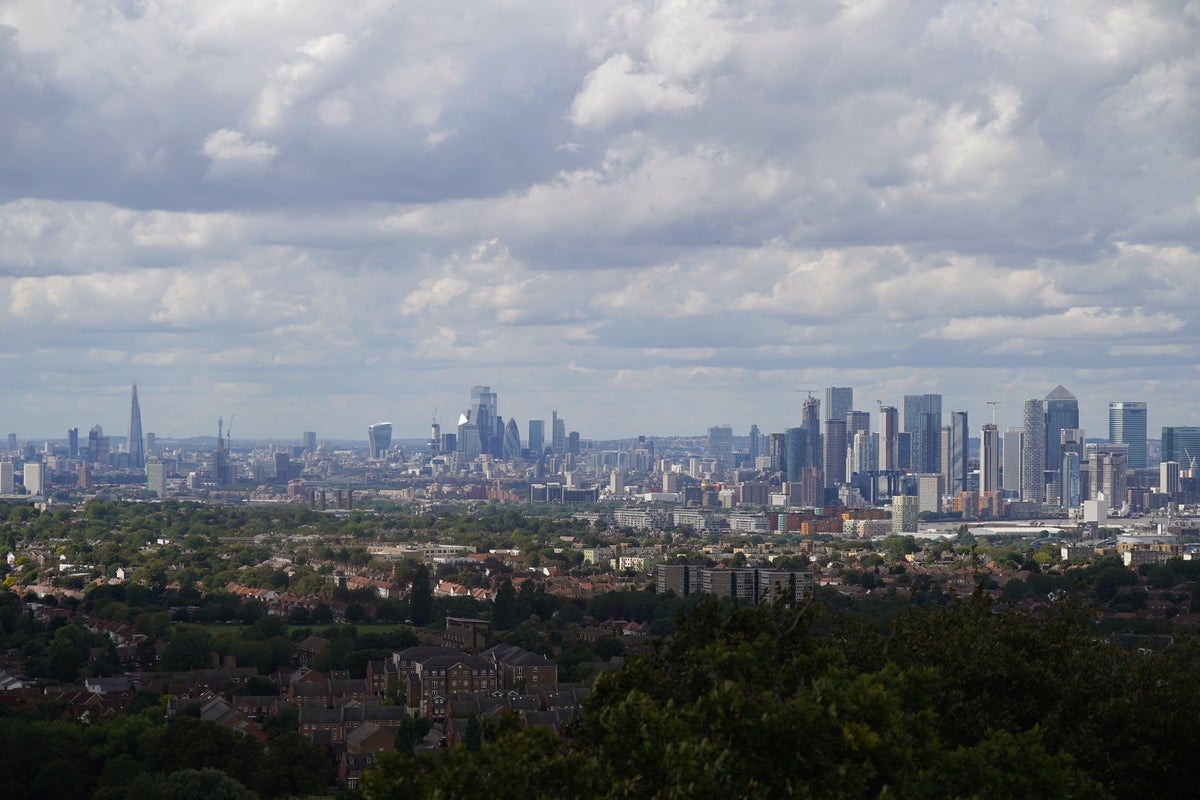
Stock prices in London closed mixed on Friday, following a week of interest rate decisions that mostly went as expected, and after a much-anticipated phone conversation between US President Donald Trump and China’s President Xi Jinping.
“Markets continued to digest the (US) Federal Reserve’s 25-basis-point rate cut this week,” Naga’s Frank Walbaum commented.
“Chair Jerome Powell described the move as a measured response to a cooling labour market, while stressing that the central bank would proceed cautiously with any further easing.
“However, a fall in jobless claims to 231,000 in last week’s data eased fears of a rapid labour market deterioration.
“Meanwhile, global policy developments added to the backdrop, with both the Bank of England and Bank of Japan holding interest rates steady this week.”
The FTSE 100 index closed down 11.44 points, 0.1%, at 9,216.67.
The FTSE 250 ended down 136.02 points, 0.6%, at 21,589.93, and the AIM All-Share closed up 1.26 points, 0.2%, at 773.60.
On the FTSE 100, NatWest was down 1.7%.
The Edinburgh-based bank is working with advisers on a sale of Cushon two years after paying £144 million for a controlling 85% stake in the workplace pensions provider, Sky News reported.
The disposal would reflect the priorities of chief executive Paul Thwaite, which includes a simplification programme and more active balance sheet and risk management.
However, a NatWest spokesperson declined to comment on the “speculation”.
Kainos on the FTSE 250 was down 1.4%.
The London-based Workday partner and provider of IT services to public sector, commercial, and healthcare customers announced the acquisition of Davis Pier, growing its Digital Services division workforce in Canada.
Davis Pier is a Nova Scotia-based consultancy specialising in addressing complex challenges for Canadian public sector and community organisations.
On AIM, Gelion ended up 11%.
The London-based battery energy storage systems firm’s UK subsidiary Oxlid has secured £533,000 in government grant funding to advance its lithium-sulphur battery technology, in collaboration with FTSE 250-listed defence and aerospace firm Qinetiq.
Chief executive John Wood said the funding will allow Gelion to demonstrate “ultra-high energy density” cells while meeting performance needs for strategic applications, and that Qinetiq’s expertise in defence certification and cell manufacturing would support the pathway to commercialisation.
Small-cap Predator Oil & Gas dropped 13%.
The Morocco and Trinidad-focused oil and gas company’s pretax loss widened to £1.9 million in the first half of 2025, from £1.0 million a year prior, although revenue was £66,815 compared to none the year before.
Chief executive Paul Griffiths, meanwhile, said: “The outlook for the next 12 months is positive and filled with operational activity…Substantive progress has been achieved by our team against the background of volatility in the financial and public markets caused by global events. We see this as an opportunity and not an excuse.”
In European equities on Friday, the CAC 40 in Paris closed up 0.1%, while the Dax 40 in Frankfurt ended down 0.1%.
The pound was quoted lower at 1.3475 US dollars at the time of the London equities close on Friday, compared to 1.3556 on Thursday.
The euro stood at 1.1746 US dollars, lower against 1.1786.
Against the yen, the dollar was trading at 147.89 yen, slightly lower compared to 147.94.
Stocks in New York were higher.
The Dow Jones Industrial Average was up 13.47 points, the S&P 500 index up 0.1%, and the Nasdaq Composite up 0.2%.
The yield on the US 10-year Treasury was quoted at 4.14%, widening from 4.11%.
The yield on the US 30-year Treasury was quoted at 4.75%, widening from 4.73%.
Mr Trump and China’s leader Mr Xi spoke by phone on Friday.
Chinese state broadcaster CCTV and the Xinhua news agency said the call had started.
The pair could settle disputes over TikTok, after Mr Trump repeatedly put off a ban under a US law designed to force Beijing-based parent ByteDance to sell its US operations for national security reasons.
Mr Trump told reporters on Thursday that he hoped to “finalise something on TikTok”, whose US business would be “owned by all American investors, and very rich people and companies”, as he put it.
The world’s two biggest economies also seek to find a compromise on tariffs.
Both sides dramatically hiked levies against each other during a months-long dispute earlier this year, disrupting global supply chains.
Brent oil was quoted lower at 66.56 US dollars a barrel at the time of the London equities close on Friday, from 67.09 late on Thursday.
Gold was quoted at 3,670.59 US dollars an ounce, up against 3,654.51 US dollars.
“Gold prices were relatively steady and remained above the 3,640 US dollars level on Friday, leaving the metal on track for a flat or marginally positive weekly close after four weeks of strong gains,” Mr Walbaum commented.
“Profit-taking after hitting record highs on Wednesday and a rise in US Treasury yields weighed on sentiment, but safe-haven demand helped limit losses.”
He added that “global policy developments added to the backdrop, with both the Bank of England and Bank of Japan holding interest rates steady this week.
“However, geopolitical tensions in the Middle East and Eastern Europe continued to be a key support for bullion.”
The biggest risers on the FTSE 100 were Fresnillo, up 112.0p at 2,276.0p, Endeavour Mining, up 136.0p at 2,828.0p, Next, up 295.0p at 11,870.0p, Coca-Cola HBC, up 74.0p at 3,644.0p, and Glencore, up 5.60p at 312.9p.
The biggest fallers on the FTSE 100 were London Stock Exchange Group, down 498.0p at 8,138.0p, WPP, down 19.70p at 360.7p, JD Sports Fashion, down 3.2p at 88.7p, Airtel Africa, down 5.2p at 221.2p, and Lloyds, down 1.67p at 82.1p.
On Monday’s economic calendar, China has its interest rate decision.
On Monday’s UK corporate calendar, Wilmington reports full-year and BioPharma Credit reports half-year results.
Contributed by Alliance News.

Tiger Woods of Jupiter Links Golf Club looks on before the match against the Los Angeles Golf Club at SoFi Center in Palm Beach Gardens, Florida, March 24, 2026.
Adam Glanzman | TGL Golf | Getty Images
Tiger Woods’ future in professional golf remains unclear as he seeks treatment after a rollover car crash last week.
Woods was arrested for a DUI after the accident in Jupiter Island, Florida, his second rollover in five years, and said in a statement on X that he would be stepping back from golf “to return to a healthier stronger, and more focused place.”
Woods did not provide a timeline for his return, only that he would be stepping away for a “period of time.”
On Wednesday, the PGA of America announced that Woods will no longer serve as captain of the 2027 U.S. Ryder Cup Team.
“We support his decision,” the PGA of America said in a statement on X. “We commend Tiger for prioritizing his long-term health and deeply respect the courage it takes to make such a personal decision.”
The latest developments leave Woods at least temporarily at the fringes of the sport that made him a household name. The golf community has rallied around the sport’s biggest star as he vows to “focus on his health,” and the PGA Tour said in a statement that Woods has the organization’s full support.
“Tiger Woods is a legend of our sport whose impact extends far beyond his achievements on the course. But above all else, Tiger is a person, and our focus is on his health and well‑being,” the tour said.
Off the course, Woods has been serving as chairman of the PGA Tour’s Future Competition Committee since August. That group has been responsible for creating a vision for the future of professional golf.
A PGA Tour spokesperson said that Woods will return to that role when he is ready to do so.
Golf Channel analyst and former tour pro Brandel Chamblee suggested it could be time for Woods to consider retirement following his latest accident. Woods, 50, has been recovering from various injuries sustained in his car crash in 2021.
“Why would he need to play golf anymore?” Chamblee asked Friday on the Golf Channel’s “Golf Central.” “I think he should probably ask himself that. Consider not playing golf anymore.”
Until Friday’s accident, Woods held onto hope that he would compete in the upcoming Masters Tournament this month.
Augusta National Golf Club Chairman Fred Ridley confirmed this week that Woods would not play.
“Although Tiger will not be joining us in person next week, his presence will be felt here in Augusta,” Ridley said. “Augusta National Golf Club and the Masters Tournament fully support Tiger Woods as he focuses on his well-being.”
TGR, Woods’ education foundation, said it remains committed to serving its students and communities.
“Our thoughts are with our founder as he takes the time needed to focus on his health,” its CEO Hrag Hamalian said in a statement.
Woods’ apparel brand, Sun Day Red, also voiced its support this week.
“He is not just our partner, he is our friend. We are here for him and we remain focused on the work we are building together,” the company said in a post on the Meta-owned Threads platform.
TGL, the indoor golf league founded by Woods and Rory McIlroy, declined to comment about Woods’ hiatus and potential return.
Woods made his first TGL playing appearance of the season for the Jupiter Links team last week in front of a notable audience. ESPN said nearly 1 million viewers tuned in to watch Woods’ return, making it the largest audience this season.
European stocks rallied on Wednesday as comments from both sides of the Middle East war gave some conviction for a near-term end to hostilities.
“The market appears increasingly optimistic that an end to the war in Iran is in the offing as big gains in the US and Asia were matched in Europe,” said AJ Bell investment director Russ Mould.
The FTSE 100 closed up 188.34 points, 1.9%, at 10,364.79. The FTSE 250 ended up 484.48 points, 2.3%, at 21,688.19, and the AIM All-Share advanced 22.13 points, 3.1%, at 739.25.
On Wednesday, US President Donald Trump said that Iran had asked for a ceasefire but that the US would only consider this once the Strait of Hormuz, the vital oil and gas shipping route which Iran has effectively closed for most exports, is clear for shipping.
This came after Mr Trump told reporters on Tuesday the US would end operations in Iran “very soon”, perhaps within “two weeks, maybe three”.
The US president is due to make a televised address later on Wednesday.
Meanwhile, Iranian President Masoud Pezeshkian said the Islamic republic had the “necessary will” to end the war, provided its enemies guaranteed it would not flare up again.
But Israeli Prime Minister Benjamin Netanyahu insisted that Israel would press ahead with its military campaign and that “we will continue to crush the terror regime”.
Brent oil traded lower at 101.83 dollars a barrel on Wednesday afternoon, from 107.38 dollars late on Tuesday.
In European equities on Wednesday, the CAC 40 in Paris closed up 2.1%, while the DAX 40 in Frankfurt rose 2.7%.
Stocks in New York were higher, extending Tuesday’s bumper gains. The Dow Jones Industrial Average was up 0.9%, as was the S&P 500 index, and the Nasdaq Composite advanced 1.3%.
Michael Brown, senior research strategist, at Pepperstone pointed out that amid the “euphoria, exuberance, and relief” which has driven a rebound in risk appetite over the last day or so, the surge in energy prices means that a rise in headline inflation over the next few months is, essentially, “baked in”.
“Added to which, considerably higher energy prices, and continued supply chain disruption, are likely to bring with them substantial growth headwinds, in turn amounting to a notable negative demand shock, which will likely weaken what is already very anaemic economic momentum, most notably in Europe,” he said.
Mr Brown does not think financial markets have “ignored” these risks, but are essentially “parking these worries, to be dealt with on some other day in the future”.
Reflecting these concerns, the Bank of England said the Middle East war had caused “a substantial negative supply shock to the global economy”, increasing risks to the financial system.
The central bank said the fallout will also weigh on economic growth and tighten financial conditions, such as restricted lending by banks.
“Adverse impacts on the global macroeconomy increase the likelihood that multiple vulnerabilities could crystallise at the same time, amplifying their effect on financial stability,” the Bank said in a quarterly update on identifying risks to financial stability.
Bank governor Andrew Bailey sought to dampen expectations of interest rate hikes.
In an interview with Reuters, Mr Bailey responded to market expectations for higher rates by commenting “that is a judgment markets have to make but I think they’re getting ahead of themselves”.
Prime Minister Sir Keir Starmer said the UK could weather the economic storm caused by the Iran conflict but acknowledged the crisis will “affect the future of our country” as households faced higher fuel costs now and the prospect of energy bill hikes later this year.
The UK is leading a diplomatic initiative to reopen the Strait of Hormuz, but restoring the flow of global trade will not be easy, Sir Keir admitted.
Foreign Secretary Yvette Cooper will host an international meeting on Thursday to “assess all viable diplomatic and political measures” to reopen the strait, after 35 countries signed up to a statement expressing willingness to contribute to efforts to ensure safe passage for shipping.
The yield on the US 10-year Treasury narrowed to 4.31% on Wednesday from 4.33% on Tuesday. The yield on the US 30-year Treasury ebbed to 4.89% from 4.91%.
The pound rose to 1.3324 dollars on Wednesday afternoon from 1.3205 dollars at the equities close on Tuesday. Against the euro, sterling firmed to 1.1476 euro from 1.1463 euro.
The euro stood higher against the greenback at 1.1608 dollars from 1.1523 dollars. Against the yen, the dollar was trading lower at 158.66 yen compared to 159.02 yen.
On the FTSE 100, the risk-on mood saw gains for banks Lloyds, up 5.8%, NatWest, up 5.4%, and Barclays, up 5.1%.
British Airways owner, International Consolidated Airlines, flew 5.7% higher, budget airlines easyJet and Wizz Air soared 5.0% and 6.2% respectively.
But housebuilder Berkeley Group plunged 9.7% as its decision to halt land buying amid the uncertainty sparked by the Iran war sparked significant profit downgrades.
In an unscheduled trading update, the Surrey-based housebuilder said its fears, expressed in a recent trading statement, that the economic consequences of the conflict in the Middle East could reduce confidence in a near-term market recovery has “now become a reality”.
The builder said it is reducing work in progress investment to match current sales levels and will not acquire new land.
Berkeley anticipates delivering above £1.4 billion of pre-tax profit, over financial 2027 to 2030, which analysts at RBC Capital Markets said was 29% below Visible Alpha consensus of £1.98 billion.
Mr Mould said Berkeley has a “long-standing reputation for being adroit at calling the ups and downs of the property market”.
“In that context, the moves the company has announced today will make others sit up and take notice,” he said.
Rightmove fell 1.4% as it said it will “defend vigorously” a proposed class action claim filed against it, as estate agents accuse the firm of charging excessive fees.
The London-based online property portal confirmed it is aware of reports that an application to commence collective proceedings has been filed with the UK’s Competition Appeal Tribunal.
On the FTSE 250, Trustpilot climbed 7.3% as Panmure Liberum upgraded to “buy” from “hold”, while Raspberry Pi extended Tuesday’s bumper gains with a further 13% rise.
Gold traded at 4,781.92 dollars an ounce on Wednesday, up from 4,613.15 dollars at the same time on Tuesday.
The biggest risers on the FTSE 100 were Babcock International, up 110.0p at 1,268.0p, Rolls Royce, up 75.0p at 1,207.0p, 3i Group, up 146.0p at 2,584.0p, Endeavour Mining, up 260.0p at 4,720.0p and Fresnillo, up 192.0p at 4,720.0p.
The biggest fallers on the FTSE 100 were Berkeley Group, down 332.0p at 3,104.0p, BP, down 30.3p at 576.0p, Shell, down 139.5p at 3,443.5p, Rightmove, down 6.0p at 422.9p and British American Tobacco, down 58.0p at 4,313.0p.
Thursday’s global economic calendar has trade figures in the US and Canada, and US weekly jobless claims.
Thursday’s domestic corporate calendar has half year results from Baillie Gifford Japan Trust.
– Contributed by Alliance News

Britain’s manufacturing sector has seen the biggest monthly jump in input prices for more than 30 years as the Iran war wreaks havoc on supply chains, according to a survey.
The S&P Global UK manufacturing purchasing managers’ index (PMI) survey, watched closely by economists, showed that the input price inflation index jumped by 15 points between February and March – the biggest rise since the UK withdrew from the European Exchange Mechanism (ERM) on so-called Black Wednesday in 1992.
The report also showed that delivery delays worsened due to the Middle East conflict as ships have been forced to re-route around the blocked Strait of Hormuz, which is a key shipping route.
Manufacturing production also contracted for the first time in six months in March, according to the survey.
Overall activity slipped back, with the PMI recording a reading of 51 in March, down from 51.7 in February and lower than the 51.4 flash estimate earlier this month.
Any reading above 50 indicates that activity is growing while any score below means it is contracting.
Rob Dobson, director at S&P Global Market Intelligence, said: “UK manufacturing output contracted for the first time in six months in March, as the war in the Middle East and ongoing concerns about domestic economic policy led to a scaling back of production.
“The impact of the war also caused noticeable shifts in the cost and supply chain backdrops.
“Delivery times lengthened to the greatest extent since mid-2022, while the acceleration in input price inflation was the steepest since the aftermath of the UK’s withdrawal from the ERM in 1992.”
The survey found that almost half of companies (49%) reported an increase in purchase prices, while only 2% saw a decrease last month.
It said the Iran conflict had a “marked” impact on supply chains, with average vendor delivery times growing by the most in more than four-and-a-half years.
The survey also showed an impact on jobs in the sector, with the latest round of cuts the steepest since last September.
But there was a chink of light with new orders remaining resilient as they rose for the fourth successive month in March, albeit at a slower pace than in February.
Mr Dobson said: “This suggests that the drop in production is currently more of a supply issue than one caused by an outright downturn in demand, though it’s hard to see how demand can prove resilient in the face of current high energy prices and economic uncertainty unless there’s a swift resolution to the war in the Middle East.”
Expert Mike Thornton, head of industrials at RSM UK, said: “The control of the Strait of Hormuz is one of the biggest commercial issues for manufacturers and issues will pile up the longer access is blocked.
“The increase in energy costs will be a persistent headwind, but worries relating to supply chain disruption are growing.”
A separate report from banking giant Barclays on Wednesday showed firms are already taking action to offset trading and cost pressures from the Iran war, with 43% seeing shipping and logistics costs hitting their profitability.
The lender’s business prosperity index revealed almost four in 10 (37%) are reducing their energy use or boosting supply chain efficiency, while nearly a third (32%) have changed their pricing to offset rising costs.
More than a third (34%) of the 500 business leaders polled for the survey are planning to pass on higher costs to consumers.
And over a quarter (29%) are cutting non-essential spending or wider operational costs, according to the report.


NCAA proposes barring players who opt in to, remain in draft

Tsunami warning issued after magnitude 7.8 earthquake strikes off Indonesia

California Suspends Enforcement of Law Requiring VCs to Report Diversity Data

-

 Politics1 week ago
Afghanistan announces release of detained US citizen
-

 Sports1 week ago
Broadcast industry CEO says consolidation is ‘essential’ to compete for NFL soaring media rights prices
-

 Entertainment1 week ago
UN warns migratory freshwater fish numbers are spiralling
-

 Tech1 week ago
Can a Home Appliance Fix the Problem of Soft-Plastic Waste?
-
 Business1 week ago
Property Play: Home flippers see smallest profits since the Great Recession, real estate data firm says
-
 Business1 week ago
Gold prices soar in Pakistan – SUCH TV
-

 Fashion1 week ago
ICE cotton slips on weaker crude, profit booking
-
 Business1 week ago
More women are entering wealth management, but few are in advisory roles, study finds