

Entertainment
Modi-led govt under fire after women journalists barred from Afghan FM’s presser

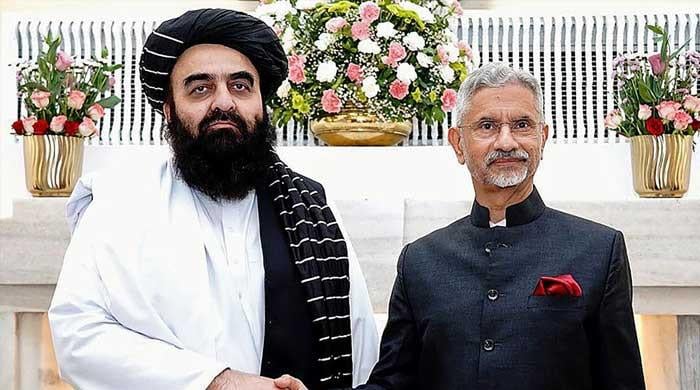
Prime Minister Narendra Modi-led Indian government faced intense backlash after women journalists were barred from attending Afghan Foreign Minister Amir Khan Muttaqi’s press conference in New Delhi, Indian media reported.
Muttaqi is on a six-day visit after getting a temporary exemption on his travel ban by UN Security Council (UNSC) Committee. It was the first such trip to India by a Afghan Taliban leader since 2021.
India, a day earlier, upgraded ties with Afghanistan’s Taliban administration, giving a boost to the diplomatically isolated group, by announcing it would reopen its embassy in Kabul that was shut after the Taliban seized power in 2021.
During the visit, the visiting foreign minister held a press conference at the Afghanistan embassy in Delhi, wherein the women journalists were stopped by the security staff and Delhi Police officials from attending the event despite multiple requests.
Opposition parties condemned the Modi administration for its silence over the exclusion of women reporters from the high-profile event, calling it an “insult to every Indian woman”.
Congress leader Rahul Gandhi said women have the right to equal participation in every field, adding that the incident sends a message that Modi is “too weak to stand up for their rights.”
“Mr Modi, when you allow the exclusion of women journalists from a public forum, you are telling every woman in India that you are too weak to stand up for them,” he wrote on X.
“In our country, women have the right to equal participation in every space. Your silence in the face of such discrimination exposes the emptiness of your slogans on Nari Shakti [woman power],” he added.
Senior Congress leader Priyanka Gandhi demanded that the Modi government clarify its position on the issue.
“If your recognition of women’s rights isn’t just convenient posturing from one election to the other, then how has this insult to some of India’s most competent women been allowed in our country, a country whose women are its backbone and its pride,” she asked.
Former finance minister P Chidambaram also criticised the media’s handling of the event, saying male journalists present at the briefing “should have walked out in protest.”
Trinamool Congress MP Mahua Moitra went further, slamming the government for “disgracing every Indian woman” through its complicity. “By allowing such discrimination on Indian soil, the Modi regime has surrendered the country’s dignity,” she said.
Meanwhile, the Indian Ministry of External Affairs distanced itself from the controversy, claiming it had “no role” in the arrangements for the event.
According to the ministry, the invites for the press meet went to select journalists from Afghanistan’s Consul General in Mumbai who were stationed in Delhi for the Afghan minister’s visit. The Afghan Embassy territory does not come under the jurisdiction of the Indian government, it pointed out.
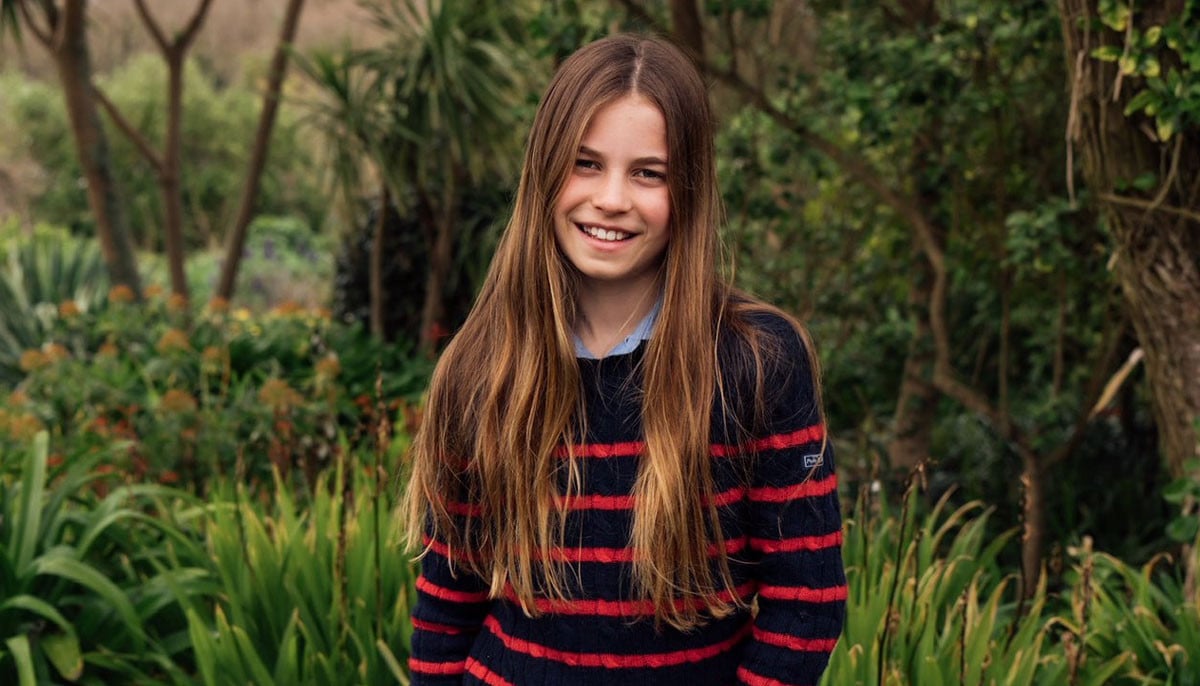
Prince William and Princess Kate’s only daughter made her most stunning appearance yet as she turned 11 on Saturday, just a week after her little brother marked his own birthday.
The Waleses, who moved to Forest Lodge last November, shared a new look for Charlotte as she is seems to be growing up fast.

Well, that soft launch has officially become a full-blown hard launch.
Sydney Sweeney just made things very Instagram official with Scooter Braun – and fans wasted approximately three seconds before turning the comments section into a full FBI investigation.
The Euphoria star dropped a Stagecoach photo carousel on Friday that looked innocent enough at first: cowboy vibes, festival lights, karaoke chaos. Then came the cuddling photos.
One snapshot showed the pair squeezed together in a photo booth making goofy faces, while another featured Braun literally carrying Sweeney bridal-style through the crowd like this was the final scene of a rom-com nobody saw coming.
There was also a clip of them singing karaoke together and another of Sweeney perched on his shoulders during a performance because apparently subtlety has officially left the chat.
“cowboy kind of weekend,” she captioned the post — which may be the understatement of the year.
Braun had already hinted at the romance weeks earlier after posting Sweeney on his Instagram Story, but this is the clearest confirmation yet that the two are no longer trying to keep things low-key.
The pair reportedly started dating in September 2025 after meeting at the lavish wedding of Jeff Bezos and Lauren Sanchez in Venice.
Since then, they have been spotted on multiple dates and holding hands publicly.
Now? The internet has officially upgraded them from rumour to relationship status.

The wardrobe is officially open again – and this time, Greta Gerwig is leading the way.
Netflix has finally confirmed the title and release dates for Gerwig’s long-awaited Chronicles of Narnia reboot, and fantasy fans already sound emotionally unwell online.
The first film will be called Narnia: The Magician’s Nephew and arrives in theaters on February 12, 2027, before landing on Netflix on April 2.
And yes, the cast is stacked.
Meryl Streep, Daniel Craig, Carey Mulligan, Emma Mackey and Denise Gough are all set to appear in the fantasy epic based on C.S. Lewis’ classic books.
Gerwig, who writes, directs, and produces the film, got deeply personal while explaining why this story matters to her.
“I was a child when I first read The Magician’s Nephew, and I fell in love with the gorgeously improbable but completely brilliant concept of a cosmic lion singing the world of Narnia to life,” she said.
“I didn’t know that I would grow up to make films… but a universe built out of music is an idea that always lived in my heart.”
Unlike the earlier Narnia movies, Gerwig’s film starts at the very beginning of the timeline, exploring Aslan’s creation of Narnia itself – essentially the fantasy franchise’s origin story.
In other words: Greta Gerwig is about to make an entire generation cry over a lion all over again.


Germany urges stronger European defence after US reduces troops

ICE cotton witnesses sharp rise on weaker dollar, strong exports

Palace drops Princess Charlotte unseen photo for 11th birthday

-
 Business1 week ago
France Ends Airport Transit Visa Requirement for Indian Travellers | Business – The Times of India
-

 Tech1 week ago
They Wanted to Join Raya. They’ve Been on the Waiting List for Years
-

 Tech5 days ago
A Brain Implant for Depression Is About to Be Tested in Humans
-

 Tech1 week ago
Why Do I Like Dyson’s PencilVac So Much?
-

 Entertainment1 week ago
Anne Hathaway makes shocking confession about Taylor Swift’s music
-

 Tech5 days ago
Almost 90% of women leave tech industry within 10 years | Computer Weekly
-

 Fashion1 week ago
North India cotton yarn steady despite continued push by spinners
-

 Entertainment5 days ago
Norway joins Type 26 Frigate Programme to boost NATO naval power