More girls chose to take A-level computing this year, despite fewer students taking the subject overall.
The number of girls who took A-level computing increased by 3.5% this year, compared with 2024, meaning girls accounted for 18.6% of computing entrants in 2025.
But the overall number of students choosing to take computing A-levels declined by 2.8% this year, after a number of years of increased interest in the subject – meaning a drop in the number of boys choosing the subject this year.
Ian Thomas, chief operating officer at IT service provider Node4, said: “It is disappointing to see that the number of students studying computing has fallen by 2.8% this year, especially as 93% of mid-market organisations in the UK report they are experiencing an IT skills shortage.”
Thomas highlighted: “It is essential that educational institutions nurture the interest young people naturally have for technology. Today’s students have grown up with technology, with mobile phones and computers readily available, and more often than not, they are the ones called upon to help with IT issues at home.
“However, this passion isn’t converting into chosen career paths. This suggests that there is a disconnect between school curriculums and real-world technological developments, which is failing to engage the younger generations.”
The number of students taking science, technology, engineering and maths (STEM) subjects has dropped in general this year. While maths, further maths and physics all saw an increase in candidates taking exams this year, the increases were far smaller than we saw last year.
But the sixth-year increase in the number of girls choosing to take computing at A-level is a positive trend. The number of girls taking A-level computing in the UK has been rising each year, from 1,797 in 2020, to 2,031 in 2021, 2,352 in 2022, 2,765 in 2023, 3,556 in 2024, and now 3,679 in 2025.
I’m excited that young women are seizing their future in greater numbers – especially in areas like AI where diversity is vital to ensure decisions and outcomes are good for everyone. We need this momentum to accelerate Julia Adamson, BCS, The Chartered Institute for IT
BCS, The Chartered Institute for IT also found the number of women choosing computing at degree level increased this year.
Julia Adamson, BCS executive director for education and public benefit, said: “I’m excited that young women are seizing their future in greater numbers – especially in areas like AI [artificial intelligence] where diversity is vital to ensure decisions and outcomes are good for everyone. We need this momentum to accelerate.”
Grade attainment for A-level computing rose again this year, with girls – as usual – achieving higher grades than boys. Some 7.1% of female candidates achieved A* in the subject, compared with 5.7% of male candidates.
Girls performed better than boys at every grade attainment level: 72.4% of female students achieved at least a C grade, compared with 69.7% of male students; 52% of female students achieved at least a B grade, while only 48.1% of male students achieved at least a B; and 28% of female students achieved at least an A grade, compared with 24.5% of male students.
Overall, 70.2% of students who took the computing exam achieved at least a C grade, 48.9% achieved at least a B grade, and slightly more than a quarter achieved at least an A, showing an increase in attainment of higher grades this year when compared with last year.
While those taking exams performed well, many have shown concern over the slowing uptake of STEM subjects this year, as well as the drop in A-level computing candidates, especially in the wake of rapidly developing technology such as AI, which requires an increasing number of skilled and diverse workers to ensure this technology serves everyone.
Heather Dawe, chief data scientist, UK, and head of responsible AI at digital transformation company, UST, said: “It’s promising to see the number of young women taking A-level computing increase year-on-year, reflecting real progress in closing the gender gap through inclusive education and early STEM programmes.
“More women in tech will bring a diversity of perspectives that drive innovation and result in fairer, more inclusive digital technologies for everyone. At the same time, the overall decline in candidates highlights the need for further action to ensure everyone can benefit from and contribute to the digital age.
“Schools, governments and industry alike need to examine the latest data to identify the gaps and take the necessary steps to strengthen the UK’s tech ecosystem as a whole.”
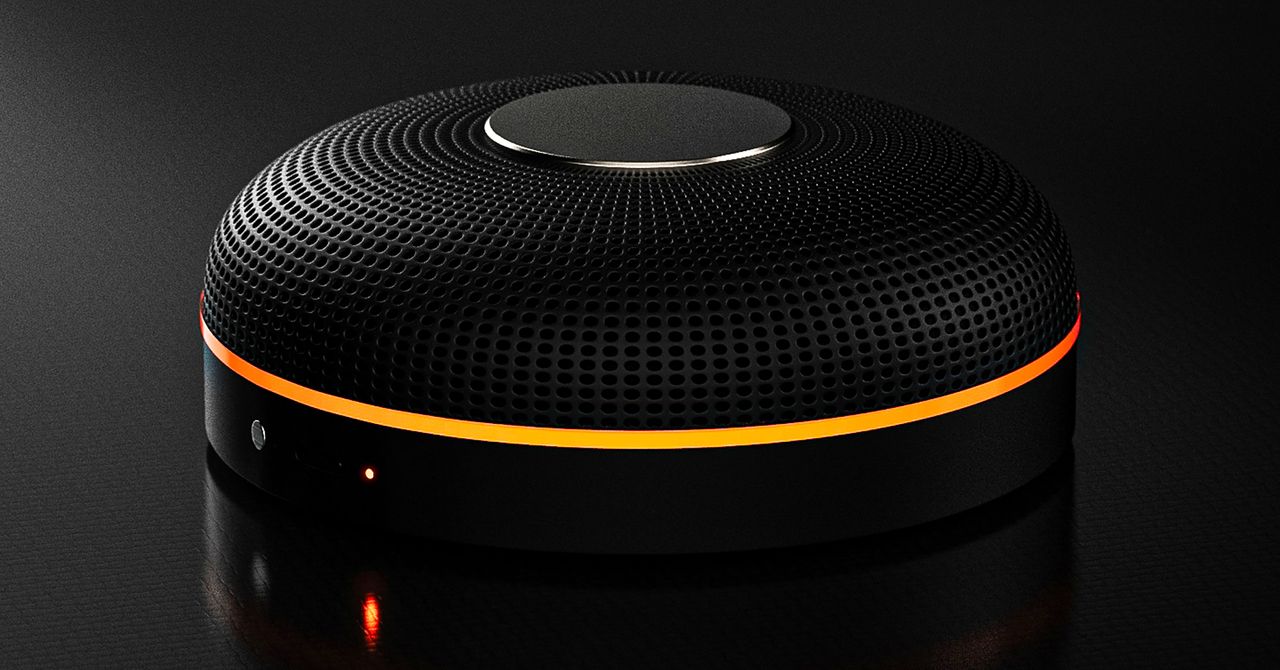
Deveillance also claims the Spectre can find nearby microphones by detecting radio frequencies (RF), but critics say finding a microphone via RF emissions is not effective unless the sensor is immediately beside it.
“If you could detect and recognize components via RF the way Spectre claims to, it would literally be transformative to technology,” Jordan wrote in a text to WIRED after he built a device to test detecting RF signatures in microphones. “You’d be able to do radio astronomy in Manhattan.”
Deveillance is also looking at ways to integrate nonlinear junction detection (NLJD), a very high-frequency radio signal used by security professionals to find hidden mics and bugs. NLJD detectors are expensive and used primarily in professional contexts like military operations.
Even if a device could detect a microphone’s exact location, objects around a room can change how the frequencies spread and interact. The emitted frequencies could also be a problem. There haven’t been adequate studies to show what effects ultrasonic frequencies have on the human ear, but some people and many pets can hear them and find them obnoxious or even painful. Baradari acknowledges that her team needs to do more testing to see how pets are affected.
“They simply cannot do this,” engineer and YouTuber Dave Jones (who runs the channel EEVblog) wrote in an email to WIRED. “They are using the classic trick of using wording to imply that it will detect every type of microphone, when all they are probably doing is scanning for Bluetooth audio devices. It’s totally lame.” Baradari reiterates that the Spectre uses a combination of RF and Bluetooth low energy to detect microphones.
WIRED asked Baradari to share any evidence of the Spectre’s effectiveness at identifying and blocking microphones in a person’s vicinity. Baradari shared a few short videoclips of people putting their phones to their ears listening to audioclips—which were presumably jammed by the Spectre—but these videos do little to prove that the device works.
Future Imperfect
Baradari has taken the critiques in stride, acknowledging that the tech is still in development. “I actually appreciate those comments, because they’re making me think and see more things as well,” Baradari says. “I do believe that with the ideas that we’re having and integrating into one device, these concerns can be addressed.”
People were quick to poke fun at the Spectre I online, calling the technology the cone of silence from Dune. Now, the Deveillance website reads, “Our goal is to make the cone of silence become reality.”
John Scott-Railton, a cybersecurity researcher at Citizen Lab, who is critical of the Spectre I, lauded the device’s virality as an indication of the real hunger for these kinds of gadgets to win back our privacy.
“The silver lining of this blowing up is that it is a Ring-like moment that highlights how quickly and intensely consumer attitudes have shifted around pervasive recording devices,” says Scott-Railton. “We need to be building products that do all the cool things that people want but that don’t have the massive privacy- and consent-violation undertow. You need device-level controls, and you need regulations of the companies that are doing this.”
Cooper Quintin, a senior staff technologist at the Electronic Frontier Foundation, echoed those sentiments, even if critics believe Deveillance’s efforts to be flawed.
“If this technology works, it could be a boon for many,” Quintin wrote in an email to WIRED. “It is nice to see a company creating something to protect privacy instead of working on new and creative ways to extract data from us.”
Portrait Light: You can change up the lighting in your portrait selfies after you take them by opening them up in Google Photos, tapping the Edit button, and heading to Actions >Portrait Light. This adds an artificial light you can place anywhere in the photo to brighten up your face and erase that 5 o’clock shadow. Use the slider at the bottom to tweak the strength of the light. It also works on older Portrait mode photos you may have captured. It works only on faces.
Health and Accessibility Features
Cough & Snore Detection (Tensor G2 and newer): On the Pixel 7 and newer, you can have your Pixel detect if you cough and snore when sleeping, provided you place your Pixel near your bed before you nod off. This will work only if you use Google’s Bedtime mode function, which you can turn on by heading to Settings > Digital Wellbeing & Parental Controls > Bedtime Mode.
Guided Frame (Tensor G2 and newer): For blind or low-vision people, the camera app can now help take a selfie with audio cues (it works with the front and rear cameras). You’ll need to enable TalkBack for this to work (Settings > Accessibility > TalkBack). Then open the camera app. It will automatically help you frame the shot.
Simple View: This mode makes the font size bigger, along with other elements on the screen, like widgets and quick-settings tiles. It also increases touch sensitivity, all of which hopefully makes it easier to see and use the screen. You can enable it by heading to Settings > Accessibility > Simple View.
Safety and Security Features
Theft Protection: This is a broader Android 15 feature, but essentially, Google’s algorithms can figure out if someone snatches your Pixel out of your hands. If they’re trying to get away, the device automatically locks. Additionally, with another device, you can use Remote Lock to lock your stolen Pixel with your phone number and a security answer. To toggle these features on, go to Settings > Security & privacy > Device unlock > Theft protection.
Identity Check: If your Pixel detects you’re in a new location, Identity Check will require your fingerprint or face authentication before you can make any changes to sensitive settings, offering extra peace of mind in case you lose your phone or if it’s stolen. You can enable this in Settings > Security & privacy > Device unlock > Theft protection > Identity Check.
Courtesy of Google
Private Space: Another Android 15 addition, Pixel phones finally have a feature that lets you hide and lock select apps. You can use a separate Google account, set a lock, and install any app to hide away. To set it all up, head to Settings > Security & privacy > Private space.
Satellite eSOS (Pixel 9 and Pixel 10 series, excluding Pixel 9a): Like Apple’s SOS feature on iPhones, you can now reach emergency contacts or emergency services even when you don’t have cell service or Wi-Fi connectivity. It’s not just available in the continental US, but also in Hawaii, Alaska, Canada, and even Europe.
Portrait Light: You can change up the lighting in your portrait selfies after you take them by opening them up in Google Photos, tapping the Edit button, and heading to Actions >Portrait Light. This adds an artificial light you can place anywhere in the photo to brighten up your face and erase that 5 o’clock shadow. Use the slider at the bottom to tweak the strength of the light. It also works on older Portrait mode photos you may have captured. It works only on faces.
Health and Accessibility Features
Cough & Snore Detection (Tensor G2 and newer): On the Pixel 7 and newer, you can have your Pixel detect if you cough and snore when sleeping, provided you place your Pixel near your bed before you nod off. This will work only if you use Google’s Bedtime mode function, which you can turn on by heading to Settings > Digital Wellbeing & Parental Controls > Bedtime Mode.
Guided Frame (Tensor G2 and newer): For blind or low-vision people, the camera app can now help take a selfie with audio cues (it works with the front and rear cameras). You’ll need to enable TalkBack for this to work (Settings > Accessibility > TalkBack). Then open the camera app. It will automatically help you frame the shot.
Simple View: This mode makes the font size bigger, along with other elements on the screen, like widgets and quick-settings tiles. It also increases touch sensitivity, all of which hopefully makes it easier to see and use the screen. You can enable it by heading to Settings > Accessibility > Simple View.
Safety and Security Features
Theft Protection: This is a broader Android 15 feature, but essentially, Google’s algorithms can figure out if someone snatches your Pixel out of your hands. If they’re trying to get away, the device automatically locks. Additionally, with another device, you can use Remote Lock to lock your stolen Pixel with your phone number and a security answer. To toggle these features on, go to Settings > Security & privacy > Device unlock > Theft protection.
Identity Check: If your Pixel detects you’re in a new location, Identity Check will require your fingerprint or face authentication before you can make any changes to sensitive settings, offering extra peace of mind in case you lose your phone or if it’s stolen. You can enable this in Settings > Security & privacy > Device unlock > Theft protection > Identity Check.
Courtesy of Google
Private Space: Another Android 15 addition, Pixel phones finally have a feature that lets you hide and lock select apps. You can use a separate Google account, set a lock, and install any app to hide away. To set it all up, head to Settings > Security & privacy > Private space.
Satellite eSOS (Pixel 9 and Pixel 10 series, excluding Pixel 9a): Like Apple’s SOS feature on iPhones, you can now reach emergency contacts or emergency services even when you don’t have cell service or Wi-Fi connectivity. It’s not just available in the continental US, but also in Hawaii, Alaska, Canada, and even Europe.











 Politics1 week ago
 Politics1 week ago

 Fashion1 week ago
 Sports1 week ago
 Sports1 week ago
 Entertainment1 week ago