

Business
More than 100,000 obesity deaths ‘could be prevented with new food warnings’


More than 100,000 obesity deaths could be prevented over 20 years if firms were forced to put nutrition warning labels on the front of food packs, experts have said.
Researchers from the University of Liverpool found that warning labels for foods high in fat, salt or sugar – as implemented in several other countries – could save lives across England and cut the number of overweight people.
In 2016, Chile was the first country to bring in a mandatory nutritional warning label law – with food and drink high in fat, salt or sugar needing to display a black octagonal warning on the front of packs.
Other countries, including Mexico and Canada, have introduced similar changes.
In the UK, while it is mandatory for nutrition information to be displayed on the back of all food packaging, putting any details on the front, such as the traffic light system, is voluntary.
In the new study, published in the Lancet Regional Health – Europe, experts used modelling to see what differences mandatory warning labels could make.
Looking at the 20-year period from 2024 to 2043, mandatory implementation of traffic light labelling was estimated to reduce obesity prevalence by 2.34 percentage points.
It could also prevent or postpone 57,000 obesity-related deaths.
But mandatory implementation of nutrient warning labelling – as seen in other countries – would have a bigger effect, with a 4.44 percentage point reduction in obesity prevalence and 110,000 fewer obesity-relateddeaths.
The authors concluded that nutrient warning labels should now be considered by the Government.
Dr Rebecca Evans, corresponding author of the study, said: “Our findings suggest that mandatory nutrient warning labels could deliver substantial health benefits for the population, reducing both obesity rates and related mortality.
“These results support current government discussions about alternative labelling approaches and provide robust evidence to guide future UK food labelling policy.”
Dr Zoe Colombet, an author on the study, said: “Nutrition labels are a simple yet powerful tool.
“Making them mandatory could help people make healthier food choices and encourage the food industry to rethink what goes on our shelves, helping to prevent thousands of deaths linked to obesity”.
Amanda Daley, professor of behavioural medicine at Loughborough University, said: “We need effective public health interventions to reduce the number of deaths related to people living with obesity and mandatory warning labels on food may be one way to achieve this.
“Importantly, we need the food industry to play their part in helping people to make informed decisions about the food they purchase and consume.
“The requirement for food manufacturers in the United Kingdom to include warning labels may encourage the sector to consider more carefully the contents and portion size of food items that they sell.
“Let’s not forget, the public have the right to be fully informed about the impact of the food they consume on their health.”
Dr Jordan Beaumont, from Sheffield Hallam University, said: “Traffic light labelling is a useful tool for consumers but can be tricky to interpret in context of our wider food choices and dietary intake.
“Given we often have very little time to actually inspect labelling and make truly informed decisions when shopping for food, nutrition warning labels provide simpler and more explicit information that is quick and easy to interpret, which explains the larger impact of such information in this modelling.”
Andrea Martinez-Inchausti, assistant director of food at the British Retail Consortium, which represents retailers, said: “Retailers are fully committed to helping improve the health of their customers and have been consistent in providing advice on healthy living, including providing nutritional information on all their products.
“Supermarkets have also keenly adopted the traffic light system for nutritional information on their own products.”
A Department of Health and Social Care spokesperson said: “This government is bringing in a modernised food nutrient scoring system to reduce childhood obesity.
“We are taking strong action to tackle the obesity crisis as part of our 10 Year Health Plan, which will shift the focus from sickness to prevention.
“We are also restricting advertising of junk food on TV and online, limiting volume price promotions on less healthy foods and introducing mandatory reporting on sales of healthy food.”
Business
Sebi sets Rs 20,000 crore threshold for ‘significant indices’; Sensex, Nifty among benchmarks covered – The Times of India

Markets regulator Sebi has introduced a new framework to classify stock market benchmarks as “significant indices” if mutual fund schemes tracking them have a daily average cumulative assets under management (AUM) of more than Rs 20,000 crore for each of the preceding six months, PTI reported.The move is aimed at strengthening transparency, governance and accountability in the index ecosystem.“It is specified that a Benchmark or Index (including index of indices) based on listed securities shall be considered as ‘significant Indices’, if the daily average cumulative AUM tracking the Benchmark or Index across schemes of Mutual Fund(s) exceeds Rs 20,000 crore for each of the past six months, ending on June 30 and December 31 each year,” Sebi said in a circular.The regulator said the threshold will be reviewed on a half-yearly basis, and once classified as significant, an index will continue in that category unless its tracked AUM falls below the threshold for three consecutive years.The framework follows the introduction of the Sebi (Index Providers) Regulations, 2024, which govern entities administering such indices.Sebi also released an initial list of indices that qualify under the new norms. These include major benchmarks such as the BSE Sensex, Nifty 50, Nifty 500 and BSE 500, along with several sectoral, debt and hybrid indices managed by NSE Indices Ltd, BSE Index Services Pvt Ltd and CRISIL.Under the new rules, index providers offering significant indices must apply for Sebi registration within six months.However, indices already notified or authorised as benchmarks by the Reserve Bank of India under relevant RBI provisions have been exempted from this requirement.Existing index providers can continue operations during the transition phase if they file registration applications within the stipulated timeline.Sebi also said entities already registered in another category with the regulator but engaged in index-related activities will have to create a separate legal entity within two years to undertake index provider operations.The regulator clarified that grievance redressal mechanisms under the new regulations will apply only to significant indices administered by Sebi-registered index providers.
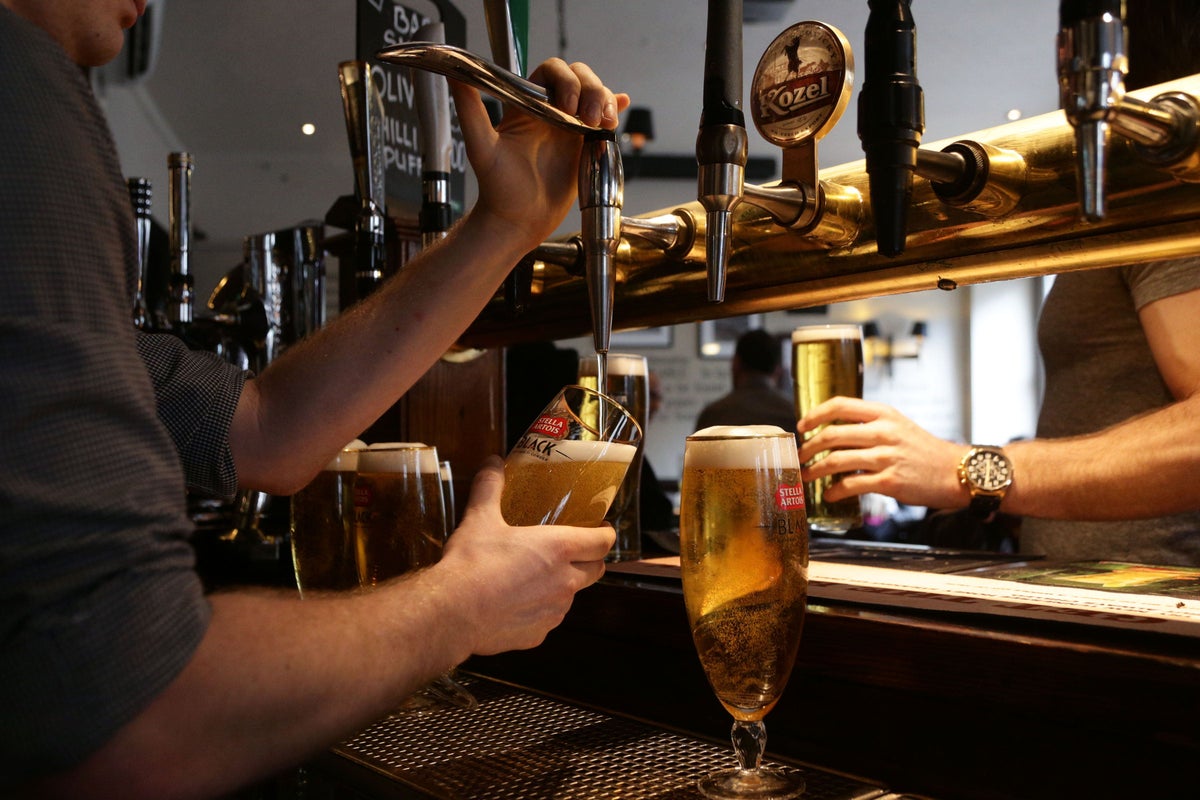
Growth in the UK’s services sector rebounded last month with business activity picking up, but firms face a “short-lived” recovery amid surging costs and lower demand linked to war in the Middle East, a new survey has shown.
Experts cautioned that the outlook for firms may be weaker after a rush of activity in April.
The S&P Global UK services PMI survey showed a reading of 52.7 in April, up from 50.5 the previous month.
Any reading above 50.0 means the sector is growing while any reading below signals it is contracting.
Activity across the industry, which spans businesses from hospitality and leisure to healthcare and transport, has been increasing for almost a year.
But while the latest reading marked an improvement from March – when the US-Israel’s conflict with Iran escalated – it signals a slower rate of growth than at the start of the year.
Businesses taking part in the survey, which is watched closely by economists, cited worries about intensifying pressures on inflation, global supply shortages and elevated borrowing costs as factors holding back business and consumer demand in April.
Some firms said export sales were lower due to disruptions to business travel and weaker demand in the Middle East.
Nevertheless, others pointed out resilient global demand for technology services while backlogs of work also decreased.
But the survey revealed that cost pressures ramped up for businesses in the service industry last month.
Costs for companies rose at the fastest pace since November 2022, with firms widely attributing the increased bills to fuel costs and higher prices for raw materials including metals and plastics, which have been driven up by soaring energy prices since the start of the war.
Many firms also cited pressure from higher wages, following the increase to the national minimum wage at the start of April.
Tim Moore, economics director at S&P Global Market Intelligence, said April’s “modest recovery” for the industry could “easily prove short-lived as new business intakes remained subdued in comparison to the start of 2026”.
Mr Moore said: “Survey respondents widely noted that the Middle East conflict and subsequent global supply chain disruptions had weighed heavily on business and consumer confidence.”
Matt Swannell, chief economist for the Item Club, agreed that there were “already some signs that this jump will be short-lived as businesses reported little improvement in new work amidst weak domestic and foreign demand”.
“We think that the outlook for private sector activity is gloomier,” he went on.
“A sharp rise in inflation will cause households’ real incomes to fall and spending growth to slow.
“Supply chain disruption, rising costs and lingering geopolitical uncertainty will cause some businesses to put their investment plans on hold.”
Mr Swannell added that the survey suggests the Bank of England will prefer to keep interest rates held steady for the rest of the year, but that there was the potential for a hike in the summer.
Thomas Pugh, chief economist at RSM UK, said firms showed “resilience” last month, adding: “However, the rebound is partly fuelled by a rush of activity before price rises and supply shortages start to bite.”
He said future interest rate hikes were “more likely” as a result, but that “everything depends on how energy prices move going forward”.
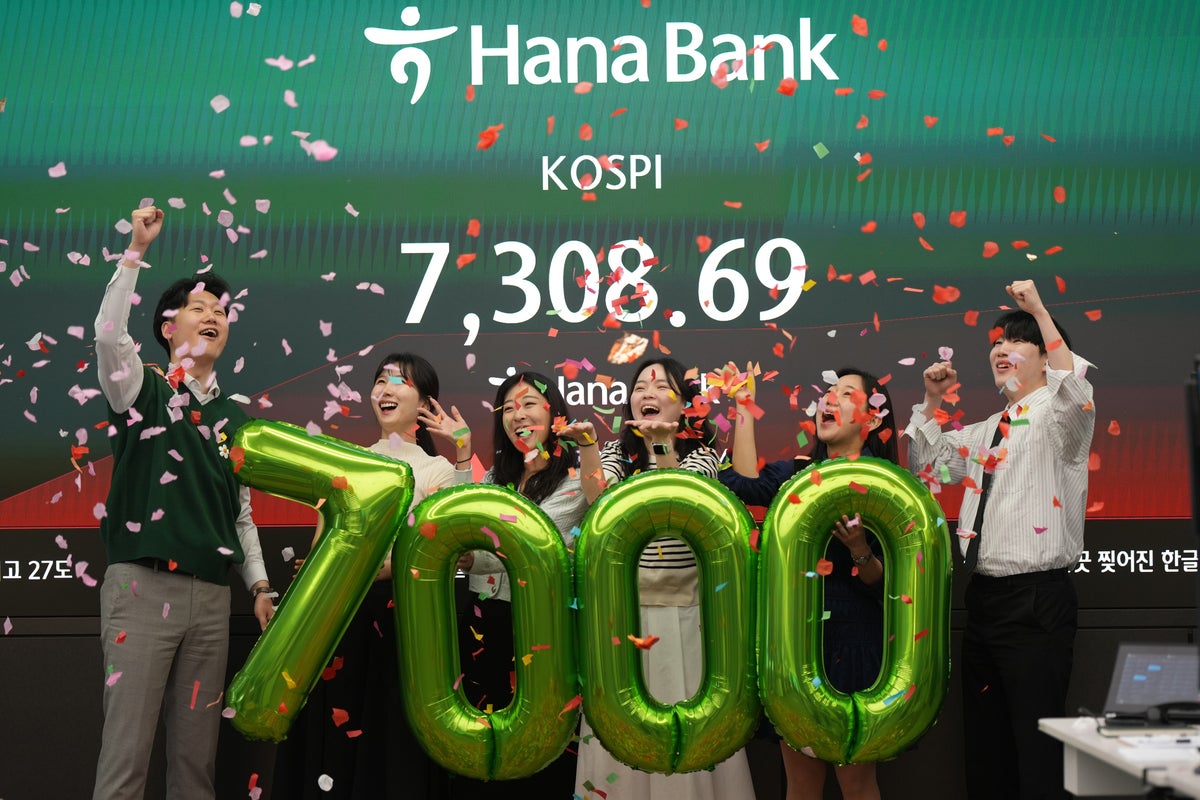
Oil prices fell and Asian stock markets surged to record highs on Wednesday after Donald Trump said negotiations with Iran were making “great progress” toward a final agreement and announced a brief pause in US operations escorting ships through the Strait of Hormuz.
Brent crude tumbled 1.2 per cent to $108.51 a barrel, still well above its roughly $70 price before the war began, but lower than the highs of recent weeks.
Wall Street had already set records on Tuesday, with the S&P 500 rising 0.8 per cent to a new all-time high and the Nasdaq gaining 1 per cent, as oil pulled back sharply after briefly crossing $115 on Monday.
Strong corporate earnings underpinned the Wall Street rally. DuPont surged 8.4 per cent after the chemical giant reported better-than-expected first-quarter profits and raised its full-year forecasts, even as it acknowledged some impact from logistics disruptions in the Middle East.
Pinterest jumped 6.9 per cent after its number of active monthly users rose 11 per cent to 631 million, beating Wall Street’s sales and profit targets. AB InBev climbed 8.7 per cent after topping profit forecasts on growth for its Corona, Stella Artois and Michelob Ultra brands. “Cheers to beer,” chief executive Michel Doukeris said.
Palantir fell 6.9 per cent despite beating expectations, as its stock continued to struggle on worries about increased competition. American Electric Power rose 1.8 per cent and Cummins added 2.8 per cent after both reported stronger-than-expected results.
In Europe, markets were mixed. The CAC 40 rose 1.1 per cent in Paris while the FTSE 100 fell 1.4 per cent in London. Hong Kong’s Hang Seng fell 0.8 per cent. Many Asian markets were closed for holidays.
The momentum carried into Asia on Wednesday, where MSCI‘s broadest index of Asia-Pacific shares outside Japan jumped 2.3 per cent to a fresh all-time high. South Korea’s Kospi surged 5.1 per cent, clearing the 7,000 mark for the first time, as Samsung Electronics jumped 12 per cent and crossed a $1 trillion market valuation, overtaking Berkshire Hathaway.
The AI trade drove much of the enthusiasm. Advanced Micro Devices jumped 16.5 per cent in extended trading after forecasting second-quarter revenue above Wall Street expectations on strong demand from cloud computing companies accelerating spending on AI infrastructure.
“Due to the capital expenditure we are seeing from hyperscalers in the US, the earnings growth trajectory for sectors such as semiconductors, tech hardware, industrials and materials in Asia exceeds anything I have seen in a long time,” Rushil Khanna, head of equity investments for Asia at Ostrum, an affiliate of Natixis Investment Managers, told Reuters. “This capex is leading to material value creation in Asia as the provider of the picks and shovels to the AI ecosystem.”
The diplomatic backdrop of US-Iran talks also helped the markets. Mr Trump said he would briefly pause US operations escorting ships through the strait, which has been effectively closed since Iran blockaded it in late February, triggering a global energy shock. US defence secretary Pete Hegseth confirmed the ceasefire remained in place despite the US and Iran exchanging fire the previous day.
“Markets embraced a sense of calm and stability overnight, with the risk of escalation in the Middle East conflict viewed as having diminished,” analysts from Westpac wrote in a note.
Despite the optimism, analysts cautioned that significant uncertainties remained this week.
“A fragile ceasefire, a novel blockade, Friday’s NFP and diminishing odds of a US-Iran peace deal are all converging this week,” said Lukman Otunuga, head of market research at trading broker FXTM.
“Gold may find itself on the losing end of conflict-induced inflation fears, even as uncertainty grips markets.”
Gold rose 1.2 per cent to $4,609.59. The dollar index slipped 0.1 per cent, snapping a three-day winning streak, with the euro rising to $1.1724 and sterling to $1.3577.
The Australian dollar climbed 0.6 per cent to its highest since June 2022, buoyed by improved risk appetite and underpinned by a third consecutive interest rate rise from the Reserve Bank of Australia, which cited the Middle East conflict’s impact on fuel and commodity prices. The ten-year US Treasury yield held flat at 4.424 per cent.


Hantavirus outbreak ignites Island leader’s outrage ahead of cruise docking

Tigers manager criticizes his own pitcher after he hit Red Sox batter, sparking benches to clear

Apple Will Pay $250 Million to Settle Lawsuit Over Siri’s AI Features

A Brain Implant for Depression Is About to Be Tested in Humans

Pro wrestling star Steph De Lander reveals how colleague’s advice helped lead her to title triumph at ACW

‘I had £20,000 stolen and had to fight a 13-month fraud reporting rule to get it back’

-
 Tech1 week ago
A Brain Implant for Depression Is About to Be Tested in Humans
-
 Sports1 week ago
Pro wrestling star Steph De Lander reveals how colleague’s advice helped lead her to title triumph at ACW
-
Business1 week ago
‘I had £20,000 stolen and had to fight a 13-month fraud reporting rule to get it back’
-

 Entertainment1 week ago
Norway joins Type 26 Frigate Programme to boost NATO naval power
-

 Entertainment1 week ago
Melania Trump says ABC should ‘take a stand’ on late-night host Kimmel
-

 Tech1 week ago
Are tech leaders risking a cyber resourcing crisis? | Computer Weekly
-
 Business6 days ago
PSX plunges over 4,800 points | The Express Tribune
-

 Tech1 week ago
This Ambitious Laptop Doesn’t Leave Much Room for Your Hands