

Business
Most U.S. consumers expect higher holiday prices and a weaker economy, survey finds


As the peak holiday shopping season approaches, most U.S. consumers have a downbeat outlook on the economy, according to an annual Deloitte survey published Wednesday.
Most consumers surveyed — 57% — said they expect the economy to weaken in the year ahead, the consulting firm found in a poll of roughly 4,000 respondents. That compares with 30% who expected a weaker economy ahead of the year-ago holiday season and 54% in 2008, one of the years of the Great Recession.
It marks the most negative economic outlook since Deloitte began tracking that in 1997.
Seventy-seven percent of people surveyed said they expect higher prices on holiday items, up from 69% last year, according to Deloitte. It’s the first holiday season since President Donald Trump‘s latest wave of tariff hikes on many imports.
“We’ve been talking about the resilient consumer for a while now, that despite all these pressures, the U.S. consumer continues to spend and we keep seeing growth and spending for retail,” said Brian McCarthy, retail strategy leader for Deloitte. “This outlook is starting to suggest that we’re getting towards the end of that resilience.”
Consumers’ pessimistic mindset has factored into their spending plans during the holiday season. They plan to spend an average of $1,595, 10% less than the $1,778 they planned to spend in the year-ago period, as they brace for higher prices, according to the Deloitte survey.
The lower anticipated spending cuts across all household income groups and nearly all generations, Deloitte found. Yet it was especially significant among younger shoppers.
Gen Z consumers, which in the survey were between ages 18 and 28, said they plan to spend an average of 34% less this holiday season than a year ago. Millennials, respondents between age 29 and 44 in the poll, said they expect to spend an average of 13% less this holiday season.
That compares with Gen X, which plans to spend an average of 3% more, and baby boomers, who expect to spend an average of 6% less.
For Gen Z shoppers, the tighter holiday budget likely comes from feeling more uncertain and unstable early in their careers, McCarthy said.
“They’re thinking about income and the job market and the concerns about the economy is going to throw a lot more pressure on them because they haven’t yet had time to sort of build up their savings or plan for less rosy economic environments,” he said.
Mike Daher, U.S. consumer industry leader for Deloitte, said the age group is also “exposed to a lot of inflationary pressures around housing costs,” along with higher prices for everyday items like groceries.
For retailers and brands, the findings add a note of caution to the most crucial sales period of the year. Other holiday forecasts have also found households expect to spend less, while still reflecting consumers’ appetite for decorating and giving gifts during the festive season.
Holiday spending across stores and online is expected to rise 4% year over year, according to consulting firm Bain & Co., a drop from the 10-year average of 5.2% growth. A separate Adobe Analytics report found online holiday spending in the U.S. is expected to grow 5.3% year over year, but that would be slower than the year-ago increase of 8.7% year over year.
Like Deloitte’s poll, consulting firm PwC’s survey indicated a holiday pullback among Gen Z consumers, who said they planned to spend 23% less than during the year-ago period. Overall, consumers said they expect to spend about 5% less – or an average total of $1,552 – on holiday gifts, travel and entertainment compared with the year-ago season, according to the PwC survey.
The National Retail Federation, the major industry trade group, plans to share its holiday forecast in early November.
Though holiday outlooks have varied, one of the dominant themes of this holiday season will be value-seeking, Deloitte’s McCarthy said. Even in the past several months, the firm has found a notable uptick in the number of U.S. consumers who have reported seeking deals. Across income groups, Deloitte’s survey indicated that 7 in 10 respondents are engaging in three or more deal-seeking behaviors, such as purchasing store brands or alternative ingredients, cooking more meals at home and buying used cars.
As consumers watch their budgets, they told Deloitte they will cut back on holiday-related extras. On average, consumers said they plan to spend $397 on nongift holiday expenses, such as hosting, clothing and decor, a 22% drop from $507 a year ago.
For gifts, however, the cut wasn’t as deep. On average, survey respondents said they plan to buy eight gifts compared with nine in the year-ago period and spend 6% less on average, a drop to $505 compared with $536 in the prior-year holiday season.


Comcast topped Wall Street’s revenue and earnings estimates for the first quarter on Thursday, lifted by NBC’s sports slate in February and improving broadband customer losses.
The company said it lost 65,000 broadband customers compared with 183,000 losses in the same period last year. Heightened competition from wireless providers like Verizon and T-Mobile has led to quarterly customer losses for Comcast and its cable peers in recent years – which has weighed on these companies’ stocks in particular.
In response, Comcast in the last year has shifted its strategy and introduced more competitive pricing packages in a bid to reduce the broadband losses. The company has also leaned on its mobile business for growth, which added 435,000 new lines during the quarter. In total, Comcast now has 9.7 million mobile customers.
The company also reported 322,000 cable TV customer losses – fewer than the 427,000 in the same period last year.
Revenue for Comcast’s connectivity and platforms unit, which includes its Xfinity-branded broadband, cable TV, and mobile businesses, decreased 2% to $17.32 billion.
The company’s stock climbed as much as 8% in premarket trading.
Here’s how Comcast performed for the period compared with average analyst estimates, according to LSEG:
- Earnings per share: 79 cents adjusted vs. 73 cents expected
- Revenue: $31.46 billion vs. $30.43 billion expected
Comcast’s net income fell nearly 36% to $2.17 billion, or 60 cents per share, compared to $3.38 billion, or 89 cents a share, during the same period last year. Adjusting for one-time items including amortization and investments, Comcast reported earnings per share of $0.79.
Adjusted earnings before interest, taxes, depreciation and amortization were down roughly 17% to $7.93 billion.
Comcast’s overall revenue increased roughly 5% to $31.46 billion for the quarter.
Revenue got a boost from Comcast’s NBCUniversal, which aired a slate of sports – including the Super Bowl, Winter Olympics and NBA All-Star Weekend, during the quarter – that the company coined as “Legendary February.”
The media business, which is made up of NBCUniversal, recorded a nearly 61% increase in revenue to $7.28 billion during the quarter. Excluding the Olympics and Super Bowl – which provided significant boosts to advertising sales – revenue for the unit was up about 13%.
Live sports remains the highest rated programming on traditional TV and streaming, and beckon the most advertising dollars. The Super Bowl, in particular, breaks records annually when it comes to its pricey commercial spots. NBC received an average $8 million per 30-second ad, CNBC reported.
Domestic advertising for the media unit was up 135% to $3.45 billion for the quarter. Excluding the Super Bowl and Winter Olympics, it was up 4.7% to $1.54 billion.
NBC’s sports roster also helped lift streaming service Peacock during the quarter. Peacock subscribers increased 12% year over year to 46 million. Peacock nearly doubled revenue to $2.1 billion compared to the same period last year. The streamer recorded a quarterly loss of $432 million compared to a loss of $215 million in the prior year period.
Adjusted EBITDA for the media segment decreased to a loss of $426 billion due to higher operating expenses related to the costs associated with the Winter Olympics and Super Bowl, as well as the cost of the NBA rights.
NBCUniversal is part of the overall content and experiences segment, which also includes the film studio and theme parks – each of which saw sales climb year-over-year.
Revenue for the film studio was up 21% to $3.43 billion, while Universal theme parks revenue increased 24% to $2.33 billion. The theme parks were boosted by the opening of Epic Universe last May.

Across the UK, shopfronts are being exploited by criminal gangs pushing illegal drugs, experts say.
Source link

At around 8.25 am, the benchmark US oil contract, West Texas Intermediate (WTI) climbed 4.06% to US$96.73 per barrel.
International oil benchmark Brent North Sea crude rose 3.62% to US$105.63. Both eased back in the following minutes.
Oil prices have soared since Israel and the US attacked Iran on Feb 28, and they have kept inching up due to the uncertainty over whether war will resume.
As the clock ticked for a return to the war that has engulfed the region, US President Donald Trump had said Tuesday he would maintain the truce to allow more time for Pakistani-brokered peace talks.
Iran said it welcomed the efforts by Pakistan but made no other comment on Trump’s announcement.
Wall Street stocks gained ground following President Trump’s unilateral ceasefire extension in the Iran war.
All three major US stock indexes advanced, with tech shares helping to put the Nasdaq out front, while gold advanced and the dollar edged higher.
The S&P 500 and the Nasdaq reached record closing highs.
“Despite the energy shock and headlines that have inundated investors, the macroeconomy, corporate fundamentals, and consumer spending remain strong,” said Bill Merz, head of capital markets research at US Bank Wealth Management in Minneapolis.
“Investors are taking the stance that the Strait of Hormuz will open before too much damage is inflicted on the global economy.”
Iran’s Revolutionary Guards seized two vessels for maritime violations just hours after Trump agreed to extend the ceasefire until negotiations are concluded.
About a fifth of the world’s oil and liquefied natural gas (LNG) supplies normally pass through the strait.
US stocks, initially battered by the war, have since made a full recovery, with the S&P 500 and the Nasdaq having reached all-time closing highs in recent sessions.
But geopolitical uncertainty lingers, and a prolonged period of elevated oil prices remains a threat.
About two-thirds of the S&P 500 companies that have reported quarterly earnings since the beginning of April have voiced concerns about energy prices in their analyst conference calls, according to a Reuters review of transcripts.
“Anytime there’s a global event like the conflict in the Middle East, and it grabs so many headlines and captures attention, it will crop up in earnings commentary,” Merz added. “But we’re not seeing it significantly impact behaviour yet.”
First-quarter earnings season is well underway amid lofty expectations. Analysts currently estimate year-on-year S&P 500 earnings growth of 14.4% for the January-March period, according to the most recent LSEG data.
The Dow Jones Industrial Average rose 341.27 points, or 0.69%, to 49,490.52, the S&P 500 +gained 73.90 points, or 1.05%, to 7,137.91, and the Nasdaq Composite was up 397.60 points, or 1.64%, to 24,657.57.
European shares ended lower for the third straight session as the Middle East strife continued to weigh on markets and investors assessed a raft of corporate earnings.
Dozens of international firms have withdrawn guidance or signalled price hikes since the war began.
MSCI’s gauge of stocks across the globe rose 4.52 points, or 0.42%, to 1,070.98.
The pan-European STOXX 600 index fell 0.35%, while Europe’s broad FTSEurofirst 300 index fell 8.58 points, or 0.35%.
Emerging market stocks fell 9.41 points, or 0.58%, to 1,606.07. MSCI’s broadest index of Asia-Pacific shares outside Japan closed lower by 0.6%, to 822.27, while Japan’s Nikkei .N225 rose 236.69 points, or 0.40%, to 59,585.86.
The dollar rose amid lingering geopolitical worries.
The dollar index, which measures the greenback against a basket of currencies including the yen and the euro, rose 0.26% to 98.63, with the euro down 0.32% at $1.1704.
Against the Japanese yen, the dollar strengthened 0.12% to 159.56.
In cryptocurrencies, Bitcoin gained 4.13% to $78,866.74. Ethereum rose 3.48% to $2,398.37.
US Treasury yields increased, rangebound amid choppy trading.
The yield on benchmark US 10-year notes rose 1.2 basis points to 4.304%, from 4.292% late on Tuesday.
The 30-year bond yield rose 1.1 basis points to 4.9091% from 4.898% late on Tuesday.
The 2-year note yield, which typically moves in step with interest rate expectations for the Federal Reserve, rose 2.1 basis points to 3.8%, from 3.779% late on Tuesday.


Italy’s OVS’ FY25 sales rise 7% to $2.06 bn; beats market
Comcast beats revenue, earnings expectations as broadband losses improve

Meghan Markle plots royal bombshell sequel to Prince Harry’s big hit

-

 Fashion1 week ago
France’s LVMH Q1 revenue falls 6%, shows resilience amid Iran war
-

 Entertainment1 week ago
Is Claude down? Here’s why users are seeing errors
-

 Tech1 week ago
The Deepfake Nudes Crisis in Schools Is Much Worse Than You Thought
-

 Sports1 week ago
PSL 11: Peshawar Zalmi win toss, opt to field first against Quetta Gladiators
-
 Business1 week ago
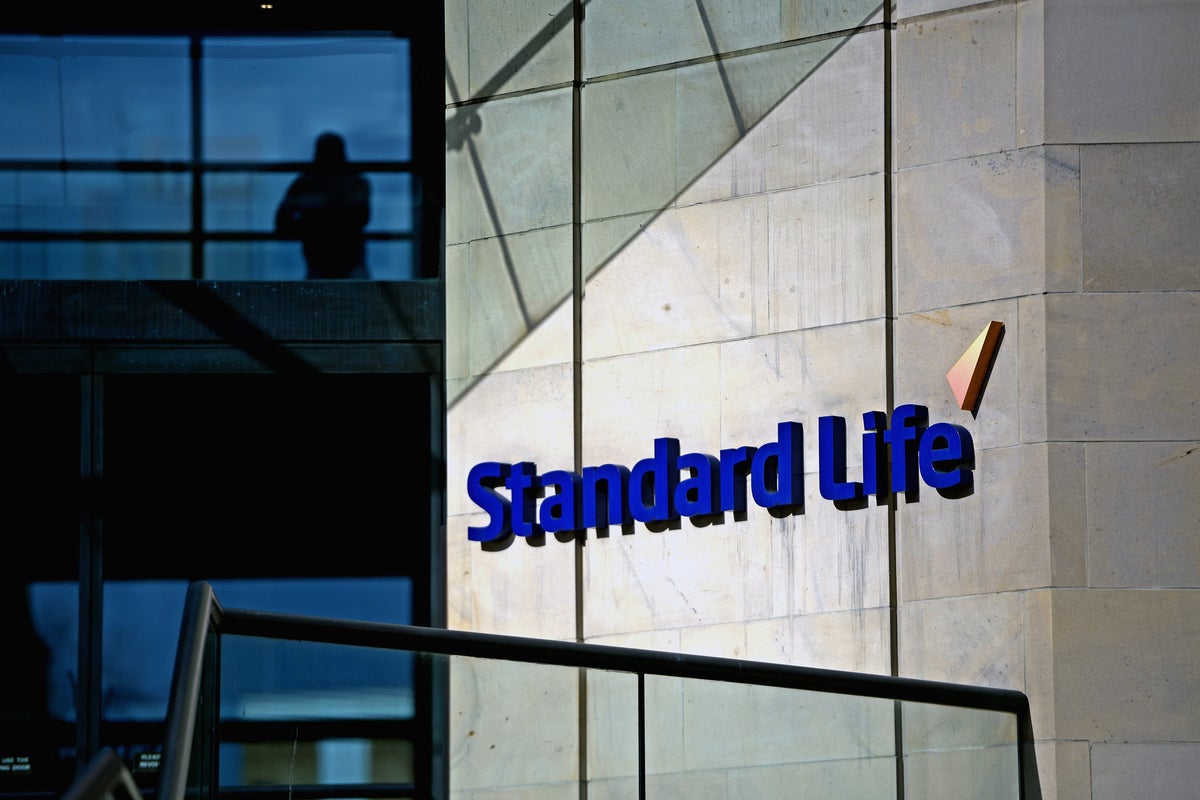
Standard Life buys rival in £2b deal to create savings giant
-

 Tech1 week ago
Human-machine teaming dives underwater
-

 Politics1 week ago
Iran in continuous message exchange with mediator Pakistan after US talks: Report
-

 Tech1 week ago
CYBERUK ’26: UK lagging on legal protections for cyber pros | Computer Weekly