

Fashion
Mulberry hails Q3 strength, shows turnaround plan is working


Published
January 14, 2026
With a brand that’s as loved as Mulberry has been for years in the UK, it’s been painful to watch it going into decline in recent years. Each new trading update can bring disappointment. But recent ones have held out some hope. So what did the latest update on Wednesday tell us? Well, there was not only hope but some tangible good news, showing that the turnaround plan put in place around a year ago is paying off.
The company said it saw a “strong festive trading period” underpinned by its full-price sales mix and newness. And there was “positive customer response” to its “right product, at the right price” strategy. You may remember that in November 2024, its still-new CEO Andrea Baldo said it was aiming to sell most of its luxury handbags for less than £1,095 (that is, less than the price of the star Bayswater) to broaden the brand’s appeal and boost sales.
For Q3 (the 13 weeks to 27 December) that translated into total group sales (that is, physical retail, e-tail and wholesale) rising 5.3% with retail and digital sales rising 11% on a like-for-like basis.
In the UK, those two figures were a positive 3.5% and 6.5%, respectively, while in the US they were an even bigger 12.7% and 12.6%. In Europe excluding the UK, the rises were 14.9% and an impressive 27.2%. In Asia Pacific, the total sales rise was just 0.8% (due to the continued right-sizing of its store estate as part of its simplification strategy) but on a like-for-like basis, sales rose 12.1%.
During the period, the group delivered revenue growth across all markets, with “a successful focus on full-price sales in the lead up to and during the festive period, against a highly promotional wider retail market”. This resulted in the previously mentioned group like-for-like sales rise in digital and e-commerce of 11%, with retail full-price sales up 19%.
The company said that the “strength of this performance reflects the group’s ongoing delivery of its new strategy – focused on simplifying the business, refreshing the brand, and more fully leveraging customer insights”.
Success at home and abroad
Part of its new strategy had been about refocusing on the UK market and customer, and this appeared to have been successful as sales in its home market rose. Full-price was the lynchpin, and it also delivered a larger proportion of the sales mix online than the prior year, “amid a backdrop of more challenging growth in the broader retail market”. This tells it that “the product is resonating positively with the UK consumer”.
As for the rest of the world, those figures for the US, Europe and Asia Pacific show that the strategy is working elsewhere too. The strength of the Apac like-for-like rise was a reflection of strong trading during the Double 11 shopping festival in November 2025.
The company added that it’s seen customers responding enthusiastically to its “differentiated product range, at a time when we have been realigning Mulberry’s identity as a British lifestyle brand, and reinvigorating its cultural relevance. Mulberry has successfully re-engaged their existing customer base as well engaging new shoppers across both retail and digital, reinforcing the core offering and signalling the Back to the Mulberry Spirit strategy is working”.
It’s something that’s also being seen at larger peer Burberry and in the case of both companies is a sign that focusing on Britishness and brand heritage doesn’t have to mean products and campaigns that are traditional, even boring.
In fact, both firms have been adding new products and reworking existing ones, using heritage materials, and promoting them via campaigns where creativity is to the fore.
CEO Andrea Baldo said that “there remains plenty more to be done” but the early results are “encouraging” and the business is also maintaining “disciplined cost control, while at the same time growing full-price sales by having products that resonate at the right price”.
He also said the response to its Christmas campaign “has been in line with expectation, with particularly strong demand for the Roxanne, the Hackney and the continued resurgence of the Bayswater”.
Copyright © 2026 FashionNetwork.com All rights reserved.













Following talks between his CDU party and its coalition partners, Chancellor Friedrich Merz said his government has decided to cut the tax on petrol and diesel by around 17 euro cents ($0.19) for two months.
Germany yesterday announced a €1.6-billion ($1.9-billion) fuel price relief package for households and businesses struggling with the energy shock triggered by the Middle East conflict.
Chancellor Friedrich Merz said his government has decided to cut the tax on petrol and diesel by around $0.19 for two months.
The funds for the relief measures would be financed by higher taxes on tobacco.
The announcement followed another surge in oil prices after the US-Iran peace talks collapsed and US President Donald Trump’s decision to blockade the Strait of Hormuz.
The war “is the root cause of the problems we face in our own country”, said Merz, stressing that Berlin is doing all it could to try to end the conflict.
“This will very quickly improve the situation for drivers and businesses in the country, and above all for those who, mainly for professional reasons, spend a great deal of time on the road,” he told a news conference in Berlin.
The funds for the relief measures would be financed by higher taxes on tobacco, a finance ministry spokesman was cited as saying by global newswires.
Employers can also pay staff tax-free bonuses of up to €1,000 ($1,170) to mitigate the impacts of inflation, which has already started rising in Germany, the government announced.
“At the same time, we cannot offset every single outcome on the market with government funds… The state cannot absorb all uncertainties, not all risks, not all disruptions in global politics,” Merz cautioned.
He said the war’s effects are likely to last long. “The German economy will face a significant burden over an extended period,” he added.
Fibre2Fashion News Desk (DS)
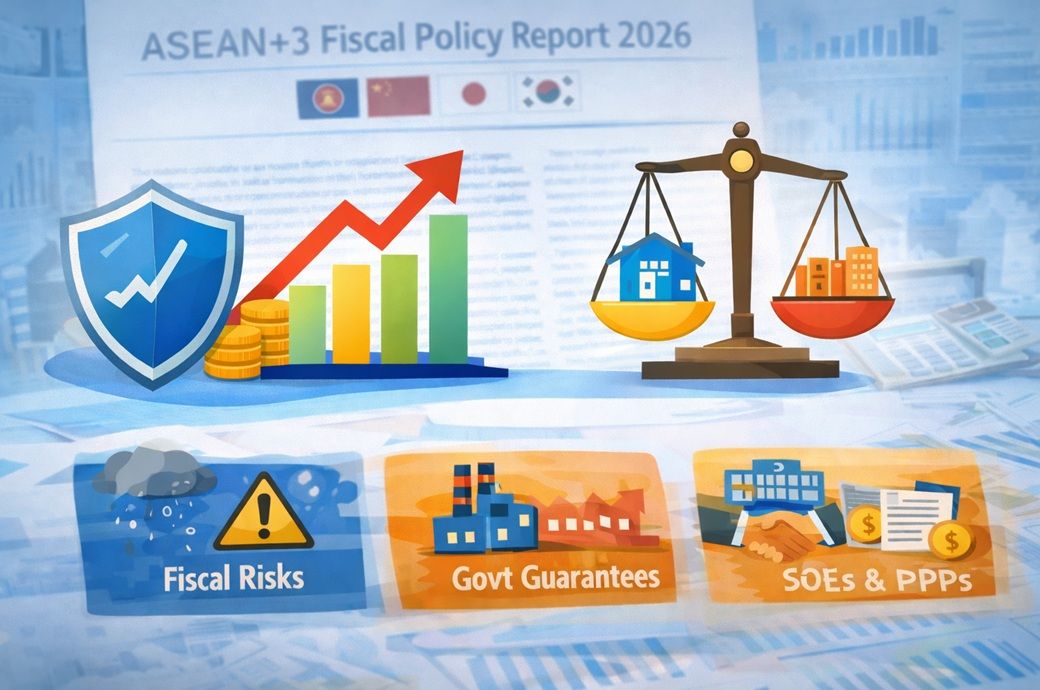
At the same time, growing demands on fiscal policy require governments not only to respond to immediate shocks, but also to support growth, facilitate structural transformation and reduce poverty and inequality over the medium to long term, it noted.
With fiscal positions weakened and policy space narrowed, ASEAN+3 policymakers must safeguard fiscal sustainability and rebuild buffers, the ASEAN+3 Fiscal Policy Report 2026 said.
Governments should also support growth, facilitate structural transformation and reduce poverty and inequality over the medium to long term, it noted.
Particular attention should be given to liabilities outside the budget.
ASEAN+3 comprises members of the Association of Southeast Asian Nations, along with China, South Korea and Japan.
These competing demands are compounded by sluggish revenue growth and rigid budget structures. Addressing these challenges will require stronger fiscal management frameworks, including improvements in risk management, fiscal aggregate management, strategic resource allocation, spending efficiency and revenue mobilisation.
The report also highlights the importance of comprehensive fiscal risk management, urging policymakers to strengthen the identification, assessment and disclosure of fiscal risks.
Particular attention should be given to liabilities outside the budget, including borrowing by off-budget public entities and government arrears.
Systematic monitoring and proactive management of contingent liabilities are essential, especially those related to government guarantees, public-private partnerships, state-owned enterprises and social security obligations, the report remarked.
Enhancing fiscal aggregate management, alongside improving strategic resource allocation and spending efficiency, will be critical to meeting rising expenditure demands in line with national priorities, while safeguarding fiscal sustainability and rebuilding buffers, it added.
The report further encourages policymakers to implement comprehensive and durable revenue-enhancing measures, including strengthening tax administration—particularly through digitalisation—rationalising tax expenditures and advancing structural reforms to major taxes.
Fibre2Fashion News Desk (DS)

The piece of legislation, aimed at addressing long-standing challenges to the enforcement of intellectual property rights (IPR) at US borders, was reported with unanimous, bipartisan support from the House Ways and Means Committee.
AAFA along with 18 other trade bodies recently wrote to Congressional leadership in the US House of Representatives seeking support to move HR 4930 forward in the legislative process.
The piece of legislation, aimed at addressing long-standing challenges to the enforcement of IPR at US borders, was reported with unanimous, bipartisan support from the House Ways and Means Committee.
“We encourage you to move swiftly in bringing the bill to the Floor,” the letter noted.
In fiscal 2023-2024, US Customs & Border Protection (CBP) seized over 32 million counterfeit and pirated items, valued in excess of $5 billion, across more than 300 ports of entry, the letter noted.
“More disconcerting though is the rate at which those figures are increasing. In just the past five years, the number of illicit goods seized by CBP has more than doubled, while the value of those goods has grown by more than 400 per cent,” the letter said.
“The cost of this criminal trafficking cannot be measured in dollars alone though, but in the injuries caused by often dangerous fakes that put consumers’ health and safety at risk, in diminished investments to drive the next wave of innovation by American businesses, in jobs lost
to unfair competition, and increasingly, by the threats such products pose to our national security,” the letter said.
The overwhelming volume of trade passing through U.S. ports, and the speed at which it moves, presents a significant obstacle to effective border enforcement, it noted.
While Congress has expressed a clear desire in recent years for greater partnership between the public and private sectors on these issues, CBP has raised concerns over both the scope of its authority to share information with, and to seek assistance from, its partners in the private sector in carrying out its IP enforcement mission, it said.
HR 4930 clarifies and expands the agency’s authority, offering practical tools to safeguard consumers and legitimate businesses.
“It is essential that CBP has the ability to work with relevant stakeholders throughout the supply chain, both to avoid the siloing of information that has often hindered the agency’s efficiency, and to ensure that the private sector can offer effective and timely assistance on matters of trade enforcement, thereby ensuring that bad actors and trade cheats are held accountable,” the letter added.
The trade associations which signed the letter include Baby Safety Alliance, International AntiCounterfeiting Coalition, International Intellectual Property Association, Personal Care Products Council and Transnational Alliance to Combat Illicit Trade.
Fibre2Fashion News Desk (DS)

Lidl and Iceland ads banned under new ‘less healthy’ food rules

Mascherano quits as Inter Miami coach, 4 months after MLS title

Crisis grants launched for struggling Bradford families

-

 Fashion1 week ago
India’s exports face reset as EU links trade to carbon metrics: EY
-

 Entertainment7 days ago
Queen Elizabeth II emotional message for Archie, Lilibet sparks speculation
-

 Tech6 days ago
As the Strait of Hormuz Reopens, Global Shipping Will Take Months to Recover
-

 Entertainment1 week ago
Lamar Odom shocking response to Khloé Kardashian account of his overdose
-

 Tech7 days ago
Azure customers up in arms over ‘full’ UK South region | Computer Weekly
-

 Fashion7 days ago
CII submits 20-pt agenda to Indian govt to back firms hit by Iran war
-

 Tech6 days ago
This AI Button Wearable From Ex-Apple Engineers Looks Like an iPod Shuffle
-

 Tech1 week ago
A Single Strike Won’t Shut Off the Gulf’s Desalination System