

Fashion
Munich Fabric Start puts emotional materiality centre stage with ‘Pleasure’ as its guiding theme

Published
January 15, 2026
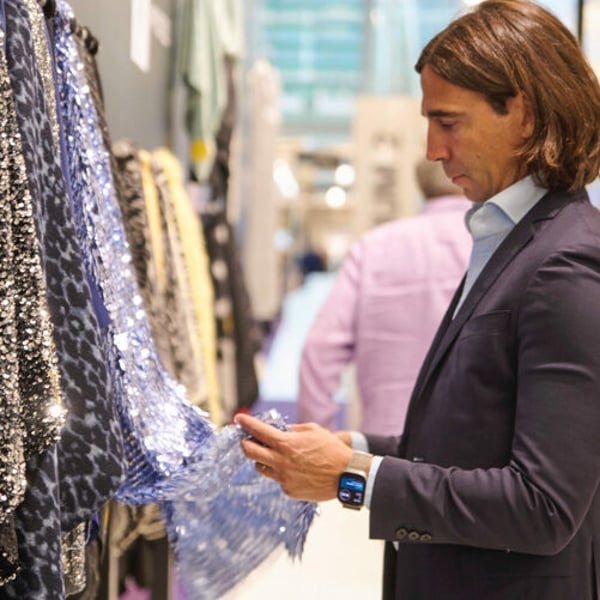
Munich Fabric Start (MFS) is gearing up for its January 27–29 edition. Designers, product managers, and buyers will be able to explore around 1,000 spring/ summer 2027 collections from international fabric and trim manufacturers at the MOC Munich.
With the lead theme of “Pleasure,” the trade show’s organisers aim to spotlight “attitude, sensuality, and emotional materiality” over the three days of the fair. The lead theme frames fashion as an emotional space, an expression of attitude and cultural reflection. Colours, surfaces and materials become conduits for self-confidence and joie de vivre.
“After seasons of restraint, spring/ summer ’27 marks a deliberate counter-design: optimism, sensuality, and creative freedom take the place of pragmatism and neutrality. Physical presence and individuality are regaining importance- as a response to uncertainty, exhaustion and algorithmic predictability,” according to MFS.
“Efficiency and pragmatism are shaping current market developments. And these are not easy times for us as trade fair organisers either. We are countering this with a clearly structured trade fair and a strong positioning as a key source of inspiration, an interactive business forum, and a platform bringing together textile expertise. In terms of fashion and trends, we are heralding a change of perspective: optimism instead of restraint. Self-confidence instead of uncertainty,” adds managing director Florian Klinder.
With the integrated shows Bluezone, Keyhouse, and The Source, the trade fair brings together all relevant fashion segments: high-quality fabrics and trims, international denim expertise, and forward-looking innovations along the entire textile value chain. International reach, collaboration, and sustainability remain central themes.

The consolidation of the trade fair segments at the MOC has proven successful. The trade fair with its eight areas will once again be held under one roof.
Bluezone and Keyhouse with “Sustainable Innovations” will once again be anchored in the high-footfall area of Hall 2 at the upcoming event- directly connected to the Fabrics and Additionals areas.
The Design Studios in Hall 4 are now positioned even more centrally. And the sustainable sourcing area Resource is also set to have a stronger presence, located directly next to The Source in Hall 1.
To provide buyers and designers with a holistic overview, the Bluezone denim trends will be integrated directly into the trend worlds built around the lead theme in the MOC foyer. This new form of presentation reflects market developments in which denim and classic fashion segments are increasingly merging within collections.

The exhibitors will once again include well-known names from the fabric and textile industry, including the Albini Group, Kiki Fashion, Calik, Lanificio di Tollegno, Bornemann Etiketten, Manteco, Pontetorto, Riopele, Thermore, Bureaux Bo, Can Tekstil, and Troficolor Denim Makers.
As usual, a supporting programme of keynotes, panel discussions, and trend presentations will round off the trade fair offering. Current industry topics will be discussed and contextualised on the “Stage” with Peclers Paris, David Shah, O/M Collective, Olivia Does Design, and Monsieur-T, among others. The curator of Sustainable Innovations, Simon Angel, will offer in-depth sessions on future-oriented, sustainable material solutions.
This article is an automatic translation.
Click here to read the original article.
Copyright © 2026 FashionNetwork.com All rights reserved.





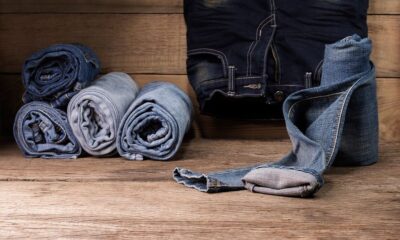




Directed and shot by Mert Alas, the new chapter sharpens the focus on denim as the ultimate expression of personal style through icon Jung Kook’s distinctive and influential point of view as he lives in the moment.
Calvin Klein, owned by PVH Corp., has unveiled its Spring 2026 denim campaign fronted by BTS icon Jung Kook.
Directed and photographed by Mert Alas, the cinematic film fuses music, movement and city energy, highlighting 90s Straight, Baggy and reworked Trucker silhouettes.
A special appearance by Rosie Perez amplifies the brand’s signature visual storytelling.
The campaign unfolds across a series of immersive worlds, unified and guided by Jung Kook’s style, attitude and way of living. The high-impact film fuses fashion and entertainment, moving to an instantly recognizable soundtrack and brought to life through the artist’s signature choreography and commanding presence. The interplay of music and movement – complete with a cameo from New York City legend Rosie Perez – captures the impact synonymous with Calvin Klein’s iconic visual storytelling.
Calvin Klein jeans are at the center of the wardrobe with hero silhouettes leading the narrative: the effortless attitude of the 90s Straight; the relaxed and nostalgic proportions of the Baggy; and new interpretations of the iconic Trucker jacket — all reimagined with elevated washes and designed for versatility. Casual logo tees and oversized bombers complete the looks, reinforcing denim as both uniform and statement.
“I love Calvin Klein jeans because they’re designed to be lived in,” said Jung Kook. “The looks I wore for this campaign nod to ‘90s style while feeling completely modern. It was exciting to bring together my love of music, dance and fashion against the energy of the city.”
Note: The headline, insights, and image of this press release may have been refined by the Fibre2Fashion staff; the rest of the content remains unchanged.
Fibre2Fashion News Desk (RM)

Premier Li Qiang, who delivered the report at the opening of the fourth session of the 14th National People’s Congress in Beijing, said the growth target is “well aligned with the country’s long-range objectives through the year 2035 and is broadly in line with the long-term growth potential of China’s economy, with favorable conditions in place for achieving this target.”
China has set a GDP growth target of 4.5–5 per cent for 2026, alongside goals to stabilise employment, manage inflation, maintain grain output and cut emissions.
The plan also preserves flexibility for structural reforms under the 15th Five-Year Plan, aiming to balance steady economic expansion with long-term, high-quality and sustainable development.
Main development targets for 2026 also include a surveyed urban unemployment rate of around 5.5 per cent, creation of over 12 million new urban jobs, a rise in the consumer price index of around 2 per cent, personal income growth in step with economic growth, a basic equilibrium in the balance of payments, grain output of around 700 million tonnes, and a drop of around 3.8 per cent in carbon dioxide emissions per unit of GDP.
Qiang said the targets took into account the need to leave room for structural adjustments, risk prevention and reform in the opening year of the 15th Five-Year Plan (2026–30) period, to lay a solid foundation for improved performance in the coming years. Government at local level should, taking into account their own conditions, make solid efforts to deliver positive outcomes, he added.
Analysts said the 2026 target reflects a pragmatic approach in recognising structural and cyclical challenges facing the world’s second-largest economy, while pursuing reasonable growth in line with high-quality development.
Fibre2Fashion News Desk (JP)
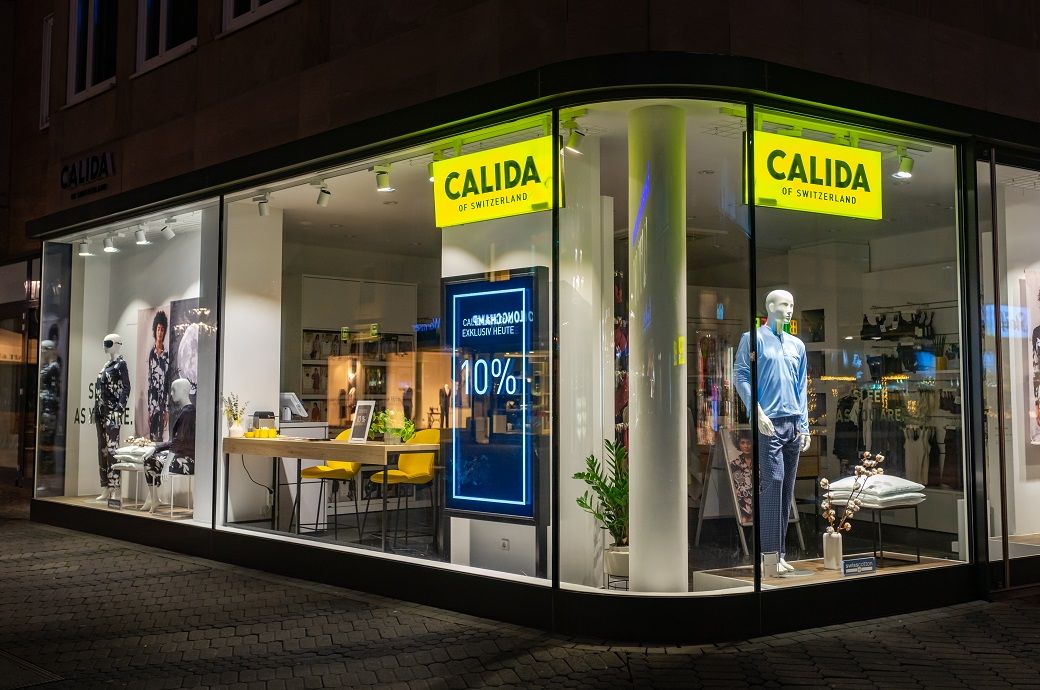
The group recorded an operating result (EBIT) of CHF 9 million (~$11.6 million) compared with CHF 4 million in the previous year, lifting the EBIT margin to 4.2 per cent from 1.7 per cent. Excluding Cosabella, the combined EBIT margin of Calida and Aubade reached 6.7 per cent, approaching the company’s medium-term target range. Operating net profit improved significantly to CHF 7.6 million (~$9.8 million) from CHF 0.5 million a year earlier, Calida Group said in a press release.
Calida Group has reported net sales of CHF 215.9 million (~$278.5 million) in 2025, down 5 per cent YoY.
EBIT rose to CHF 9 million (~$11.6 million) and net profit to CHF 7.6 million (~$9.8 million), supported by strong Calida and Aubade performance.
The group maintained solid liquidity and continued Cosabella repositioning while targeting future profitability improvement.
The group maintained a solid financial base with net liquidity of CHF 25.1 million and an adjusted equity ratio of 67.9 per cent, while free cash flow reached CHF 9.8 million. The board proposed a cash dividend of CHF 0.25 per share, corresponding to a payout ratio of 23 per cent in line with its long-term dividend policy.
“After a challenging first half of 2025, the Calida Group developed positively in the second half and achieved operational improvements on sales and profitability. By deliberately and systematically forgoing discount-driven growth and strategically positioning Calida and Aubade in the premium segment, the brands were strengthened in the long-term. Overall, 2025 was another year defined by a persistently challenging market environment,” said Thomas Stocklin, CEO of the Calida Group.
“Geopolitical uncertainty, US trade and tariff policies, and muted consumer sentiment in our core markets impacted the entire industry. In this environment, the Calida Group has demonstrated strategic discipline and, step by step, is evolving in the desired direction. Today, our group is more agile and efficient. Combined with our financial strength, this positions the Calida Group to pursue well-considered organic as well as external growth opportunities, allowing us to look to the future with confidence,” added Stocklin.
Operationally, the company continued implementing its efficiency-focused strategy by reintegrating functions into individual brands, streamlining group management structures and strengthening capabilities across product management, marketing, operations and sales.
Brand-wise, Calida generated sales of CHF 145.1 million, declining modestly as store traffic softened, although e-commerce growth and a strong Christmas season supported second-half performance. The brand improved its operating contribution margin through higher gross margins and ongoing cost optimisation while reinforcing its premium market positioning.
Aubade recorded sales of CHF 58 million amid weak consumer sentiment in France and the strategic withdrawal from unprofitable channels following the pandemic-driven demand surge. Nevertheless, margin performance strengthened through strict cost management, ongoing rebranding initiatives and progress in expanding export markets, particularly in the United States.
Cosabella reported sales of CHF 12.8 million, extending its negative growth trajectory and contributing higher losses as the brand remains in an intensive repositioning phase under strategic review. The group is targeting a turnaround towards operational break-even in 2026.
Overall, the group indicated that organisational restructuring, inventory optimisation and disciplined channel management enhanced agility and cost efficiency, positioning the company for future growth while aiming to improve group profitability further as Cosabella’s performance stabilises.
Fibre2Fashion News Desk (SG)


US brand Calvin Klein unveils Spring 2026 denim with Jung Kook

Law firm fighting for women’s sports in SCOTUS battle comments on ruling possibly impacting SJSU trans lawsuit

Beyond oil: How US-Iran war & Middle East crisis may hit India’s economy – sector-wise impact explained – The Times of India

What are Iran’s ballistic missile capabilities?

India Us Trade Deal: Fresh look at India-US trade deal? May be ‘rebalanced’ if circumstances change, says Piyush Goyal – The Times of India

Attock Cement’s acquisition approved | The Express Tribune

-
 Politics1 week ago
What are Iran’s ballistic missile capabilities?
-
Business6 days ago
India Us Trade Deal: Fresh look at India-US trade deal? May be ‘rebalanced’ if circumstances change, says Piyush Goyal – The Times of India
-
Business7 days ago
Attock Cement’s acquisition approved | The Express Tribune
-
 Business1 week ago
Households set for lower energy bills amid price cap shake-up
-

 Politics1 week ago
US arrests ex-Air Force pilot for ‘training’ Chinese military
-

 Fashion7 days ago
Policy easing drives Argentina’s garment import surge in 2025
-

 Sports6 days ago
LPGA legend shares her feelings about US women’s Olympic wins: ‘Gets me really emotional’
-
 Fashion7 days ago
Texwin Spinning showcasing premium cotton yarn range at VIATT 2026