

Tech
My Favorite Laptops, Chromebooks, and Gaming Laptops Are on Sale For Black Friday

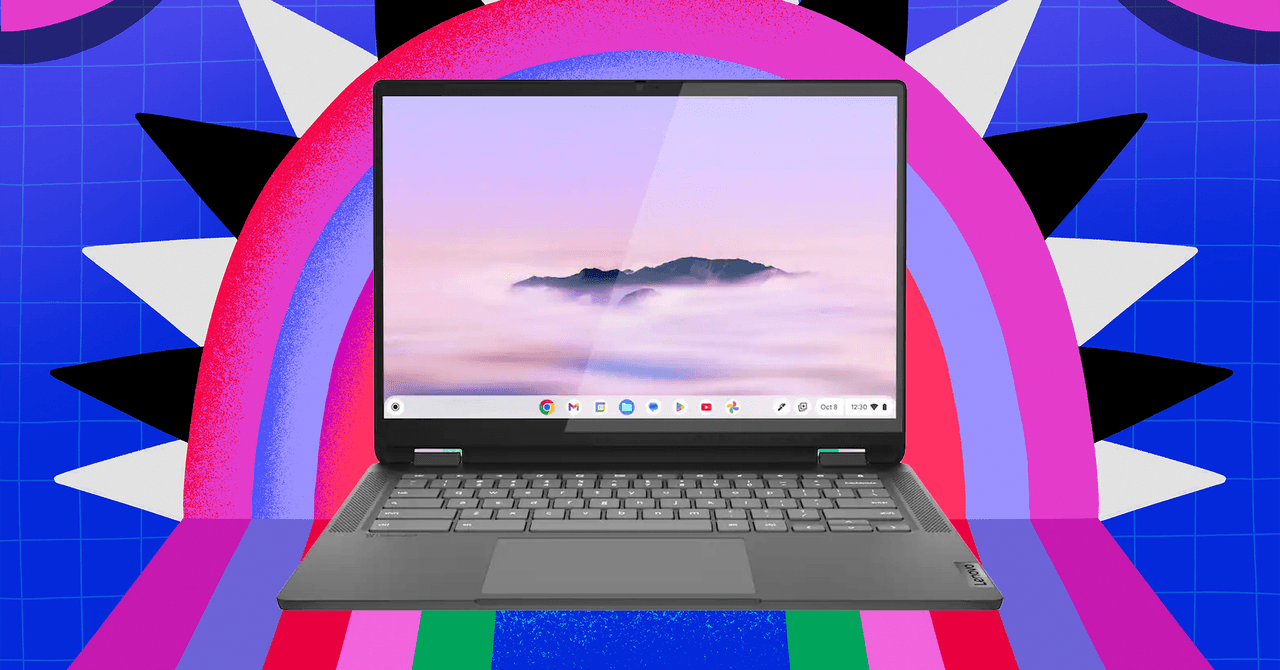
It’s almost the end of the year, and with Black Friday upon us, it’s a great time to buy a laptop. I’ve sorted through the junk to find the best Black Friday laptop deals, and I’m happy to report that most of my favorite laptops I tested this year are on sale right now. Even better, some laptops I thought were overpriced at launch now have such steep discounts that they’ve risen in value in my estimation. So, if you’ve been waiting to buy a laptop at the right moment, this is it. One of these laptops should fit exactly what you’re looking for at a wide range of prices.
Hunting for more deals? Read our Absolute Best Black Friday Deals roundup, and check out our Black Friday liveblog for the highlights.
The Best Windows Laptop Deal
-
Photograph: Luke Larsen
-
Photograph: Luke Larsen
-
Photograph: Luke Larsen


If you’re shopping for a laptop on Black Friday, you’re probably looking for something a bit more budget-friendly. And while the MacBook Air is the better laptop, there’s no question that the Dell 14 Plus is the best deal. It comes with great specs: 16 GB of RAM, 512 GB of storage, and an Intel Core Ultra 5 226V. I reviewed the model with the Core Ultra 7 258V, but either way, you’re getting really good battery life and integrated graphics performance.
Most importantly, it avoids the two main pitfalls of budget laptops: poor displays and touchpads. The Dell 14 Plus comes with a high-resolution display (2560 x 1600) and a very smooth-feeling touchpad. It’s literally a premium laptop for an affordable price, and at $500, it’s officially the best deal on a laptop this Black Friday. It’s a doorbuster-style deal, however, so once it’s sold out, the price may change.
The Best MacBook Deal
-Reviewer-Photo-SOURCE-Brenda-Stolyar.jpg)
Photograph: Brenda Stolyar
Apple
MacBook Air (M4, 2025)
Since its launch this spring, the M4 MacBook Air has been the best laptop you can buy. It has also continued to drop in price slowly month after month, now down to just $749. That’s low enough that it’s not worth buying cheaper, older MacBook Airs, such as the M2 model. The difference in performance (and external display support) is worth far more. The M5 model is likely coming sometime in early 2026, but it’ll be a long time before it comes down to the price of the M4 right now. Come and get it while it’s hot.
I’ve collected the best Black Friday MacBook deals here for more recommendations and discussion on which MacBook deal is right for you.
The Best Chromebook Deal

Courtesy of Lenovo
Lenovo
Flex 5i Chromebook Plus
There are Chromebooks I like more than the Lenovo Flex 5i Chromebook Plus (8/10, WIRED Recommends), such as the Lenovo Chromebook Plus 14. But none are this cheap. At $350, it’s one of the most affordable Chromebook Plus models you can find—it’s in a different league over standard Chromebooks at this price. It has a better screen, faster performance, more storage, and even a crisper webcam. The Flex 5i Chromebook Plus even has a 360-degree hinge and touchscreen, sweetening the deal even more.
The Latest MacBook, Already on Sale
-
Photograph: Luke Larsen
-
Photograph: Luke Larsen
-
Photograph: Luke Larsen
-
Photograph: Luke Larsen
%2520source%2520luke%2520larsen.png)


The MacBook Air is a better value, yes. And the M4 Pro or M4 Max MacBooks are more powerful. But the base 14-inch MacBook Pro is the only Mac right now with the latest M5 chip, which launched just a month ago. I wish Apple had included other features in this update, as the M5 is the only change over the M4 model. The good news is that the M5 MacBook Pro (8/10, WIRED Recommends) offers a solid performance increase in all areas, including CPU, GPU, and even the Neural Engine. More important is the $200 discount just a month after it launched.
The Best 2-in-1 Laptop Deal
-
Photograph: Christopher Null
-
Courtesy of Microsoft
-
Courtesy of Microsoft
-
Photograph: Christopher Null
-Front-Reviewer-Photo-(no-border)-SOURCE-Christopher-Null.jpg)


-Screen-Display-Closeup-Reviewer-Photo-SOURCE-Christopher-Null.jpg)
Microsoft
Surface Pro 13-inch (11th Edition, 2024)
The OLED Surface Pro was excellent when it came out in mid-2024. It was the first time the Surface Pro got an OLED panel, and the Qualcomm Snapdragon X Plus/Elite chip finally gave this Windows tablet the performance and battery life needed to compete with the iPad Pro. The only problem? It was too expensive. But for Black Friday, the OLED Surface Pro is $500 off, bringing the price down to just $900. The one caveat to remember is that you’ll still need to buy a Surface Type Cover Keyboard to pair it with. Together, you have a 2-in-1 laptop that’s the ultimate travel companion and a full PC replacement.
A Great Budget Laptop

Photograph: Luke Larsen
Asus
Vivobook 14 (X1407QA)
The Asus Vivobook 14 is one of the few Snapdragon X-powered laptops bringing efficient performance and excellent battery life to surprisingly low prices. It’s $200 off for Black Friday, which brings it down to the same price as on the last Amazon Prime Day. There’s really only one problem: the Dell 14 Plus. By every measure, that’s the laptop you should buy. Not only is it cheaper, but it also has a much better display, touchpad, and integrated GPU performance. However, if the limited Doorbuster prices on the Dell 14 Plus have run out, the Asus Vivobook 14 is your next best bet for a Windows laptop around this price.
What to Look for in a Black Friday Laptop Deal
Shopping around for a good Black Friday deal isn’t so different from buying a laptop at any other time of the year. We never recommend products we don’t test ourselves, so if you’re interested in a particular laptop on this list, check out the corresponding review. But as you shop around, you may want to factor in the following specs along with the current price of the laptop:
- CPU
- GPU
- Memory (RAM)
- Storage
- Display resolution, panel type, and refresh rate
- Battery life
Lastly, consider the price history. CamelCamelCamel is a good tool to see some historical data on price drops for individual laptops. Some of the laptops included above (such as the Dell 14 Plus) are hitting new historic lows in terms of price, while others are returning to the same low price as they were on Prime Day. That doesn’t mean these aren’t a good deal necessarily, but it’s important to know that not every deal labeled “Black Friday Deal” is equal, even if the percentage drop looks similar. Many products these days have permanent discounted prices at retailers, which can obscure how big of a sale it really is.
For an in-depth breakdown that explains each element of a laptop, read our detailed How to Choose the Right Laptop guide.
Is Now a Good Time to Buy a Laptop?
Yes. Black Friday isn’t the only big shopping event throughout the year, and it’s not uncommon to find great sales on laptops at other times, whether that’s on a random day or on Amazon Prime Day(s). But Black Friday remains important as the beginning of the holiday shopping season. The entire annual cycle of laptop refreshes revolves around this timing. The beginning of the year starts with lots of products getting announced at CES, and then launching throughout the year. By the time Black Friday rolls around, companies and retailers are looking to clear out inventory to make room for incoming new stuff, which is why we still often see the biggest discounts for Black Friday.
This year, that timing even applies to MacBooks. Because Apple didn’t refresh any Macs this fall outside the 14-inch M5 MacBook Pro, laptops like the M4 MacBook Air or M4 Pro/Max MacBook Pro are discounted with the anticipation of a refresh coming sometime in early 2026.










Thinking Machines cofounders Barret Zoph and Luke Metz are leaving the fledgling AI lab and rejoining OpenAI, the ChatGPT-maker announced on Thursday. OpenAI’s CEO of applications, Fidji Simo, shared the news in a memo to staff Thursday afternoon.
The news was first reported on X by technology reporter Kylie Robison, who wrote that Zoph was fired for “unethical conduct.”
A source close to Thinking Machines said that Zoph had shared confidential company information with competitors. WIRED was unable to verify this information with Zoph, who did not immediately respond to WIRED’s request for comment.
Zoph told Thinking Machines CEO Mira Murati on Monday he was considering leaving, then was fired today, according to the memo from Simo. She goes on to write that OpenAI doesn’t share the same concerns about Zoph as Murati.
The personnel shake-up is a major win for OpenAI, which recently lost its VP of research, Jerry Tworek.
Another Thinking Machines Lab staffer, Sam Schoenholz, is also rejoining OpenAI, the source said.
Zoph and Metz left OpenAI in late 2024 to start Thinking Machines with Murati, who had been the ChatGPT-maker’s chief technology officer.
This is a developing story. Please check back for updates.
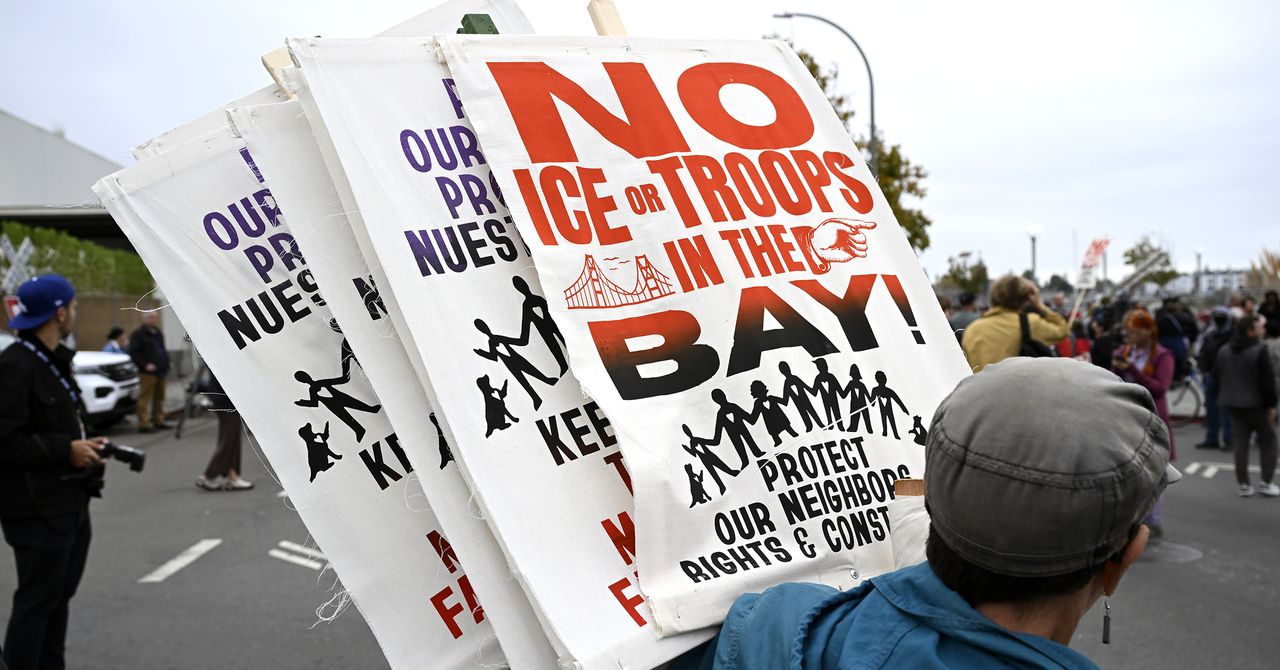
Since Donald Trump returned to the White House last January, the biggest names in tech have mostly fallen in line with the new regime, attending dinners with officials, heaping praise upon the administration, presenting the president with lavish gifts, and pleading for Trump’s permission to sell their products to China. It’s been mostly business as usual for Silicon Valley over the past year, even as the administration ignored a wide range of constitutional norms and attempted to slap arbitrary fees on everything from chip exports to worker visas for high-skilled immigrants employed by tech firms.
But after an ICE agent shot and killed an unarmed US citizen, Renee Nicole Good, in broad daylight in Minneapolis last week, a number of tech leaders have begun publicly speaking out about the Trump administration’s tactics. This includes prominent researchers at Google and Anthropic, who have denounced the killing as calloused and immoral. The most wealthy and powerful tech CEOs are still staying silent as ICE floods America’s streets, but now some researchers and engineers working for them have chosen to break rank.
More than 150 tech workers have so far signed a petition asking for their company CEOs to call the White House, demand that ICE leave US cities, and speak out publicly against the agency’s recent violence. Anne Diemer, a human resources consultant and former Stripe employee who organized the petition, says that workers at Meta, Google, Amazon, OpenAI, TikTok, Spotify, Salesforce, Linkedin, and Rippling are among those who have signed. The group plans to make the list public once they reach 200 signatories.
“I think so many tech folks have felt like they can’t speak up,” Diemer told WIRED. “I want tech leaders to call the country’s leaders and condemn ICE’s actions, but even if this helps people find their people and take a small part in fighting fascism, then that’s cool, too.”
Nikhil Thorat, an engineer at Anthropic, said in a lengthy post on X that Good’s killing had “stirred something” in him. “A mother was gunned down in the street by ICE, and the government doesn’t even have the decency to perform a scripted condolence,” he wrote. Thorat added that the moral foundation of modern society is “infected, and is festering,” and the country is living through a “cosplay” of Nazi Germany, a time when people also stayed silent out of fear.
Jonathan Frankle, chief AI scientist at Databricks, added a “+1” to Thorat’s post. Shrisha Radhakrishna, chief technology and chief product officer of real estate platform Opendoor, replied that what happened to Good is “not normal. It’s immoral. The speed at which the administration is moving to dehumanize a mother is terrifying.” Other users who identified themselves as employees at OpenAI and Anthropic also responded in support of Thorat.
Shortly after Good was shot, Jeff Dean, an early Google employee and University of Minnesota graduate who is now the chief scientist at Google DeepMind and Google Research, began re-sharing posts with his 400,000 X followers criticizing the Trump administration’s immigration tactics, including one outlining circumstances in which deadly force isn’t justified for police officers interacting with moving vehicles.
He then weighed in himself. “This is completely not okay, and we can’t become numb to repeated instances of illegal and unconstitutional action by government agencies,” Dean wrote in an X post on January 10. “The recent days have been horrific.” He linked to a video of a teenager—identified as a US citizen—being violently arrested at a Target in Richfield, Minnesota.
In response to US Vice President JD Vance’s assertion on X that Good was trying to run over the ICE agent with her vehicle, Aaron Levie, the CEO of the cloud storage company Box, replied, “Why is he shooting after he’s fully out of harm’s way (2nd and 3rd shot)? Why doesn’t he just move away from the vehicle instead of standing in front of it?” He added a screenshot of a Justice Department webpage outlining best practices for law enforcement officers interacting with suspects in moving vehicles.

How does procrastination arise? The reason you decide to postpone household chores and spend your time browsing social media could be explained by the workings of a brain circuit. Recent research has identified a neural connection responsible for delaying the start of activities associated with unpleasant experiences, even when these activities offer a clear reward.
The study, led by Ken-ichi Amemori, a neuroscientist at Kyoto University, aimed to analyze the brain mechanisms that reduce motivation to act when a task involves stress, punishment, or discomfort. To do this, the researchers designed an experiment with monkeys, a widely used model for understanding decisionmaking and motivation processes in the brain.
The scientists worked with two macaques that were trained to perform various decisionmaking tasks. In the first phase of the experiment, after a period of water restriction, the animals could activate one of two levers that released different amounts of liquid; one option offered a smaller reward and the other a larger one. This exercise allowed them to evaluate how the value of the reward influences the willingness to perform an action.
In a later stage, the experimental design incorporated an unpleasant element. The monkeys were given the choice of drinking a moderate amount of water without negative consequences or drinking a larger amount on the condition of receiving a direct blast of air in the face. Although the reward was greater in the second option, it involved an uncomfortable experience.
As the researchers anticipated, the macaques’ motivation to complete the task and access the water decreased considerably when the aversive stimulus was introduced. This behavior allowed them to identify a brain circuit that acts as a brake on motivation in the face of anticipated adverse situations. In particular, the connection between the ventral striatum and the ventral pallidum, two structures located in the basal ganglia of the brain, known for their role in regulating pleasure, motivation, and reward systems, was observed to be involved.
The neural analysis revealed that when the brain anticipates an unpleasant event or potential punishment, the ventral striatum is activated and sends an inhibitory signal to the ventral pallidum, which is normally responsible for driving the intention to perform an action. In other words, this communication reduces the impulse to act when the task is associated with a negative experience.
The Brain Connection Behind Procrastination
To investigate the specific role of this connection, as described in the study published in the journal Current Biology, researchers used a chemogenetic technique that, through the administration of a specialized drug, temporarily disrupted communication between the two brain regions. By doing so, the monkeys regained the motivation to initiate tasks, even in those tests that involved blowing air.
Notably, the inhibitory substance produced no change in trials where reward was not accompanied by punishment. This result suggests that the EV-PV circuit does not regulate motivation in a general way, but rather is specifically activated to suppress it when there is an expectation of discomfort. In this sense, apathy toward unpleasant tasks appears to develop gradually as communication between these two regions intensifies.
Beyond explaining why people tend to unconsciously resist starting household chores or uncomfortable obligations, the findings have relevant implications for understanding disorders such as depression or schizophrenia, in which patients often experience a significant loss of the drive to act.
However, Amemori emphasizes that this circuit serves an essential protective function. “Overworking is very dangerous. This circuit protects us from burnout,” he said in comments reported by Nature. Therefore, he cautions that any attempt to externally modify this neural mechanism must be approached with care, as further research is needed to avoid interfering with the brain’s natural protective processes.
This story originally appeared in WIRED en Español and has been translated from Spanish.


More than 500 million request of World Cup tickets, says FIFA – SUCH TV

Goldman Sachs is about to report fourth-quarter earnings — here’s what the Street expects

Chase Infiniti exudes star power receiving Breakthrough Performance award

-

 Politics1 week ago
UK says provided assistance in US-led tanker seizure
-

 Entertainment1 week ago
Does new US food pyramid put too much steak on your plate?
-

 Entertainment1 week ago
Why did Nick Reiner’s lawyer Alan Jackson withdraw from case?
-
 Business1 week ago
Trump moves to ban home purchases by institutional investors
-

 Sports4 days ago
Clock is ticking for Frank at Spurs, with dwindling evidence he deserves extra time
-

 Sports1 week ago
PGA of America CEO steps down after one year to take care of mother and mother-in-law
-
 Business1 week ago
Bulls dominate as KSE-100 breaks past 186,000 mark – SUCH TV
-
 Business1 week ago
Gold prices declined in the local market – SUCH TV