

Tech
Nation states responsible for ‘nationally significant’ cyber attacks against UK, says NCSC chief | Computer Weekly


The UK is facing a “perfect storm” in cyber security as attacks driven by hostile states, combined with advances in artificial intelligence (AI), create new risks to UK infrastructure, the head of the UK’s National Cyber Security Centre (NCSC) will warn on Tuesday.
Hostile nation states are now directly or indirectly responsible for the majority of “nationally significant” cyber security attacks against the UK, running at an average of four per week, Richard Horne, CEO of the NCSC, is expected to say.
A combination of technological change and rising geopolitical tension is creating “tumultuous uncertainty”, as well as opportunities in cyber security, he is expected to say at the NCSC’s CyberUK conference in Glasgow.
Lessons from the battlefield
Russia is taking cyber lessons learned during the war in Ukraine and is deploying “tactics and techniques honed in conflict” against western states, including the UK, Horne will tell conference attendees.
That has led to sustained “hybrid” attacks, which incorporate physical and cyber disruption, targeting the UK and Europe.
“Russia is taking the cyber lessons it has learnt in a theatre of war and is moving them beyond the battlefield,” he will say.
China’s intelligence and military agencies are capable of an “eye-watering level of sophistication” in offensive cyber operations.
The Chinese hacking group Volt Typhoon has targeted multiple operators of critical national infrastructure (CNI) in Asia and across the US, as it pre-positions for future attacks, which could rank among the most severe experienced to date, Computer Weekly has previously reported.
And Iran is “almost certainly” using cyber activity to support the repression of people in Britain who are seen as threats to the Iranian regime.
Iranian state-linked hackers were also identified as being behind the cyber attack on the US medical technology firm, Stryker, in March.
Cyber is an integral part of conflict
Horne is expected to warn that cyber attacks are now an integral part of conflict, and as much a part of modern warfare as drones and missiles.
Groups linked to Russian military and intelligence services were behind a series of cyber attacks on Poland’s energy infrastructure in December 2025, for example.
They targeted two combined heat and power plants and an energy management system for renewable energy.
Cyber security has become “integral to conflict” and will become a new “home front”, Horne is expected to say.
Ransomware without the ransom
In the event of conflict, or near conflict, the UK would likely face cyber attacks “at scale” that would cause similar disruption to ransomware attacks, but without the possibility of recovering data by paying a ransom.
Ransomware attacks on Jaguar Land Rover cost the UK an estimated £1.9bn, while attacks on Marks & Spencer and the Co-op had estimated costs of between £270m and £440m, according to the UK Cyber Monitoring Centre.
Horne will say that defending against such attacks will require every organisation to make cyber security part of their corporate mission and to “build defence in-depth” so that they can remain operational following a successful attack.
Risks from Mythos and frontier AI
Anthropic’s AI model, Mythos, has exposed widespread security vulnerabilities in legacy software that could be exploited by malicious attackers if they became known.
Horne will warn that such “frontier AI” will quickly show where the fundamentals of cyber security need to be addressed.
It will expose poor quality code shipped by software suppliers with significant vulnerabilities, organisations that are not patching their IT systems quickly or widely enough, and those that fail to replace outdated legacy computer systems.
But Horne is expected to argue that there is an opportunity for AI to be a net positive for cyber defence.
Cyber security in space
In the near future, organisations will need to expand cyber security to protect energy systems, production lines, robotics, space-based communications and autonomous AI agents.
Technology that is physically integrated into the human body, including medical devices, will also need to be protected.
Defending against cyber attacks requires a “cultural shift”, and for cyber security and resilience to be seen as a strategic investment, rather than a cost.
Google DeepMind’s AlphaFold has already revolutionized scientists’ understanding of proteins. Now, the ability of the platform to design safe and effective drugs is about to be put to the test.
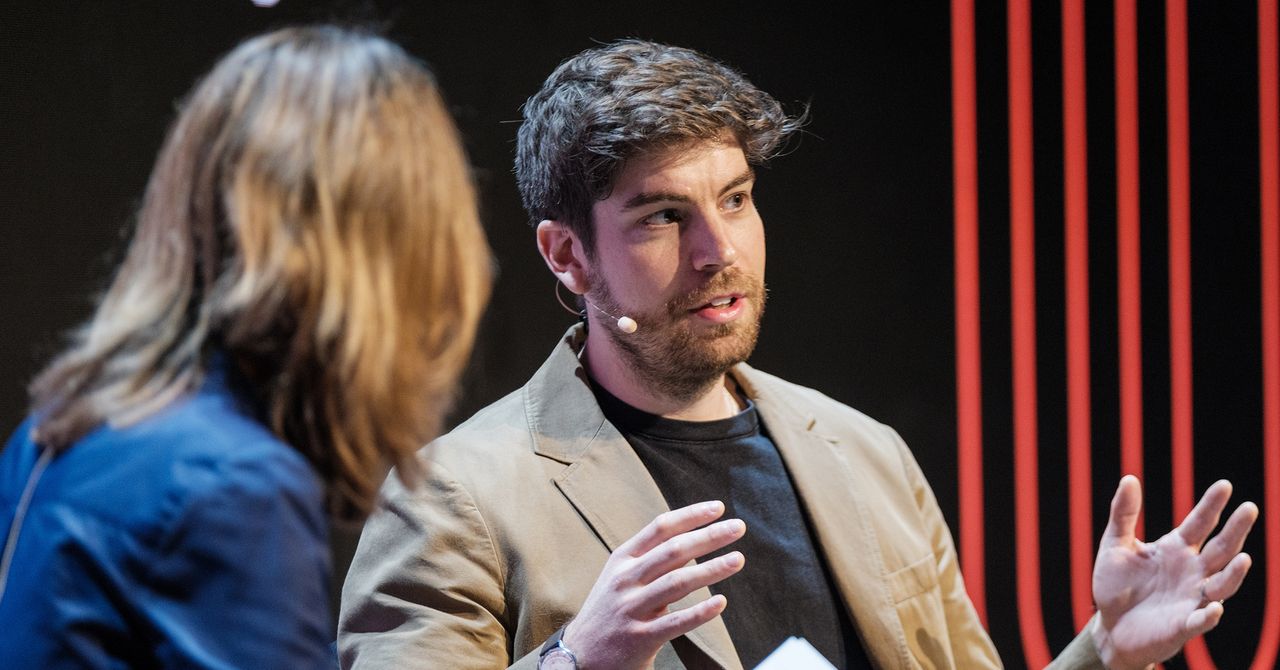
Isomorphic Labs, the UK-based biotech spinoff of Google DeepMind, will soon begin human trials of drugs designed by its Nobel Prize–winning AI technology. “We’re gearing up to go into the clinic,” Isomorphic Labs president Max Jaderberg said on April 16 at WIRED Health in London. “It’s going to be a very exciting moment as we go into clinical trials and start seeing the efficacy of these molecules.”
Jaderberg did not elaborate on the timeline, but it’s later than the company had planned to initiate human studies. Last year, CEO Demis Hassabis said it would have AI-designed drugs in clinical trials by the end of 2025.
Isomorphic Labs was founded in 2021 as a spinoff from Alphabet’s AI research subsidiary, Google DeepMind. The company uses DeepMind’s AlphaFold, a groundbreaking AI platform that predicts protein structures, for drug discovery.
Built from 20 different amino acids, proteins are essential for all living organisms. Long strings of amino acids link together and fold up to make a protein’s three-dimensional structure, which dictates the protein’s function. Researchers had tried to predict protein structures since the 1970s, but this was a painstaking process given the astronomically high number of possible shapes a protein chain can take.
That changed in 2020, when DeepMind’s Hassabis and John Jumper presented stunning results from AlphaFold 2, which uses deep-learning techniques. A year later, the company released an open-source version of AlphaFold available to anyone.
In 2024, DeepMind and Isomorphic Labs released AlphaFold 3, which advanced scientists’ understanding of proteins even further. It moved beyond modeling proteins in isolation to predicting other important molecules, such as DNA and RNA, and their interactions with proteins.
“This is exactly what you need for drug discovery: You need to see how a small molecule is going to bind to a drug, how strongly, and also what else it might bind to,” Hassabis told WIRED at the time.
Since its release, the AlphaFold platform has been able to predict the structure of virtually all the 200 million proteins known to researchers and has been used by more than 2 million people from 190 countries. The breakthrough earned Hassabis and Jumper the Nobel Prize for chemistry in 2024, with the Nobel committee noting that AlphaFold has enabled a number of scientific applications, including a better understanding of antibiotic resistance and the creation of images of enzymes that can decompose plastic.
Earlier this year, Isomorphic Labs announced an even more powerful tool, what it calls IsoDDE, its proprietary drug-design engine. In a technical paper, the company touts that the platform more than doubles the accuracy of AlphaFold 3.
The startup has formed partnerships with Eli Lilly and Novartis to work together on AI drug discovery and is also advancing its own “broad and exciting pipeline of new medicines” in oncology and immunology, Jaderberg said.
“The exciting thing about the molecules that we’re designing is because we have so much more of an understanding about how these molecules work, we’ve engineered them to be very, very potent,” Jaderberg told the audience at WIRED Health. “You can take them at a much lower dose, and they’ll have lower side effects, off target effects.”
Last year, Isomorphic appointed a chief medical officer and announced it had raised $600 million in its first funding round to gear up for clinical trials. Meanwhile, the company has been building a clinical development team. Its mission is to “solve all disease.”
“It’s a crazy mission,” Jaderberg said. “But we really mean it. We say it with a straight face, because we believe this should be possible.”
The vacuum connects to Dyson’s app, where you’ll find resources such as how to empty the dustbin and wash the filter, but not much else. It can tell you how long your last vacuuming session was, but no other details, so it’s not as interesting or as informative as the data you’d get from a robot vacuum.
Fluffy Face
Photograph: Nena Farrell

Photograph: Nena Farrell
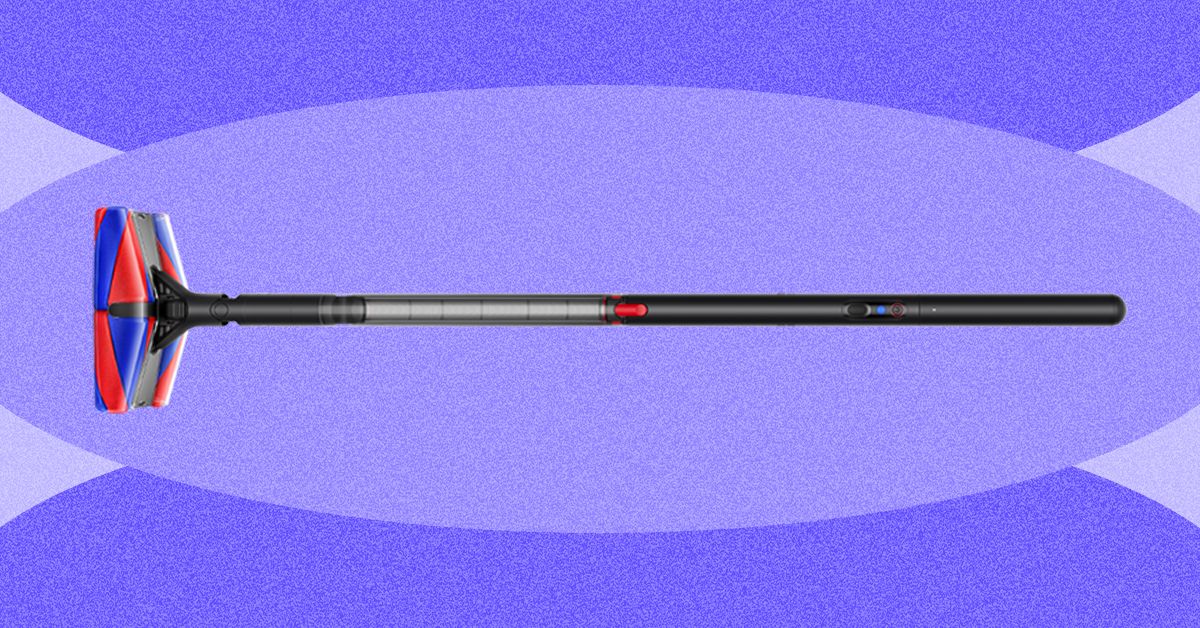
This vacuum’s full name is the Dyson PencilVac Fluffycones, aptly named for the four fluffy cones inside the vacuum head. Dyson’s previous recent stick vacuums all have the Fluffy Optic cleaner head for vacuuming hard floors. While both have a fluffy roller bar, the Fluffycones have a conical shape that Dyson says will detangle and remove hair rather than the hair getting stuck all around it. It did detangle hair for me, but when I vacuumed up larger portions of hair from my bathroom floor (a place where many a stray hair comes to die at the hands of my hairbrush, comb, and towel), it actually bunched up the hair into a ball and spat it back out a few times before finally sucking it up into the dustbin.
Video: Nena Farrell
While the hair results weren’t great, I did love this vacuum for sucking up the cat litter that constantly plagues my home. It did a great job with flour on my hard floors and a solid job with dry oats, but it occasionally just bumped the oats around instead of immediately sucking them up. I was even able to quickly run it over the top of my carpet, but rolling back and forth on the carpet a bunch did stop the cones.
The head is designed to move in just about any direction. The cones make it easy to swivel around, and the green illuminating lights on the front and back help you spot any debris you might otherwise miss. With its compact size that fits in tricky corners, the PencilVac finally lets me vacuum up all the litter around the base of my toilet and pedestal sink. It’s part of what makes me reach for this vacuum over and over, even after my robot vacuum cleaned the day before.
Forward Momentum

Photograph: Nena Farrell
Do I think this vacuum replaces Dyson’s existing cordless options? No. But Dyson has other new vacuums planned that could do that. This vacuum has a specific design for a specific use: smaller homes with entirely hard floors. There’s an accessibility opportunity here, too. This lightweight vacuum can be much easier to use for folks with mobility and strength restrictions. The magnetic charging base also makes it easy to store and access for a variety of people, whether they struggle with fine motor skills or can’t bend over and grab the vacuum.

There is a special agony to existing in limbo, that state of eternal in-between, where time stretches into infinity.
Today, that experience is especially true for people vying to join Raya, the members-only dating app. Obtaining a Raya account requires an invitation from a current member, and even after you’ve applied, you can’t log in until your application is approved. The process creates a bottleneck akin to the line outside a nightclub, where the chosen few breeze inside while the rest are left to wait. Beyond the velvet rope there are some 2.5 million people waiting to get into Raya—many of whom have been idling in limbo for years.
“My application is stuck in purgatory,” Gabriela Mark, a 23-year-old law student and model in San Diego, tells WIRED. “Like, she’s never escaping.”
Mark has been on the waiting list for five years. “I don’t know what their deal is, but there’s a reason I’m trapped on this waitlist and I needed to find out what it was.” In January, having reached her limit, she decided to email Raya. “I am beginning to believe you guys genuinely hate me or are bullying me,” Mark wrote in a colorfully worded letter. “Is my application just floating in the abyss somewhere or a running gag to you guys???”
Mark never received a response, but her story is an increasingly common one. The people WIRED spoke to for this story—who, despite their professional bona fides, have waited anywhere between two and seven years to join—have watched friends get accepted, break up, and cycle through the app while their own status remains unchanged.
Originally marketed as a kind of SoHo House for people in creative industries, Raya launched in 2015 as an app built around aspiration—but it has since shifted into a platform where many people in those industries find themselves unable to participate at all.
“It’s a bit of a mental fuck,” says Jennifer Rojas, who was working as an actress when she applied in 2020. “You start to look inward. Like, maybe it’s me. Maybe it’s this or that. I was opening it every day to check my status.” Now a 40-year-old UGC creator in South Florida, Rojas is going on year six of the waiting list. “I have 17 referrals on the freaking app.”
There is not an exact science to making it past the waiting list. According to previous reporting, the app—which charges users $25 per month, or $50 for a premium membership once approved—receives up to 100,000 applications per month. For prospective users, the biggest advantage comes from referrals by current members, who each get a small stash of “friend passes” to share. list isn’t first-come, first-served, which partially explains why some people have been on it for so long. It changes based on things like how trendy your city is on the app or whether you’ve snagged a referral.
(Raya declined to comment. After an initial call with Raya’s communications team about scheduling an interview with Ifeoma Ojukwi, the vice president of global memberships who oversees the application process, the company stopped responding to requests from WIRED. As is common in online dating, we were ghosted.)
Like so many people who want in, Raya’s exclusivity initially appealed to Mark. She wanted to join because she’d heard it was full of “cool people who seem untouchable.” Reputationally known as the celebrity dating app, everyone from actors Dakota Fanning and Channing Tatum to Olympian Simone Biles have had varying degrees of success on the platform. (Biles met her husband on Raya.) Mark had tried her luck on the app circuit: Hinge was “just OK.” With Tinder she kept running into guys that “just seemed like they wanted to literally bone anything with a hole in it.” As for the other ones, “nothing but trap boys and creatures,” she says.


AI-Designed Drugs by a DeepMind Spinoff Are Headed to Human Trials

Offset teases new album plans after recent shooting accident

Intel bags big gains! Chipmaker’s shares jump 26% on blockbuster results; how Trump admin benefits – The Times of India

-

 Fashion1 week ago
France’s LVMH Q1 revenue falls 6%, shows resilience amid Iran war
-

 Tech1 week ago
CYBERUK ’26: UK lagging on legal protections for cyber pros | Computer Weekly
-

 Sports5 days ago
WWE WrestleMania 42 Night 2: Live match results and analysis
-
 Business1 week ago
PepsiCo earnings beat estimates as North American food business improves
-

 Sports5 days ago
NCAA men’s gymnastics championship: All-time winners list
-

 Tech1 week ago
Anthropic Plots Major London Expansion
-

 Entertainment4 days ago
Lee Anderson, Zarah Sultana kicked out of UK Parliament for calling PM ‘liar’
-

 Tech1 week ago
Cyber Essentials closes the MFA loophole but leaves some organisations adrift | Computer Weekly