

Tech
Nature’s resilience inspires an improved power grid

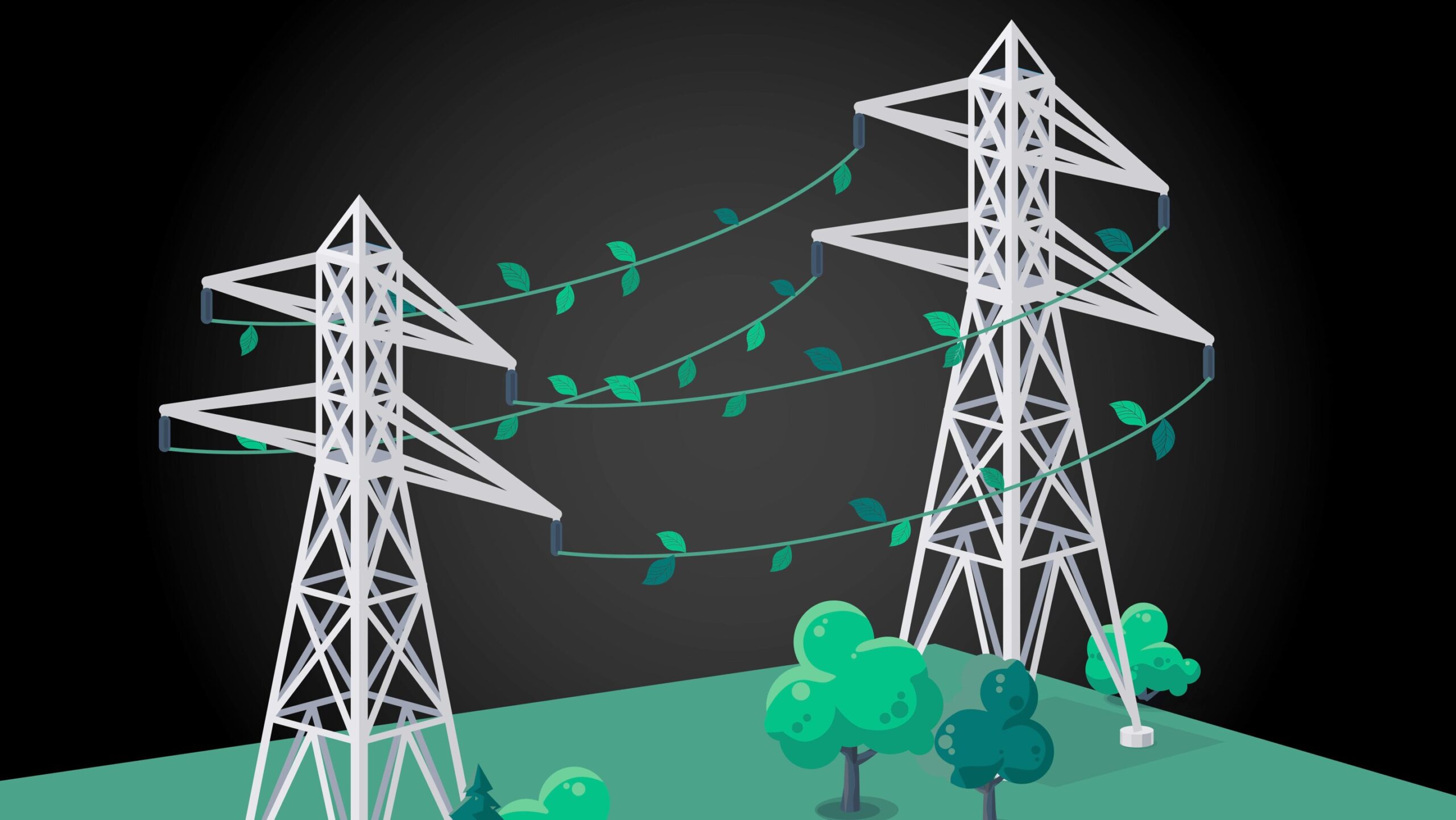
Natural ecosystems made up of plants, animals and microorganisms face constant challenges from natural hazards, like extreme weather or invasive species.
Despite these challenges, ecosystems have thrived for millions of years, showcasing high levels of resilience against hazards and disturbances. What if the mechanisms and patterns responsible for this prosperous resilience could be applied to the power grid?
Texas A&M University researchers have tested bio-inspired cyber-physical systems to strengthen the power grid to mitigate different types of cyber-attacks and understand their impacts.
Possible cyber threats to resource networks like the power grid include presentations of false information to data systems and information theft attempts, which can affect a network’s performance abilities.
“Ecosystems experience many of the same unexpected disturbances as human-made systems, like droughts and floods,” said Dr. Astrid Layton, an associate professor in the J. Mike Walker ’66 Department of Mechanical Engineering and head of the Bio-inspired SystemS Lab (BiSSL).
“While ecosystems may be damaged by these hazards, they have the unique ability to survive these disturbances without wasteful levels of redundancies, not only at the ecosystem level, but on a species level as well—which is why we’re interested in cyber-physical power systems from this ecological perspective.”
As their name suggests, cyber-physical power systems are made up of both cyber and physical elements, referred to as components. Cyber components—like firewalls and routers—deal with digital information flows, while physical components—like buses and generators—process tangible energy flows. Despite their prevalence, the system’s complexity causes incomplete knowledge of how disturbances move through and impact a cyber-physical power system.
“It’s crucial for a system to not only survive the hard times, but to thrive during good times,” said Layton. “Using ecological models and the insight they give allows us to assess the cyber-physical interface, clarifying how the system can run more efficiently when there are no immediate threats while still understanding and minimizing damages when they do happen.”
The main goal of this project was to better understand the relationship between the cyber components and physical components that make up cyber-physical power systems. A stronger understanding of the system’s interface allows researchers to predict potential impacts of cyber-attacks on the physical components and physical attacks on the cyber components, informing policymakers and grid operators on how best to prepare for and operate during these threats.
Layton, an expert in bio-inspired systems design and analysis techniques, collaborated with Dr. Katherine Davis, an associate professor of electrical and computer engineering, who brings extensive power system knowledge. Layton and Davis have worked as collaborators since a 2018 Texas A&M Energy Institute seed grant.
Their combined knowledge of mechanical and electrical engineering makes them a great team for understanding and designing cyber-physical power systems for resilience.
Layton and Davis were also joined by their senior Ph.D. students Emily Payne and Shining Sun for the Sandia study. Payne, a mechanical engineering student, started working with Layton in the Bio-inspired SystemS Lab as an undergraduate architectural engineering student in 2022.
Sun, an electrical and computer engineering student, has worked with Davis since 2023. Both Payne and Sun have published several papers relating to this work and have presented their findings at conferences, each winning awards for their research.
“Part of the success of this project has been these engineering graduate students, Emily and Shining, who have excelled at the interdisciplinary aspects of the work in addition to the highly technical focus of the problem,” Layton said.
“My research in particular asks engineering students to read ecology papers, which are essentially a different language from engineering papers, and apply this to their research.”
The approach enables Layton to view engineering problems from an innovative perspective.
The Sandia National Laboratories project ended in September 2025, but the researchers are continuing to collaborate on their bio-inspired power systems.
Layton and Davis are set to participate in a collaborative study focusing on modeling the impacts of weather disturbances on the power grid.
Citation:
Nature’s resilience inspires an improved power grid (2025, November 6)
retrieved 6 November 2025
from https://techxplore.com/news/2025-11-nature-resilience-power-grid.html
This document is subject to copyright. Apart from any fair dealing for the purpose of private study or research, no
part may be reproduced without the written permission. The content is provided for information purposes only.













Anthropic won a preliminary injunction barring the US Department of Defense from labeling it a supply-chain risk, potentially clearing the way for customers to resume working with the company. The ruling on Thursday by Rita Lin, a federal district judge in San Francisco, is a symbolic setback for the Pentagon and a significant boost for the generative AI company as it tries to preserve its business and reputation.
“Defendants’ designation of Anthropic as a ‘supply chain risk’ is likely both contrary to law and arbitrary and capricious,” Lin wrote in justifying the temporary relief. “The Department of War provides no legitimate basis to infer from Anthropic’s forthright insistence on usage restrictions that it might become a saboteur.”
Anthropic and the Pentagon did not immediately respond to requests to comment on the ruling.
The Department of Defense, which under Trump calls itself the Department of War, has relied on Anthropic’s Claude AI tools for writing sensitive documents and analyzing classified data over the past couple of years. But this month, it began pulling the plug on Claude after determining that Anthropic could not be trusted. Pentagon officials cited numerous instances in which Anthropic allegedly placed or sought to put usage restrictions on its technology that the Trump administration found unnecessary.
The administration ultimately issued several directives, including designating the company a supply-chain risk, which have had the effect of slowly halting Claude usage across the federal government and hurting Anthropic’s sales and public reputation. The company filed two lawsuits challenging the sanctions as unconstitutional. In a hearing on Tuesday, Lin said the government had appeared to illegally “cripple” and “punish” Anthropic.
Lin’s ruling on Thursday “restores the status quo” to February 27, before the directives were issued. “It does not bar any defendant from taking any lawful action that would have been available to it” on that date, she wrote. “For example, this order does not require the Department of War to use Anthropic’s products or services and does not prevent the Department of War from transitioning to other artificial intelligence providers, so long as those actions are consistent with applicable regulations, statutes, and constitutional provisions.”
The ruling suggests the Pentagon and other federal agencies are still free to cancel deals with Anthropic and ask contractors that integrate Claude into their own tools to stop doing so, but without citing the supply-chain-risk designation as the basis.
The immediate impact is unclear because Lin’s order won’t take effect for a week. And a federal appeals court in Washington, DC, has yet to rule on the second lawsuit Anthropic filed, which focuses on a different law under which the company was also barred from providing software to the military.
But Anthropic could use Lin’s ruling to demonstrate to some customers concerned about working with an industry pariah that the law may be on its side in the long run. Lin has not set a schedule to make a final ruling.

President Donald Trump and top defense officials are reportedly weighing whether to send ground troops to Iran in order to retrieve the country’s highly enriched uranium. However, the administration has shared little information about which troops would be deployed, how they would retrieve the nuclear material, or where the material would go next.
“People are going to have to go and get it,” secretary of state Marco Rubio said at a congressional briefing earlier this month, referring to the possible operation.
There are some indications that an operation is close on the horizon. On Tuesday, The Wall Street Journal reported that the Pentagon has imminent plans to deploy 3,000 brigade combat troops to the Middle East. (At the time of writing, the order has not been made.) The troops would come from the Army’s 82nd Airborne Division, which specializes in “joint forcible entry operations.” On Wednesday, Iran’s government rejected Trump’s 15-point plan to end the war, and White House press secretary Karoline Leavitt said that the president “is prepared to unleash hell” in Iran if a peace deal is not reached—a plan some lawmakers have reportedly expressed concern about.
Drawing from publicly available intelligence and their own experience, two experts outlined the likely contours of a ground operation targeting nuclear sites. They tell WIRED that any version of a ground operation would be incredibly complicated and pose a huge risk to the lives of American troops.
“I personally think a ground operation using special forces supported by a larger force is extremely, extremely risky and ultimately infeasible,” Spencer Faragasso, a senior research fellow at the Institute for Science and International Security, tells WIRED.
Nuclear Ambitions
Any version of the operation would likely take several weeks and involve simultaneous actions at multiple target locations that aren’t in close proximity to each other, the experts say. Jonathan Hackett, a former operations specialist for the Marines and the Defense Intelligence Agency, tells WIRED that as many as 10 locations could be targeted: the Isfahan, Arak, and Darkhovin research reactors; the Natanz, Fordow, and Parchin enrichment facilities; the Saghand, Chine, and Yazd mines; and the Bushehr power plant.
According to the International Atomic Energy Agency, Isfahan likely has the majority of the country’s 60 percent highly enriched uranium, which may be able to support a self-sustaining nuclear chain reaction, though weapon-grade material generally consists of 90 percent enriched uranium. Hackett says that the other two enrichment facilities may also have 60 percent highly enriched uranium, and that the power plant and all three research reactors may have 20 percent enriched uranium. Faragasso emphasizes that any such supplies deserve careful attention.
Hackett says that eight of the 10 sites—with the exception of Isfahan, which is likely intact underground, and “Pickaxe Mountain,” a relatively new enrichment facility near Natanz—were mostly or partially buried after last June’s air raids. Just before the war, Faragasso says, Iran backfilled the tunnel entrances to the Isfahan facility with dirt.
The riskiest version of a ground operation would involve American troops physically retrieving nuclear material. Hackett says that this material would be stored in the form of uranium hexafluoride gas inside “large cement vats.” Faragasso adds that it’s unclear how many of these vats may have been broken or damaged. At damaged sites, troops would have to bring excavators and heavy equipment capable of moving immense amounts of dirt to retrieve them
A comparatively less risky version of the operation would still necessitate ground troops, according to Hackett. However, it would primarily use air strikes to entomb nuclear material inside of their facilities. Ensuring that nuclear material is inaccessible in the short to medium term, Faragasso says, would entail destroying the entrances to underground facilities and ideally collapsing the facilities’ underground roofs.
Softening the Area
Hackett tells WIRED that based on his experience and all publicly available information, Trump’s negotiations with Iran are “probably a ruse” that buys time to move troops into place.
Hackett says that an operation would most likely begin with aerial bombardments in the areas surrounding the target sites. These bombers, he says, would likely be from the 82nd Airborne Division or the 11th or 31st Marine Expeditionary Units (MEU). The 11th MEU, a “rapid-response” force, and the 31st MEU, the only Marine unit continuously deployed abroad in strategic areas, have reportedly both been deployed to the Middle East.

The WIRED Reviews Team has been covering Amazon’s Big Spring Sale since it began at on Wednesday, and the overall deals have been … not great, honestly. So far, we’ve found decent markdowns on vacuums, smart bird feeders, and even an air fryer we love, but I just saw that Cadence Capsules, those colorful magnetic containers you may have seen on your social media pages, are 20 percent off. (For reference, the last time I saw them on sale, they were a measly 9 percent off.)
If you’re not familiar, they allow you to decant your full-sized personal care products you use at home—from shampoo and sunscreen to serums and pills—into a labeled, modular system of hexagonal containers that are leak-proof, dishwasher safe, and stick together magnetically in your bag or on a countertop. No more jumbled, travel-sized toiletries and leaky, mismatched bottles and tubes.

Cadence Capsules have garnered some grumbling online for being overly heavy or leaking, but I’ve been using them regularly for about a year—I discuss decanting your daily-use products in my guide to How to Pack Your Beauty Routine for Travel—and haven’t experienced any leaks. They do add weight if you’re trying to travel super-light, and because they’re magnetic, they will also stick to other metal items in your toiletry bag, like bobby pins or other hair accessories. This can be annoying, especially if you’re already feeling chaotic or in a hurry.
Otherwise, Capsules are modular, convenient, and make you feel supremely organized—magnetic, interchangeable inserts for the lids come with permanent labels like “shampoo,” “conditioner,” “cleanser,” and “moisturizer.” Maybe you love this; maybe you don’t. But at least if you buy on Amazon, you can choose which label genre you get (Haircare, Bodycare, Skincare, Daily Routine). If this just isn’t your jam, the Cadence website offers a set of seven that allows you to customize the color and lid label of each Capsule, but that set is not currently on sale.


Time to hold the line

Vietnam overtakes China in US jackets, blazers imports

China concludes Mexico tariffs create trade barriers for firms

-

 Fashion1 week ago
Sales at US apparel, clothing accessories stores up 4% YoY in Jan 2026
-

 Entertainment1 week ago
Val Kilmer revived 1 year after death through AI
-

 Sports1 week ago
March Madness 2026 – How to watch in SA, start time, schedule, TV channel for NCAA championship basketball tournament
-

 Fashion1 week ago
US’ G-III Apparel’s FY26 sales fall 7% to $2.96 bn
-
 Business1 week ago
Brits cashing in jewellery as gold price hits record high
-

 Fashion6 days ago
China’s textile & apparel exports surge 17% to $50 bn in Jan-Feb 2026
-

 Fashion1 week ago
Suez and Hormuz shut together, triggering global supply shock
-
 Business1 week ago
World’s largest mining group names new chief executive