

Sports
NCAA officially adopts Jan. 2-16 portal window

The NCAA is officially moving transfer portal season in college football from December to January.
The Division I Administrative Committee voted Tuesday to adopt the proposed dates of Jan. 2-16 as the new transfer portal window for all FBS and FCS players in 2026.
College football players, including graduate transfers, now must wait until Jan. 2 to officially enter their names in the NCAA transfer portal and initiate contact with other schools. The reform is expected to be finalized at the conclusion of the Administrative Committee’s meetings on Wednesday.
The new 15-day transfer portal windows opens one day after College Football Playoff quarterfinals conclude. Players on the two teams competing in the CFP national championship game on Jan. 19 will get an additional five-day period from Jan. 20 to 24 to enter the portal after their season ends.
The Division I Administrative Committee also approved a reform around the transfer window exception granted to football players after a head coaching change. Effective immediately, starting five days after a new head coach is hired or announced, players will have a 15-day window to enter their names in the portal.
Until now, players were given a 30-day window to enter the portal immediately after a coaching change, which can lead to large numbers of players departing a program before the arrival of the next head coach.
Players at Arkansas, Oklahoma State, UCLA and Virginia Tech will be grandfathered in under the previous rule and are currently permitted to enter the transfer portal after head coaches at those programs were fired in September.
The FBS and FCS oversight committees initially proposed moving to a 10-day portal window in January but agreed to extend the window to 15 days in response to student-athlete feedback.
The Division I Administrative Council had already eliminated the 15-day spring transfer window in college football last month, formally moving the sport to a single offseason period for transfer activity.
While FBS head coaches have been pushing for a single transfer window since January, there are still expected to be challenges to this reform in the months ahead. Attorney Tom Mars wrote on X last week that “experienced antitrust lawyers will be at the courthouse before the sun comes up” to contest the new 15-day window as overly restrictive.
During the 2024-25 school year, more than 4,900 FBS players and more than 3,200 FCS players entered their names in the NCAA transfer portal in another record-setting year for transfer movement.
Video of the between-period brawl among 8-year-olds at a Hershey (Pa.) AHL game went viral. A probe said the fight was unplanned.
Source link
Flag football has been added to the NCAA’s Emerging Sports for Women program and four other women’s sports were elevated to championship status, the NCAA announced Friday.
Flag football has been one of the fastest-growing sports at the youth, high school and collegiate levels and will debut as an Olympic sport for men and women in 2028.
There were about 40 NCAA schools with women’s flag football teams in 2025, and the organization projected that 60 could be competing this spring.
Nebraska on Friday announced that it would be the first power-conference school to add flag football as a varsity women’s sport, with competition beginning in the spring of 2028.
The new championship sports are acrobatics and tumbling, stunt, Division II bowling and Division III women’s wrestling.
“This moment reflects the growth of college sports, as schools continue to provide a record number of scholarships and opportunities across the NCAA,” NCAA president Charlie Baker said. “By expanding championship opportunities, we celebrate the remarkable momentum of women’s sports, ensuring more student-athletes have the chance to compete for national titles, represent their institutions and inspire future generations.”
To become a championship sport, a minimum of 40 schools must sponsor it at the varsity level and meet contest and participation requirements.
At Nebraska, women’s flag football would be the first sport added since beach volleyball in 2013. The season will run from January to May. Nebraska will immediately begin a coaching search and plans to have a roster of 20-25 players.
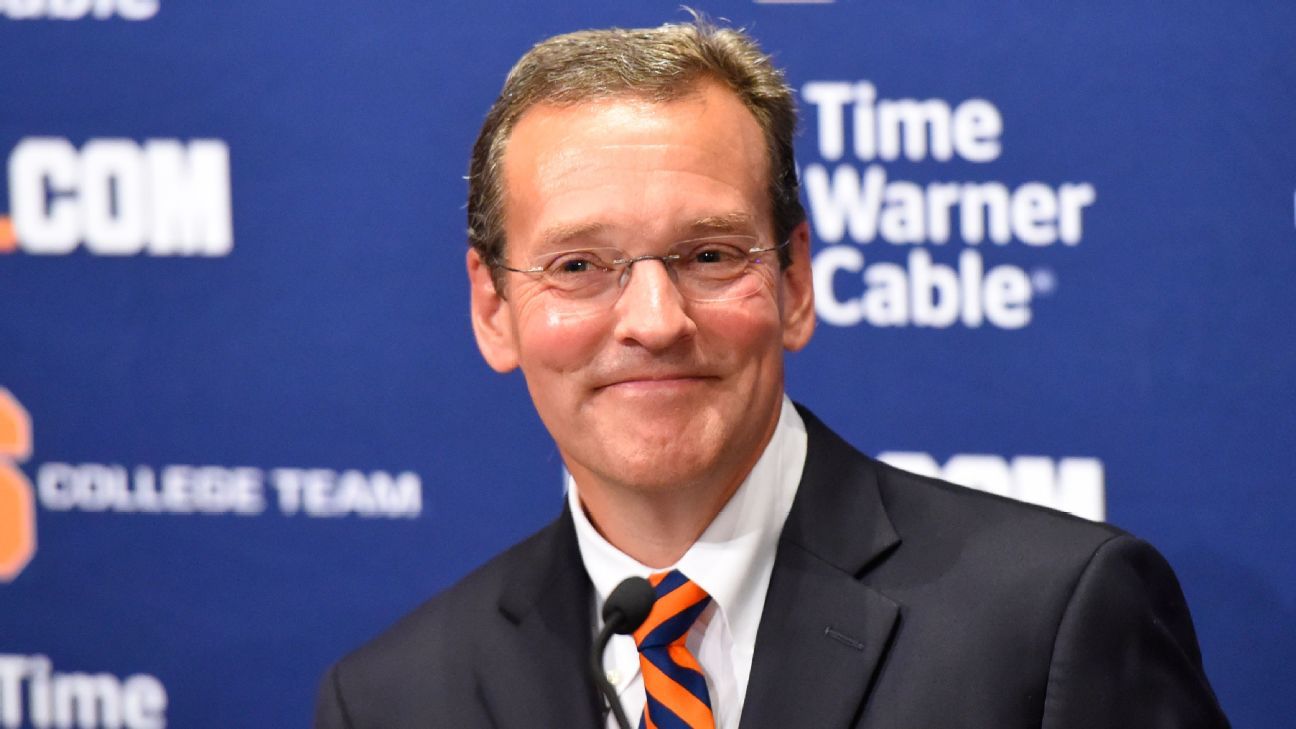
Syracuse athletic director John Wildhack is the latest voice calling for serious reforms in college football, including a holistic rethinking of the calendar, collective bargaining with athletes and consolidation of TV media rights in order to build a sustainable future.
Wildhack told ESPN he believes it’s imperative for college sports — and football, in particular — to embrace the current moment as a chance to make wholesale changes to address ongoing issues such as the transfer portal, in-season coaching departures, player eligibility and revenue gaps.
“We have a tendency to look at things as a one-off, and we need to look at the sport holistically,” Wildhack said. “When you’re in a moment when you have that popularity and the support from the fans, you have to build on it and make it better.”
Wildhack, a former ESPN executive who has served as AD at Syracuse since 2016, said the sport’s popularity should not be an excuse to continue avoiding addressing key issues but rather an endorsement for finding solutions now. His concerns have been echoed in recent days by other power brokers in the sport, from Georgia president Jere Morehead and Clemson’s Dabo Swinney.
At this week’s American Football Coaches Association convention in Charlotte, coaches attempted to tackle a portion of the eligibility issues by unanimously supporting a plan to extend redshirt eligibility to any player who participates in less than nine games in a season.
Meanwhile, a subcommittee of coaches and athletic directors met in Charlotte outside the AFCA’s formal agenda to discuss changes to the calendar that one athletic director described as “very productive” with a focus on “progress not perfection.”
Still, Wildhack’s public endorsement of collective bargaining and television media consolidation marks one of the most emphatic pushes toward significant reform from a current athletic director.
“There needs to be collective bargaining,” Wildhack said. “The players should be getting paid, no question about that. But with collective bargaining there’s rules that have been bargained for. It’s a legal document that everybody has obligations they’re required to uphold. That’s where we need to go.”
Wildhack said an agreement with “real teeth” is necessary, too, to combat schools who are “flagrantly disregarding” the guidelines set forth by the College Sports Commission.
Wildhack also called for a holistic reimagining of college football’s calendar, which has been a hot topic among coaches and fans after former Ole Miss coach Lane Kiffin departed for the LSU job before the Rebels’ began a playoff run that ended at the Vrbo Fiesta Bowl. In the run-up to that loss to Miami, Kiffin and Ole Miss battled over how many departing assistant coaches would be available to the Rebels rather than joining the rest of the new LSU staff in Baton Rouge.
In the midst of the calendar debate, college football’s commissioners are set to meet this weekend to discuss expanding the College Football Playoff beyond its current 12 teams.
The final — and perhaps trickiest — piece to the puzzle, Wildhack said, is revenue generation.
With the $20.5 million in revenue sharing that began this year, schools have been forced to scramble to cover costs, and the revenue gap between the biggest brands in larger conferences and the “have nots” in smaller leagues has grown significantly in the process.
But Wildhack pointed to the strong ratings for bowl games and this year’s College Football Playoff as evidence that the sport is leaving huge sums of money on the table by failing to negotiate TV deals as a unified bloc.
Wildhack pointed to the ACC’s new success initiatives and brand distribution model as ways to still ensure the biggest brands in college football won’t take a financial step back by agreeing to consolidated TV rights, but said it’s in everyone’s best interest to consider options to increase TV revenue nationally rather than by conference.
“There’s no 100% approval rating, but let’s take what we have now and make it better,” Wildhack said. “The time is right and there’s so much opportunity here that’s being left on the table. If we address the key issues and can begin to make progress, we make it better for everybody, and the sport will thrive. There’s no question.”

When ‘Mites on Ice’ becomes fights on ice, team blames 8-year-olds

NCAA tabs flag football as an emerging sport for women

Trump welcomes Iran move on mass executions as turmoil eases

-

 Tech4 days ago
New Proposed Legislation Would Let Self-Driving Cars Operate in New York State
-

 Sports6 days ago
Clock is ticking for Frank at Spurs, with dwindling evidence he deserves extra time
-
Sports7 days ago
Commanders go young, promote David Blough to be offensive coordinator
-

 Fashion6 days ago
South India cotton yarn gains but market unease over US tariff fears
-

 Fashion6 days ago
China’s central bank conducts $157-bn outright reverse repo operation
-

 Entertainment3 days ago
X (formerly Twitter) recovers after brief global outage affects thousands
-

 Sports6 days ago
US figure skating power couple makes history with record breaking seventh national championship
-
 Business7 days ago
SoftBank reduces Ola Electric stake to 13.5% from 15.6% – The Times of India