

Fashion
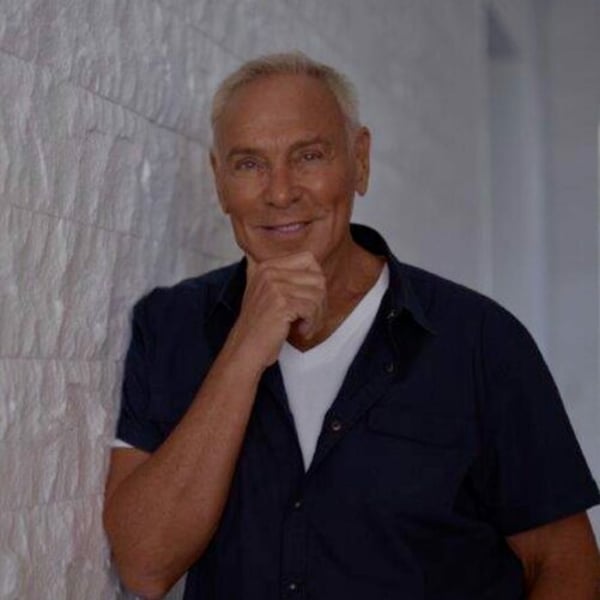
Neil Lane, jeweler to the stars, subject of first solo exhibition

Published
September 14, 2025
Born in Brooklyn, the Los Angeles-based jeweler will be the subject of his first solo exhibition at the Toledo Museum of Art in Ohio from October 18 to January 18, 2026.
Neil Lane talks to FashionNetwork.com about his career and latest news.
FashionNetwork.com : You will be presenting your new collaboration with Kay Jewelers in a few days. Next month, your first solo exhibition will be dedicated to you, accompanied by a book. Are you a man in a hurry?
Neil Lane : I love it. I’m experiencing a king of renaissance right now. I’m involved in the diamond industry, in art, in design, in creation. I practice what’s called the “next” philosophy, which is to complete one project and already start thinking about the next. All of this gives me a tremendous amount of energy.
FNW: How did it all begin ?
N.L.: I’m an Aquarius, a very creative and imagery temperament. I created my own world. I was born in Brooklyn, and my mother always told me that when I was very young, I collected marbles and pieces of broken glass. I don’t remember it, but I believe her! My mother was raised in the Lower East Side and we go visit on the weekends, the neighborhood of Jewish immigrants where jewelry merchants, often in backrooms, would display their creations. All this left a mark on me. But what I remember most is the ring my mother wore, a pear-shaped ring. It’s a model I’ve kept and it will be on display in the exhibition “Radiance and Reverie: Jewels from the Collection of Neil Lane” at the Toledo Museum of Art, and it inspired my first jewelry sketches for Kay Jewelers and the show “The Bachelor”.
The Toledo Museum of Art exhibition will feature your most beautiful vintage collections. When did you start collecting?
N.L.: My father collected antiques and kitschy porcelain figurines he wouldn’t let me touch. I think that influenced me. I learned early on that things could have value. As a teenager in Brooklyn, I watched what people threw away on the street. One day, I met this woman, Vivianne, who asked me to help her sell her collections at flea markets in Manhattan. That’s where I met all the stars of the day – Andy Warhol among others, Zsa Zsa Gabor who would show up in a Rolls Royce, and even Louise Nevelson, wandering around dressed in black with false eyelashes, looking for wood everywhere to use in her artworks. That’s where I sharpened my eye and my knowledge of beautiful things.
A passion that later took you to Paris…
N.L.: I had always dreamed of Paris. I went there to study art, and while I was interested in museums and galleries, I was fascinated by the small jewelers that I discovered on the Rue du Faubourg Saint-Honoré. I could stand glued to the windows for hours, gazing at those jewels like candy. I remember spending my entire travel budget during my first stay to buy a little “demon” brooch from the late 19th century, set with a pearl and diamonds.

What did you learn in France?
N.L.: So many things! I felt frustrated in the United States. There were certainly boutiques on Madison Avenue, but I never comfortable going in. The Parisian atmosphere was a very different. The mix of history, art, architecture, and craftsmanship made sense, resonated with me, and gave me goosebumps. My passion became an obsession, almost visceral. The flea markets in Chatou or La Villette were full of incredible pieces and talent. Paris invented beauty, and I drew inspiration from it. And no one judged me for being in jeans and sneakers!
FNW: In the end, you decided to settle in Los Angeles, in the mid-80s, and launch your career…
N.L: I really had no idea what I was doing at the time. It was after visiting one of my friends that I decided to open a stand in an antique bazaar on Beverly Boulevard (now closed), called Antiquarius. I arrived with my suitcase containing a few late 19th-century gold jewels, Art Nouveau and Art Deco creations. People were mostly looking for diamonds and glamour. But I had an advantage: nobody looked or offered jewelry like me. I brought from France a craft, a know-how, an aesthetic, a history that didn’t exist here. My jewels weren’t just simple diamonds but real pieces of art.
FNW: Is that when all of Hollywood started shopping with you?
N.L.: All the Hollywood stars appreciated my difference. I worked behind the counter in jeans with a Gauloise cigarette. I remember this anecdote with Yoko Ono, who came to have a metal object, seemingly of no value, duplicated in gold. At the same time, the wife of an important Hollywood producer was waiting to have one of her diamond ring reset. A few days later, when I delivered her diamond ring, she told me the object Yoko Ono brought in was actually the pick used by John Lennon. She wanted a gold version to give to her son Sean for Valentine’s day.
FNW: And you became the official jewelers to the stars…
N.L.: In the early 1990s, “new Hollywood” came looking for me. Hollywood stylists and costume designers were searching for new designs, unique and unusual pieces to spotlight the new stars. People started to see the past in a new light. Suddenly, “vintage” was no longer associated with grandma’s rags. I was lucky to be there at the right time. My Art Deco jewelry collection delighted everyone. I also started creating my own pieces, engagement and wedding rings for all kinds of celebrities, from Renee Zellweger to Reese Witherspoon, Jennifer Hudson, Jessica Simpson, and Ellen DeGeneres. There was Armani for fashion, and me for jewelry.

FNW: Your popularity with the general public accelerated after your partnership with the TV show “The Bachelor”. How did that happen?
N.L.: At that time, my creations and collections were very popular in Hollywood. Anyone getting married would come see me. I was seeing all the agents and publicists and wasn’t thinking anything more. But after agreeing to participate in the first TV show – “Instyle Celebrity Wedding” – that appearance catapulted me in a different orbit and exposed me to new audiences. Later on, a producer from ABC called me to propose being the official partner for their show “The Bachelor”. I hesitated, but finally accepted. Two months after the first episode aired, I was overwhelmed with calls.
FNW : What has this experience brought you?
N.L.: I didn’t really understand what was happening at the time. I was living in a bubble, collaborating only with Hollywood’s elite. I eventually realized in hindsight saring Hollywood’s glamour with the public was a victory for me. The little kid from Brooklyn was getting public recognition. For almost 20 years, we have created the rings for The Bachelor, and its spin-offs like “Bachelor in Paradise” and “The Golden Wedding” and the partnership with Kay Jewelers changed the face of American bridal market.
FNW: Your first solo exhibition will take place in October at the Toledo Art Museum in Ohio. What does this represent for you?
N.L.: I’m very excited but also very scared! The public will discover pieces that have never been seen before. I have a collection of several thousand pieces, including a large selection from Tiffany, as well as creations by almost unknown or forgotten designers. This exhibition will display 175 of them, including historic pieces by Cartier, Suzanne Belperron, Boucheron, Castellani, Paul Flato, Jean Fouquet, Raymond Templier and Van Cleef & Arpels. Many of these pieces come from world’s fairs or belonged to Hollywood icons like Mae West or Joan Crawford. Each section of the exhibition will be enriched with additional objects from the museum’s glass collection and clothing and accessories from ASU FIDM, the Fashion Institute of Design and Merchandising in Los Angeles to reflect the era the jewelry was made.
FNW: A book co-published with Rizzoli New York will also be released soon. What does it tell?
N.L.: It tells the story of my journey in jewelry and will enhance readers’ understanding of the history of American and Europen jewelry, illustrating the main artistic movements of the 19th and 20th centuries. It combines big names and unknowns, focuses on the importance of design, manufacturing secrets, and techniques.
FNW: Finally, the general public will be able to find some of your vintage collections at the Just One Eye store. What pieces will you show?
N.L: We will offer a selection of high design jewelry from the Art Deco period or twenties to the retro seventies.
Copyright © 2025 FashionNetwork.com All rights reserved.




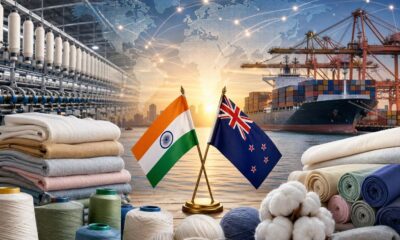


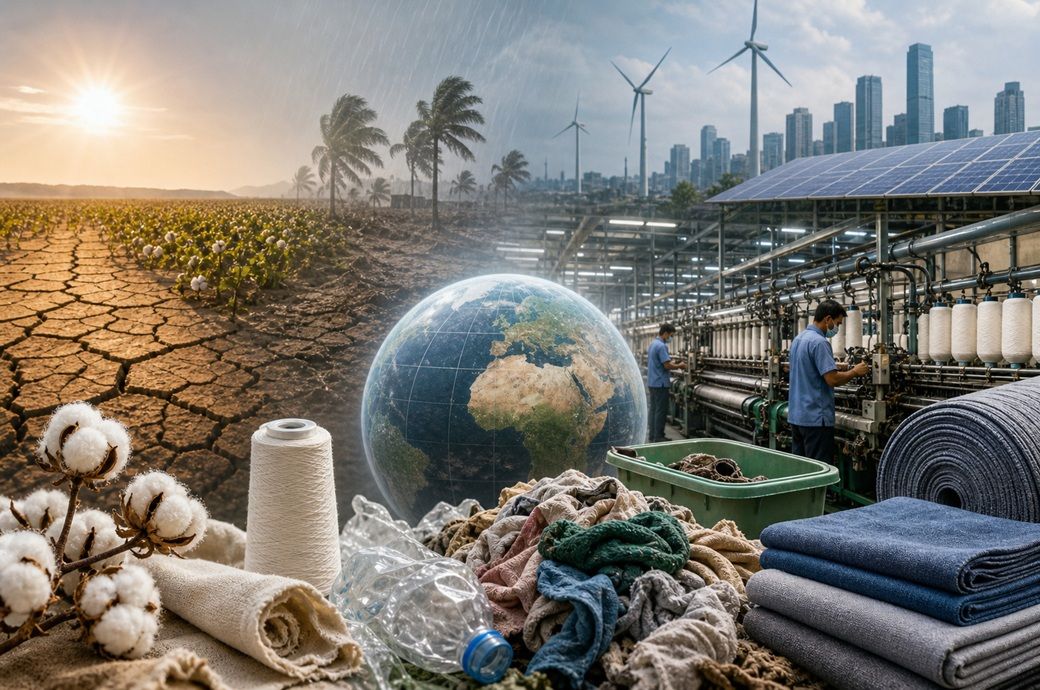
The apparel climate story has moved out of the ESG report and into the cost sheet. In ****–****, climate risk is showing up as cotton quality loss, import dependence, energy volatility, cooling capex, carbon-price exposure and mandatory textile-waste fees. For brands and suppliers, the question is no longer whether climate action is ‘responsible’. It is whether delay will make product margins uncompetitive.
The latest data makes the shift visible. Textile Exchange says global fibre production reached *** million tonnes in **** and could hit *** million tonnes by **** if business continues as usual. Polyester alone now makes up ** per cent of global fibre output, with ** per cent still fossil-based. That scale gives apparel a low-cost material engine, but it also ties the sector to fossil energy, petrochemical volatility and future carbon accounting.
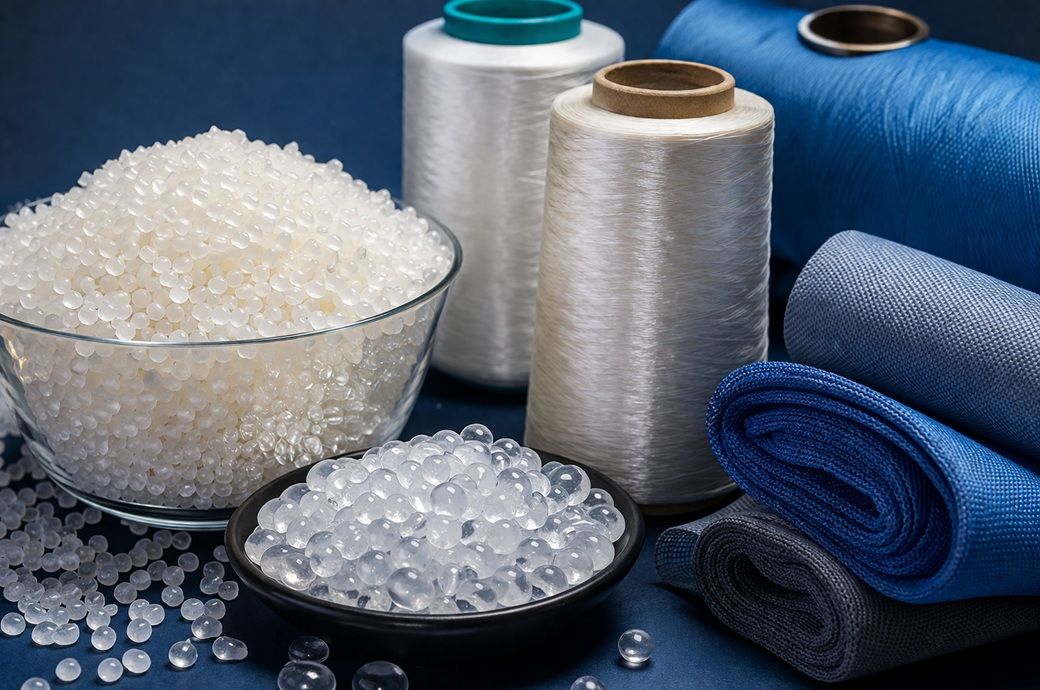
Caprolactam (CPL) prices initially held near $*.**–*.**/kg with minimal movement, while nylon chips saw uptick to ~$*.***/kg (+*.* per cent WoW) driven by short-term restocking. Nylon filament yarn (DTY **D/**F) prices remained stable at ~$*.**–*.**/kg, supported by existing inventory and steady downstream textile operations.
By the second week (April * to April **), benzene stabilised, but caprolactam began to weaken to ~$*.**–*.**/kg (−*.* per cent WoW), signalling the start of broader chain pressure. Nylon chips responded with a mild correction to ~$*.***/kg (−* per cent WoW), while filament yarn prices continued to hold steady due to inventory buffers and ongoing execution of prior textile orders. In the third week (Apr **–**), caprolactam stable to ~$*.*/kg, and chips followed to ~$*.***/kg (Stable WoW).
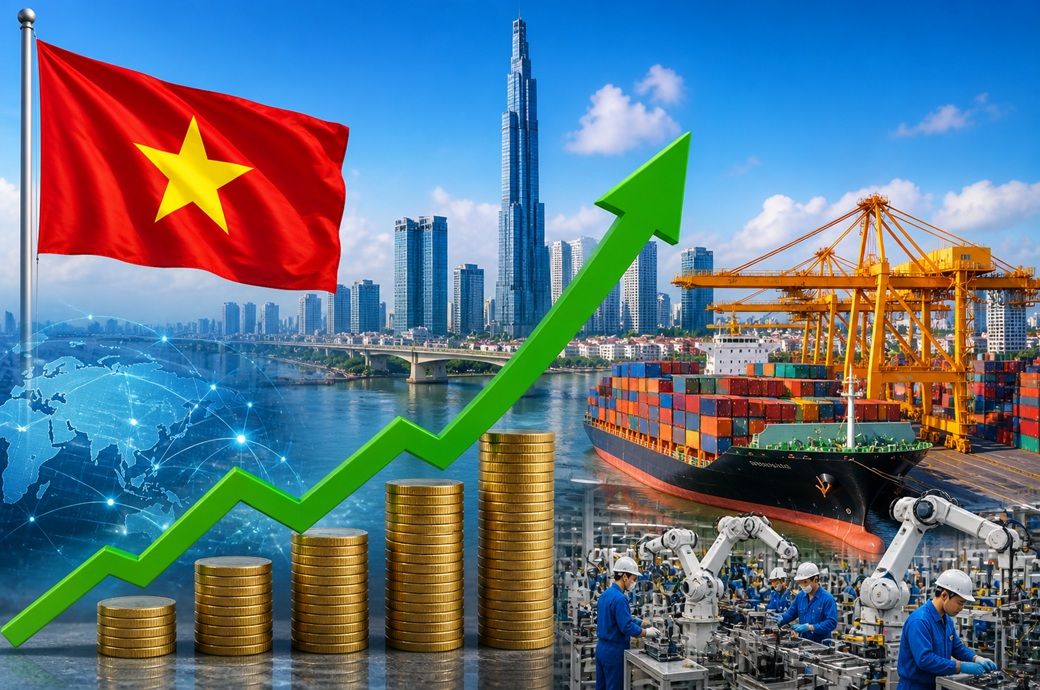
Total registered FDI, including newly registered and adjusted capital, along with foreign investors’ contributions and share purchases, reached $18.24 billion as of April 27, up 32 per cent year on year (YoY), according to the Ministry of Finance’s National Statistics Office (NSO).
Vietnam attracted $18.24 billion in FDI in January–April 2026, up 32 per cent, driven by manufacturing and processing.
Realised FDI hit a five-year high, signalling continued capacity expansion.
Trade surged to $344.17 billion, supported by strong US demand and rising imports from Asia, highlighting deeper global supply chain integration and export momentum.
A total of 1,249 new projects were licensed with combined registered capital of $12.15 billion, reflecting a 3.7 per cent annual increase in project numbers and a 2.2-fold rise in value. Manufacturing and processing dominated, attracting $8.12 billion, or 66.8 per cent of total newly registered capital.
Realised FDI in the January–April period was estimated at $7.40 billion, up 9.8 per cent YoY and marking the highest level for the period in the past five years. Of this, the manufacturing and processing sector disbursed $6.12 billion, accounting for 82.7 per cent. Meanwhile, 316 existing projects registered additional capital of $3.13 billion, representing a sharp 51 per cent decline compared to the same period last year. Combining newly registered and adjusted capital, total FDI into manufacturing and processing reached $10.49 billion, or 68.6 per cent of the total.
Foreign investors carried out 976 capital contribution and share purchase transactions worth $2.96 billion, up 61.9 per cent YoY. Among these, 325 deals increased enterprises’ charter capital by $445.13 million, while 651 share acquisitions without capital increases totalled $2.51 billion. Wholesale and retail trade led these investments, capturing $1.89 billion, or 63.9 per cent.
Among 53 countries and territories with newly licensed projects, Singapore was the largest investor with $6.05 billion, accounting for 49.8 per cent of the total. It was followed by the Republic of Korea with $4.08 billion (33.6 per cent), China with $524.1 million (4.3 per cent), Japan with $462 million (3.8 per cent), Hong Kong (China) with $329.2 million (2.7 per cent), and the Netherlands with $318.5 million (2.6 per cent).
On the trade front, Vietnam’s total trade with the rest of the world was estimated at $344.17 billion in the first four months of 2026, a significant increase from $277.21 billion in the same period last year, the NSO said. In April alone, trade volume reached an estimated $94.32 billion, rising 8 per cent from March and 26.7 per cent YoY.
The United States remained the largest importer of Vietnamese goods, with imports valued at $53.9 billion, while China continued as the top supplier with $69 billion. Imports from traditional markets also surged, with South Korea and ASEAN recording growth rates of 57.8 per cent and 44.3 per cent, respectively.
Fibre2Fashion News Desk (MS)


Longtime entertainment publicist was 82

Spirit starts monthslong process of dismantling airline after biggest collapse in a generation

AS-level Business Studies paper allegedly leaked online

-

 Tech1 week ago
A Brain Implant for Depression Is About to Be Tested in Humans
-

 Sports1 week ago
Pro wrestling star Steph De Lander reveals how colleague’s advice helped lead her to title triumph at ACW
-

 Tech1 week ago
Almost 90% of women leave tech industry within 10 years | Computer Weekly
-
 Business1 week ago
‘I had £20,000 stolen and had to fight a 13-month fraud reporting rule to get it back’
-

 Entertainment1 week ago
Norway joins Type 26 Frigate Programme to boost NATO naval power
-

 Entertainment1 week ago
Melania Trump says ABC should ‘take a stand’ on late-night host Kimmel
-

 Tech1 week ago
This Ambitious Laptop Doesn’t Leave Much Room for Your Hands
-
 Business6 days ago
PSX plunges over 4,800 points | The Express Tribune