

Politics
Nepal lifts social media ban after protests leave 19 dead, minister says

- PM pins unrest on “selfish centres,” vows relief for victims’ families.
- Free treatment to be given to the injured, Nepalese officials confirm.
- Inquiry panel to report within 15 days on causes, future safeguards.
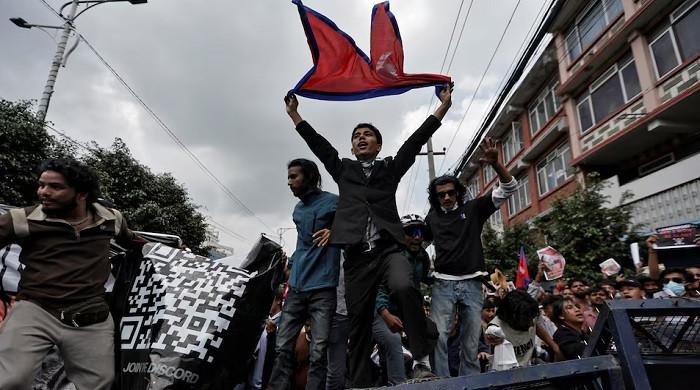
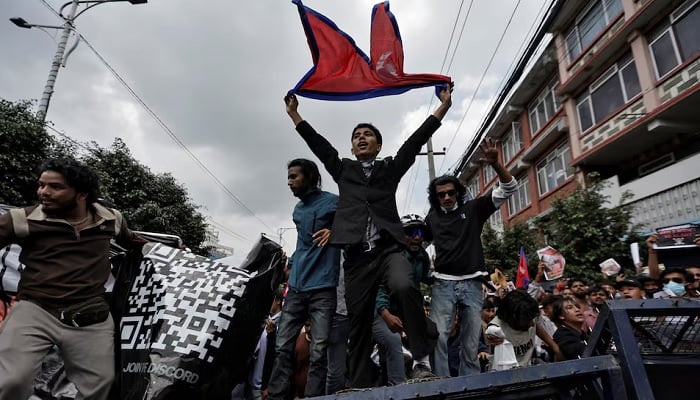
Nepal has lifted a social media ban following protests that resulted in the deaths of 19 people, a government minister said on Tuesday.
The government had rolled back the social media ban imposed last week, Cabinet spokesperson and Communications and Information Technology Minister Prithvi Subba Gurung said.
The decision came after 19 people were killed and more than 100 were injured in the “Gen Z” protests on Monday against widespread corruption. The protests were triggered by the ban.
“We have withdrawn the shutdown of social media. They are working now,” Gurung told Reuters.
Prime Minister KP Sharma Oli said he was saddened by the incidents of violence due to the “infiltration from different selfish centres”.
The government would pay relief for the families of the dead and provide free treatment for the injured persons, he added.
“An investigation panel will be set up to find out the causes, assess losses and suggest measures within 15 days to ensure that such incidents are not repeated in future,” Oli said in a late-night statement on Monday.
Organisers of the protests, which spread to other cities in the Himalayan country, have called them “demonstrations by Gen Z.” They say the protests reflect young people’s widespread frustration with the government’s perceived lack of action to tackle corruption and boost economic opportunities.
The government last week decided to block access to several social media platforms, including Facebook, a decision that fuelled anger among the young.
Officials say the shutdown was for those social media platforms which had failed to register with the government, amid a crackdown on fake IDs, misinformation and hate speech.
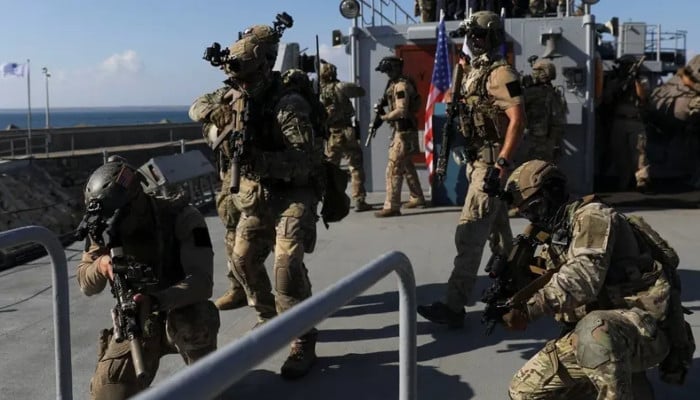
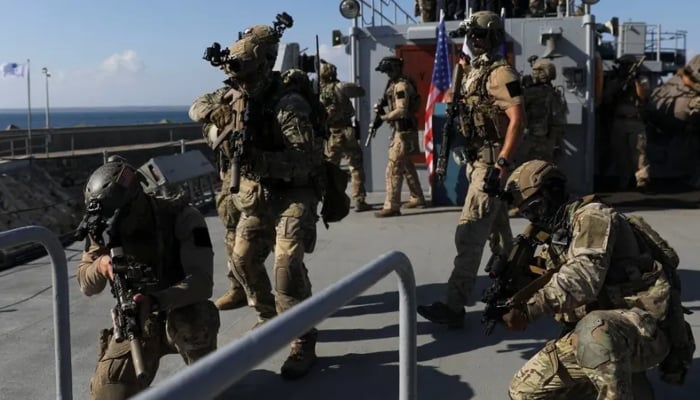
WASHINGTON: American commandos deployed deep into Iranian territory to rescue a downed airman, US news outlets reported on Sunday, hours after President Donald Trump announced that the crew member had been recovered “safe and sound.”
Tehran said this week it had shot down an F-15 warplane, the first US fighter jet to go down inside Iran since the start of the war. Washington has not confirmed the details of how the fighter went down.
Trump said early on Sunday the US military had “pulled off one of the most daring Search and Rescue Operations in U.S. [US] History, for one of our incredible Crew Member Officers, who also happens to be a highly respected Colonel, and who I am thrilled to let you know is now SAFE and SOUND!”
Navy Seal Team 6 commandos were tasked with extracting the airman, while US attack aircraft dropped bombs and opened fire on Iranian convoys to keep them away, the New York Times reported, citing an unidentified official.
The airman, a weapon systems officer, was wounded after the ejection but could still walk, evading capture in the mountains for more than a day, according to news outlet Axios, which cited a US official.
The unidentified airman was equipped with a pistol, a beacon and a secure communications device to coordinate with rescuers, the New York Times reported.
American commandos converging on the officer fired their weapons to keep Iranian forces away from the rescue site, the Times said.
Trump wrote on his Truth Social platform that he had directed the US military to send “dozens of aircraft, armed with the most lethal weapons in the World, to retrieve” him.
“He sustained injuries, but he will be just fine,” Trump wrote.
Two of the planes meant to transport the airman and his rescuers to safety were stuck in a remote base in Iran and had to be destroyed to prevent them from falling into Iranian hands, the New York Times and CBS reported.
US forces then used three other transport planes to carry the airman and his rescuers out of Iran.
The Iranian military said on Sunday the US operation to rescue the airman had used an abandoned airport in southern Isfahan province.
“The so-called US military rescue operation, planned as a deception and escape mission at an abandoned airport in southern Isfahan under the pretext of recovering the pilot of a downed aircraft, was completely foiled,” said Ebrahim Zolfaghari, spokesman for the Iranian military´s central command.
Zolfaghari also said two US “C-130 military transport planes and two Black Hawk helicopters were destroyed”.
The CIA reportedly launched a deception campaign to spread word inside Iran that US forces were moving the airman out of the country on the ground.
In his post, Trump also confirmed the “successful rescue of another brave Pilot, yesterday,” adding it was not disclosed to avoid jeopardising the second rescue mission.
“This is the first time in military memory that two U.S.[US] Pilots have been rescued, separately, deep in Enemy Territory,” he wrote, adding that both operations were concluded “without a SINGLE American killed, or even wounded.”
AFP has contacted the White House and the Pentagon for comment.
Politics
‘Humiliating defeat’: Iran destroys several US warplanes on mission to retrieve missing pilot
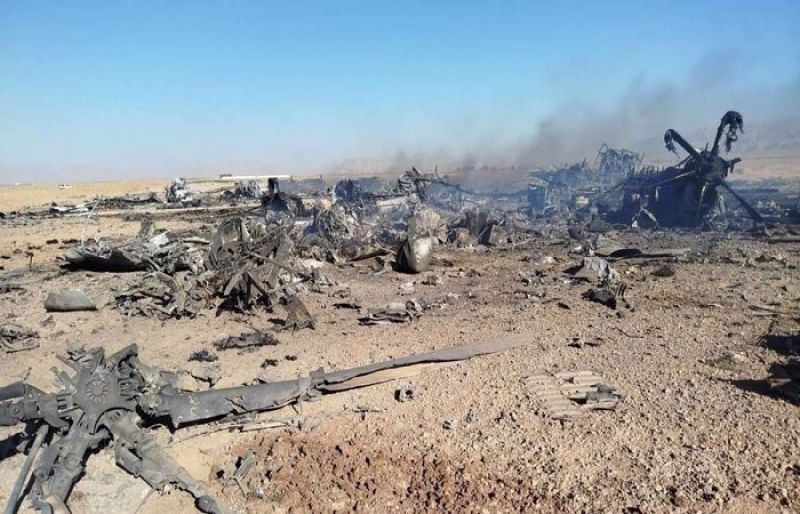
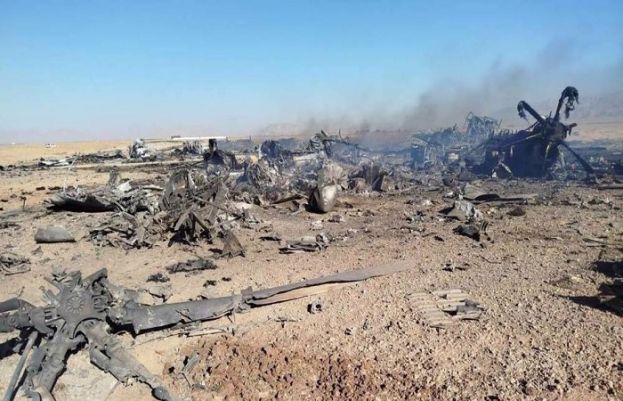
The Islamic Revolution Guards Corps (IRGC) says Iranian forces have managed to destroy several US warplanes that were conducting a mission to retrieve the pilot of a downed American fighter jet.
“Following desperate US moves to rescue the pilot of the downed fighter jet and the entry of flying objects to the country’s central parts, the enemy’s flying objects were destroyed and the US once again suffered a humiliating defeat during a joint operation (involving Aerospace, Ground forces as well as public, Basij and police units),” the IRGC’s Public relations Department said on Sunday.
The announcement came after US President Donald Trump claimed in a social media post that his country’s military “got” the pilot during an operation, one day after rescuing another pilot.
Enemy ‘failed’ to rescue pilot in Iran
Meanwhile, the spokesman for the Khatam al-Anbiya Central Headquarters said that the enemy’s desperate efforts to rescue the pilot of the downed jet “failed” with the grace of God, divine providence, as well as the timing measures and the joint operation of the fighters of the IRGC, the Army, Basij and police.
He added that the enemy flying objects, including two Black Hawk helicopters and a C-130 transport plane, are burning in fire.
Additionally on Sunday, two intruding drones, including an MQ-9 and a Hermers-900, were destroyed in the skies over Isfahan Province by Iran’s air defense systems operating under the country’s integrated air defense network.
The criminal US-Israeli aggression on Iran began on February 28 with airstrikes that assassinated senior Iranian officials and commanders.
The Iranian armed forces have responded by launching almost daily missile and drone operations targeting locations in the Israeli occupied territories as well as US military bases and assets across the region.
They have also shot down several hostile fighter jets, missiles and drones, reflecting Iran’s readiness to defend its airspace.
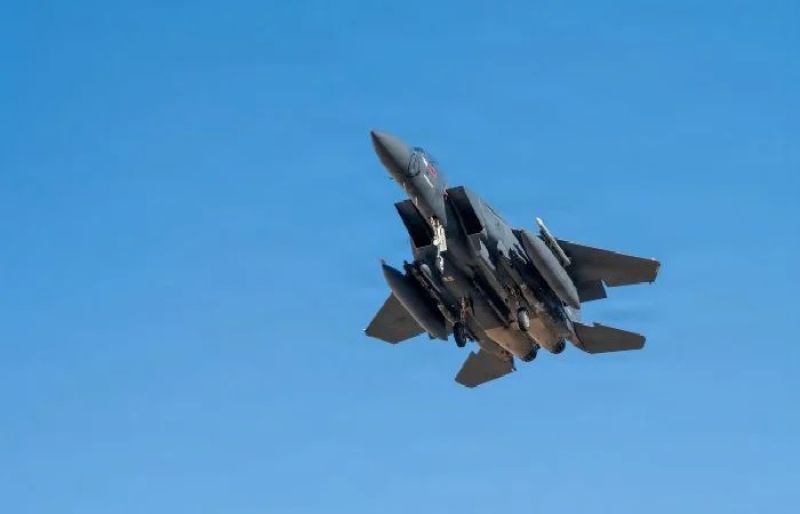
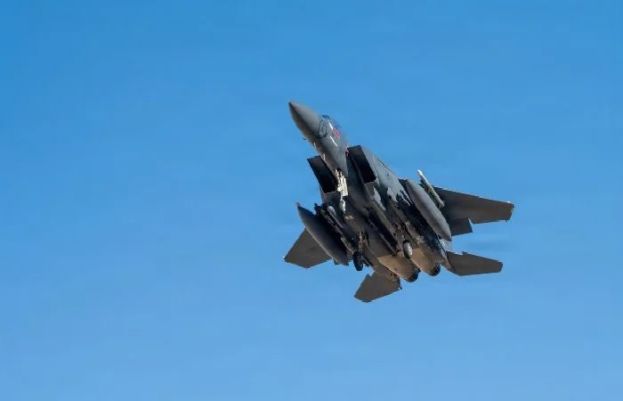
US forces staged the audacious rescue of an airman behind enemy lines after Iran downed his fighter jet, officials said on Sunday, resolving a crisis for President Donald Trump as he weighs escalating the war, now in its sixth week.
The airman rescued by special operations forces, who Trump said was a colonel, was the weapons-systems officer on the downed F-15, a US official told Reuters.
“Over the past several hours, the United States Military pulled off one of the most daring Search and Rescue Operations in US History,” Trump said in a statement, adding that the airman was injured but “he will be just fine.”
The officer was the second of two crew members on the warplane that Iran said on Friday had been brought down by its air defences. Iran’s Revolutionary Guards said several aircraft were destroyed during the US rescue mission, Tasnim news agency reported.
Reuters reported on Friday that the first crew member had been retrieved, triggering a high-profile search by both Iran and the United States for the remaining airman.
Iranian officials had urged citizens to help find him, hoping to gain leverage against Washington in the war Trump and Israel launched on February 28.
Trump has threatened to escalate the conflict in the coming days with attacks on Iran’s energy infrastructure.
Had Iran captured the airman, the ensuing hostage crisis could have shifted American public perception of a conflict that opinion polls show was already unpopular.
Trump said the airman was rescued “in the treacherous mountains of Iran” in what he said was the first time in military memory that two US pilots had been rescued, separately, deep in enemy territory.
The official told Reuters that as the weapons-systems officer was moved from near a mountain to a transport aircraft parked within Iran, US forces had to destroy at least one of the aircraft because it had malfunctioned.
US aircraft hit
The rescue effort, involving dozens of military aircraft, encountered fierce resistance from Iran.
Reuters reported on Friday that two Black Hawk helicopters involved in the search were hit by Iranian fire but escaped from Iranian airspace.
Separately, a pilot ejected from an A-10 Warthog fighter aircraft after it was hit over Kuwait and crashed, the officials said, though the extent of crew injuries was unclear.
“The fact that we were able to pull off both of these operations, without a SINGLE American killed, or even wounded, just proves once again, that we have achieved overwhelming Air Dominance and Superiority over the Iranian skies,” he said in his statement.
US air crews are trained in what to do if they go down behind enemy lines, measures known as Survival, Evasion, Resistance and Escape, but few are fluent in Persian and face a challenge in staying undetected while seeking rescue.
The conflict has killed 13 US military service members, with more than 300 wounded, US Central Command said, adding no US troops have been taken prisoner by Iran.
While Trump has repeatedly sought to portray the Iranian military as being in tatters, they have repeatedly been able to hit US aircraft.
Reuters reported on US intelligence showing that Iran retains large amounts of missile and drone capability. Until just over a week ago, the US could only determine with certainty that it had destroyed about one-third of Iran’s missile arsenal.
The status of about another third was less clear, but bombings probably damaged, destroyed or buried those missiles in underground tunnels and bunkers, Reuters sources said.
The US and Israeli war on Iran has spread across the Middle East, killing thousands and hitting the global economy with soaring energy prices that are fueling fears of inflation.


Actress Tori Spelling hospitalized after Southern California crash; authorities investigating cause

With Messi goal, Inter Miami open new stadium with dream moment

Justin Bieber ignites documentary release speculations ahead of Coachella

-

 Sports1 week ago
USMNT handed reality check by Doku, Belgium ahead of World Cup
-

 Sports1 week ago
2026 NCAA men’s hockey tournament: Schedule, results
-

 Fashion1 week ago
EU apparel imports slump 15.48% YoY in Jan; Bangladesh hardest hit
-
Uncategorized6 days ago
[CinePlex360] Please moderate: “Further tariff
-
Uncategorized3 days ago
[CinePlex360] Please moderate: “Trump signals p
-

 Tech2 days ago
Our Favorite iPad Is $50 Off
-
Uncategorized1 week ago
[CinePlex360] Please moderate: “Apple scrapping
-
 Entertainment1 week ago
The Avett Brothers’ bassist explains why he wrote a book about John Quincy Adams