

Politics
Netanyahu confirms India used Israeli weapons against Pakistan during Operation Sindoor

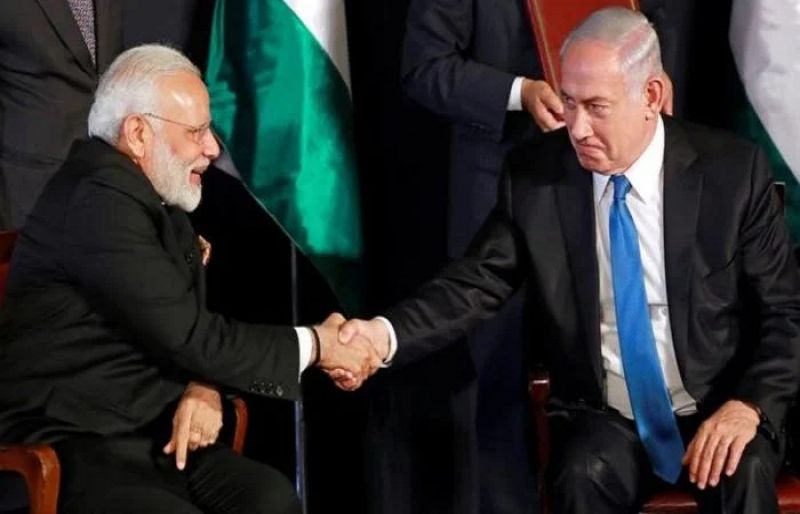

Israeli Prime Minister Benjamin Netanyahu has confirmed that weapons supplied by Israel were used by India during “Operation Sindoor” a cross-border military operation in which New Delhi targeted Pakistani positions, claiming to be striking “terrorists”.
The four-day conflict began after India accused Pakistan—without providing concrete evidence—of involvement in a deadly attack on tourists in Pahalgam.
What followed was a heavy exchange of artillery fire, drone attacks, and airstrikes between the two nuclear-armed neighbours.
In retaliation, Pakistan launched a large-scale military response named “Operation Bunyan-um-Marsoos”, hitting multiple Indian military sites across various regions.
During the confrontation, Pakistan reportedly shot down six Indian fighter jets, including three Rafales, along with dozens of drones.
The intense fighting ended after approximately 87 hours, culminating in a US-brokered ceasefire agreement on May 10.
In a post on X, Netanyahu said he met the Indian ambassador to Israel, JP Singh, to discuss strengthening “security and economic” cooperation, before addressing senior Indian journalists.
Indian media reported that he acknowledged that Israeli-supplied systems, including Barak-8 surface-to-air missiles and HARPY drones, played a key role in India’s operations.
“The things we provided before worked very well on the field… we develop our weapons in the field and they are battle-tested,” Netanyahu remarked, adding that Israel plans to escalate its military campaign in Gaza.
Weapons used against Pakistan
According Indian media, India deployed the jointly developed Barak-8 missile system alongside Israeli HARPY drones to counter Pakistani missile strikes during the May conflict.
he Russian-made S-400 missile defence system and various Indian-made weapons were also used.
The HARPY drone is designed for “suppression of enemy air defences” and can autonomously detect and destroy radar systems with high-explosive warheads, while the Barak-8 system offers 360-degree coverage and the ability to intercept multiple aerial threats within a 100km range.
Israel’s backing for India’s action was explicit. Kobbi Shoshani, Israel’s Consul General in Mumbai, called Operation Sindoor “an action of self-defence” and said he was “very proud” of it.
Israel remains one of India’s largest arms suppliers, with over $2.9 billion in hardware exports to New Delhi over the last decade, including radars, drones, and missile systems.
Despite its ongoing war on Gaza, Israel has maintained uninterrupted weapons deliveries to India.
India’s other main suppliers are Russia ($21.8 billion), France ($5.2 billion), and the US ($4.5 billion).
- Rubio demands release of detained Americans, including Habibi, Coyle.
- Taliban accused of kidnappings for ransom or policy concessions.
- US warns it may restrict passports for travel to Afghanistan.
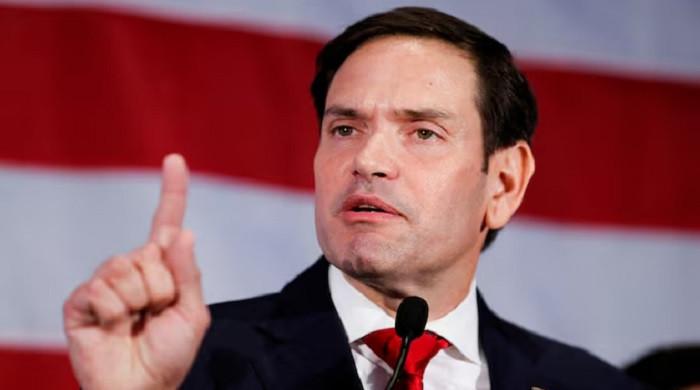
US Secretary of State Marco Rubio on Monday censured Afghanistan over its detention of American citizens, a move that could lead to a ban on US passport holders travelling to the country.
Rubio said in a statement he was designating Afghanistan’s Taliban government as a “state sponsor of wrongful detention,” demanding that Kabul release all US citizens detained in the country, including Mahmood Habibi and Dennis Coyle.
“The Taliban continues to use terrorist tactics, kidnapping individuals for ransom or to seek policy concessions. These despicable tactics need to end,” he said, adding that he had concluded it was not safe for Americans to travel to the country because of the risk of being unjustly detained.
The US is also seeking the return of the remains of Paul Overby, an author who was last seen close to Afghanistan’s border with Pakistan in 2014, two sources familiar with the situation said.
The sources said the US could restrict the use of US passports for travel to Afghanistan if it does not meet the US demands. Such a passport restriction is currently only in place for North Korea.
Rubio, on February 27, issued the same determination against Iran, the first country to be designated under an executive order signed by President Donald Trump in September.
He warned the US could restrict travel to Iran over its detention of US citizens, but has not imposed any restrictions. The US and Israel launched a war against Iran the day after the determination was announced.
Reuters was unable to reach the government in Afghanistan for comment.
Afghanistan’s Taliban government has previously denied that it detained Habibi, who was the head of Afghanistan’s civil aviation.
CBS News was the first to report on the US considering designating Afghanistan as a state sponsor of wrongful detention earlier on Monday.
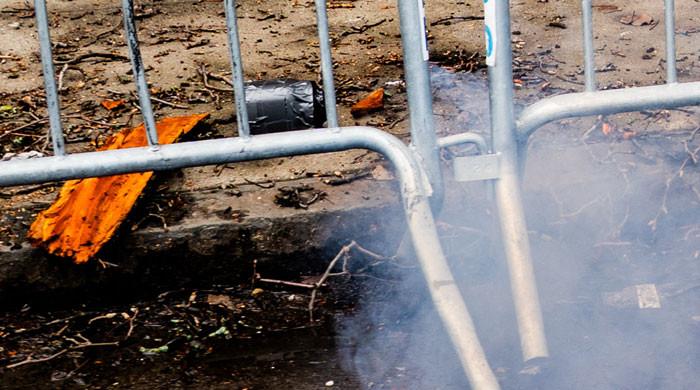
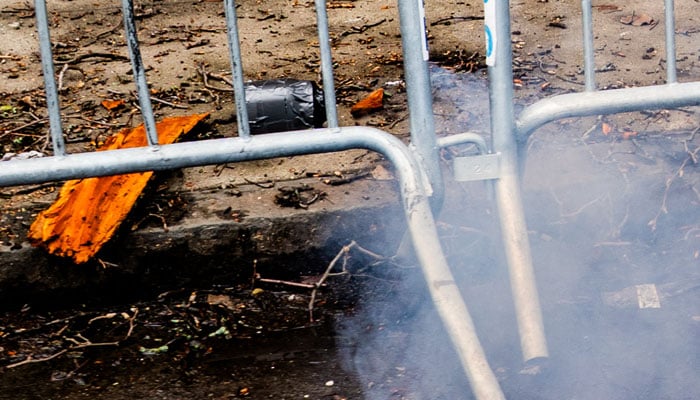
NEW YORK: Two men were charged Monday with “terrorist” offences for throwing a nail bomb near a weekend protest, after which the pair told police they were aligned with terrorist group Daesh, charging documents showed.
The two men, both US citizens, are in custody after allegedly being involved in tossing the bomb packed with explosives.
This is being investigated as an act of Daesh-inspired terrorism, said NYPD Commissioner Jessica Tisch.
She said it was not thought to be linked to the ongoing conflict in Iran. No one was hurt during the incident.
Two suspicious devices were thrown by a man identified by police as Emir Balat near the protest Saturday, led by a far-right influencer.
According to the charging document, the men “referred to Daesh in recorded post-arrest statements… More specifically, Balat wrote on a piece of paper that he pledge(d) allegience (sic) to the Daesh.”
The men were charged with five counts including attempted support of a “foreign terrorist organisation” and “use of a weapon of mass destruction.”
On Sunday, the police bomb squad inspected a car connected to the men near the scene. Tisch said a suspicious device found in the vehicle tested negative for explosives.
‘Flames and smoke’
Police had said Saturday that the devices were jars wrapped in tape and containing nuts, bolts and screws. Also arrested was Ibrahim Kayumi.
The events unfolded after the far-right influencer, Jake Lang, staged a demonstration outside Gracie Mansion, the official residence of New York Mayor Zohran Mamdani.
His protest drew around 20 people, while a counter-protest drew about 125. Mamdani was not home during the incident.
Lang returned to the scene of the incident Monday and was outside Mamdani’s official residence.
AFP correspondents at the scene on Saturday saw a man wearing a dark hooded sweatshirt and beige cargo pants — later identified as Balat —being handed a device wrapped in tape and billowing smoke by another man, named by police as Kayumi.
Balat dropped the device near a line of police before vaulting a barrier.
“Witnesses reported seeing flames and smoke as it travelled through the air before it struck a barrier a few feet from police officers,” Tisch said Saturday.
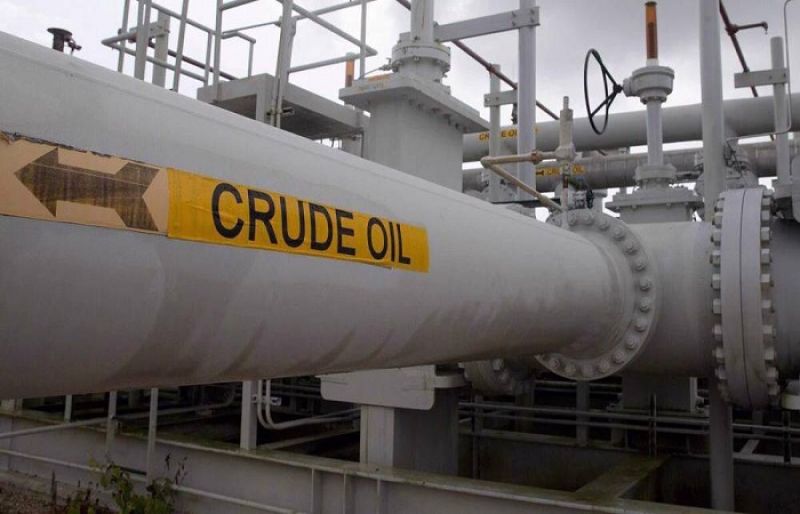
Crude oil prices have soared past $100 a barrel amid a large-scale and unprovoked US-Israeli war on Iran.
The international benchmark of Brent crude jumped more than 20 percent on Sunday, and at one point hit $115 as concerns increased over prolonged disruptions to global energy supplies.
The benchmark was being traded at around $107.50 as of 0230 GMT on Monday following a slight moderation. The uptick marked the first time oil prices climbed over $100 per barrel since the onset of Russia’s operations in Ukraine in 2022.
US President Donald Trump, who campaigned heavily on cost-of-living concerns in the 2024 vote, sought to downplay the rise in prices.
“Short term oil prices, which will drop rapidly when the destruction of the Iran nuclear threat is over, is a very small price to pay for the USA, and World, Safety and Peace,” Trump asserted in a post on Truth Social.
US Secretary of Energy Chris Wright also tried to brush off the prospect of soaring energy prices earlier on Sunday.
He told CBS News’ Face the Nation program that any increase in prices at the petrol pump would be “temporary.”Crude oil prices have spiked by about 50 percent since the US and Israel launched joint strikes on Iran on February 28.
Iran, in retaliation, has effectively brought shipping in the Strait of Hormuz to halt.
Iraq, the United Arab Emirates and Kuwait — three of the major producers in the Organization of the Petroleum Exporting Countries (OPEC) — have slashed production amid an accumulating backlog of barrels with no destination to go due to the effective closure of the strategic waterway.
Meanwhile, stocks in Asia tumbled drastically on Monday morning, as investors prepared for the fallout of soaring energy prices.
Japan’s 225 index fell more than 7 percent in early trading, while South Korea’s KOSPI plunged more than 8 percent.The Hang Seng Index in Hong Kong also fell by nearly 3 percent.
US stocks futures, which are regularly traded outside of usual market hours, also experienced significant losses.
Futures tied to Wall Street’s benchmark S&P 500 fell by 1.7 percent, while those for the tech-heavy Nasdaq Composite dropped by 1.90 percent.
The International Monetary Fund (IMF) has predicted that energy sustained 10 percent rise in oil prices brings about a 0.5 rise in inflation and a 0.15 percent reduction in global economic growth.


Intertextile Shanghai 2026: Fringe events spotlight market trends

Tyler Linderbaum’s $81M record-breaking deal headlines Raiders’ free agent spending spree

Milan’s big derby win; Arsenal’s FA Cup scare; Yamal stars again; more

-
 Politics3 days ago
India let Iran warship dock the day US sank another off Sri Lanka, say officials
-

 Sports3 days ago
Pakistan set for FIH Pro League debut | The Express Tribune
-

 Entertainment3 days ago
Harry Styles kicks off new era with ‘One Night Only’ comeback show
-
 Business1 week ago
Labour parliamentarians urge UK Government to oppose Rosebank oil field
-
 Business3 days ago
Home heating oil: ‘Most of my pension has gone on home heating oil’
-
 Business3 days ago
Restaurant group changes name after bid to buys pubs across the UK
-
 Tech1 week ago
The 5 Big ‘Known Unknowns’ of Donald Trump’s New War With Iran
-

 Sports1 week ago
USA vs. Argentina (Mar 1, 2026) Live Score – ESPN