

Business
Netflix grants Warner Bros. Discovery 7-day waiver to reopen deal talks with Paramount Skydance


Warner Bros. Discovery on Tuesday said it will reopen deal talks with Paramount Skydance under a seven-day waiver from Netflix to explore “deficiencies” in Paramount’s offer to buy the entirety of WBD.
The legacy media company has a pending transaction with Netflix for its streaming and studio businesses. Paramount launched a hostile tender offer straight to WBD shareholders at $30 per share after losing out to Netflix in a bidding war.
“Netflix has provided WBD a limited waiver under the terms of WBD’s merger agreement with Netflix, permitting WBD to engage in discussions with Paramount Skydance (“PSKY”) (NASDAQ: PSKY) for a seven-day period ending on February 23, 2026 to seek clarity for WBD stockholders and provide PSKY the ability to make its best and final offer,” Warner Bros. Discovery said in a release.
“During this period, WBD will engage with PSKY to discuss the deficiencies that remain unresolved and clarify certain terms of PSKY’s proposed merger agreement,” it said.
Paramount leadership has repeatedly said its $30 per share, all-cash offer is not its “best and final.” Last week the company sweetened its offer with additional “enhancements,” but stopped short of raising the per-share value.
Warner Bros. Discovery said Tuesday that a senior Paramount representative informed a WBD board member that it would pay $31 per share if deal talks were to reopen.
Tune in at 4:30pm ET as Netflix co-CEO Ted Sarandos joins CNBC TV. Watch in real time on CNBC+ or the CNBC Pro stream.
After the limited waiver period, Netflix will retain its matching rights provided by the merger agreement, WBD said.
“Throughout the entire process, our sole focus has been on maximizing value and certainty for WBD shareholders,” said WBD CEO David Zaslav in a statement. “Every step of the way, we have provided PSKY with clear direction on the deficiencies in their offers and opportunities to address them. We are engaging with PSKY now to determine whether they can deliver an actionable, binding proposal that provides superior value and certainty for WBD shareholders through their best and final offer.”
WBD also on Tuesday announced a special meeting of shareholders will be held on March 20 and said its board continues to unanimously recommend the Netflix deal over Paramount’s offer.
Netflix said in a statement the shareholder meeting date marked an “important milestone for our transaction with WBD.”
“While we are confident that our transaction provides superior value and certainty, we recognize the ongoing distraction for WBD stockholders and the broader entertainment industry caused by PSKY’s antics,” Netflix said. “Accordingly, we granted WBD a narrow seven-day waiver of certain obligations under our merger agreement to allow them to engage with PSKY to fully and finally resolve this matter.”
Shares of Warner Bros. Discovery were up about 3.5% Tuesday. Shares of Paramount were up about 6%.
Raising regulatory concerns
Either proposed purchase of Warner Bros. Discovery assets comes with regulatory questions.
Media industry insiders and lawmakers have questioned whether Netflix’s proposed deal would win approval as it would bring together two of the top streaming services and could result in higher prices for consumers.
Netflix leadership has repeatedly said the company believes it would win regulatory approval for the deal because it would preserve jobs in a challenged media landscape rife with layoffs.
Paramount has sounded the alarm to WBD shareholders, however, and argues its offer is not only better but would more easily garner government support.
On the flipside, Paramount’s offer has raised questions of foreign funding and antitrust considerations in bringing together two large portfolios of pay TV channels and two major film studios.
Paramount’s deal is financed in part by sovereign wealth funds of Saudi Arabia; Abu Dhabi, United Arab Emirates; and Qatar. Paramount has said those entities have agreed to forgo any governance rights.
In its statement on Tuesday, Netflix called out the foreign funding, which it said it expects to come under scrutiny from international regulators, including the Committee on Foreign Investment in the United States (CFIUS). Netflix said it also expects European authorities “to scrutinize the Middle Eastern investors in PSKY’s consortium and to be skeptical of claims that they are purely passive investors.”
Given Europe’s track record of antitrust enforcement, it’s possible regulatory battles for either deal would be won or lost in that market. Of course, the question still looms of how President Donald Trump will view either transaction. Trump recently said he hadn’t been involved in the process so far and didn’t plan to be, though he has reportedly met with executives from each camp.
Netflix’s statement on Tuesday “unsurprisingly points to a number of arguments Netflix believes it has in its favor,” according to an analyst note from Raymond James on Tuesday, “including better prospects for approval, a clearer national security picture, and financial security.”





One elderly couple had to find £1,000 for an oil delivery and suppliers are not giving quotes, a councillor says.
Source link
Business
Middle East conflict may hit India’s exports beyond region if prolonged, says government – The Times of India
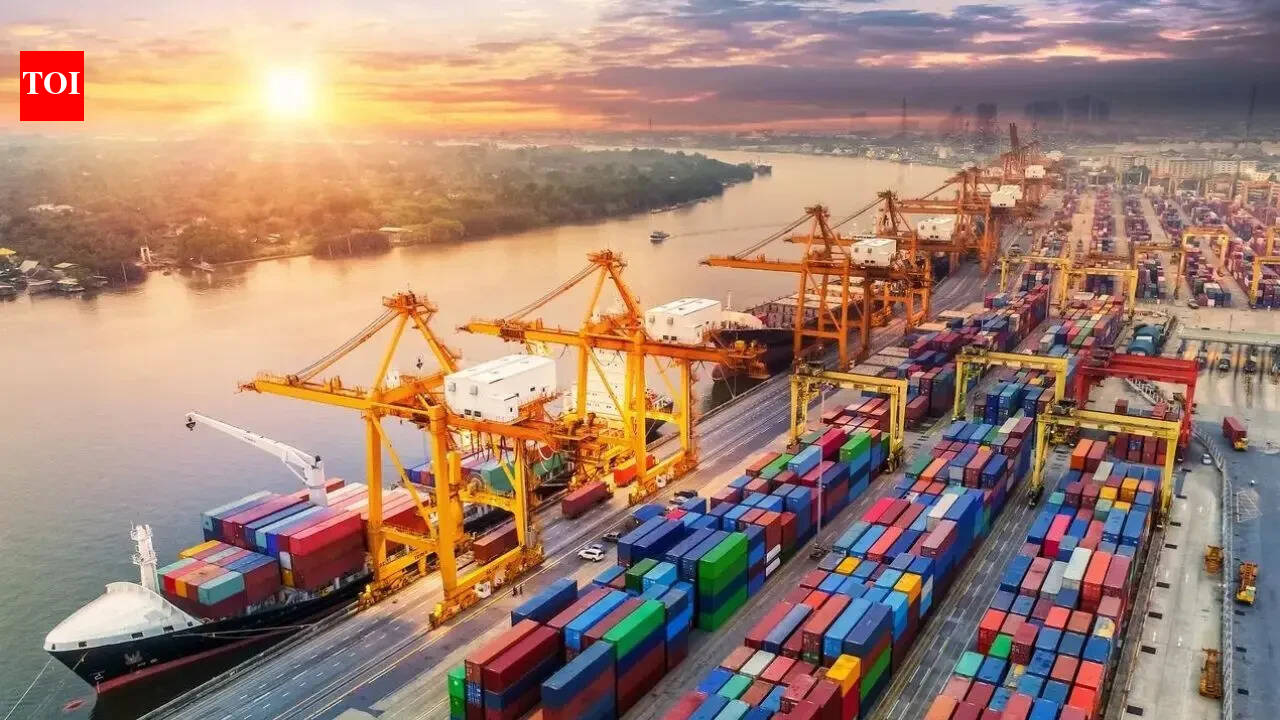
A prolonged conflict in Middle East could begin to hurt India’s exports not just to the region but also to other global markets, as disrupted supply chains ripple outward, commerce secretary Rajesh Agrawal said on Saturday, He also urged the pharmaceutical industry to reduce dependence on imported raw materials and build more resilient export and import linkages.Speaking on the sidelines of ‘Chintan Shivir – Scaling Up Pharma Exports’ in Hyderabad, Agrawal said the government has already seen an impact on both imports and exports over the past month because of the Middle East crisis, with energy imports and regional trade flows under pressure.
“Middle East is also an important market. Around 12-13 per cent of our exports go to the region. So, that will directly get impacted. And if it goes on for long, maybe our exports to other parts of the world will also get impacted as some of the value chains will rotate back. We are cognizant of it,” Agrawal told reporters, as per news agency PTI.He said the exact impact of the conflict on India’s trade would become clearer in the next couple of weeks, but indicated that both exports and imports could see some decline.“And I assume, it will not only be a one-way traffic, in terms of export going down, but it will also be imports having some downfall,” he said.Agrawal cautioned that even if the war ends soon, the disruption may linger for months or even years, depending on the extent of damage to supply chains and infrastructure.“So, at this juncture, it will be very difficult to take a very long-term view on it,” he said.He said the Centre is trying to ensure that supply chains face the minimum possible disruption, while acknowledging that some trade numbers may soften in the near term.
Pharma sector already feeling supply pressure
The commerce secretary said the pharmaceutical sector has already seen some impact in the availability of key intermediates and solvents because supply chains are getting affected by the regional crisis.Agrawal said all arms of the government are working to prioritise limited LPG supply and are attempting to ease the situation by diversifying imports and sourcing from alternative suppliers.“So, as we are able to resolve that overall supply, we will try to alleviate some of the pain in every sector. The Pharma sector will be one of the priority sectors,” he said.He added that the government and industry are jointly working on ways to make supply chains more resilient.
Call for self-reliance in APIs, bulk drugs and intermediates
At the same event, Agrawal asked the pharmaceutical industry to use the current geopolitical uncertainty as a trigger to reduce dependence on critical imported inputs and strengthen domestic capacity.Addressing industry stakeholders in Hyderabad, he stressed “the importance of ensuring greater self-reliance by meeting 80-90 per cent (or higher) of domestic pharmaceutical requirements through indigenous production, while reducing critical import dependencies in APIs, bulk drugs, and intermediates”.He also emphasised the “importance of insulating import supply chains in a geopolitically fragmented world, where availability may be important”.Agrawal called for a broader strategic repositioning of India as a global hub for quality, affordable pharmaceuticals, saying that quality would remain the decisive factor in healthcare. He urged the sector to build a stronger quality ecosystem to enhance global trust and align with emerging areas such as biologics and biosimilars.He also encouraged the industry to shift from a volume-driven to a value-driven model, with greater focus on innovation and new patents, while maintaining India’s strength in generics.
Exports remain on positive path despite uncertainty
Despite the geopolitical overhang, Agrawal said India’s exports in the last financial year were expected to remain on a positive trajectory.The broader pharmaceutical export picture remains resilient. India’s pharma exports stood at $30.47 billion in 2024-25, up 9.4 per cent over the previous year.During April–February 2025-26, pharma exports reached $28.29 billion, registering growth of over 5 per cent compared with the corresponding period of the previous year.India remains the third-largest producer of pharmaceuticals globally by volume and 14th by value, underscoring both the sector’s scale and the stakes involved in insulating it from external shocks.
Business
India Pharmaceutical Exports: India’s pharma exports rise 5.6% to $28.29 billion till Feb in FY26; sector seen doubling to $130 billion by 2030 – The Times of India
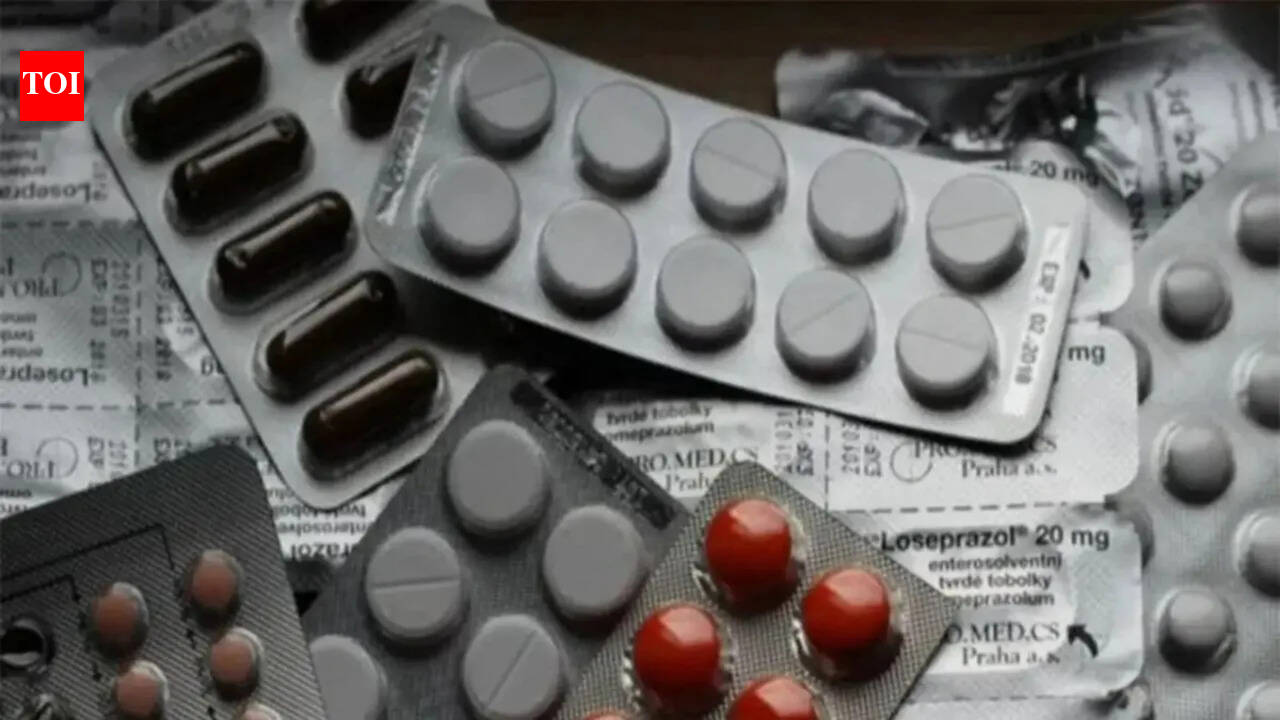
India’s pharmaceutical exports remained on a growth track in the last financial year despite global headwinds, crossing $28 billion during April–February FY26, while industry leaders said the sector is on course to nearly double in size to $130 billion by 2030.Speaking at the inaugural session of the ‘Chintan Shivir: Scaling Up Pharma Exports’ on Saturday, K Raja Bhanu, director general of the Pharmaceuticals Export Promotion Council of India (Pharmexcil), said pharma exports stood at $28.29 billion in April–February FY26, marking a 5.6 per cent increase over the same period of FY25.“Despite global challenges, pharmaceutical exports have been among the few sectors to maintain growth momentum. Exports during April–February FY26 stood at $28.29 billion, reflecting a growth of 5.6 per cent compared to the same period in FY25, led by formulations, biologicals, vaccines and AYUSH products,” Bhanu said.Bhanu said the Indian pharmaceutical sector, currently valued at around $60 billion, is projected to grow to $130 billion by 2030. He added that pharma exports reached $30.47 billion in FY2024–25, recording a 9.4 per cent year-on-year growth despite global pricing pressures and trade volatility.He said Pharmexcil is targeting $65 billion in exports by 2030, backed by policy prioritisation, diversification beyond traditional markets, higher FDI inflows and faster regulatory clearances.India currently ranks third globally in pharmaceutical production by volume, with shipments reaching more than 200 markets, he said. Bhanu also noted that over 60 per cent of India’s pharma exports go to highly regulated markets, highlighting the sector’s quality and compliance standards.According to him, the United States accounts for 34 per cent of India’s pharmaceutical exports, followed by Europe at 19 per cent.Commerce secretary Rajesh Agrawal said the sector is likely to stay on a positive trajectory even if export targets prove difficult to meet in dollar terms, given the weakening rupee.“The target we have set appears difficult to meet, but we will remain on a positive trajectory,” Agrawal said.He added that regardless of whether targets are achieved in dollar terms, export growth would still reflect positively in rupee terms as the Indian currency continues to weaken against the US dollar.Pharmexcil chairman Namit Joshi said India is likely to end the current financial year at levels comparable to FY25, while flagging the effect of front-loaded US buying.“That is why we expect to end up close to last year’s performance, with some growth coming from that,” Joshi said.Joshi said tariff-related issues in 2025 led to higher procurement of medicines worth $1.6 billion in the US, above normal levels, and that this is expected to influence FY26 numbers.
US tariff backdrop may shape future outlook
While the immediate focus remains on export resilience, the external environment—especially in the US, India’s biggest pharma market—could become a key variable going forward.The US has announced a fresh tariff framework targeting patented drugs and certain high-value pharmaceutical ingredients manufactured outside America, with duties of up to 100 per cent set to take effect between August and September 2026 after a transition period.However, the near-term hit to India may be limited because generic medicines are currently exempt, and about 90 per cent of India’s pharmaceutical exports to the US are generics, as per a GTRI report. The report said India exported $9.7 billion worth of pharmaceuticals to the US in 2025, accounting for 38 per cent of its global pharma exports of $25.8 billion.


Transfer rumors, news: Fernandes to urge Man United to sign Portugal teammate

With One Million Displaced, Lebanon Turns to Digital Wallets for Aid

‘Humiliating defeat’: Iran destroys several US warplanes on mission to retrieve missing pilot

-
 Business1 week ago
How do you spot a fake online review?
-

 Sports1 week ago
Illinois defense gets tough, ousts Houston to reach Elite Eight
-

 Sports1 week ago
USMNT handed reality check by Doku, Belgium ahead of World Cup
-

 Entertainment1 week ago
Lee Sang-bo dies at 45: Funeral details revealed
-

 Sports1 week ago
2026 NCAA men’s hockey tournament: Schedule, results
-

 Fashion1 week ago
China rolls out tariff cuts on Congo imports from April 1
-

 Fashion1 week ago
EU apparel imports slump 15.48% YoY in Jan; Bangladesh hardest hit
-
Uncategorized6 days ago
[CinePlex360] Please moderate: “Further tariff