

Politics
Netherlands sets global standard in flood defence and water management

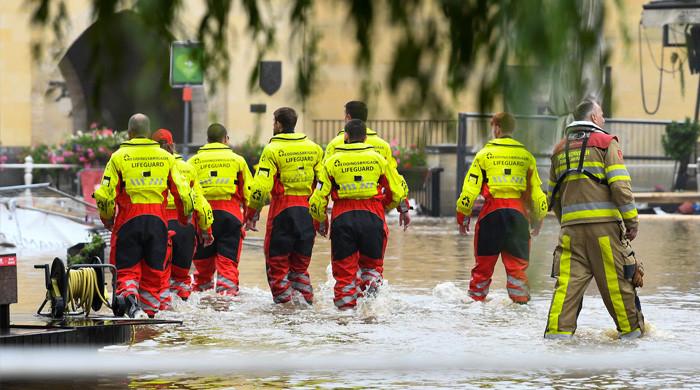
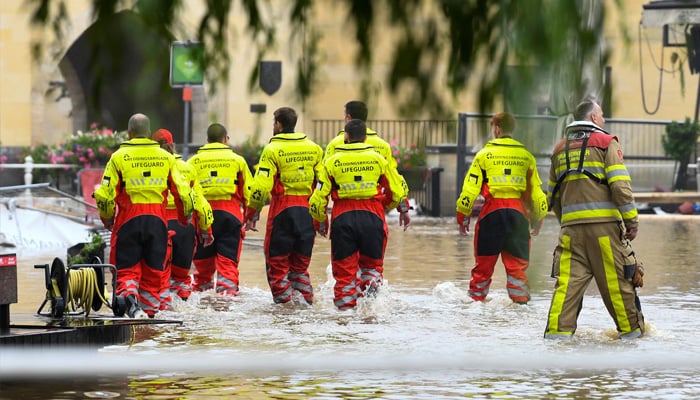
The Netherlands has emerged as a world leader in protecting land from rising waters, investing up to 1.3 billion euros each year to maintain an extensive system of dikes, polders, canals, windmills, concrete barriers and embankments that keep floods at bay, The News reported citing a research.
Moreover, artificial dwelling hills or Terpins have also been built to increase the land elevation.
Similar to Bangladesh, the Netherlands has also created a scheme that alerts citizens of possible floods 24 hours before the otherwise uncontrollable waters hit the country.
The anti-flood system they have built over decades is on a scale unmatched anywhere else in the world.
The Dutch have also built a giant sea gate guarding the port of Rotterdam, the largest port in Europe, and a c rucial hub for industries of all sorts.
A media house maintained: “The gate has two curved arms; each as tall and twice as heavy as the Eiffel Tower. When needed, they swing out into the water to lock together and sink to the bottom, forming a 22-meter-high wall against the sea. The barrier is one of the largest moving structures on Earth; its two ball-and-socket joints, anchored in the embankment on either side of the canal, weigh 680 tonnes each.”
From 1962 until 2004, the 31,500-acre Rotterdam was the world’s busiest port by annual cargo tonnage. It was overtaken first in 2004 by the port of Singapore, and later by Shanghai and other very large Chinese seaports.
In May 2019, global investors had enthusiastically embraced a national Netherlands 5.98 billion-Euro Green Bond designed to fund projects to cope with current and future climate change impacts and an advanced low-carbon economy.
Much of the bond focused on using coastal and river ecosystems as a safeguard for negative climate impacts such as high flood risk.
Investors responded to the bond immediately, oversubscribing the issuance by more than 15.2 billion Euros!
Although global warming can overwhelm the measures the Netherlands has taken to control floods, the risk of these water-related disasters has been reduced from once every 100 years to once every 1,250 years.
The region has a long history of devastating floods that continually reshape the land. For more than 1,000 years the residents of this region have devised ways to reclaim land from encroachment by the sea.
The Rhine, Meuse and Schelde are Holland’s three chief rivers.
The densely-populated Netherlands or Holland is known for its low elevation and approximately two-thirds of its area is vulnerable to flooding.
While 15 million people in the Netherlands live below the sea level, the river Rhine and its tributaries, the Meuse and the Mosel, have often attacked Holland, Belgium and Luxembourg.
The first river dikes had appeared near the river mouths in the 11th century, where incursions from the sea added to the danger from high water levels on the river.
The 17th and 18th centuries were a period of many infamous river floods resulting in much loss of life. They were often caused by ice dams blocking the river. Land reclamation works, large willow plantations and building in the winter bed of the river all worsened the problem.
The “Encyclopedia Britannica” states: “The first Dutch food in 1287 had caused more than 50,000 casualties. A significant percentage of the country’s population perished in the disaster, and it has been rated as one of the most destructive floods in recorded history. Called the St Lucia flood, this event also created direct sea access for the village of Amsterdam, allowing its development into a major port city.”
The 1421 floods had killed up to 10,000 people.
In more recent history, February 1953 had seen one of the biggest natural disasters hitting the Netherlands ever, killing 2400 humans.
Around 770 square miles of southern Holland were inundated, forcing tens of thousands to flee.
Many were overtaken by the icy waters as more and more flood walls failed. The storm also devastated parts of England, Belgium and Germany.
Urbanisation is one of the major causes of flooding in Netherlands.
The urban population here accounts for 82.9% of the total population. A lot of buildings, roads, and cities have thus been built over the course of centuries, leading to destruction of vegetation, hence reducing the interception of rainfall when a storm is to occur.
Additionally, the excessive use of tar and cement to pave roads and sidewalks inhibit water from infiltrating the soil, which increases the chances of surface runoff.
These artificial structures are impermeable, and water is forced to flow back into the ocean through surface runoff, increasing the peak discharge in the area. Due to this, the lag time for water to flow back into the ocean has decreased, increasing the chances of flooding.
Due to land reclamation, areas close to the shoreline become more prone to coastal waves. Erosion takes place resultantly and the fast-sinking land leads to floods.
And then for the sake of urbanisation and providing land for agriculture and ploughing, deforestation has taken place.
Being the world’s second largest exporter of agricultural products, agriculture plays an immense role in the Netherlands’ economy. Presently, over 70% of the country’s land is used for agricultural purposes.
The Guardian reported that the low-lying Netherlands has been fighting back water for more than 1,000 years, when farmers built the first dykes.
“Windmills have also been pumping the stuff off the land since the 14th century. One of the most densely populated countries on the planet, 60% of the Netherlands is vulnerable to flooding, and its peat-rich agricultural soil is subsiding even as climate change is raising sea levels. The country’s universities are producing some of the world’s best water engineers and managers and it is exporting its expertise abroad; the Dutch government has advised on water governance projects in China, Africa and Australia,” the report stated.
Meanwhile, The British newspaper revealed “there are no financial packages for people who have to move.”
It quoted a government official as saying: “They get the market value of their house and that is all. We will help them find another place, but not financially. The only thing we do is to make sure that they do not lose money.”
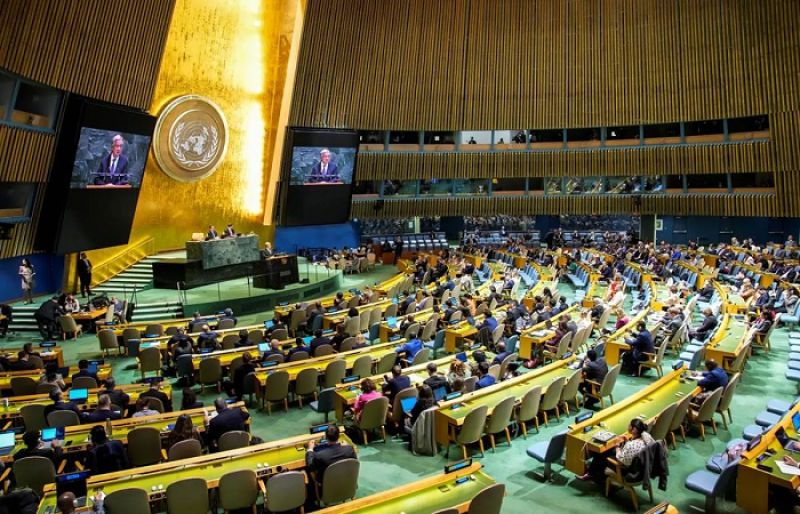
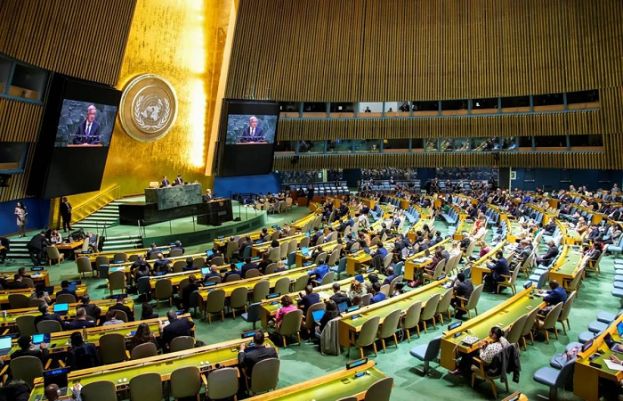
Signatories of the landmark nuclear non-proliferation treaty began a meeting Monday at the United Nations as fears of a renewed arms race escalate, with atomic powers again at loggerheads over safeguards.
In 2022, during the last review of the treaty considered the cornerstone of non-proliferation, UN Secretary-General Antonio Guterres warned humanity was “one misunderstanding, one miscalculation away from nuclear annihilation.”
On Monday he warned “the drivers” of nuclear weapons proliferation were accelerating.
“For too long, the treaty has been eroding. Commitments remain unfulfilled. Trust and credibility are wearing thin. The drivers of proliferation are accelerating. We need to breathe life into the treaty once more,” Guterres said in opening remarks.
With global geopolitical friction only heightened since the last meeting, it was unclear what the gathering at UN headquarters could achieve.
France’s Foreign Minister Jean-Noel Barrot told signatories that “never has the risk of nuclear proliferation been so high, and the threat posed by Iran’s and North Korea’s programs is intolerable for each and every state party to this treaty.”
Tempering expectations, Do Hung Viet, Vietnam’s UN ambassador and president of the conference, said “we should not expect this conference to resolve the underlying strategic tensions of our time.”
“But a balanced outcome that reaffirms core commitments and set out practical steps forward would strengthen the integrity of the NPT,” he said.
“The success or failure of this conference will have implications way beyond these halls,” Viet added. “The prospects of a new nuclear arms race are looming over us.”
The nuclear non-proliferation treaty (NPT), signed by almost all countries on the planet — with notable exceptions including Israel, India and Pakistan — aims to prevent the spread of nuclear weapons, promote complete disarmament, and encourage cooperation on civilian nuclear projects.
The nine nuclear-armed states — Russia, the United States, France, the United Kingdom, China, India, Pakistan, Israel and North Korea — possessed 12,241 nuclear warheads in January 2025, the Stockholm International Peace Research Institute (SIPRI) reported.
The US and Russia hold nearly 90 percent of nuclear weapons globally and have carried out major programs to modernize them in recent years, according to SIPRI.
China has also rapidly increased its nuclear stockpile, SIPRI said, with the G7 raising the alarm Friday over Moscow and Beijing boosting their nuclear capabilities.
US President Donald Trump has indicated his intention to conduct new nuclear tests, accusing others of doing so clandestinely.
In March, French President Emmanuel Macron announced a dramatic shift in nuclear deterrence, notably an increase in the atomic arsenal, currently numbering 290 warheads.
International Atomic Energy Agency chief Rafael Grossi, just returned from 40th anniversary events at Chernobyl to mark the nuclear disaster there, said “there is a growing perception that perhaps having nuclear weapons could be good for national security.”
“Nothing is further from the truth,” he said.
– ‘Affront’ to NPT –
“It is obvious that trust is eroding, both inside and outside the NPT,” Seth Shelden of the International Campaign to Abolish Nuclear Weapons, a Nobel Peace Prize laureate, told AFP.
He questioned the likely outcome of the four-week summit.
Decisions on the NPT require agreement by consensus, with the previous two conferences failing to adopt final political declarations.
In 2015, the deadlock was largely due to opposition by Israel’s arch-ally Washington to creation of a nuclear-weapon-free zone in the Middle East.
A 2022 impasse was due mainly to Russian opposition to references to Ukraine’s nuclear power plant at Zaporizhzhia, occupied by Moscow.
This year’s summit could hit any number of stumbling blocks.
The ongoing war in Ukraine, Iran’s nuclear program and the war there, proliferation fears and Pyongyang’s developing arsenal could all be deal-breakers.
The United States along with its allies Britain, the UAE and Australia spoke out at Iran’s appointment as a conference vice president.
Washington’s meeting envoy said conferring a leadership role on Tehran was an “affront” to countries that take the NPT “seriously.”
Artificial intelligence could be a prominent issue as some countries call for all sides to keep human control over nuclear weapons.
- US says nuclear issues must be dealt with from the outset.
- Trump unhappy with delaying deal on Iran nuclear programme.
- Iran demands blockade be lifted before any negotiations begin.
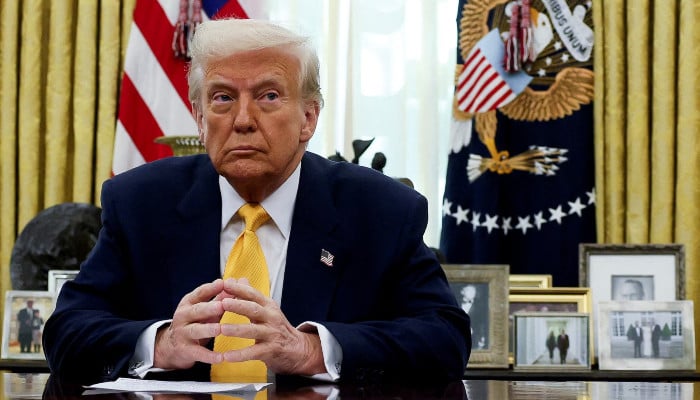
US President Donald Trump is unhappy with the latest Iranian proposal on resolving the two-month war, a US official said, dampening hopes for a resolution to the conflict that has disrupted energy supplies, fuelled inflation, and killed thousands.
Iran’s latest proposal would set aside discussion of Iran’s nuclear programme until the war is ended and disputes over shipping from the Gulf are resolved.
That is unlikely to satisfy the US, which says nuclear issues must be dealt with from the outset, and Trump was unhappy with Iran’s proposal for that reason, a US official briefed on the president’s Monday meeting with his advisers said, speaking on condition of anonymity.
White House spokeswoman Olivia Wales said the US “will not negotiate through the press” and has “been clear about our red lines” as the Trump administration looks to end the war against Iran it began in February alongside Israel.
A previous agreement in 2015 between Iran and multiple other countries including the US sharply curtailed Iran’s nuclear programme, which it has long maintained is for peaceful, civilian purposes. But that deal fell apart when Trump unilaterally withdrew from it in his first term in office.
Hopes of reviving peace efforts have receded since the US president scrapped a visit planned for last weekend by his special envoy Steve Witkoff and son-in-law Jared Kushner to Islamabad, where Iranian Foreign Minister Abbas Araqchi shuttled in and out twice during the weekend.
Araqchi also visited Oman and on Monday went to Russia, where he met President Vladimir Putin and received words of support from a longstanding ally.
Oil prices rise again
With the warring sides still seemingly far apart, oil prices resumed their upward march, extending gains in early Asia trade on Tuesday.
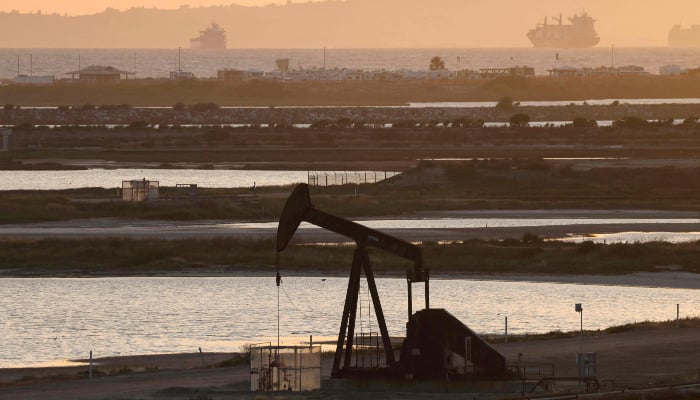
“For oil traders, it’s not the rhetoric that matters any more, but the actual physical flow of crude oil through the Strait of Hormuz, and right now, that flow remains constrained,” Fawad Razaqzada, market analyst at City Index and FOREX.com, said in a note.
At least six tankers loaded with Iranian oil have been forced back to Iran by the US blockade in recent days, ship-tracking data showed, underscoring the war’s impact on traffic.
Iran’s foreign ministry condemned US seizures of Iran-linked tankers as “outright legalisation of piracy and armed robbery on the high seas”, in a social media post.
Between 125 and 140 ships usually crossed in and out of the strait daily before the war, but only seven have done so in the past day, according to Kpler ship-tracking data and satellite analysis from SynMax, and none of them were carrying oil bound for the global market.
With his approval ratings falling, Trump faces domestic pressure to end a war for which he has given the US public shifting rationales.
Araqchi told reporters in Russia that Trump had requested negotiations because the US has not achieved any of its objectives.
Senior Iranian officials, speaking on condition of anonymity, told Reuters the proposal carried by Araqchi to Islamabad over the weekend envisioned talks in stages, with the nuclear issue to be set aside at the start.
A first step would require ending the US-Israeli war on Iran and providing guarantees that the US cannot start it up again. Then negotiators would resolve the US Navy’s blockade of Iran’s trade by sea and the fate of the Strait of Hormuz, which Iran aims to reopen under its control.
Only then would talks look at other issues, including the longstanding dispute over Iran’s nuclear programme, with Iran still seeking some kind of US acknowledgement of its right to enrich uranium.
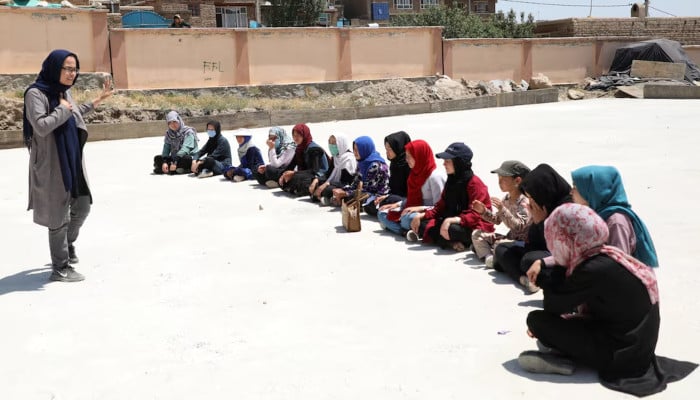
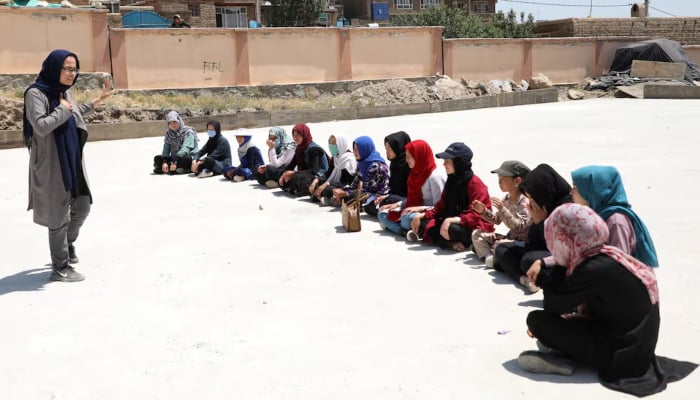
Afghanistan is at risk of losing more than 25,000 female teachers and health workers by 2030 if the Taliban-led country’s restrictions on girls’ education and women’s employment are not lifted, according to a new Unicef report released on Monday.
The Taliban has banned women from most public sector jobs and limited girls to receiving an education only until the age of 12.
These restrictions, according to the report, have already affected at least 1 million girls — a figure that is expected to double by 2030 if nothing changes. Unicef called on the Taliban to lift the ban that it imposed after returning to political power in 2021.
Unicef’s “The Cost of Inaction on Girls’ Education and Women’s Labour Force Participation in Afghanistan” report found a rapid decline in qualified women entering the teaching and healthcare sectors.
Up to 20,000 female teachers and 5,400 health workers could be lost by 2030, according to the report, which estimated that this figure is about 25% of Afghanistan’s 2021 workforce. As many as 9,600 health workers could be lost by 2035, it added.
“Afghanistan cannot afford to lose future teachers, nurses, doctors, midwives, and social workers, who sustain essential services,” Unicef Executive Director Catherine Russell said. “This will be the reality if girls continue to be excluded from education.”
Female healthcare workers are required to attend to female patients, and female teachers are preferred for girls in gender-disaggregated schools whenever possible, the report noted.
The growing decrease could have at least a AFN 5.3 billion ($84 million) annual economic impact on Afghanistan’s economy, according to Unicef, which added that this is the equivalent of about 0.5% of the country’s gross domestic product.
Afghanistan’s de facto authorities should safeguard skills training and allow women to participate in the labor market, Unicef said.


Match officials announced for HBL PSL 11 qualifier – SUCH TV
BP profits more than double as oil trading booms amid Iran war

‘Dances With Wolves’ star Nathan Chasing Horse gets life imprisonment for sexual assault verdict

-

 Sports1 week ago
NCAA men’s gymnastics championship: All-time winners list
-

 Sports1 week ago
WWE WrestleMania 42 Night 2: Live match results and analysis
-

 Fashion1 week ago
UK’s Sosandar returns to profitability amid robust FY26 performance
-

 Politics7 days ago
UK’s Starmer seeks to deflect blame over Mandelson appointment
-
 Business1 week ago
No fuel shortage: Govt assures 100% domestic LPG, PNG, CNG supply amid Hormuz energy crunch – The Times of India
-

 Entertainment1 week ago
Lee Anderson, Zarah Sultana kicked out of UK Parliament for calling PM ‘liar’
-
 Business7 days ago
Us-India Trade Talks: US–India trade deal: Where do talks stand & what to expect – explained – The Times of India
-

 Sports1 week ago
Quetta Gladiators opt to bowl after winning toss against Peshawar Zalmi in PSL 11 clash