

Politics
New details and images of Bondi Beach attackers emerge

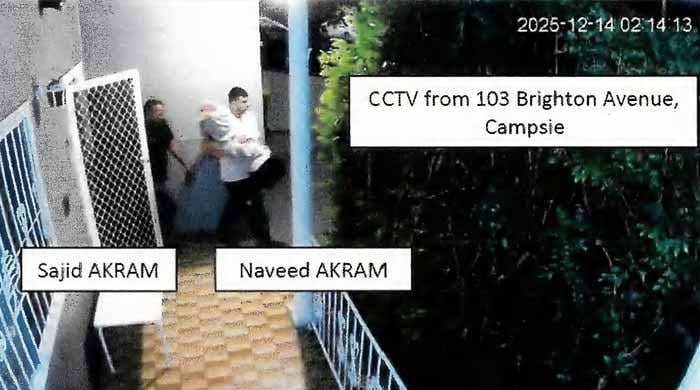
As Australia continues its investigation into the deadliest mass shooting in decades, the newly released court documents on Monday revealed fresh details and images of the father-and-son duo, who are accused of opening fire on a religious festival at Sydney’s Bondi Beach, killing 15 people.
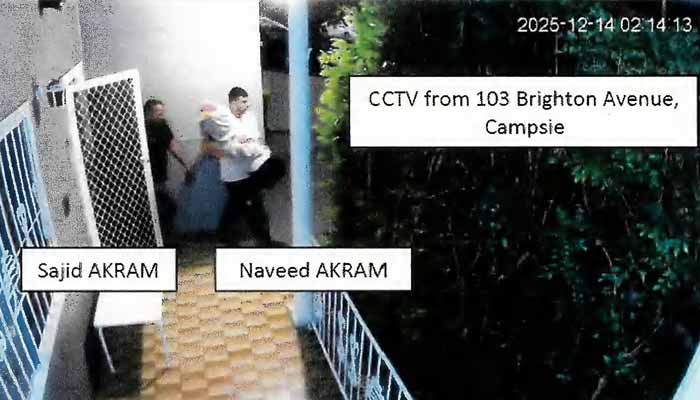
The documents, released by the NSW Courts as part of the police facts sheet on Monday, contain redactions, images from a video of Sajid Akram and his son Naveed Akram.
The documents claimed that the father-and-son duo had carried out “firearms training” in what was believed to be the New South Wales countryside prior to the shooting.
An alleged video found on Naveed’s mobile phone from late October shows the father and son training, “firing shotguns and moving in a tactical manner” in the countryside.

The NSW police believe that the suspects were inspired by Daesh, saying the group’s flags were found in a car they drove.
While Sajid was shot dead by police, Naveed is still recovering from his bullet injuries in hospital and has been charged with 59 offences, including murder and terrorism.
The pair also recorded a video in October railing against “Zionists” while sitting in front of a flag of the Daesh alongside four long-barrelled guns and rounds of ammunition and detailing their motivations for the attack, police said.
The attackers made a nighttime reconnaissance trip to Bondi Beach just days before the killings, documents showed.
A CCTV footage, presented to the court, showed the two men allegedly leaving an Airbnb in Campsie on the day of the attack and travelling toward Bondi Beach while carrying concealed weapons.
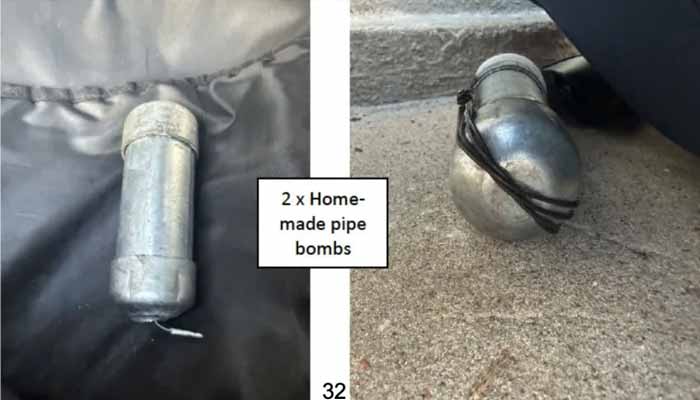
According to the alleged facts, the duo threw four improvised explosive devices into the crowd moments before opening fire. While none of the devices detonated, police say three pipe bombs and a tennis ball bomb were all viable.
Australia’s federal government has flagged a suite of reforms to gun ownership and hate speech laws, as well as a review of police and intelligence services.
Prime Minister Anthony Albanese also announced a sweeping buyback scheme to “get guns off our streets”.
The government of New South Wales — where the shooting took place — recalled its parliament for two days on Monday to introduce what it called the “toughest firearm reforms in the country”.
“We can’t pretend that the world is the same as it was before that terrorist incident on Sunday,” New South Wales Premier Chris Minns told reporters.
The new rules will cap the number of guns an individual can own to four, or 10 for exempted individuals like farmers. There are more than 1.1 million firearms in the state, officials said.
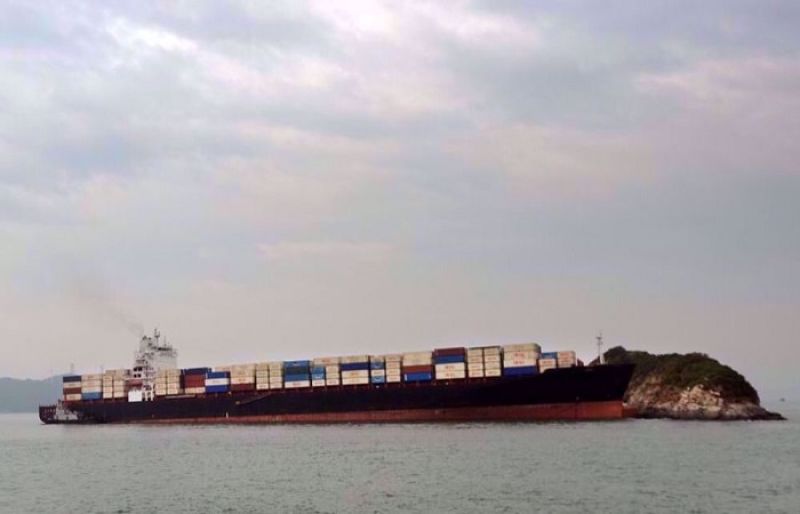
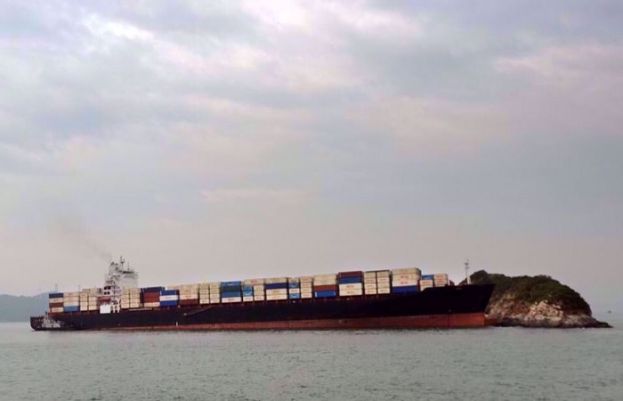
The crew from the Iranian commercial vessel Touska that has been seized by the US as part of Washington’s continued illegal naval blockade against the Islamic Republic have reportedly been transferred to Pakistan in preparation for their return to Iran.
ABC News reported the development on Sunday, citing US Central Command (CENTCOM), which overseas American troops in the West Asia region.
The transfer to Pakistan, it added, took place to facilitate arrangements for the 22-strong crew’s return.
The report noted that procedures had also begun to return the ship to its owner.
The vessel was seized last month. The United States had announced the blockade on April 13 and then ordered its continuation, despite US President Donald Trump’s having earlier declared a ceasefire in aggression targeting the Islamic Republic.
Iran has vehemently denounced the blockade, and pledged not to rejoin talks with the US as long as it stays in place.
The Islamic Republic has also described seizure of several Iranian vessels as part of the illegal measure, as an act of piracy and asserted that it reserves all rights to take due defensive countermeasures.
Trump has, himself, admitted that the US Navy acts “like pirates” in implementing the blockade.
Iranian Foreign Ministry spokesman Esmaeil Baghaei commented on the admission in a post on X on Saturday, saying, “This was no verbal slip. It was a direct and damning admission of the criminal nature of their actions against international maritime navigation.”
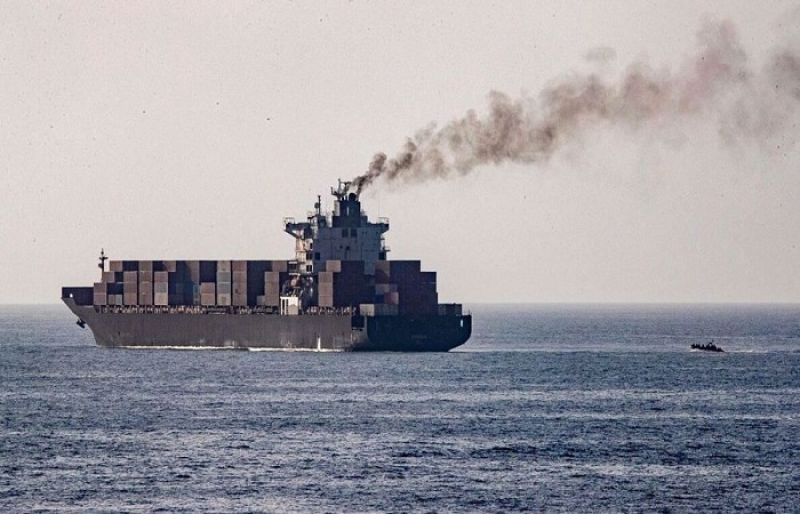
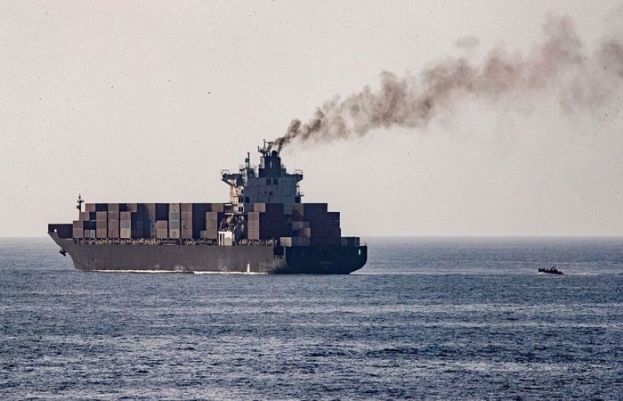
Two missiles have struck a US Navy vessel near the strategic Strait of Hormuz after it ignored warnings from Iran’s naval forces, according to a report.
Fars News Agency reported that the American warship was moving in the vicinity of Jask port on Monday with the intention of transiting through the Strait of Hormuz, in violation of maritime security protocols.
The vessel reportedly disregarded multiple warnings issued by the Islamic Republic of Iran’s naval forces before being targeted.
According to the report, the US vessel suffered damage from the strikes, forcing it to abandon its course and retreat from the area.
The Islamic Republic of Iran had previously announced that any transit through the Strait of Hormuz without official authorization from Iran is not permitted, and that any disregard for this warning would be met with a decisive response from the country’s armed forces.
As of the time of this report, no further details have been released regarding the extent of damage or possible casualties.
Earlier on Monday Commander of Khatam al-Anbiya Central Headquarters Major General Ali Abdollahi warned that any foreign armed forces — particularly the aggressive US military — will be attacked if they attempt to approach or enter the strategic Strait of Hormuz.
US President Donald Trump claimed in recent remarks that US will be “liberating the movement of ships in the Strait of Hormuz.”
He further claimed that these actions would begin this morning, Monday, according to Middle Eastern time.
Since February 28, when the US and Israel launched their military assault, Iran has blocked the Strait of Hormuz to oil and gas tankers affiliated with both regimes, as well as those cooperating with them, in an attempt to maintain security at the strategic waterway.
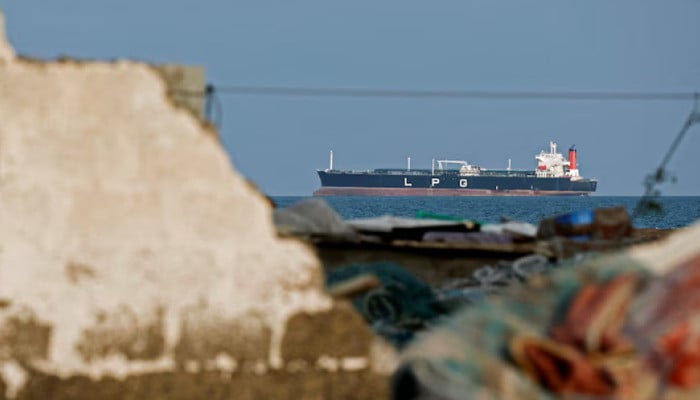
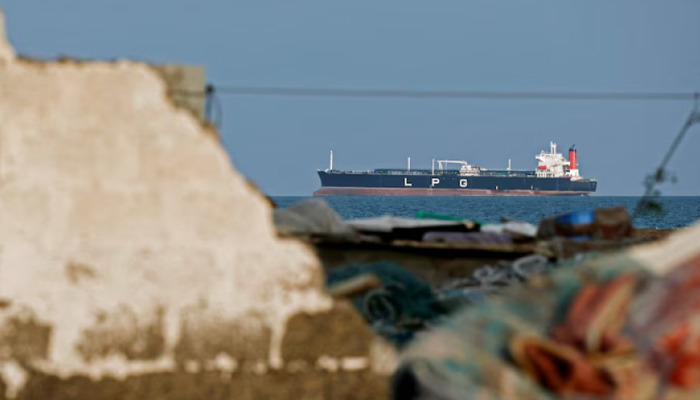
- Trump calls “Project Freedom” humanitarian gesture for stranded ships.
- Iran chokes off major flows of oil, gas and fertiliser to world economy.
- Over 900 commercial vessels present in Gulf, says maritime intel firm.
Iran warned on Monday that it would consider any US attempt to interfere in the Strait of Hormuz a breach of the Mideast ceasefire, as President Donald Trump said the United States would begin escorting ships through the blocked waterway.
Negotiations between the two countries have been deadlocked since a ceasefire came into effect on April 8, and Iran’s stranglehold on the strategic strait following US-Israeli attacks on Tehran has been a main point of contention.
Trump said Sunday the new maritime operation, which he dubbed “Project Freedom,” was a “humanitarian” gesture for crews aboard the many ships swept up in the blockade and which may be running low on food and other crucial supplies.
“We will use best efforts to get their Ships and Crews safely out of the Strait. In all cases, they said they will not be returning until the area becomes safe for navigation,” Trump said in a Truth Social post, noting operations would begin on Monday.
In response, the head of the Iranian parliament’s national security commission said: “Any American interference in the new maritime regime of the Strait of Hormuz will be considered a violation of the ceasefire.”
By blocking the Strait of Hormuz, Iran has choked off major flows of oil, gas and fertiliser to the world economy, while the United States has imposed a counter-blockade on Iranian ports.
Trump, in his post, said he was “fully aware that my Representatives are having very positive discussions with the Country of Iran, and that these discussions could lead to something very positive for all.”
He made no direct mention of what Tehran described as a 14-point plan “focused on ending the war.”
US Central Command said it would use guided-missile destroyers, over 100 land and sea-based aircraft, multi-domain unmanned platforms and 15,000 service members in the Hormuz effort.
As of April 29, more than 900 commercial vessels were located in the Gulf, according to maritime intelligence firm AXSMarine.
‘Impossible operation’
US news website Axios, citing two sources briefed on the proposal, reported that Iran set “a one-month deadline for negotiations on a deal to reopen the strait,” dissolve the US naval blockade and end the war.
Earlier Sunday, the Revolutionary Guards sought to put the onus back on Trump, saying he must choose between “an impossible operation or a bad deal with the Islamic Republic of Iran.”
Washington’s European allies are concerned that the longer the strait remains closed, the more their economies will suffer, and German Foreign Minister Johann Wadephul demanded that it be reopened.
In a call with his Iranian counterpart Abbas Araghchi, Wadephul stressed that Germany supported a negotiated solution but that “Iran must completely and verifiably renounce nuclear weapons and immediately open the Strait of Hormuz.”
Oil prices are currently about 50% above pre-conflict levels, largely due to the supply snarls in the strait.
‘Suffocating the regime’
The US president, who spent the weekend at his Mar-a-Lago resort in Florida, declined on Sunday to specify what could trigger new American military action.
But in his post he said that “if in any way, this Humanitarian (ship-guiding) process is interfered with, that interference will, unfortunately, have to be dealt with forcefully.”
Treasury Secretary Scott Bessent said the US naval blockade was only part of a broader economic embargo.
“We are suffocating the regime, and they are not able to pay their soldiers. This is a real economic blockade, and it is in all parts of government,” he told Fox News.
In yet more bellicose rhetoric, Mohsen Rezaei, a military adviser to Iran’s Supreme Leader Ayatollah Mojtaba Khamenei, said Iranian forces would sink US ships.
“The US is the only pirate in the world that possesses aircraft carriers. Our ability to confront pirates is no less than our ability to sink warships. Prepare to face a graveyard of your carriers and forces,” he posted on X.


India’s PMI rises to 54.7 in April; highest in 4 years: S&P

Lizzo on new music, weight loss journey and ongoing legal battle: "I'm fighting the case"
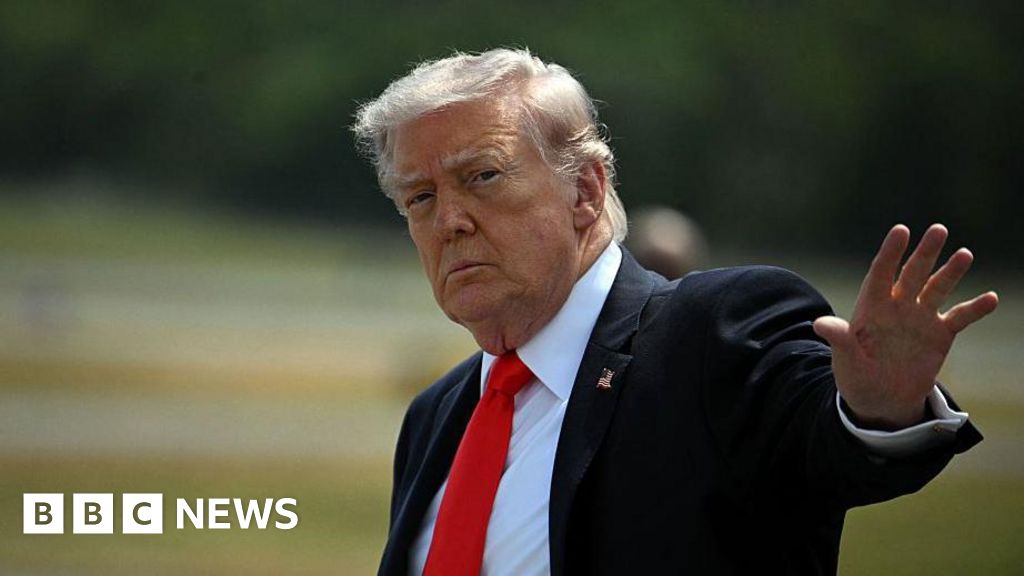
US denies Iranian report warship was struck by missiles

-

 Tech7 days ago
A Brain Implant for Depression Is About to Be Tested in Humans
-

 Tech1 week ago
Almost 90% of women leave tech industry within 10 years | Computer Weekly
-
 Business7 days ago
‘I had £20,000 stolen and had to fight a 13-month fraud reporting rule to get it back’
-
 Business1 week ago
Pakistan’s oil market is fuelling the crisis | The Express Tribune
-

 Sports6 days ago
Pro wrestling star Steph De Lander reveals how colleague’s advice helped lead her to title triumph at ACW
-

 Entertainment7 days ago
Norway joins Type 26 Frigate Programme to boost NATO naval power
-

 Entertainment7 days ago
Melania Trump says ABC should ‘take a stand’ on late-night host Kimmel
-
 Tech6 days ago
This Ambitious Laptop Doesn’t Leave Much Room for Your Hands