

Business
New Income Tax Act 2025 To Take Effect From April 1: 10 Key Changes That Will Affect Your Money

Last Updated:
The New Income Tax Act, 2025, effective April 1, 2026, replaces the 1961 Act. Key changes: PAN for high-value transactions, expanded HRA benefits, higher tax-free perquisites, etc




Income Tax Rules 2026: 10 changes that will impact your pocket
The New Income Tax Act, 2025 is set to come into effect from April 1, 2026, replacing the decades-old Income-tax Act, 1961 with a simplified and more streamlined tax framework. The new legislation aims to make tax laws easier to understand by reducing complex provisions, eliminating redundant sections, and reorganising the structure of the law to improve clarity for taxpayers, professionals, and businesses.
1. PAN Rules Overhauled for High-Value Transactions
Under the draft rules, PAN will be required for annual cash deposits or withdrawals of Rs 10 lakh or more (aggregate in a financial year). Currently, a per-day limit of Rs 50,000 is applicable in deposits, while withdrawals have no specific provision.
PAN will be mandatory for vehicle purchases of Rs 5 lakh or more, including two-wheelers. Currently, PAN is needed for all vehicles, except for two-wheelers, irrespective of value.
For immovable property transactions, including gifts and JDAs, exceeding Rs 20 lakh, PAN must be quoted.
PAN will now be mandatory for all insurance premium payments, regardless of amount. Currently, PAN is required if the premium is above Rs 50,000 in a fiscal year.
However, PAN will be required for hotel/ event payments above Rs 1 lakh per transaction, against the current Rs 50,000.
This replaces the earlier fragmented daily or transaction-based limits and introduces a more annualised reporting structure.
2. Cash Deposits & Withdrawals: Annual Threshold Introduced
Currently, PAN is required for cash deposits exceeding Rs 50,000 in a day. The draft rules shift focus to an annual aggregate threshold of Rs 10 lakh for both deposits and withdrawals.
This could mean tighter tracking of cash-heavy transactions while reducing paperwork for smaller daily banking activities.
3. HRA Benefits Expanded to More Cities
In a major relief for urban salaried taxpayers, Bengaluru, Pune, Ahmedabad and Hyderabad have been proposed to be treated as metro cities for House Rent Allowance (HRA) purposes.
This increases the HRA exemption cap to 50% of basic salary (from 40%) for employees living in these cities, potentially reducing tax liability for lakhs of professionals.
4. Higher Tax-Free Perquisite Limits
The draft rules enhance tax-free limits for certain employer-provided benefits, including official vehicles and employer-provided meals.
The earlier provisions were scattered and outdated. These have now been consolidated and rationalised to reflect current costs and business practices.
5. Property Transactions Threshold Raised
The PAN reporting threshold for immovable property transactions has been increased from Rs 10 lakh to Rs 20 lakh.
Importantly, this now explicitly includes gift transactions, joint development agreements (JDAs), and stamp value-based transactions.
This aligns reporting requirements more closely with prevailing property values.
6. Insurance Premium: PAN Now Mandatory for All
Earlier, PAN was required only if the annual insurance premium exceeded Rs 50,000. Under the draft rules, PAN will be mandatory for all insurance premium payments, regardless of amount. This may increase traceability of high-value policies and prevent misuse.
7. Vehicle Purchases: Two-Wheelers Included
Previously, PAN was required for all motor vehicles except two-wheelers. Now, the rule shifts to a value-based threshold of Rs 5 lakh, and it includes motorcycles and two-wheelers. This aligns compliance requirements with vehicle price escalation.
8. Crypto Exchanges Face Wider Reporting Requirements
Acknowledging the growing digital asset ecosystem, the draft rules expand information-sharing requirements for crypto exchanges. This could mean tighter reporting standards, improved traceability of crypto trades, and greater alignment with anti-tax evasion mechanisms.
9. CBDC Recognised as Valid Electronic Payment Mode
The draft rules formally recognise Central Bank Digital Currency (CBDC) as a valid electronic mode of payment. The Reserve Bank of India has already introduced the Digital Rupee in pilot phases. Recognition under tax rules integrates CBDC into mainstream tax compliance frameworks.
10. Massive Structural Simplification: Rules & Forms Reduced
One of the biggest structural reforms is simplification:
Rules reduced from 511 to 333
Prescribed forms reduced from 399 to 190
Provisions earlier scattered across multiple rules have been consolidated into topic-based frameworks. Operational details are increasingly moved to Schedules, making the rulebook shorter and more navigable.
March 15, 2026, 16:17 IST
Read More
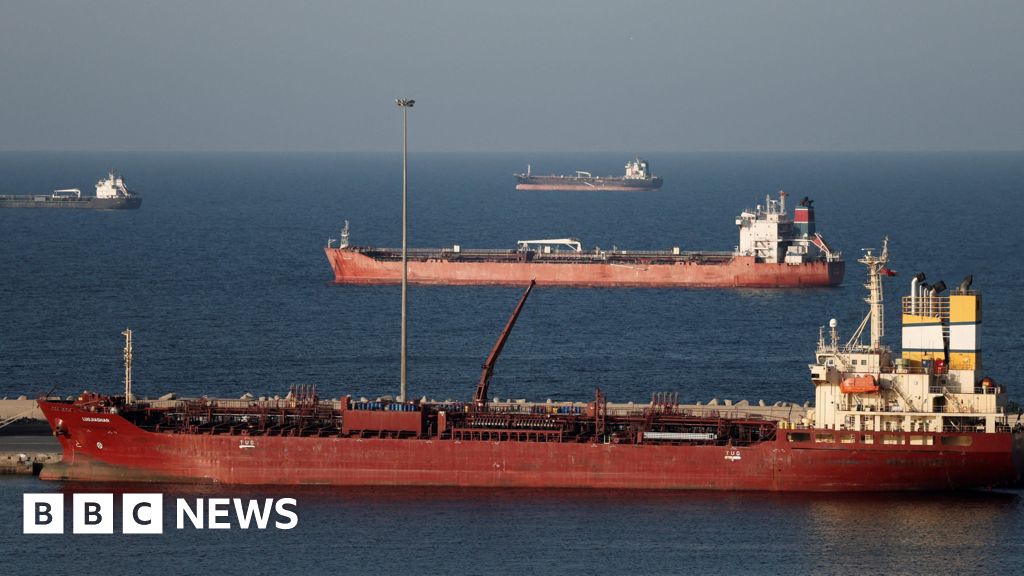
The energy secretary also hinted at the possibility of sending minesweeping drones to the region.
Source link
Business
Gold Prices: Gold, silver may see more corrective moves this week as Middle East tensions, central bank cues drive volatility – The Times of India
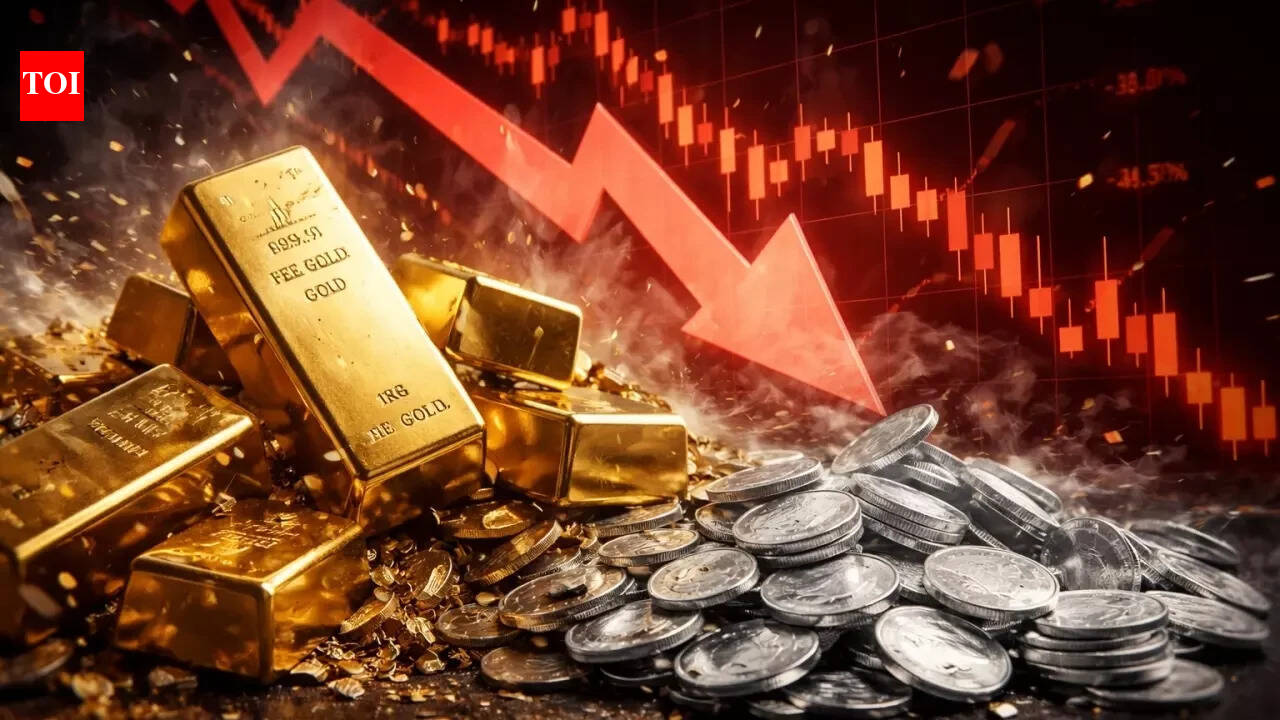
Gold and silver prices are likely to remain volatile and could see further corrective moves in the coming week, with investors closely watching developments in the Middle East conflict and a packed calendar of major central bank policy meetings, analysts said.Market participants are expected to remain focused on the evolving geopolitical situation, as any sign of escalation or de-escalation in the Middle East could trigger sharp swings across commodities, currencies and broader financial markets.
Middle East conflict to remain key trigger
Analysts said traders will continue to track the conflict in the Middle East closely, with geopolitical headlines likely to remain the biggest short-term driver for bullion prices.“In the week ahead, focus will remain in the Middle East region as any signs of further escalation or de-escalation may lead to increased volatility in the financial markets,” Pranav Mer, vice president, EBG – commodity & currency research at JM Financial Services Ltd, was quoted as saying by news agency PTI.While gold and silver are traditionally seen as safe-haven assets during times of crisis, recent sessions have shown that broader market stress can also lead to profit-booking and cash-raising, which can weigh on prices even when geopolitical risks remain elevated.
Fed, ECB, BoE and PBOC decisions in focus
On the macroeconomic front, investors will also monitor a heavy lineup of central bank meetings this week.The US Federal Reserve will announce its policy decision on Wednesday, followed by the European Central Bank and the Bank of England on Thursday, and the People’s Bank of China on Friday.These central banks are widely expected to keep interest rates unchanged, but traders will be closely watching their forward guidance for clues on the path of global monetary policy, especially at a time when higher crude oil prices are complicating inflation expectations.
Bullion under pressure last week
Bullion prices remained under pressure in domestic markets last week. On the Multi Commodity Exchange (MCX):
- Silver fell Rs 8,850, or 3.3%
- Gold declined Rs 3,168, or 2%
In the international market, Comex silver dropped nearly $3, or 3.52%, during the week, while gold fell $97, or 2%.Mer told PTI that gold broke down from a consolidation range on Friday and ended the week nearly 2 per cent lower, dragged by a stronger US dollar and growing expectations that major central banks may delay interest rate cuts because of the inflationary impact of surging crude oil prices.
Why bullion fell despite safe-haven demand
The fall in bullion prices came even as equities and other risk assets saw broad pressure.According to PTI, Mer said gold prices slipped despite a wider sell-off in risk assets because traders and investors may have chosen to book profits at higher levels or sold holdings to meet margin calls and liquidity needs.Still, he said bullion continues to retain an important support base from safe-haven demand because of the escalating conflict in the Middle East.“Silver prices closed in negative for the second consecutive week, weighed by a stronger dollar and a consolidative/ corrective move in the industrial metals,” Mer told PTI.
Long-term allocation still favoured
Despite near-term volatility, analysts said gold and silver continue to play an important role in portfolio construction.“Gold and silver earn their place not because of what they return in isolation, but because of how they behave relative to everything else,” Vijay Kuppa, CEO of InCred Money, said, as per PTI.He said the two metals remain valuable because of their low correlation with equities and their ability to act as a hedge against currency debasement.Kuppa also cautioned investors against trying to time the market, saying that while broader commodity markets have been disrupted by supply chain issues and changing trade routes amid the conflict, investors should maintain a long-term allocation to bullion rather than chase short-term price swings.
Last Updated:
NHAI raised the FASTag Annual Pass fee from Rs 3,000 to Rs 3,075 for 2026–27, effective April 1, 2026. The pass covers 1,150 toll plazas for non-commercial vehicles.
NHAI Revises FASTag Annual Pass Fee for FY27; Price Increased to Rs 3,075
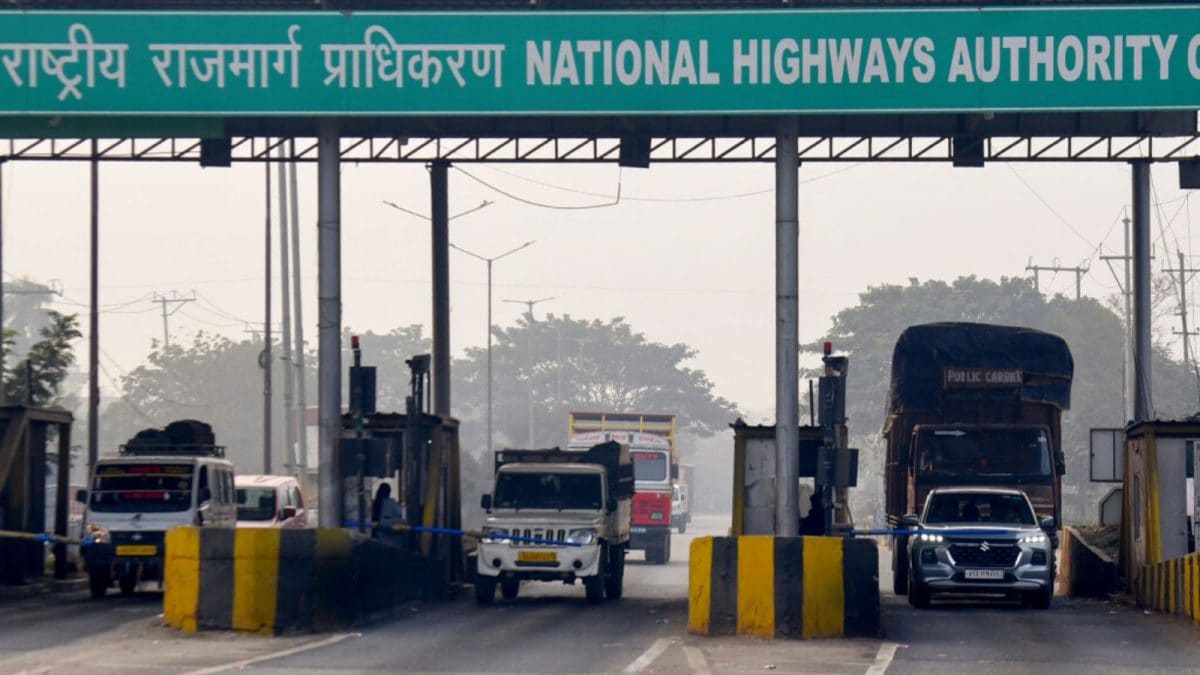
The National Highways Authority of India (NHAI) has announced a revision in the FASTag Annual Pass fee, increasing the charge from Rs 3,000 to Rs 3,075 for the financial year 2026–27. According to an official statement released on March 15, the revised fee will come into effect from April 1, 2026.
The change has been implemented in accordance with the National Highways Fee (Determination of Rates and Collection) Rules, 2008, which allows periodic revision of toll charges. The FASTag Annual Pass facility is available to eligible non-commercial vehicles with a valid FASTag, enabling users to travel across around 1,150 toll plazas on national highways and expressways.
The annual pass allows private vehicle owners to pay a one-time fee for toll usage instead of recharging FASTag frequently. Once activated, the pass remains valid for one year or up to 200 toll plaza crossings, whichever occurs earlier, making it a convenient option for frequent highway commuters.
Users can activate the annual pass on their existing FASTag linked to the vehicle by paying the fee through the Rajmarg Yatra App or via the official NHAI website. According to the authority, the pass is typically activated within two hours of payment.
Launched on August 15, 2025, the FASTag Annual Pass has seen growing adoption among private vehicle owners. NHAI said more than 56 lakh users have already opted for the facility, highlighting its popularity as a convenient and cost-effective option for travellers on national highways across India.
March 15, 2026, 16:25 IST
Read More


Netanyahu posts video in response to rumours that he is dead

Ex-NFL star Troy Aikman drops theory about cause of early season injuries

Michael Che takes new dig at Colin Jost, Scarlett Johansson family on ‘SNL’

-

 Politics1 week ago
India let Iran warship dock the day US sank another off Sri Lanka, say officials
-

 Sports1 week ago
Pakistan set for FIH Pro League debut | The Express Tribune
-

 Entertainment1 week ago
Harry Styles kicks off new era with ‘One Night Only’ comeback show
-
 Business1 week ago
Restaurant group changes name after bid to buys pubs across the UK
-
 Business4 days ago
Stock market crash today (March 12, 2026): Nifty50 opens below 23,600; BSE Sensex down over 900 points on continuing US-Iran war – The Times of India
-
 Business1 week ago
Home heating oil: ‘Most of my pension has gone on home heating oil’
-

 Sports1 week ago
Winners and losers of the 2026 NHL trade deadline
-

 Entertainment1 week ago
Kanye ‘Ye’ West trips during trial: ‘Is he asleep?’