

Politics
New Zealand mosque shooter tells court mental health forced him to plead guilty

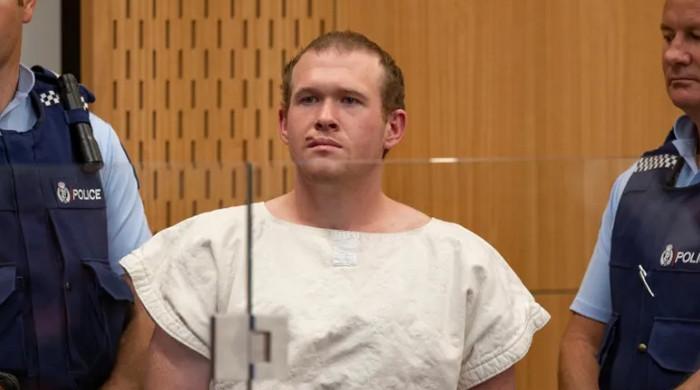
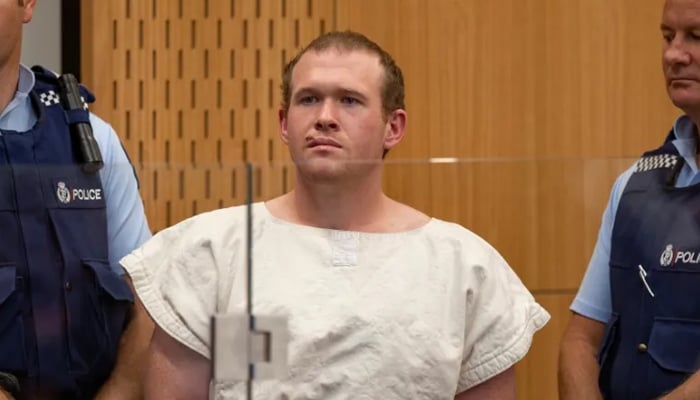
- Did not have “mental health” required to make decisions: Tarrant.
- Tarrant opened fire on two mosques during Friday prayers.
- Convict serving life sentence in prison without parole.
A white supremacist who killed 51 Muslim worshippers at two mosques in New Zealand seven years ago said on Monday that he was irrational when he pleaded guilty, local media reported, as he sought to overturn his conviction in a New Zealand court.
Brenton Tarrant, 35, who appeared in a court in Wellington via a video link, is seeking to appeal his guilty pleas.
Tarrant, an Australian national, opened fire on two mosques in Christchurch in March 2019 during Friday prayers in the deadliest mass shooting in New Zealand’s history.
He released a racist manifesto shortly before the attack, where he used military-style semi-automatic weapons and livestreamed the killings on Facebook with a head-mounted camera.
Tarrant initially denied all charges and was preparing to stand trial after the attack but entered guilty pleas a year later to 51 charges of murder, 40 counts of attempted murder and one charge of committing a terrorist act.
Tarrant told the court that harsh prison conditions had deteriorated his mental health while awaiting trial, and that he was essentially not fit to plead guilty, according to a report in the New Zealand Herald.
“I did not have the mind frame or mental health required to be making informed decisions at that time,” Tarrant said.
“I think the issue is, did I really know what I wanted to do or what would be a good idea? No, I didn’t actually … I was making choices, but they were not choices made voluntarily and they were not choices made rationally due to the (prison) conditions.”
Counsel acting for Tarrant have their names and identities suppressed by order of the Court and could not be reached for comment.
A court document showed the Court of Appeal would check if Tarrant was incapable of making rational decisions when he entered his guilty pleas “as a result of the conditions of his imprisonment, which he says were torturous and inhumane”.
He is serving a life sentence in prison without parole — the first time a New Zealand court imposed a sentence requiring a person to spend the rest of their life in prison.
The appeal hearing is set down for five days, and is expected to finish on Friday.
If the appeal court declines to grant the application to vacate the guilty pleas, a hearing later in the year will consider the appeal on his sentence. If the appeal is accepted, the case will be sent back to the High Court for Tarrant to stand trial on the charges.
- Hackers publish photos and over 300 emails from Patel’s account.
- Handala group claims hack, linked to Iranian cyber intelligence units.
- Attack aims to embarrass officials, expose vulnerabilities: experts.
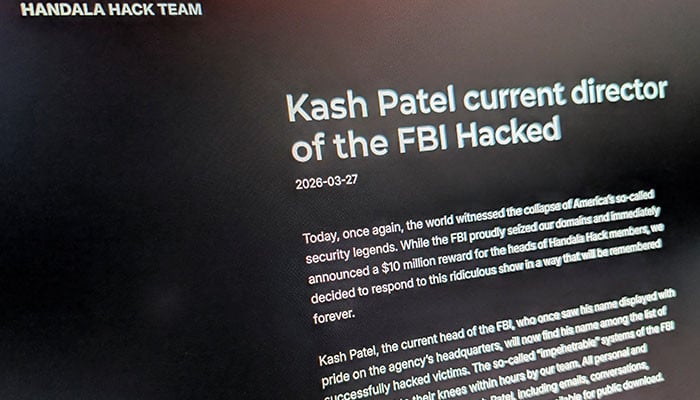
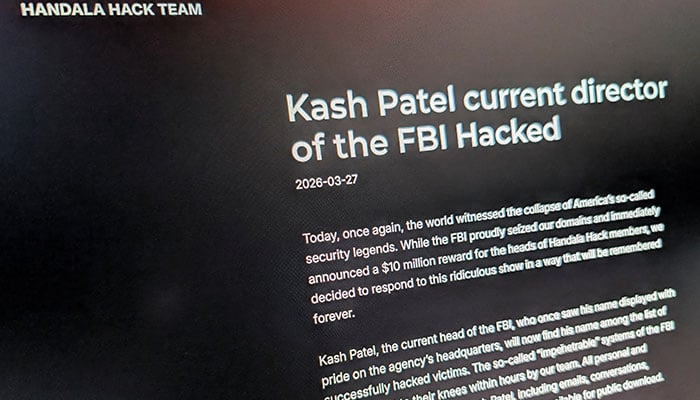
Iran-linked hackers have broken into FBI Director Kash Patel’s personal email inbox, publishing photographs of the director and other documents to the internet, the hackers and the bureau said on Friday.
On their website, the hacker group Handala Hack Team said Patel “will now find his name among the list of successfully hacked victims.”
The hackers published a series of personal photographs of Patel sniffing and smoking cigars, riding in an antique convertible, and making a face while taking a picture of himself in the mirror with a large bottle of rum.
The FBI confirmed that Patel’s emails had been targeted. In a statement, bureau spokesman Ben Williamson said, “we have taken all necessary steps to mitigate potential risks associated with this activity” and that the data involved was “historical in nature and involves no government information.”
Handala, which presents itself as a group of pro-Palestinian vigilante hackers, is considered by Western researchers to be one of several personas used by Iranian government cyberintelligence units. Handala recently claimed the hack of Michigan-based medical devices and services provider Stryker on March 11, saying they had deleted a massive trove of company data.
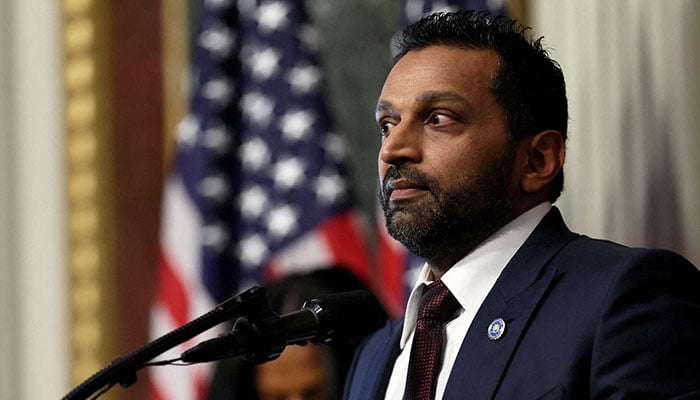
Alongside the photographs of Patel, the hackers published a sample of more than 300 emails, which appear to show a mix of personal and work correspondence dating between 2010 and 2019.
Reuters was not able to independently authenticate the Patel messages, but the personal Gmail address that Handala claims to have broken into matches the address linked to Patel in previous data breaches preserved by the dark web intelligence firm District 4 Labs. Alphabet-owned Google, which runs Gmail, did not immediately respond to a request for comment.
‘Make them feel vulnerable’
Iran-linked hackers — who initially kept a low profile after the United States and Israel launched coordinated strikes against the Islamic Republic last month — have increasingly boasted of their cyber operations as the conflict drags on.
In addition to the hack against Stryker, Handala on Thursday claimed to have published the personal data of dozens of defence company Lockheed Martin employees stationed in the Middle East. In a statement, Lockheed Martin said it was aware of the reports and had policies and procedures in place “to mitigate cyber threats to our business.”
Gil Messing, chief of staff at Israeli cybersecurity company Check Point, said the hack-and-leak operation against Patel was part of Iran’s strategy to embarrass US officials and “make them feel vulnerable.”
The Iranians, he said, are “firing whatever they have.”
It is not unusual for foreign hackers to target senior officials’ personal emails, and breaches and leaks both happen periodically. Hackers famously broke into Hillary Clinton campaign chairman John Podesta’s personal Gmail account ahead of the 2016 election and published much of the data to the WikiLeaks site. In 2015, teenage hackers broke into then-CIA director John Brennan’s personal AOL account and leaked data about US intelligence officials.
Relatively unsophisticated breaches of this nature are in line with a US intelligence assessment reviewed by Reuters on March 2. The assessment said Iran and its proxies could respond to the killing of Iranian Supreme Leader Ayatollah Ali Khamenei with low-level hacks against US digital networks.
Iran-linked hackers may have other emails in reserve.
Last year, another group operating under the pseudonym “Robert” told Reuters it was considering disclosing 100 gigabytes of data stolen from White House chief of staff Susie Wiles and other figures close to US President Donald Trump.
Reuters has not been able to verify the claim and the group has not responded to messages in several months.
- Agreement “focuses on integrated systems, data analysis tools”.
- Saudi Arabia, Ukraine sign MoU on defence procurement: SPA.
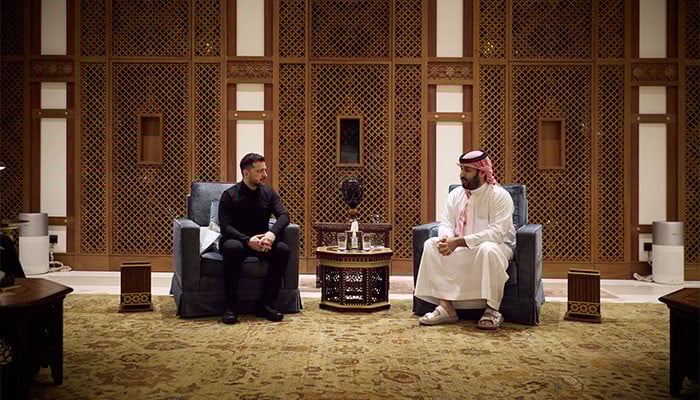
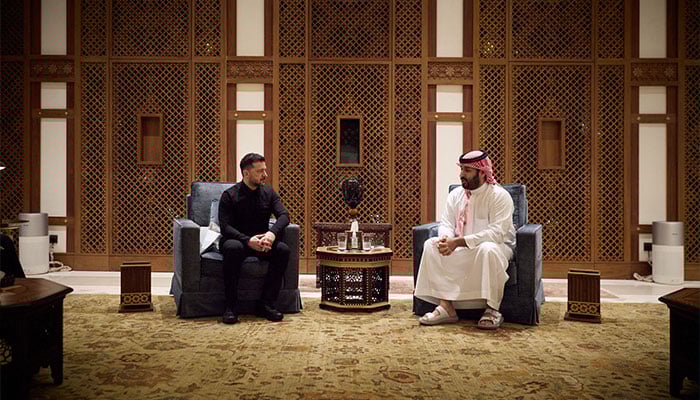
- Zelensky meets Crown Prince MBS, confirms defence arrangement.
Ukraine and Saudi Arabia have signed an air defence agreement during President Volodymyr Zelensky’s visit to the kingdom facing Iranian drone attacks, two senior officials told AFP on Friday.
Kyiv has sought to leverage its expertise in downing Russian drones to help Gulf nations, which are being attacked with the same kind of Iranian-designed Shahed drones that Russia fires on Ukraine.
“The point of the agreement is that Ukraine will support them in developing all the necessary components of air defence, which they currently lack,” one official said of the document which, according to another was signed on Thursday.
Both spoke to AFP on the condition of anonymity.
Kyiv has been using a mix of cheap drone interceptors, electronic jamming tools and anti-aircraft guns to down Russian drones fired at its cities on a nightly basis for four years.
It touts its anti-drone defences as the best in the world.
Ukraine has proposed swapping its interceptors for vastly more expensive air-defence missiles that Gulf countries are using to down Iranian drones. Ukraine says it needs more of them to fend off Russian missile attacks.
The deal signed between Ukraine and Saudi Arabia “is not only about interceptors as such, but about building a system, integrating it with other air defence components, Ukrainian experience in its use, AI, and all the other elements of data analysis needed to counter Shaheds and other drones,” one of the officials said.
Zelensky confirmed on social media that both countries had “reached an important arrangement” on defence cooperation and that he had met Saudi Crown Prince Mohammed bin Salman during his visit.
“We are ready to share our expertise and systems with Saudi Arabia,” Zelensky said, adding: “Saudi Arabia also has capabilities that are of interest to Ukraine, and this cooperation can be mutually beneficial.”
He did not disclose what exactly has been agreed as part of the deal.
Zelensky also met Ukrainian anti-drone experts that have been deployed to the country since US and Israel launched strikes on Iran that spurred retaliatory drone and missile attacks from Tehran.
“Even in such a short time, Ukrainian experts were able to share extensive expertise,” Zelensky said.
“Ukraine’s expertise is unique, and recognised as such, and that is why everyone is so interested in our technologies and experience.”
MoU on defence procurement
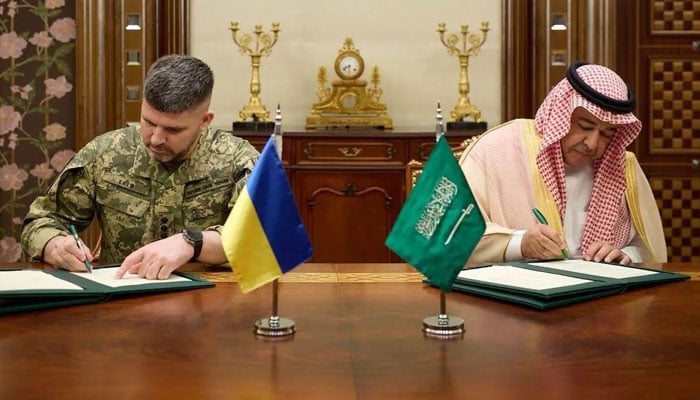
The Saudi Ministry of Defence and its Ukrainian counterpart have signed a memorandum of understanding related to defence procurement arrangements in Jeddah, Saudi state news agency SPA reported.
Saudi Assistant Minister of Defence for Executive Affairs Dr Khaled Al-Biyari and Ukrainian Chief of the General Staff of the Armed Forces Lieutenant General Andrii Hnatov signed the agreement, it added.
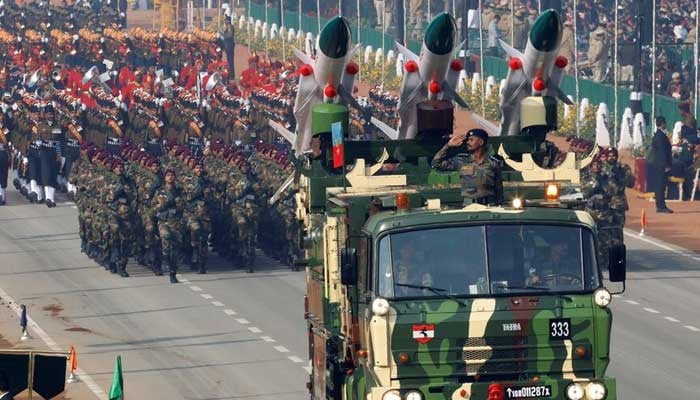
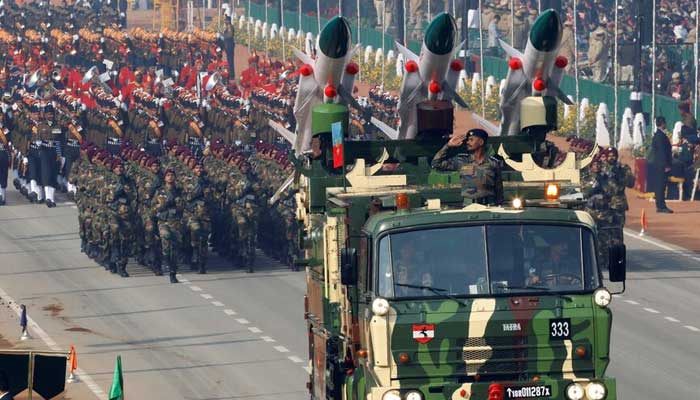
- India’s military spending reaches $71 billion this fiscal year.
- India’s defence spending highest ever in a fiscal year.
- India ranks as second-largest arms importer globally.
NEW DELHI: India approved proposals worth $25 billion on Friday to buy transport aircraft, Russian S-400 missile systems and remotely piloted strike aircraft as it pushes its military modernisation and replenishes equipment after its conflict with Pakistan.
The decision comes on the back of another major approval last month worth $40 billion to purchase more French Rafale fighter jets for the air force and Boeing P-8I reconnaissance aircraft for the navy.
Friday’s approvals also covered purchases of armoured piercing tank ammunition, gun systems and aerial surveillance systems for the army, increasing the life of the Sukhoi-30 fighter jets operated by the air force, and hovercraft for the coastguard, a statement from the defence ministry said.
Separately, the ministry also signed a 4.45 billion rupees ($47 million) contract on Friday with Russia’s JSC Rosoboronexport to acquire Tunguska air defence missile systems for the army.
In all, India has approved 55 proposals worth 6.73 trillion rupees ($71 billion) and signed contracts for another 503 proposals amounting to 2.28 trillion rupees in the fiscal year ending March 31, the statement said, adding that both were the highest in a fiscal year.
India is the world’s fifth-largest military spender and the second-largest arms importer after Ukraine, according to latest data from the Stockholm International Peace Research Institute.
It has for decades been modernising its mostly Soviet-era equipment and increasingly looking to new sources including France, Israel, the United States and Germany. In recent years, it has pushed to manufacture everything from guns and drones to fighter jets and submarines at home, either on its own or in collaboration with foreign partners.


FIFA clears Fulham’s Diop, Ajax’s Bounida to play for Morocco

Iranian Hackers Breached Kash Patel’s Email—but Not the FBI’s

Tiger Woods involved in rollover crash in Florida less than 2 weeks before Masters: reports

-
 Business7 days ago
Flipkart group CFO to leave co amid IPO plans – The Times of India
-

 Fashion7 days ago
China’s textile & apparel exports surge 17% to $50 bn in Jan-Feb 2026
-
 Business1 week ago
Video: The Effects of High Oil Prices
-

 Sports1 week ago
Rating Adidas’ 2026 World Cup away shirts: Argentina, Spain, Mexico and more
-

 Fashion1 week ago
The hidden $1.62 war tax now embedded in every garment you source
-

 Sports7 days ago
American Conference Commissioner Tim Pernetti thanks Trump for Army-Navy game executive order
-
Tech1 week ago
The Corsair 4000D RS PC Case Keeps Your System Cool
-

 Tech1 week ago
‘Uncanny Valley’: Nvidia’s ‘Super Bowl of AI,’ Tesla Disappoints, and Meta’s VR Metaverse ‘Shutdown’