

Business
Nexperia: Dutch government takes control of China-owned chip firm

Osmond ChiaBusiness reporter
 Getty Images
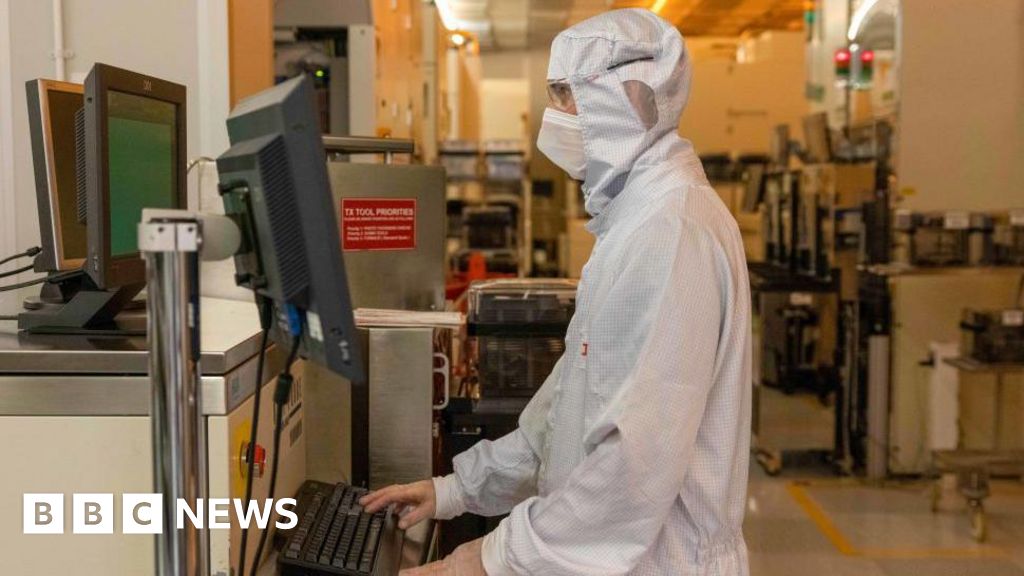
The Dutch government has taken control of Nexperia, a Chinese-owned chipmaker based in the Netherlands, in a bid to safeguard the European supply of semiconductors for cars and other electronic goods and protect Europe’s economic security.
The Hague said it took the decision due to “serious governance shortcomings” and to prevent the chips from becoming unavailable in an emergency.
Nexperia’s owner Wingtech said on Monday that it would take actions to protect its rights and would seek government support.
The development threatens to raise tensions between the European Union and China, which have increased in recent months over trade and Beijing’s relationship with Russia.
In December 2024, the US government placed Wingtech on its so-called “entity list”, identifying the company as a national security concern.
Under the regulations, US companies are barred from exporting American-made goods to businesses on the list unless they have special approval.
In the UK, Nexperia was forced to sell its silicon chip plant in Newport, after MPs and ministers expressed national security concerns. It currently owns a UK facility in Stockport.
The Dutch Economic Ministry said it made the “highly exceptional” decision to invoke the Goods Availability Act over “acute signals of serious governance shortcomings” within Nexperia.
“These signals posed a threat to the continuity and safeguarding on Dutch and European soil of crucial technological knowledge and capabilities,” the ministry said in a statement.
“Losing these capabilities could pose a risk to Dutch and European economic security.”
The statement did not detail why it thought the firm’s operations were risky. A spokesperson for the minister of economic affairs told the BBC there was no further information to share.
The measures are aimed to keep European chip supplies flowing and protect Dutch intellectual property, said EU-China researcher Sacha Courtial.
In a crisis, a Chinese-owned company could come under pressure from Beijing to halt supplies or prioritise sales to China, crippling European industries like carmakers and electronics manufacturers, he said.
The Hague’s move puts economic security “over free-market investment principles”, in what could pave the way for other governments to follow, said Mr Courtial from the Jacques Delors Institute.
‘Mitigating risk’
The Goods Availability Act is designed to allow the Hague to intervene in companies under exceptional circumstances. These include threats to the country’s economic security and to ensure the supply of critical goods.
Under the order, the Dutch Minister of Economic Affairs, Vincent Karremans, could reverse or block Nexperia’s decisions if they were potentially harmful to the company’s interests, to its future as a business in the Netherlands or Europe, or to ensure supply remains available in an emergency.
The Dutch government added the company’s production can continue as normal.
“This measure is intended to mitigate that risk,” the ministry said.
Shanghai-listed shares in Nexperia’s parent company Wingtech fell by 10% on Monday morning.
A Nexperia spokesperson said the company “complies with all existing laws and regulations, export controls and sanctions regimes,” and had no further comment.
In a statement in Mandarin, Wingtech said its operations were continuing uninterrupted and it remained in close communication with its suppliers and customers.
Wingtech said in a stock filing that the company’s chairman, Zhang Xuezheng, was suspended from Nexperia’s boards by an Amsterdam court order earlier this month.
The company was also in talks with lawyers about potential legal remedies, it added.
The BBC has also contacted the Chinese embassies in the Netherlands and Brussels.
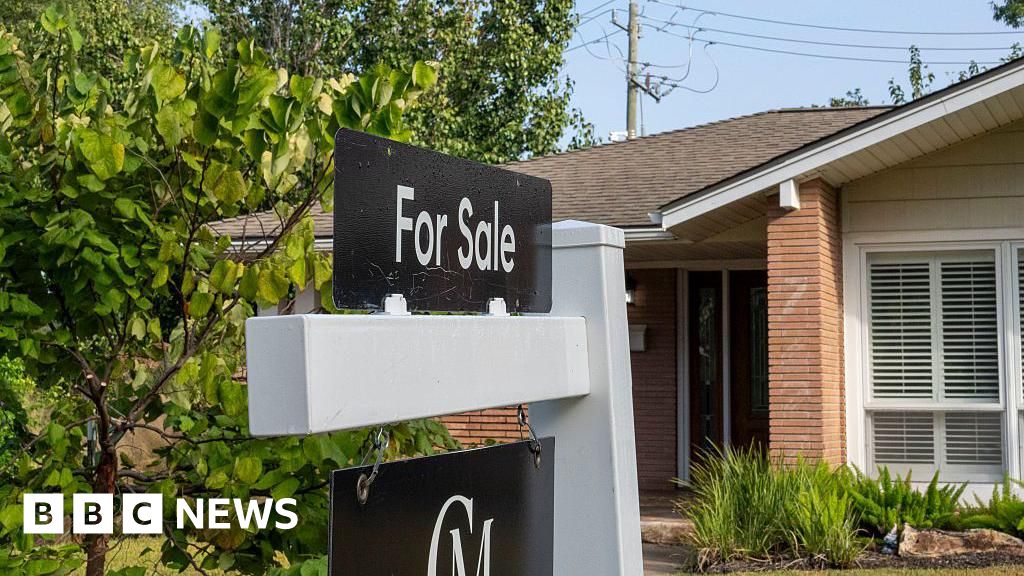
US President Donald Trump is set to announce a plan that would let Americans use their retirement savings for down payments on homes.
National Economic Council Director Kevin Hassett, who hinted at the plan on Friday, offered few details about how withdrawals from US workplace retirement accounts – known as 401(k)s – would work.
“Suppose that you put 10% down on a home, and then you take 10% of the equity of the home and put it in as an asset in your 401(k). Then your 401(k) will grow over time,” Hassett said on Fox Business.
Trump will present a “final plan” at the Davos World Economic Forum next week, he added.
The White House did not immediately respond to a request for comment on the upcoming proposal, including the tax implications. Currently, employees who opt to withdraw money from retirement accounts typically incur fees and taxes.
The anticipated 401(k) plan is the latest in a slew of recent housing affordability proposals as Trump’s administration faces growing public pessimism about its handling of the economy.
Home affordability remains high on the list of Americans’ concerns. Trump has in recent weeks sought to allay voter anxiety ahead of midterm elections later this year, announcing a series of proposals aimed at addressing the high cost of housing.
Daryl Fairweather, the chief economist at Redfin, said using retirement funds for down payments won’t solve the housing affordability crisis. But it could help some people meet their current financial needs, and better position themselves for retirement.
“It doesn’t really drift that far from the purpose of 401(k)s, which is to encourage people to save money for these big expenses that they may not have the discipline to save for,” Fairweather said.
She compared it to a pandemic-era temporary policy that allowed people to access funds from their retirement accounts for down payments with fewer penalties.
Still, she said it would be concerning if people were to start draining their 401(k)s in order to buy a home. That home could eventually lose its value, putting them in a worse financial position.
Last week, Trump said he would move to ban big corporate investors from buying single-family homes, in a bid to make housing more affordable for Americans. That pledge bolstered an idea that has been circulating for years, though some analysts question the extent to which a ban would affect prices.
Jason Richardson, senior research director for the National Community Reinvestment Coalition, said that proposal and this latest plan, “sound good but don’t actually address the core affordability and supply problems in housing”.
Only about 55% of Americans have retirement accounts, of which only a subset are 401(k)s, according to government estimates. Low income workers are the least likely to have access to the plans.
“This isn’t a targeted assistance program for people who need help with down payments – it’s giving people who already have substantial retirement savings more purchasing power, which will likely just drive home prices up further,” he wrote in an email.
Trump also recently directed Fannie Mae and Freddie Mac, the government-backed housing finance firms, to buy $200bn (£149.4bn) worth of mortgage bonds. The move, he claimed, would push down mortgage rates.
An increase in purchases could boost demand for the so-called mortgage-backed securities, which could in turn help lower mortgage rates for borrowers.
The average rate on a 30-year mortgage fell below 6% for the first time in nearly three years following his announcement – “and that’s not with the help of the Fed,” Trump said during a speech in Michigan this week, referring to the Federal Reserve. The US central bank’s benchmark interest rate can indirectly affect mortgage rates.
On Friday, Hassett promoted Trump’s move to order bond purchases.
“We’ve seen a pretty big reaction to the announcement, and I think that actually makes us all feel better, because the truth is that fewer people are buying homes right now than we’ve seen pretty much in my lifetime,” he said.
But housing economists have cautioned that the bond purchases might not push mortgage rates substantially lower in the long run.
“The key now is the timing and cadence of these purchases, which will determine whether the impact is healthy or introduces volatility into the mortgage market,” said Jeff DerGurahian, head economist at loanDepot, a mortgage lender.

A pharmacist displays a box of Wegovy pills at a pharmacy in Provo, Utah, Jan. 15, 2026.
George Frey | Bloomberg | Getty Images
Shares of Novo Nordisk rose more than 8% on Friday after early prescription data showed an encouraging start to the U.S. launch of the company’s new GLP-1 pill for obesity.
In a Friday note, TD Cowen analysts called it a “solid start” for the first-ever weight loss pill, but said “one data point does not make a trend.” They cautioned that they need to see more data to fully assess early demand for the Wegovy pill, which officially launched Jan. 5 after winning approval in late December.
Still, the initial data is a boost to the Danish drugmaker’s hopes of winning back more share from its chief rival, Eli Lilly, this year in the booming obesity and diabetes drug market. Eli Lilly won the majority market share in early 2025 and is trailing closely behind Novo Nordisk in the pill space, as it prepares for the upcoming launch of its own oral drug for obesity.
In a Friday note, Leerink Partners analyst David Risinger said around 3,100 prescriptions for the Wegovy pill were filled in the first week of the launch, citing IQVIA data for the week ending Jan. 9. In the first week of the commercial launch of Eli Lilly’s popular obesity injection, Zepbound, around 1,300 prescriptions were filled, and roughly 8,000 were filled in the second week, he noted. That injection won U.S. approval in late 2023.
The TD Cowen analysts cited somewhat different data published by Symphony through Bloomberg.
The analysts said around 4,290 prescriptions were filled for Novo Nordisk’s pill during its first full week of launch, with the majority being for the starting dose of the drug. They added that the data from their source or IQVIA likely don’t include prescriptions through Novo Nordisk’s direct-to-consumer pharmacy or its telehealth partners.
The analysts said that compares with the roughly 1,900 prescriptions filled for Zepbound during its first full week on the market.
Assuming the Symphony data is accurate, the pill “is already outstripping its injectable counterparts at the same stage of their launch,” TD Cowen analyst Michael Nedelcovych wrote in the note. A more direct comparison between the pill and the injections can be made based on available data early next week, though the figures may not prove more useful for another two to three quarters, he added.
Nedelcovych said he wants to see the full picture on the direct-to-consumer channel, which holds “significant promise” for the pill’s launch.
Demand could also shift once Eli Lilly’s pill, orforglipron, enters the market in the next few months, he added.
While Novo Nordisk’s drug has a head start, it is a peptide medication with dietary requirements — no food or drink for 30 minutes after taking the pill with water — that may hinder uptake. Eli Lilly’s pill is a small-molecule drug and not a peptide, meaning it does not have those restrictions.

Kevin Hassett, director of the National Economic Council, speaks to members of the media outside the White House in Washington, DC, US, on Friday, Oct. 24, 2025.
Francis Chung | Bloomberg | Getty Images
White House economic advisor Kevin Hassett said Friday that large U.S. banks could voluntarily provide credit cards to underserved Americans as a means to address President Donald Trump’s affordability push.
A week ago, Trump called for banks to cap credit card interest rates at 10%, an idea that has been roundly rejected by industry executives and their lobbyists this week.
Now, Hassett, who is director of the National Economic Council, is floating a different plan, this one more narrowly focused on consumers who don’t have credit access but have the income to justify credit lines.
“They could potentially voluntarily provide for people who are in that sort of sweet spot of not having financial leverage very much because they don’t have access to credit, but they have enough income and stability in their lives so they’re worthy of credit,” Hassett told Fox Business host Maria Bartiromo.
“Our expectation is that it won’t necessarily require legislation, because there will be really great new ‘Trump cards’ presented for folks that are voluntarily provided by the banks,” he said.
The comments could indicate that the administration is downgrading its efforts for broad changes to the card industry that would be difficult to enact and that could hit consumer spending and the economy.
This week, bankers discussing fourth-quarter results said that rather than offering cards at a 10% interest rate, as Trump has said should happen by Jan. 20, the banks would simply close many customers’ accounts.
Hassett’s statement came in response to a question about whether bankers would be forced to comply with Trump’s rate cap, a move that would probably require new legislation.
The administration has been talking with “CEOs of many of the big banks who think that the president’s onto something,” Hassett said.
A major credit card issuer and a bank lobbyist representing big lenders told CNBC that they haven’t yet had any discussions with the administration about the “Trump card” concept.


Laurens’ weekend preview: Manchester derby, redemption for Real Madrid?

Ole Miss quarterback Trinidad Chambliss sues NCAA to get sixth season of eligibility

FTC seeks info from 20 universities about agents, federal law

-

 Tech4 days ago
New Proposed Legislation Would Let Self-Driving Cars Operate in New York State
-

 Sports6 days ago
Clock is ticking for Frank at Spurs, with dwindling evidence he deserves extra time
-
Sports1 week ago
Commanders go young, promote David Blough to be offensive coordinator
-

 Fashion6 days ago
South India cotton yarn gains but market unease over US tariff fears
-

 Entertainment3 days ago
X (formerly Twitter) recovers after brief global outage affects thousands
-

 Fashion6 days ago
China’s central bank conducts $157-bn outright reverse repo operation
-

 Sports6 days ago
US figure skating power couple makes history with record breaking seventh national championship
-
 Business1 week ago
SoftBank reduces Ola Electric stake to 13.5% from 15.6% – The Times of India