

Fashion
Next eyes Russell & Bromley as latest buy – report


Published
December 15, 2025
Retail giant Next has been a major acquirer of brands in recent years and a report claims that premium footwear chain Russell & Bromley is now on its shopping list.
Next either owns or has majority stakes in Reiss, FatFace, Joules, Cath Kidston, Made, Laura Ashley’s homewares and more. But while it has a big war chest for acquisitions, it’s not the only company targeting Russell & Bromley.
Sky News reported that the 145-year-old family-owned footwear and accessories is courting investors and Next is one of several parties in talks with Russell & Bromley’s advisers about a deal. None of the other potential buyers have been identified.
Russell & Bromley confirmed this autumn that it had appointed advisory specialist Interpath to look at funding options for the business.
In October, CEO Andrew Bromley said: “We are currently exploring opportunities to help take Russell & Bromley into the next phase of our ‘Re Boot’ vision. Since the announcement of the ‘Re Boot’ earlier this year we have made significant progress, positioning us well to build on our momentum and continue along our journey. We are looking forward to working with our advisory team to secure the necessary investment to accelerate our expansion plans.”
The company has stores and concessions in the UK and Ireland and is led by Bromley, who’s from the fifth generation of his family to run the chain.
Earlier this year, he oversaw the launch of a five-year turnaround plan focused on “refining the brand proposition, elevating the product offering, streamline operations and fuel market expansion at pace”.
In September, the change of approach could be seen when the company launched a quirky campaign fronted by pop star-turned-actress Billie Piper. It was overseen by creative director Daniel Beardsworth-Shaw (who joined as the brand’s first CD in 2024) and was an unusual move for the label that’s not previously been known for its celebrity ambassadors or surreal campaign concepts.
In its last accounts, covering 2023, the company reported turnover down to just under £40 million from almost £45 million. EBITDA was a loss of £3.2 million after a narrower loss of £404,000 the year before. And the loss after tax was £6.9 million, also wider than the loss in the prior year of £4.6 million. The company didn’t share any details about what had gone wrong.
Those accounts were filed in early November 2024 and its next filing (covering 2024) is due before the end of this year.
Whether Next or another business buys it or takes a stake (it’s unclear which option the controlling family favours) will clearly have big impact on its future direction. Next already has a strong track record in the premium sector in which Russell & Bromley operates with its stewardship of Reiss.
Next declined to comment on the Sky News story, and both Russell & Bromley and Interpath couldn’t be reached.
Copyright © 2025 FashionNetwork.com All rights reserved.








The rise was largely driven by a rebound in energy costs. Prices of non-regulated energy products surged from a 2 per cent decline to a 9.9 per cent increase, while regulated energy prices rose 5.7 per cent after previously contracting, Istat said in a press release.
Italy’s inflation rose to 2.8 per cent YoY in April 2026 from 1.7 per cent in March, driven by a sharp rebound in energy prices, Istat said.
Monthly inflation stood at 1.2 per cent.
Goods inflation strengthened, while services inflation eased.
Transport costs increased notably.
The harmonised index (HICP) rose 2.9 per cent YoY, reflecting higher prices and seasonal factors.
In contrast, services inflation showed signs of moderation. Prices for recreation-related services eased to 2.6 per cent YoY, while transport services slowed sharply to 0.5 per cent. Overall services inflation decelerated to 2.4 per cent from 2.8 per cent in March.
Goods inflation, however, strengthened significantly, rising 3.2 per cent YoY compared with 0.8 per cent in the previous month. This narrowed the inflation gap between goods and services to -0.8 percentage points, down from +2 percentage points in March.
The monthly increase in the index was primarily led by higher prices for non-regulated energy (+5.7 per cent), transport services (+1.6 per cent), and recreation-related services (+1.4 per cent).
Among major consumption categories, water, electricity and fuels recorded a sharp 5.3 per cent annual increase, while transport prices rose 3.8 per cent.
Italy’s harmonised index of consumer prices (HICP), which allows comparison across the euro area, rose 2.9 per cent YoY in April, up from 1.6 per cent in March. On a monthly basis, HICP increased 1.7 per cent, partly reflecting the end of seasonal discounts in clothing and footwear.
Fibre2Fashion News Desk (SG)
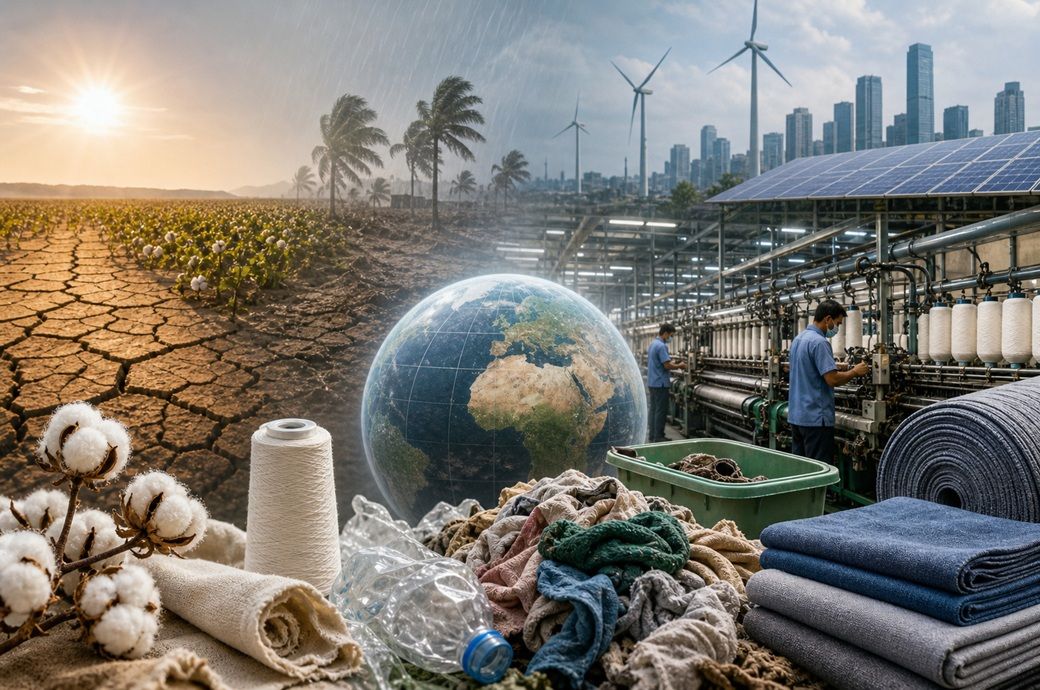
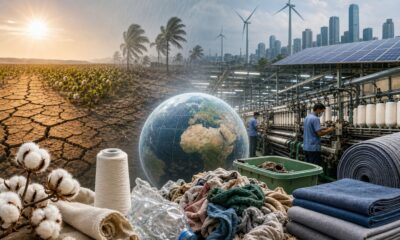
The apparel climate story has moved out of the ESG report and into the cost sheet. In ****–****, climate risk is showing up as cotton quality loss, import dependence, energy volatility, cooling capex, carbon-price exposure and mandatory textile-waste fees. For brands and suppliers, the question is no longer whether climate action is ‘responsible’. It is whether delay will make product margins uncompetitive.
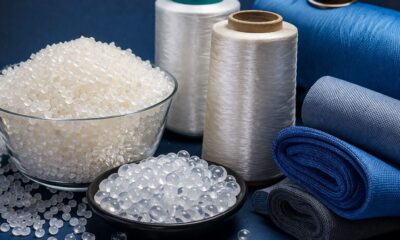
The latest data makes the shift visible. Textile Exchange says global fibre production reached *** million tonnes in **** and could hit *** million tonnes by **** if business continues as usual. Polyester alone now makes up ** per cent of global fibre output, with ** per cent still fossil-based. That scale gives apparel a low-cost material engine, but it also ties the sector to fossil energy, petrochemical volatility and future carbon accounting.
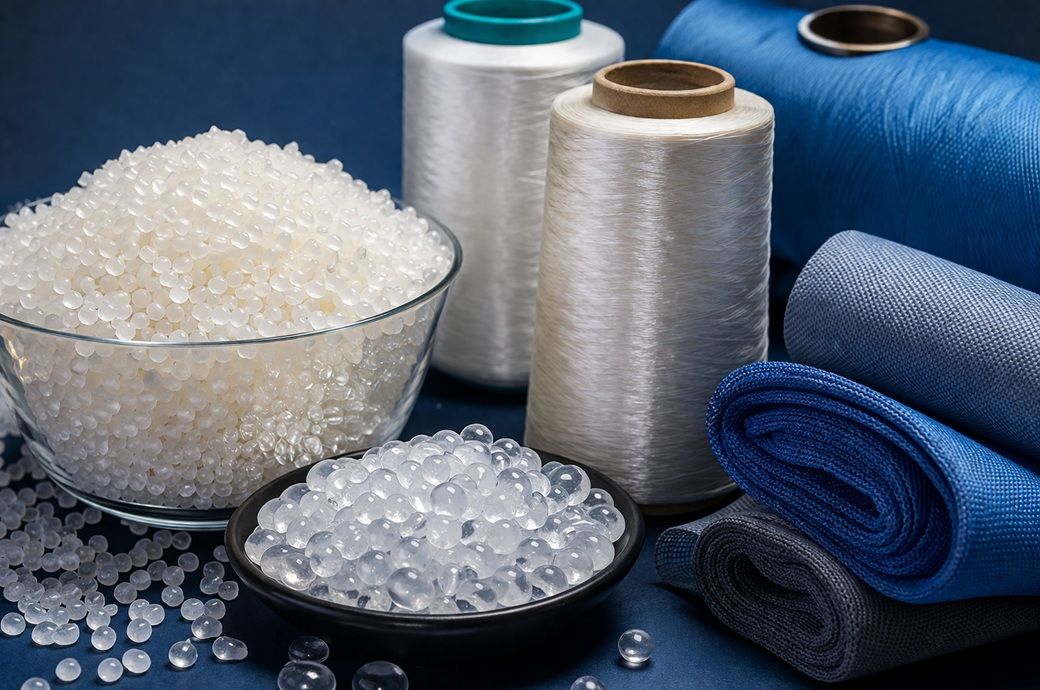
Caprolactam (CPL) prices initially held near $*.**–*.**/kg with minimal movement, while nylon chips saw uptick to ~$*.***/kg (+*.* per cent WoW) driven by short-term restocking. Nylon filament yarn (DTY **D/**F) prices remained stable at ~$*.**–*.**/kg, supported by existing inventory and steady downstream textile operations.
By the second week (April * to April **), benzene stabilised, but caprolactam began to weaken to ~$*.**–*.**/kg (−*.* per cent WoW), signalling the start of broader chain pressure. Nylon chips responded with a mild correction to ~$*.***/kg (−* per cent WoW), while filament yarn prices continued to hold steady due to inventory buffers and ongoing execution of prior textile orders. In the third week (Apr **–**), caprolactam stable to ~$*.*/kg, and chips followed to ~$*.***/kg (Stable WoW).


Italy’s inflation rises to 2.8% in April on energy spike
Oil prices ease as US pauses Project Freedom to seek Iran deal

Kadeem Hardison calls ‘Euphoria’ costar Zendaya ‘a boss’

-

 Tech1 week ago
A Brain Implant for Depression Is About to Be Tested in Humans
-

 Tech1 week ago
Almost 90% of women leave tech industry within 10 years | Computer Weekly
-

 Sports1 week ago
Pro wrestling star Steph De Lander reveals how colleague’s advice helped lead her to title triumph at ACW
-
 Business1 week ago
‘I had £20,000 stolen and had to fight a 13-month fraud reporting rule to get it back’
-

 Entertainment1 week ago
Norway joins Type 26 Frigate Programme to boost NATO naval power
-

 Tech1 week ago
Are tech leaders risking a cyber resourcing crisis? | Computer Weekly
-

 Entertainment1 week ago
Melania Trump says ABC should ‘take a stand’ on late-night host Kimmel
-
 Business6 days ago
PSX plunges over 4,800 points | The Express Tribune