

Politics
No ground troops, but maybe air support, to back Ukraine peace deal, says Trump

- Russia launches largest attack this month amid peace moves.
- Uncertainty over US security guarantees for Ukraine.
- Possible sites for trilateral summit considered.
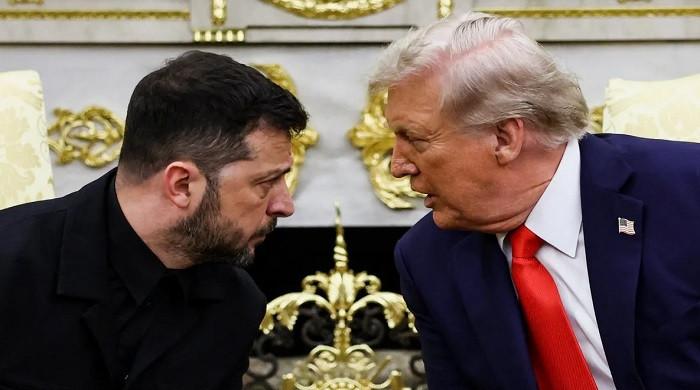
US President Donald Trump said on Tuesday he ruled out putting US troops on the ground in Ukraine but said the United States might provide air support as part of a deal to end Russia’s war in the country.
A day after Trump pledged security guarantees to help end the war at an extraordinary White House summit, the path to peace remained uncertain as the US and allies prepared to work out what military support for Ukraine might include.
“When it comes to security, (Europeans) are willing to put people on the ground. We’re willing to help them with things, especially, probably, … by air,” Trump said in an interview with the Fox News “Fox & Friends” program. He did not elaborate.
Following Monday’s meeting, Russia launched its biggest air assault in more than a month on Ukraine, and Trump conceded that Russian President Vladimir Putin might not want to make a deal after all. “We’re going to find out about President Putin in the next couple of weeks,” he said.
The nature of US military aid for Ukraine under a peace deal was unclear. Air support could take many forms, such as missile defence systems or fighter jets enforcing a no-fly zone.
White House press secretary Karoline Leavitt confirmed US air support was “an option and a possibility,” but, like Trump, did not provide any details.
“The President has definitively stated US boots will not be on the ground in Ukraine, but we can certainly help in the coordination and perhaps provide other means of security guarantees to our European allies,” she said at a news briefing.
Analysts say more than 1 million people have been killed or wounded in the conflict, which began with Russia’s full-scale invasion in February 2022.
Trilateral meeting
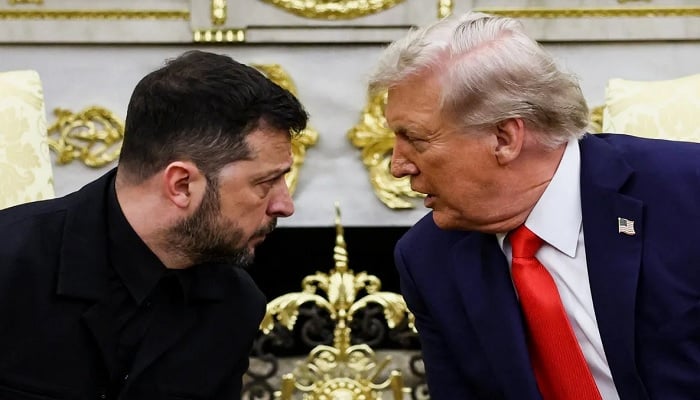
Ukrainian President Volodymyr Zelenskiy hailed the White House talks as a “major step forward” toward ending Europe’s deadliest conflict in 80 years and setting up a trilateral meeting with Putin and Trump. Zelenskiy’s warm rapport with Trump contrasted sharply with their disastrous Oval Office meeting in February.
Trump discussed Budapest as a venue for a summit involving Zelenskiy and Putin with Hungarian Prime Minister Viktor Orban on Tuesday, a White House official said.
Istanbul, where delegations for the two countries have met previously, has also been mentioned, a senior administration official said.
Hungary is one of the few European places that Putin could visit without fear of arrest on International Criminal Court charges since Orban maintains close ties with the Russian leader. It was unclear whether Ukraine would accept Hungary as a venue.
Neutral Switzerland also said it would be ready to host Putin for any peace talks.
Russia launched 270 drones and 10 missiles in an overnight attack on Ukraine, the Ukrainian air force said. The energy ministry said the strikes caused big fires at energy facilities in the central Poltava region, home to Ukraine’s only oil refinery.
However, Russia also returned the bodies of 1,000 dead Ukrainian soldiers on Tuesday, Ukrainian officials said. Moscow received 19 bodies of its own soldiers in return, according to the state-run TASS news agency.
Ukraine’s allies held talks in the so-called Coalition of the Willing format on Tuesday, discussing additional sanctions to crank up the pressure on Russia. The grouping has also agreed that planning teams will meet US counterparts in the coming days to develop security guarantees for Ukraine.
NATO military leaders were expected to meet on Wednesday to discuss Ukraine, with US General Dan Caine, the chairman of the Joint Chiefs of Staff, expected to attend virtually, officials told Reuters.
‘Tiptoing around Trump’
Although Trump said on Monday that Putin asked for a bilateral meeting with Zelenskiy, the Kremlin has made no explicit commitment. Foreign Minister Sergei Lavrov said on Tuesday that Moscow did not reject any format for Ukraine peace talks, but any leaders’ meeting “must be prepared with utmost thoroughness”.
Putin has said Russia will not tolerate troops from the NATO alliance in Ukraine. He has also shown no sign of backing down from demands for territory, including land not under Russia’s military control, following his summit with Trump on Friday in Alaska.
Neil Melvin, a director at the International Security at the Royal United Services Institute think-tank, said Russia could drag out the war while trying to deflect US pressure with a protracted peace negotiation.
Melvin said both Ukraine and its European allies, on one side, and Russia on the other were striving “not to present themselves to Trump as the obstacle to his peace process,” Melvin said.
“They’re all tiptoeing around Trump” to avoid any blame, he said, adding that Trump’s statements on security guarantees were “so vague it’s very hard to take it seriously.”
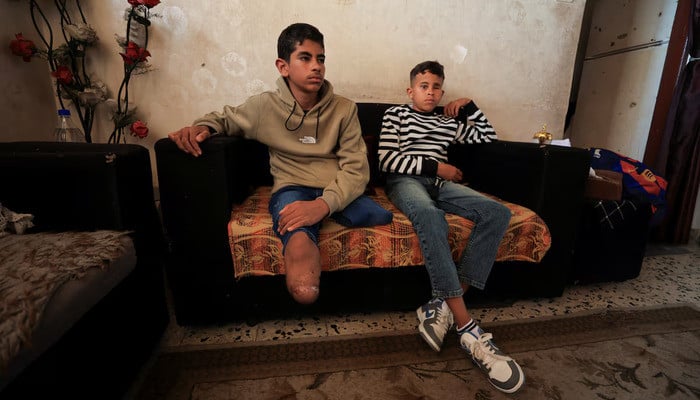
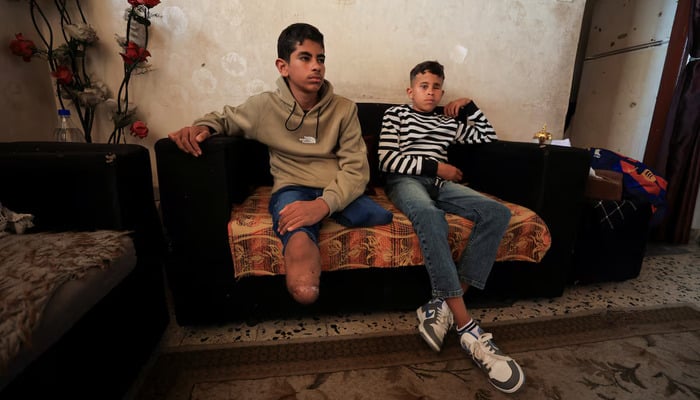
Fourteen-year-old Fadel al-Naji used to be a keen footballer but is now largely confined to his home in Gaza City since both legs were severed in an Israeli drone attack in September.
He sits sullenly on a couch with one hollow pant leg dangling and the other tucked into his waist beside his 11-year-old brother who lost an eye in the same strike.
“He has become withdrawn and isolated,” said his mother Najwa al-Naji, showing old videos of him doing kick-ups on her phone. “It is as if he is dying slowly, and I wish that they would fit him with prosthetic limbs.”
But those are in scarce supply for Gaza’s nearly 5,000 war amputees – a quarter of whom are children like al-Naji – because of Israeli restrictions on materials like plaster of Paris, seven aid and medical sources told Reuters.
Israel, which fought a two-year war with Hamas fighters in the Palestinian enclave, cites security concerns as the reason for restrictions.
Taken together with Gaza’s pre-war amputee population provided by Palestinian health officials, its per capita amputee rate now exceeds even Cambodia, which had been the worst due to landmines, aid group Humanity & Inclusion said.
Such is the need that two medical centres said they were trying to reuse old prosthetic limbs recovered from people killed in the war. Others are creating makeshift artificial limbs with plastic piping or wooden planks, medics said, though this risks damaging the stump or causing infection.
Unfulfilled promise
Gaza’s amputees are a symbol of unfulfilled pledges from the October ceasefire and US President Donald Trump’s 20-point plan envisaging full aid “without interference”.
It also foresaw the reopening of the Rafah border crossing – Gaza’s sole route out to Egypt – but medical evacuations including for amputees have been irregular.
Israel restricts imports of items it says have potential military as well as civilian use under a policy pre-dating the two-year war. While plaster of Paris and other plastic components for prostheses are not specified on Israeli lists of so-called dual use items, “construction products” are there, an Israeli export control document showed.
Israel’s COGAT military agency, which controls access to Gaza, says it facilitates the regular entry of medical equipment but will not permit materials that could be used by Hamas for a “terrorist build-up”.
Responding to questions about prostheses, COGAT said it is in dialogue with the UN and other aid groups to identify ways to enable an adequate medical response.
The International Committee of the Red Cross, which supports the Artificial Limbs and Polio Centre in Gaza, the main centre for prosthetics, said imports of plaster of Paris have been almost completely restricted for over four months with supplies left only to June or July.
“What we are producing now are very small quantities compared to the actual need,” said Hosni Mhana, the centre’s spokesperson, without giving numbers.
The Qatari-funded Sheikh Hamad Hospital said no supplies have been received during the war and that it has run out. It can now only offer maintenance on existing prostheses. “There are no local alternatives for prosthetic manufacturing materials,” said the hospital’s General Director Ahmed Naim.
Humanity & Inclusion, which has fit 118 temporary prostheses in Gaza since early 2025, said supplies from its last shipment in December 2024 are dwindling.
The Trump-led Board of Peace, which has sought to boost aid for Gaza, said it took very seriously the hardships of amputees and other patients in Gaza.
“These are urgent civilian needs,” it said in a statement to Reuters, noting that the ceasefire obligations included the sustained flow of humanitarian, commercial and medical supplies.
Restrictions and delays are raised with the relevant authorities, it added. “We have significant guarantees and commitments that these restrictions will be eased and eliminated as armed parties agree to decommission their weapons and hand over authority to a Palestinian technocratic government in Gaza.”
Prolonged trauma
Artificial limbs cannot be imported whole into Gaza since they are built for each patient, with plaster used to take an exact cast of the residual limb to shape a custom-made socket.
Reuters interviewed three other Gaza amputees all struggling to resume their pre-war lives without prostheses.
Some of the amputees are on a waiting list and may have undergone preparatory work, which can include stump revisions, a form of surgery to hone its shape.
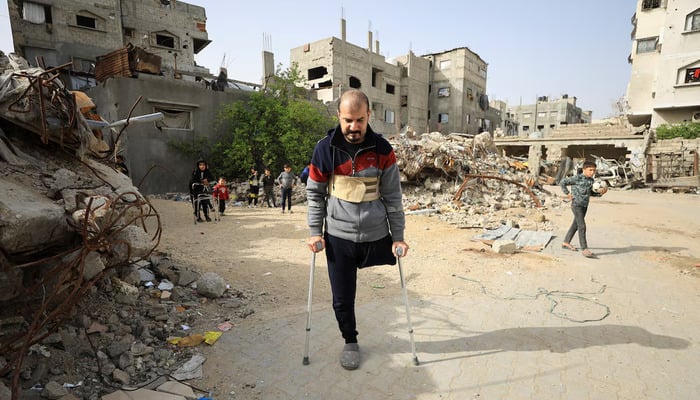
One on the list is Hazem Foura, a 40-year-old former office worker unable to work since losing his left leg above the knee in December 2024 when he says Israel bombed his house.
“I am not asking for the luxuries of life, I am asking for a limb so I can regain my humanity,” he said.
Lack of prostheses severely disrupts recovery and prolongs trauma for amputees, many of whom might have avoided limb loss had more specialist surgeons been available.
It also puts them in greater danger from ongoing Israeli attacks, which have killed 750 Palestinians since the ceasefire, Palestinian health officials say.
Israeli restrictions on items like wheelchairs have eased since the ceasefire, the ICRC and the UN children’s agency said, but medics said manoeuvring around Gaza’s rubble-strewn roads remains a challenge.
As well as materials, expertise is lacking, with only eight prosthetists still in Gaza, according to the World Health Organisation. Follow-up care for children is especially tough, medics said, since they need regular refittings as they grow.
“The amputation itself is not just a lost limb, it’s lost hope, it’s lost independence,” said Heba Bashir, prosthetic and orthotic technical officer for Humanity & Inclusion. “For the kids, it means losing their future.”
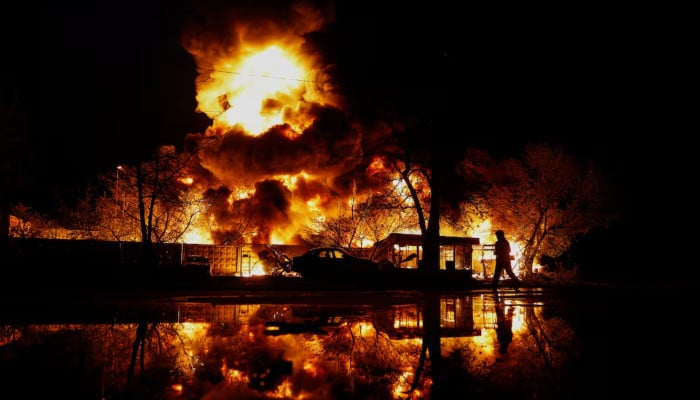
At least 16 people, including a 12-year-old child, were killed and several others were injured Russia’s drone and missile strikes in Ukrainian capital Kyiv, officials said on Thursday.
Fires burned out of control in parts of the capital, sending black smoke billowing into the night sky, as firefighters struggled to control multiple blazes. The morning saw residents and emergency crews cleaning debris scattered around heavily damaged buildings in the city.
Four people, including the child, died in Kyiv, mayor Vitali Klitschko said. Nine people were killed in Odesa, and two in the southeastern city of Dnipro, where Russian attacks set residential buildings ablaze, according to regional officials.
President Volodymyr Zelenskiy said the night had proven that Russia did not deserve any easing of global policy or lifting of sanctions, with 100 people wounded alongside those killed.
“There can be no normalisation of Russia as it is today. Pressure on Russia must work. And it is important to fulfill every promise of assistance to Ukraine on time,” he said.
Air force units shot down or neutralised 31 missiles and 636 drones, but 12 missiles and 20 drones hit in the 24 hours to 7 am (0500 GMT) on Thursday, the air force said.
Deputy Prime Minister Oleksiy Kuleba said rescue operations were ongoing and the toll could rise, while Foreign Minister Andrii Sybiha urged the international community to act.
“All decisions required to increase pressure on the aggressor must be unblocked now,” he said on X. “It is immoral, counterproductive, and dangerous to delay sanctions against Russia or packages of support for Ukraine.”
Klitschko said that Kyiv came under another attack early on Thursday, adding that a drone, flying very low, slammed into an 18-storey building.
Prosecutors put the number of injured in the city at 54.
Klitschko said rescue teams had rescued a mother and child from a building in a central district where the ground floor was badly damaged. He also said missile debris had hit the sixth floor of an apartment building in the central Podil district.
A large fire had broken out in a building in a district in the north of the capital and four emergency medical workers were injured, while debris had fallen in several locations, Klitschko said.
Dnipro, Odesa under attack
Nine people were killed and 23 injured in an attack on a high-rise building in the southern city of Odesa, officials said.
“Last night, the city came under several waves of missile and drone attacks,” Serhiy Lysak, the head of the local military administration, wrote on Telegram, reporting damage to infrastructure facilities and a residential building.
The regional governor said that port and critical infrastructure facilities in the city had also been damaged.
In Dnipro, regional governor Oleksandr Ganzha said that two people were killed and 30 injured in an evening and overnight attack on the city; he posted pictures showing residential buildings ablaze. Another man was killed and four people injured in the surrounding region, Ganzha added.
In Kharkiv, Ukraine’s second-largest city in the northeast, officials said two people had been injured in drone strikes.
- Senate Republicans have blocked war powers measures four times.
- Almost all Republicans remain firmly behind Trump.
- Democrats warn conflict could escalate.
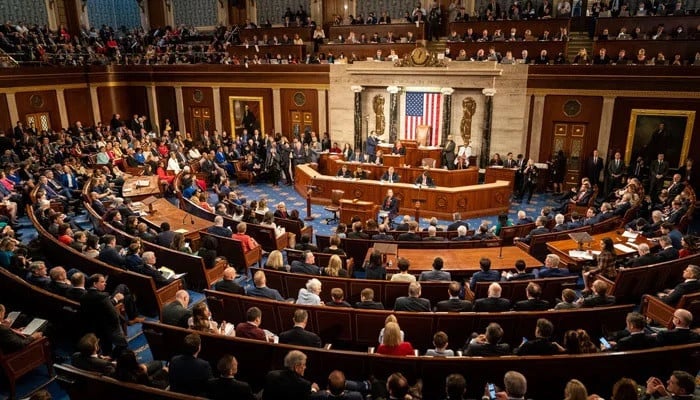
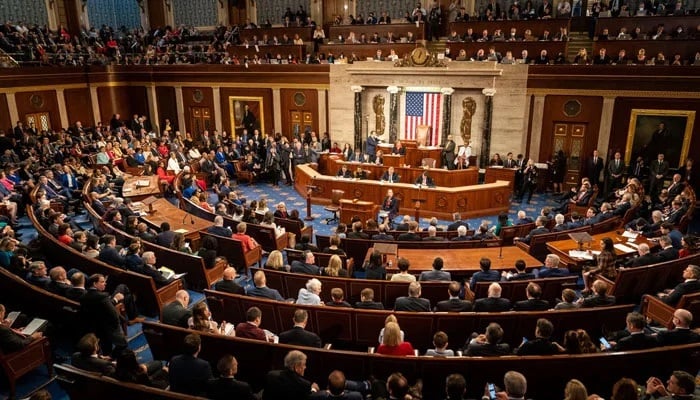
A majority of the US Senate backed President Donald Trump’s military campaign against Iran on Wednesday, voting to block a Democratic-led resolution aiming to stop the war until hostilities are authorised by Congress.
The Senate voted 52-47 not to advance the war powers resolution, underscoring his party’s continuing support for the Republican president’s war policy more than six weeks after the US and Israel launched airstrikes on Iran.
Trump said in an interview with Fox Business Network conducted on Tuesday and aired on Wednesday that the war was close to over. Also on Wednesday, the army chief of mediator Pakistan arrived in Tehran to try to prevent a renewal of the conflict, after weekend peace negotiations ended without an agreement.
It was the fourth time Democrats have forced Senate votes on war powers measures since the war began. All of them have failed in the face of opposition from every Senate Republican except Rand Paul of Kentucky.
The libertarian-leaning Paul, who often advocates against excessive military spending and for a strict interpretation of the Constitution, was the only Republican vote in favour of the resolution in the latest vote. The only Democratic “no” came from Pennsylvania Senator John Fetterman. Republican Senator Jim Justice of West Virginia did not vote.
Although the US Constitution says that Congress, not the president, can declare war, presidents from both parties have long held that the restriction does not apply to short-term operations or if the country is under immediate threat.
‘Nobody is coming to help you, Iran’
The White House, and almost all of Trump’s fellow Republicans in Congress, say Trump’s actions are legal and within his rights as commander-in-chief to protect the US by ordering limited military operations.
Opinion polls show the war is broadly unpopular, although views differ along partisan lines. A Reuters/Ipsos poll published on March 31 found that 60% of Americans opposed US military strikes on Iran, with 74% of Republicans supporting the action, compared with 7% of Democrats.
Senator Jim Risch of Idaho, the Republican chairman of the Foreign Relations Committee, accused backers of the war powers resolution of supporting Iran in a speech before the vote.
“Nobody is coming to help you, Iran, except for the 47 people over here,” he said, referring to senators who back the resolution.
Democrats said they wanted Congress to retake its constitutionally mandated power to declare war, and pull the country back from what they warned could become a long conflict.
“I urge my colleagues … to choose the path of peace before President Trump’s war becomes irreversible,” Senator Jack Reed of Rhode Island, the top Democrat on the Armed Services Committee, said in a speech urging support for the vote.
Democratic Party leaders have vowed to keep bringing war powers resolutions until the conflict ends or Congress authorises continued fighting.
The House of Representatives is expected to consider a similar measure later this week.


Australian consumer confidence drops in April on rising living costs

LG’s High-End Soundbar System Makes My Living Room Feel Like a Home Theater

‘Miss Congeniality’ Benjamin Bratt opens up on working with Sandra Bullock

-

 Entertainment1 week ago
Queen Elizabeth II emotional message for Archie, Lilibet sparks speculation
-

 Tech1 week ago
Azure customers up in arms over ‘full’ UK South region | Computer Weekly
-

 Tech1 week ago
As the Strait of Hormuz Reopens, Global Shipping Will Take Months to Recover
-

 Fashion1 week ago
CII submits 20-pt agenda to Indian govt to back firms hit by Iran war
-

 Tech1 week ago
This AI Button Wearable From Ex-Apple Engineers Looks Like an iPod Shuffle
-

 Politics6 days ago
Indian airlines hit hardest after Dubai limits foreign flights until May 31
-

 Fashion1 week ago
ICE cotton hits 11-month high on drought concerns, demand boost
-

 Politics6 days ago
Chinese, Taiwanese will unite, Xi tells Taiwan opposition leader