

Sports
No vote on Big Ten capital deal; some urge caution

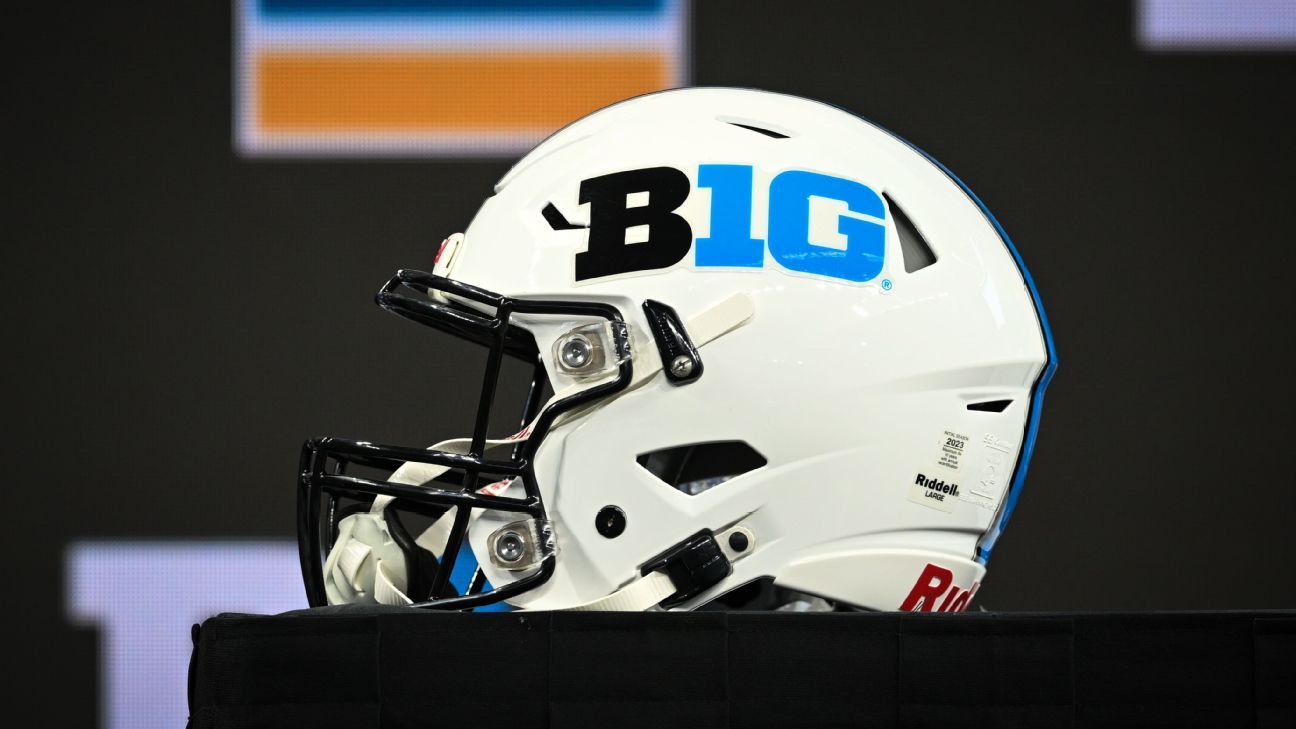
A decision on the Big Ten’s proposed private capital deal does not appear imminent in the wake of a Thursday meeting of the league’s presidents and chancellors.
No vote was taken on the conference call, as leagues rarely do so on any issue that won’t be unanimously approved.
The Big Ten said in a statement that conversations are ongoing.
Earlier Thursday, University of Michigan regents criticized the proposed deal, illustrating how tenuous completing it will be. Regent Mark Bernstein dubbed the deal “a payday loan.” Another regent, Jordan Acker, compared it to opening a new credit card to pay off debt.
The plan calls for the league to spin off a new entity, Big Ten Enterprises, that will house all leaguewide media rights and sponsorship deals. A University of California pension fund will receive a 10% stake in exchange for a cash infusion of over $2 billion to conference athletic departments. The deal also would extend the league’s grant of rights until 2046.
The Big Ten is in the middle of a seven-year, $7 billion media rights package that runs through 2030. Numerous schools, however, need money from soaring operational costs, revenue sharing with athletes and significant debt on stadium constructions and renovations.
Michigan and Southern California have emerged as opponents of the groundbreaking deal, details of which are still being negotiated. The deal does enjoy support among a majority of league schools, as well as from Big Ten commissioner Tony Petitti. Whether the deal can pass without unanimous support is unknown.
In its statement Thursday, the Big Ten said it “remains committed to modernizing the operations of our conference, strengthening conference stability, preserving Olympic and women’s sports, and enhancing the student-athlete experience.
“The conference has provided an option from a nonprofit partner — not private equity — that meets those objectives. Ultimately, it is the decision of the Big Ten member institutions’ presidents and chancellors to decide if it’s the right opportunity and those conversations are ongoing.”
At a previously scheduled meeting of Michigan trustees, multiple regents blasted the proposal as shortsighted and not addressing college athletics’ underlying spending problem. Acker said it was the latest short-term strategy to raise money. He noted the league has expanded four times since 2011 to generate more revenue but again is being told it has to rush into another deal.
“Now, we have to do this deal; giving away 10% of future media revenue for the next 21 years even though no one knows what college athletics or media will look like?” Acker said.
Acker brought up regrets inside the ACC for a 2013 deal that extended its grant of rights through 2036.
“The ACC once thought a long-term deal was a good idea,” he said. “Within a few years, they were suing each other.”
Acker said Michigan hired third-party “consultants and banks,” including the multinational financial institution Barclays, and all were “unequivocal in their opposition. They recommend different ways to address deficits and raise money. They say we can do it more efficiently without selling assets.”
“We understand the responsibility to lift all boats and to help schools that need money to get that money,” Acker said. “It just has to be on the best financial terms possible. The Big Ten doesn’t need to be sold to save college sports. It needs to lead to save college sports.”
Bernstein followed by criticizing the league for demanding quick action, claiming the “contrived urgency is mysterious.” He called the deal “reckless” and a “payday loan.”
“It is the job of the board to protect the future from the present,” he said.
Michigan Regent Sarah Hubbard said further study was needed, and noted that given the board’s mission to protect the assets of the university, it would not be pressured.
“We will not be rushed by false deadlines or pressure from those that do not hold the fiduciary responsibilities we do,” Hubbard said.
The framework of the groundbreaking Big Ten deal would send a significant infusion of money (a minimum of at least the $100 million range) to each of the league’s 18 schools. Shares of ownership in Big Ten Enterprises would fall to those schools, the conference office and the capital group — an investment fund that is tied to the University of California pension system. The UC pension fund would receive the 10% stake in Big Ten Enterprises and would hold typical minority investor rights but no direct control, according to sources.
The exact equity amounts per school in Big Ten Enterprises are still being negotiated. There is expected to be a small gap in the percentage of the remaining equity among the schools that would favor the league’s biggest athletic brands, but it’s likely to be less than a percentage point. There is also expected to be a tier system for initial payments, but with the lowest amount in the nine-figure range. Larger athletic departments could receive an amount above $150 million.
An extension of the Big Ten grant of rights through 2046 would provide long-term stability for the league and make both further expansion and any chance schools leave for the formation of a so-called “Super League” unlikely.
The pension fund is not a private equity firm, which has been attractive to the Big Ten and its schools. The UC fund valuation proved to be higher than other competing bids, sources told ESPN, and that made it attractive.
The money infusion is believed to be acutely needed at a number of Big Ten schools that are struggling paying down debt on new construction and budgeting for direct revenue ($20.5 million this year and expected to rise annually) to athletes.
In 2023-24, Illinois spent $20 million, or 11.8% of its expenditures, paying down debt, according to Sports Illustrated. Ohio State laid out $33.7 million, or 11.5% of its budget.
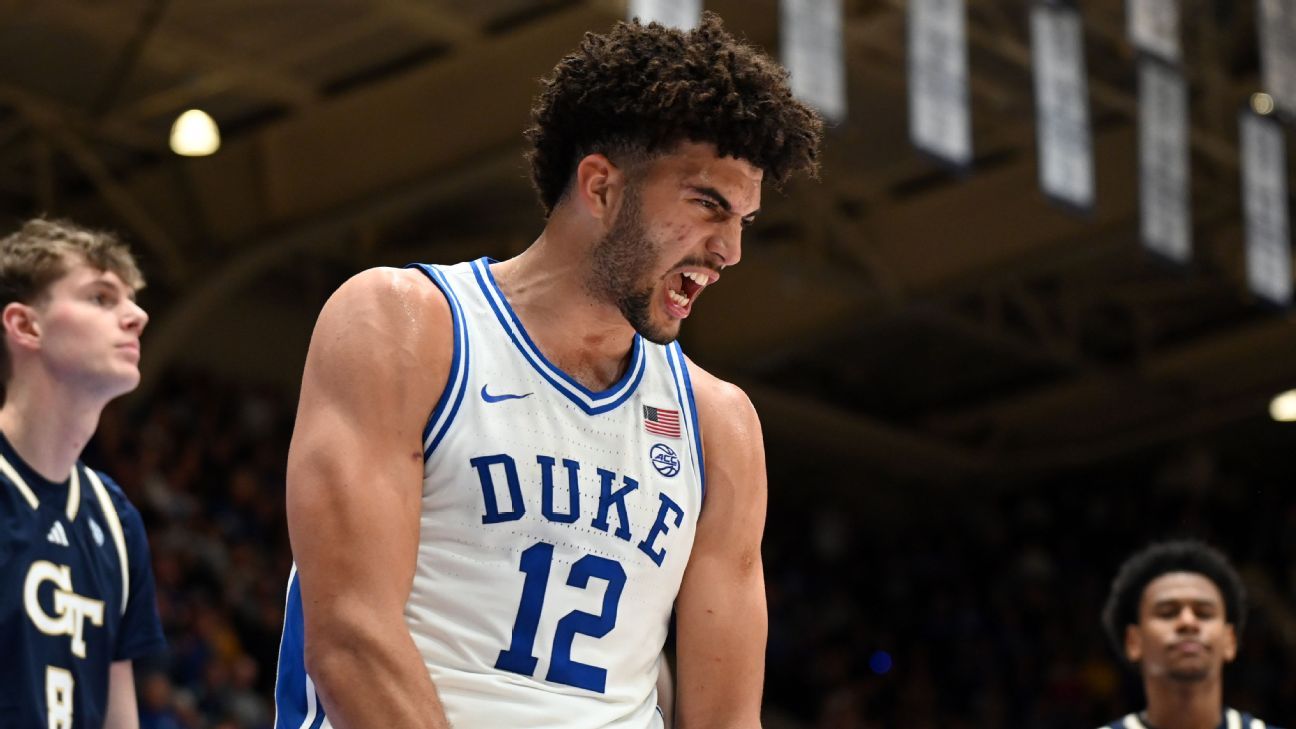
Had Michigan star Yaxel Lendeborg just seen a ghost?
His Wolverines — then the No. 1 team in the country — were used to overwhelming opponents on the glass and in the paint. Instead, they had just been outrebounded and outscored by Cameron Boozer and the No. 3 Duke Blue Devils, and Lendeborg couldn’t find the words to describe the superstar freshman.
“Um … man … um,” Lendeborg hedged when asked about Boozer’s play after the Feb. 21 game, shaking his head and trailing off.
Boozer has had that mystifying effect on every opponent he has faced when the stakes are high.
Clutch performances throughout the 2025-26 campaign have made him the clear favorite for national player of the year honors in a season that features arguably the most talented freshman class of the one-and-done era, not to mention multiple returning All-Americans. The gap between the 18-year-old and the country’s other elite players was widened in the win over Michigan, thanks to his game-altering 3-pointer and the draw of a key goaltending call in the final minutes.
Lendeborg was not the first star Boozer humbled this season. He had 24 points and 23 rebounds against Tennessee’s Nate Ament in a preseason win. Projected NBA draft lottery picks Darius Acuff Jr. and Thomas Haugh could only watch in awe as Boozer scored 64 points combined in wins over Arkansas and Florida, respectively. Boozer also bulldozed Jeremy Fears Jr. and Michigan State to the tune of 18 points and 15 rebounds. Meanwhile, the ACC is still trying to catch its breath from Boozer’s spectacular efforts throughout conference play, with rival North Carolina up next in Saturday’s regular-season finale (6:30 p.m. on ESPN) — a game that could seal Duke’s bid for the No. 1 overall seed in the NCAA tournament.
“We’ve been in a lot of big-time games, a lot of close games, against a lot of highly ranked teams or talked-about teams,” Boozer said about himself and his brother Cayden, also a five-star freshman for the Blue Devils. “So I feel like just being in a lot of those moments prepares you for this.”
Those who have watched the rise of Boozer — son of Carlos Boozer, a former NBA All-Star who won a title with Duke in 2001 — would agree. There is a common thread that ties his basketball career together, from middle school to present day: He’s a defensive dilemma not only because of his size, relentless motor, intellect and a skill set that has made a him a projected top-three pick in the 2026 NBA draft, but also because of the way the game seems to slow down for him in the highest-pressure moments.
Boozer won four state titles with Columbus High School at Florida’s highest level of prep basketball. He led the Explorers to a national title in 2025. His AAU team, the Nightrydas, won three consecutive Nike EYBL crowns. He was co-MVP of last year’s McDonald’s All American game. He won Gatorade Player of the Year twice, plus two gold medals with USA Basketball. That level of dominance means the same question opponents have always asked about Boozer will take center stage in March: How do you stop him?
Kansas’ Darryn Peterson might have the highest NBA ceiling in this freshman class. And BYU’s AJ Dybantsa is its most entertaining and explosive talent. But Boozer is, well, the winningest.
Every time championships have been on the line in his career, Boozer has won. And in the clutch moments of crucial games, he has delivered.
“It’s his greatest tool. It’s his greatest asset,” Miami head coach Jai Lucas, a former Duke assistant who recruited Boozer, said. “It’s like he’s been there before, and he’s been that way since he was in seventh, eighth grade. He’s always played with an older vibe, a veteran vibe about him.
“No moment, no situation is too big for him.”
Andrew Moran’s phone buzzed the night before a regional matchup in the 2022 Florida state playoffs.
As the Columbus High School coach was preparing his squad to face its next opponent, Boozer — a team captain as just a 14-year-old freshman — had watched the film and written a scouting report. He noted the hand signals the opposing coach had used for each set.
“It had descriptions of their plays and it had the time stamps in which it happened during the game. And at first I was confused,” said Moran, who is now an assistant at Miami. “I looked at it and I was like, ‘What the hell is he sending me?’ And then I realized, ‘Oh man, this guy is sending me detailed stuff.’ So for me, I was like, ‘This is another level of preparation at this age.'”
Boozer fell in love with the game early.
There is video of a seventh-grade Boozer blocking shots into the parents section of former NBA All-Star Chris Paul’s middle school combine in 2019, dribbling behind his back and throwing full-court passes. He already had a bag of skills players his age clearly couldn’t match.
“That’s a throwback. I think I had yellow hair back then,” Boozer said, referencing the gold hairstyle he sported at the time.
When the pandemic closed schools and gyms around the country, Boozer and his buddies played pickup games every day, sometimes in the rain, often on the full court at his house. That’s when his friends noticed a shift.
Dante Allen was Boozer’s AAU teammate then. He asked his father, Malik Allen, an assistant coach for the Miami Heat, to put their pickup crew through drills before playing 5-on-5. It was already evident Boozer had the tools to be a great player, but the drills showcased how his intensity was growing.
“I think that’s definitely when he started to get a lot better as a basketball player,” Dante Allen said. “I’d say every drill, he was very intentional with it. There was no point where he was going anything less than a 100% speed with it, just trying to be the best that he can. And then once we started playing pickup, it was just carrying over everything that we’d been doing, all the lessons he’d learned.”
During his freshman year at Columbus High School, Boozer’s combination of brains and brawn thrust his team into the state championship game against Dr. Phillips High School’s roster of now-Division I players Denzel Aberdeen (Kentucky), Ernest Udeh Jr. (Miami) and Riley Kugel (UCF). Boozer scored a team-high 17 points to help Columbus High capture its first state title.
“It was the biggest matchup that we had at that point, and he was just really poised and got us to the win,” Cayden Boozer said.
The victories piled up from there as Cameron’s game evolved.
Coach Mark Griseck figured his Windermere High School team would have its hands full against Boozer and a Columbus team seeking its fourth consecutive state title last year. Early in the game, he said, Boozer set the tone.
“The first time my point guard got hit with a ball screen from Boozer, he goes, ‘Man, it took me about three or four trips back down the court to get my senses back,'” said Griseck, whose team lost 68-36. “Because Boozer set a screen on him and it almost knocked him out. And it wasn’t illegal. It was just a screen by a tree.”
The opposing players in that lopsided affair noticed not only Boozer’s skills and dominance, but also the way he orchestrated the action on the court.
“He was anchoring his offense and not only anchoring it but calling out the plays,” said TJ Drain, a Windermere alum who now plays at Liberty. “He was very vocal with his teammates in encouragement, and that really stood out to me. Whether it was a good pass or a great cut or he’d say, ‘I know you’re going to finish the next one.'”
Boozer’s family background gave him a head start in basketball. His determination did the rest. To those who have witnessed his development, his success at Duke isn’t surprising. They saw the seeds of what he blossomed into a long time ago.
“He’s getting wherever he wants to,” Allen said. “It doesn’t matter if it’s a 7-foot, 300-pound player in front of him or if it’s a pesky guard in front of him, Cam is going to get wherever he wants, regardless. And I think the really hard part about that is that he can get wherever he wants to and then the fact that he’s going to make the right play.”
Exactly 32 hours before Notre Dame was set to tip off against Duke, Fighting Irish head coach Micah Shrewsberry was concerned about how his team would handle Boozer.
Those worries were justified. Notre Dame scored only 22 points in the first half. Boozer had 20 on his own. The Blue Devils went on to win 100-56.
“I’m pretty sure he and his brother were probably dominating when they were 8-year-olds, all the way through,” said Shrewsberry, who left the game in a walking boot after suffering an Achilles injury while he coached his team. “He plays as hard as anybody out there. There is no arrogance to him. It looks like winning’s really important to him, and he’s going to do whatever it takes to win.”
1:05
Cameron Boozer tallies a double-double in Duke’s win
Cameron Boozer scores 24 points and grabs 13 rebounds in Duke’s rout over Notre Dame.
Howard head coach Kenny Blakeney knows what it takes to win, too. He was on the Duke team that won its second straight national title in 1992. Having played with Christian Laettner, Grant Hill and Bobby Hurley, Blakeney also knows talent. And he realized Boozer is a lot more than that when his Bison played the Blue Devils in November, saying the “ginormous” Boozer plays like a “baby Jokic” — comparing him to three-time NBA MVP Nikola Jokic.
“If you watch the Duke game against us, Duke was closing out the game, running ball screens for a 6-foot-9, 250-pound dude to get downhill and make decisions,” Blakeney said. “He shoots it well. He’s an incredible passer. He can do whatever he wants to do on the low block.
“It’s like the criticism from what I hear is that he’s not bouncy enough. Well, you can’t stop the stuff that he can do, so he doesn’t need to be.”
It was only this time last year that Cooper Flagg was authoring one of the greatest freshman campaigns in the one-and-done era. And Boozer is arguably outplaying him.
Boozer is averaging more points (22.6 vs. 19.2) and rebounds (10.0 vs. 7.5) than Flagg, and nearly as many assists (4.0 vs. 4.2). Boozer is also a better 3-point shooter and is playing more minutes. His current 135.3 offensive rating would set a record in the KenPom era (since 2003-04) if it holds. And he has led Duke to its best start (28-2) since 1998-99, when that squad started 29-1 (and won 32 games in a row).
Boozer has an opportunity to end his career as one of the greatest freshmen of all time — not just at Duke. According to data scientist Evan Miya, Boozer is having the best season in college basketball since at least 2009-10, surpassing Zach Edey’s second consecutive Wooden Award season in 2023-24 (25.2 PPG, 12.2 RPG, 2.0 BPG).
“I just think he’s wired for it. He lives it,” Duke head coach Jon Scheyer said. “He’s incredibly prepared going into the games of understanding the different coverages he can see. I mean, we’ve seen so many different defenses, whether it’s doubles or single coverage or heavy plugs, whatever it is. I credit his preparation. I credit the fact that he just lives it every single day.”
At the next level, Boozer will compete against players who might have traits he lacks. He’s not an above-the-rim threat or walking “SportsCenter” highlight like Dybantsa and Peterson, who are projected to go ahead of him in the NBA draft. But Boozer is a complete player with a knack for navigating adversity to win games.
“One of his biggest intangibles is a winning pedigree. Championships, MVPs, gold medals, he’s won at every stop, at a high level, and is a primary contributor on a team that is in position to win it all in April,” one NBA executive told ESPN. “He seems to be about all the right things.
“His actions indicate that he cares about winning, playing the game the right way, handling his business with maturity and professionalism.”
On Saturday, Boozer will lead Duke into its regular-season finale against North Carolina, the ACC outright title already in hand. After that, the Blue Devils will ask him to do what he has done throughout his career: lead them to a championship — their first since 2015.
Accepting that responsibility is all Boozer knows. He always has done his best work when the stakes are highest.
“There is a lot that comes with being at Duke, but you wouldn’t come to Duke if you were afraid of that or didn’t want to be a part of that,” Boozer said. “It’s the biggest brand in college basketball. There is always a spotlight, always a target on your back, so you come to Duke to play in these moments — to be in these moments.”

ISLAMABAD: Eight Pakistani officials have been appointed to key committees of the International Tennis Federation and the Asian Tennis Federation for the 2026–2027 term, marking a significant achievement for Pakistan’s tennis community.
The appointments are being viewed as a recognition of Pakistan’s growing role in the development and governance of tennis at both regional and international levels.
Representation in ITF Committees
Pakistan’s top tennis player and President of the Pakistan Tennis Federation, Aisam-ul-Haq Qureshi, has been selected as a member of the ITF Athlete Commission.
Other Pakistani officials appointed to ITF committees include:
Sara Mansoor – ITF Coaches Commission
Syed Muhammad Ali Murtaza – ITF Juniors Committee
Pakistani Officials in ATF Committees
Several Pakistani representatives have also been appointed to committees of the Asian Tennis Federation:
Salim Saifullah Khan – Finance Committee, Development Advisory Group, Legal, Constitution & Ethics Committee
Ziauddin Tufail – Junior and Coaches Development Committee
Rashid Malik – Marketing and Sponsorship Committee
Shehzad Akhtar Alvi – Tournament Officiating Committee
Sara Mansoor – ATF Advantage All Committee
Muhammad Khalid Rehmani – Senior, Wheelchair and Beach Tennis Committee
Recognition for Pakistan Tennis
Speaking on the occasion, Salim Saifullah Khan said the appointments demonstrate the trust of international tennis bodies in Pakistani officials to contribute to the global development of the sport.
PTF President Aisam-ul-Haq Qureshi also described the development as a proud moment for Pakistan, saying it will strengthen the country’s role in international tennis and open new opportunities for the sport’s growth in the region.
PTF Secretary General Ziauddin Tufail congratulated the appointed officials and expressed confidence that they would represent Pakistan effectively at the international level.
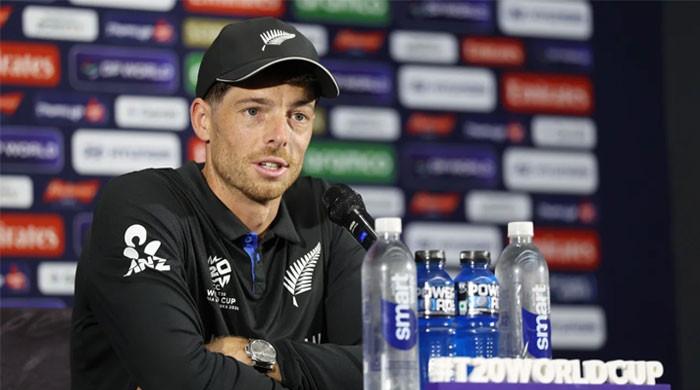
AHMEDABAD: New Zealand will “not mind breaking a few hearts” in the T20 World Cup final against defending champions and hosts India, captain Mitchell Santner said on Saturday.
Santner’s side will face India on Sunday in Ahmedabad with over 100,000 home fans expected to fill the Narendra Modi Stadium.
New Zealand reached the 2021 final, losing to Australia, and has never won a white-ball World Cup.
“I wouldn’t mind winning a trophy,” Santner said.
He added: “It’s going to be obviously a challenge where everyone knows we’re probably not the favourites.
“But yeah, I wouldn’t mind breaking a few hearts to lift the trophy for once.”
New Zealand have blown hot and cold.
They hammered South Africa — unbeaten until then — by nine wickets in the semi-finals after Finn Allen blasted the fastest-ever century at the tournament.
But they also lost to South Africa and England earlier in the competition.
They face an India side on a roll with three straight wins.
In 2023, Australia, led by Pat Cummins, silenced the home crowd in Ahmedabad in the final of the ODI World Cup.
“I guess that’s the goal, is to silence the crowd,” said Santner.
“T20 cricket is fickle at times. We’ve seen South Africa playing very good cricket all the way through and then had a little hiccup against us and out.
“So I think for us, it’s taking confidence from that, and if we go about our business the same way, we can upset another big team.”
Top-ranked India are attempting to become the first team to win back-to-back T20 World Cups and the first to lift the trophy on home soil.
They would also be the first to win the title three times.
But they will have to withstand the expectations of a packed house plus hundreds of millions more watching on TV.
Santner feels that the level of expectation could weigh heavily on them.
“So I think that comes with a lot of added pressure as well,” said Santner. “So if we can go out there and try and put, I guess, that added pressure on them and see what happens.”


Timothee Chalamet’s ‘insensitive’ joke sparks response from Met Opera

UAE president says country is well and ‘no easy prey’ in first public comments since Iran strikes

Go Digit General Insurance gets GST demand notice of Rs 170 cr – The Times of India

India Us Trade Deal: Fresh look at India-US trade deal? May be ‘rebalanced’ if circumstances change, says Piyush Goyal – The Times of India

Policy easing drives Argentina’s garment import surge in 2025

LPGA legend shares her feelings about US women’s Olympic wins: ‘Gets me really emotional’

-
 Fashion1 week ago
Policy easing drives Argentina’s garment import surge in 2025
-
Business1 week ago
India Us Trade Deal: Fresh look at India-US trade deal? May be ‘rebalanced’ if circumstances change, says Piyush Goyal – The Times of India
-
 Sports1 week ago
LPGA legend shares her feelings about US women’s Olympic wins: ‘Gets me really emotional’
-

 Entertainment1 week ago
Bobby J. Brown, “The Wire” and “Law & Order: SUV” actor, dies of smoke inhalation after reported fire
-

 Fashion1 week ago
South Korea’s Misto Holdings completes planned leadership transition
-

 Entertainment1 week ago
Pakistan’s semi-final qualification scenario after England defeat New Zealand
-

 Fashion1 week ago
Texwin Spinning showcasing premium cotton yarn range at VIATT 2026
-
 Business1 week ago
Data tool to spot Cambridgeshire families due financial support