

Business
Nostalgic Rs 5 biscuits back? This is how FMCG firms will pass GST 2.0 benefits—It’s not cutting prices! – The Times of India

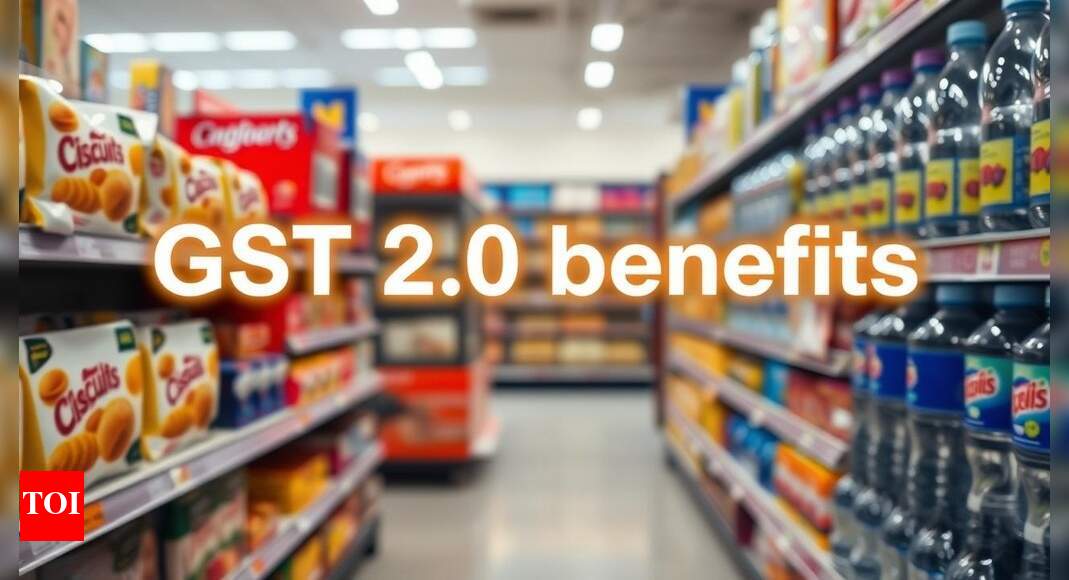
Repriced and repacked! Your biscuit, shampoo and water bottles will now be bigger!Remember when a Rs 5 Parle-G pack or a Rs 20 Bisleri bottle felt like such a steal, giving you more than you expected?Those days could soon be back as FMCG companies are planning to bring back these familiar price points by mid-November, with slightly bigger packs to match the new GST rules.
Bigger sizes instead of lesser prices
After the September 22 GST rate cuts, many items had shifted to awkward new prices as there was no clarification from the government about increasing weights. A Rs 5 Parle-G pack became Rs 4.45, a Rs 1 candy fell to 88 paise, and a Rs 2 shampoo sachet went down to about Rs 1.77, leaving shoppers frustrated.The government then issued clarification to some FMCG manufacturers allowing them to pass on the GST rate cut benefits by increasing the weight of the packets instead of reducing prices.Industry executives told ET that now that officials from the Central Board of Indirect Taxes and Customs gave a verbal clarification in meetings with FMCG firms, they can start fresh production by next week with new packets at the already popular prices, but with a 6% to 12% increase in quantity.“Over the next few days, companies will roll out new packs at the popular price points and increased weight,” said Mayank Shah, vice president at Parle Products. Snack production has already restarted, while other categories are modifying pack sizes. For biscuits, the weight will go up by 11–12%.Angelo George, chief executive of Bisleri International, said, “The current price points are inconvenient for consumers,” adding that the companies will soon go back to old popular prices but with higher volume.
Popular prices —Win-win for both!
After the initial GST cut, many products saw temporary price drops: Mondelez revised Bournvita from Rs 30 to Rs 26.69, Oreo from Rs 10 to Rs 8.90, and Gems and 5Star Rs 20 packs to Rs 17.8. Bisleri reduced 500 ml bottles from Rs 10 to Rs 9 and 1-litre bottles from Rs 20 to Rs 18. Retailers often rounded off prices or returned change with small confectionery packs, while digital payments allowed exact amounts.Tarun Arora, chief executive of Zydus Wellness, which makes Complan and Glucon-D, said that popular price points are a win-win for consumers and small retailers alike. Arora said that they make sense from a consumer perspective and are easier for marketing as well.“”It’s still early days, but companies might respond by launching new products at magic price points or even consider reaching out to regulators for guidance or relief,”” he explained.
Many await official clarification
Back in 2017, several FMCG firms were fined by the National Anti-Profiteering Authority for allegedly failing to pass on GST benefits to consumers. This time, however, government officials have clarified that companies will not face penalties if they reintroduce popular price points by increasing pack weight or volume.Dairy major Amul, however, is taking a cautious approach. Jayen Mehta, managing director of the Gujarat Cooperative Milk Marketing Federation, which markets Amul products, said, “The government’s intent was to lower pricing and we will follow it in letter and spirit. We do not intend to revise the prices and increase grammage because consumers will not get the intended benefit.”Prashant Peres, managing director at Kellanova India and South Asia, told ET last month that price tags in between the “magic” points had caused inconvenience for the industry. “In the short term, there will be some slashing of prices that we will do, or many others will do, because we just can’t turn around the supply chain fast enough. But in the long term, it will be grammage, and we will go to those price points,” he said.
GST 2.0 cuts and benefits
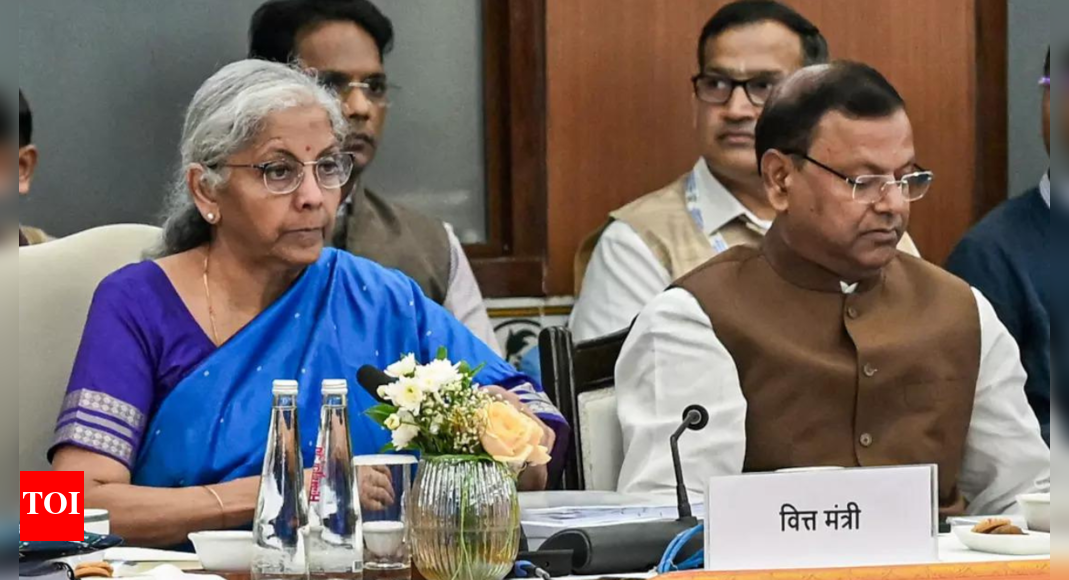
The GST Reforms 2025 mark a major overhaul of India’s indirect tax system, aiming to simplify taxation, reduce the burden on citizens, and stimulate business growth. The reform introduces a new two-slab structure of 5% and 18%, replacing the previous four-tier system. Luxury and sin goods such as tobacco, pan masala, aerated drinks, and high-end cars will now be taxed at 40%, ensuring fairness while maintaining government revenue.The reform significantly reduces GST on essential household items and services and the benefits of these reforms extend across the economy.The government has directed multiple times that the companies must pass on the benefits to the consumers. Earlier, Union finance minister Nirmala Sitharaman said that the Centre is working on a package to provide relief to exporters affected by US tariffs.In an hour-long interview, she told TOI the GST reforms, which came on PM Modi’s directions, focused on ensuring the benefits of rate reduction go to the common man, farmers and small businesses. She said ministries were already working with the industry to ensure that the gains are fully transferred to consumers and pointed to several companies, such as state-run insurers and a leading Indian auto company, announcing plans to reduce prices.While addressing a press conference on ‘GST Bachat Utsav’, Sitharaman also said in quite a few cases, a “more-than-expected” price reduction due to GST reforms has been passed on to end consumers.“We are convinced that on every such items the benefits are being fully passed on to consumers,” she added. The government has also introduced a helpline and an online portal for consumers to register a complaint, in case they are not receiving the benefits of the rate cuts.



Last Updated:
Gold is sold at a discount in Dubai due to Middle East conflict disrupting flights. Traders offer up to $30 per ounce less than London prices.




Dubai Gold Selling Cheaper As Iran War Grounds Flights
Gold is being sold at a discount in Dubai as the widening conflict in the Middle East disrupts flights and hampers the movement of bullion from one of the world’s key trading hubs.
According to a Bloomberg report, traders in Dubai are offering discounts of up to $30 per ounce compared to the global benchmark price in London. The unusual price cut comes as shipments remain stranded due to flight disruptions triggered by the escalating conflict involving Iran and Israel.
Dubai is a key global centre for refining and exporting gold to markets across Asia, including India. However, partial airspace restrictions and heightened security risks have slowed the movement of bullion out of the region.
Why Gold Is Being Sold Cheaper
Gold is typically transported in the cargo holds of passenger aircraft. With several flights from the UAE restricted amid regional tensions, traders are struggling to move bullion to international markets.
At the same time, insurance and freight costs have surged, making shipments more expensive and uncertain. Many buyers have therefore stepped back from placing new orders, unwilling to bear high logistics costs without assurance of timely delivery.
To avoid paying prolonged storage and financing costs while shipments remain stuck, some traders are offering gold at discounted prices.
Although transporting bullion by road to airports in neighbouring countries such as Saudi Arabia or Oman is theoretically possible, logistics firms are reluctant due to the risks and complications of moving high-value cargo across land borders during a conflict.
What It Means For India
India, one of the largest buyers of gold shipped from Dubai, could face short-term supply disruptions if the situation continues.
Renisha Chainani, head of research at Augmont Enterprises Ltd., said several cargo shipments have already been delayed, creating temporary tightness in the availability of physical bullion in India.
However, industry experts as reported by Bloomberg say the immediate impact may remain limited as domestic inventories are currently comfortable after heavy imports earlier this year.
Chirag Sheth, principal consultant for South Asia at Metals Focus, said Bloomberg that India has ample stocks for now, but warned that prolonged disruptions could eventually affect supply if the conflict continues for several months.
Meanwhile, global gold prices have surged this year amid geopolitical uncertainty, with spot gold recently trading above $5,000 per ounce.
 Click here to add News18 as your preferred news source on Google.
Follow News18 on Google. Join the fun, play games on News18. Stay updated with all the latest business news, including market trends, stock updates, tax, IPO, banking finance, real estate, savings and investments. To Get in-depth analysis, expert opinions, and real-time updates. Also Download the News18 App to stay updated.
March 08, 2026, 10:03 IST
Read More

Some seven in 10 British adults without a full driving licence say learning to drive is currently unaffordable, according to a survey.
The figure is even higher among younger people, with 76% of 18 to 29-year-olds without a licence saying driving lessons are financially out of reach, the poll for car insurer Prima found.
Overall, 38% said the cost of driving lessons was the biggest deterrent to learning to drive.
Some 32% were put off by the price of buying a car and 15% said the cost of car insurance was the main barrier to learning to drive.
Almost half (45%) said they would consider learning to drive if it became significantly cheaper.
Nick Ielpo, UK country manager at Prima, said: “For a growing number of people, driving is no longer a symbol of freedom – it’s a financial stretch too far.
“Between lessons, buying a car and insuring it, the upfront and ongoing costs are pricing many people out before they even start.”
Find Out Now surveyed 1,134 adults who do not hold a full driving licence between January 21 and 23.

Go Digit General Insurance on Saturday said it has received a demand notice of about Rs 170 crore for short payment of goods and services tax (GST) for nearly five years. The company has received an order copy from the Office of the Commissioner of GST & Central Excise, Chennai South Commissionerate on March 6, confirming GST demand of Rs 154.80 crore levying penalty of Rs 15.48 crore and Interest u/s 50 of CGST Act, 2017 for the period July 2017 to March 2022, the insurer said in a regulatory filing. The company is in the process of evaluating the legal advice on the implications and would file an appeal, it said.

Gold On Sale In Dubai? Here’s Why Prices Have Dropped By $30 Per Ounce

King Charles crucial trip comes to screeching halt amid new conflict

Removing NTBs could boost trade with US: Bangladesh commerce minister

LPGA legend shares her feelings about US women’s Olympic wins: ‘Gets me really emotional’

India Us Trade Deal: Fresh look at India-US trade deal? May be ‘rebalanced’ if circumstances change, says Piyush Goyal – The Times of India

Pakistan’s semi-final qualification scenario after England defeat New Zealand

-
 Sports1 week ago
LPGA legend shares her feelings about US women’s Olympic wins: ‘Gets me really emotional’
-
Business1 week ago
India Us Trade Deal: Fresh look at India-US trade deal? May be ‘rebalanced’ if circumstances change, says Piyush Goyal – The Times of India
-
 Entertainment1 week ago
Pakistan’s semi-final qualification scenario after England defeat New Zealand
-

 Fashion1 week ago
South Korea’s Misto Holdings completes planned leadership transition
-

 Entertainment1 week ago
Bobby J. Brown, “The Wire” and “Law & Order: SUV” actor, dies of smoke inhalation after reported fire
-
 Business1 week ago
Greggs to reveal trading amid pressure from cost of living and weight loss drugs
-
 Business1 week ago
CNBC To Merge TV And Digital News Operations, Nearly A Dozen Jobs To Be Cut: Report
-
 Business1 week ago
Data tool to spot Cambridgeshire families due financial support