

Business
Nostalgic Rs 5 biscuits back? This is how FMCG firms will pass GST 2.0 benefits—It’s not cutting prices! – The Times of India

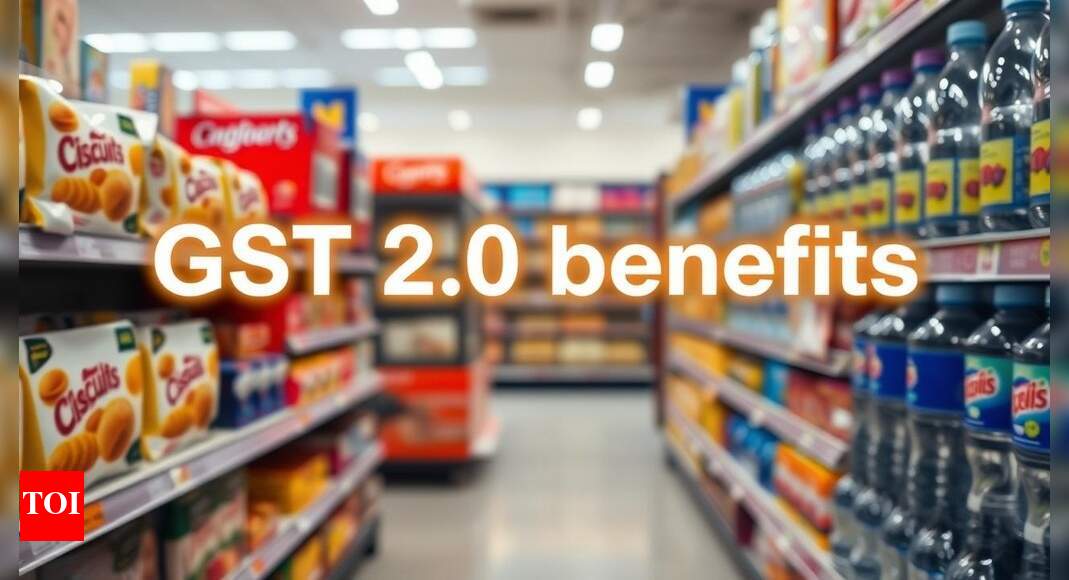
Repriced and repacked! Your biscuit, shampoo and water bottles will now be bigger!Remember when a Rs 5 Parle-G pack or a Rs 20 Bisleri bottle felt like such a steal, giving you more than you expected?Those days could soon be back as FMCG companies are planning to bring back these familiar price points by mid-November, with slightly bigger packs to match the new GST rules.
Bigger sizes instead of lesser prices
After the September 22 GST rate cuts, many items had shifted to awkward new prices as there was no clarification from the government about increasing weights. A Rs 5 Parle-G pack became Rs 4.45, a Rs 1 candy fell to 88 paise, and a Rs 2 shampoo sachet went down to about Rs 1.77, leaving shoppers frustrated.The government then issued clarification to some FMCG manufacturers allowing them to pass on the GST rate cut benefits by increasing the weight of the packets instead of reducing prices.Industry executives told ET that now that officials from the Central Board of Indirect Taxes and Customs gave a verbal clarification in meetings with FMCG firms, they can start fresh production by next week with new packets at the already popular prices, but with a 6% to 12% increase in quantity.“Over the next few days, companies will roll out new packs at the popular price points and increased weight,” said Mayank Shah, vice president at Parle Products. Snack production has already restarted, while other categories are modifying pack sizes. For biscuits, the weight will go up by 11–12%.Angelo George, chief executive of Bisleri International, said, “The current price points are inconvenient for consumers,” adding that the companies will soon go back to old popular prices but with higher volume.
Popular prices —Win-win for both!
After the initial GST cut, many products saw temporary price drops: Mondelez revised Bournvita from Rs 30 to Rs 26.69, Oreo from Rs 10 to Rs 8.90, and Gems and 5Star Rs 20 packs to Rs 17.8. Bisleri reduced 500 ml bottles from Rs 10 to Rs 9 and 1-litre bottles from Rs 20 to Rs 18. Retailers often rounded off prices or returned change with small confectionery packs, while digital payments allowed exact amounts.Tarun Arora, chief executive of Zydus Wellness, which makes Complan and Glucon-D, said that popular price points are a win-win for consumers and small retailers alike. Arora said that they make sense from a consumer perspective and are easier for marketing as well.“”It’s still early days, but companies might respond by launching new products at magic price points or even consider reaching out to regulators for guidance or relief,”” he explained.
Many await official clarification
Back in 2017, several FMCG firms were fined by the National Anti-Profiteering Authority for allegedly failing to pass on GST benefits to consumers. This time, however, government officials have clarified that companies will not face penalties if they reintroduce popular price points by increasing pack weight or volume.Dairy major Amul, however, is taking a cautious approach. Jayen Mehta, managing director of the Gujarat Cooperative Milk Marketing Federation, which markets Amul products, said, “The government’s intent was to lower pricing and we will follow it in letter and spirit. We do not intend to revise the prices and increase grammage because consumers will not get the intended benefit.”Prashant Peres, managing director at Kellanova India and South Asia, told ET last month that price tags in between the “magic” points had caused inconvenience for the industry. “In the short term, there will be some slashing of prices that we will do, or many others will do, because we just can’t turn around the supply chain fast enough. But in the long term, it will be grammage, and we will go to those price points,” he said.
GST 2.0 cuts and benefits
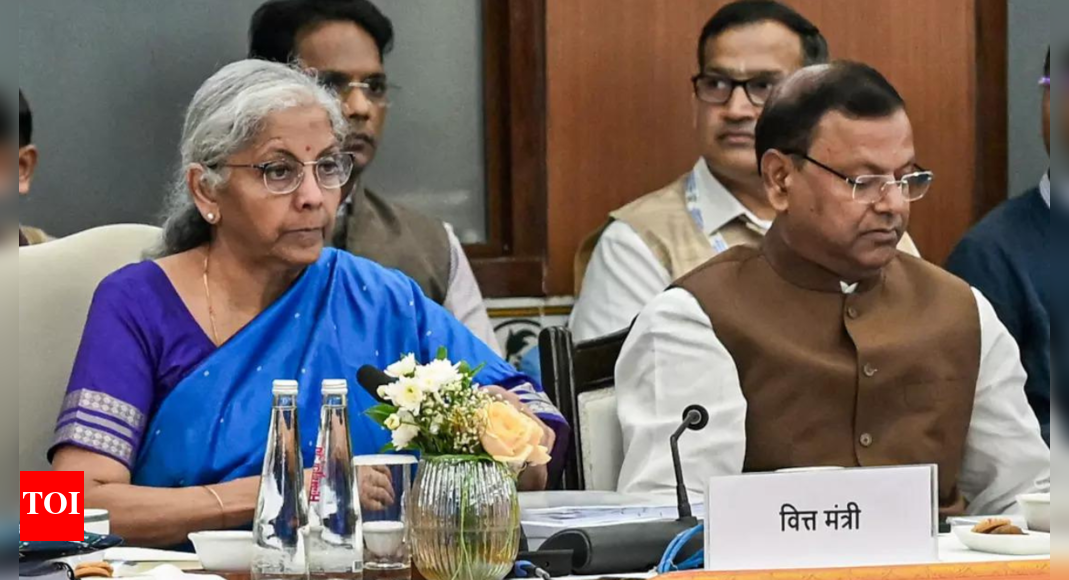
The GST Reforms 2025 mark a major overhaul of India’s indirect tax system, aiming to simplify taxation, reduce the burden on citizens, and stimulate business growth. The reform introduces a new two-slab structure of 5% and 18%, replacing the previous four-tier system. Luxury and sin goods such as tobacco, pan masala, aerated drinks, and high-end cars will now be taxed at 40%, ensuring fairness while maintaining government revenue.The reform significantly reduces GST on essential household items and services and the benefits of these reforms extend across the economy.The government has directed multiple times that the companies must pass on the benefits to the consumers. Earlier, Union finance minister Nirmala Sitharaman said that the Centre is working on a package to provide relief to exporters affected by US tariffs.In an hour-long interview, she told TOI the GST reforms, which came on PM Modi’s directions, focused on ensuring the benefits of rate reduction go to the common man, farmers and small businesses. She said ministries were already working with the industry to ensure that the gains are fully transferred to consumers and pointed to several companies, such as state-run insurers and a leading Indian auto company, announcing plans to reduce prices.While addressing a press conference on ‘GST Bachat Utsav’, Sitharaman also said in quite a few cases, a “more-than-expected” price reduction due to GST reforms has been passed on to end consumers.“We are convinced that on every such items the benefits are being fully passed on to consumers,” she added. The government has also introduced a helpline and an online portal for consumers to register a complaint, in case they are not receiving the benefits of the rate cuts.
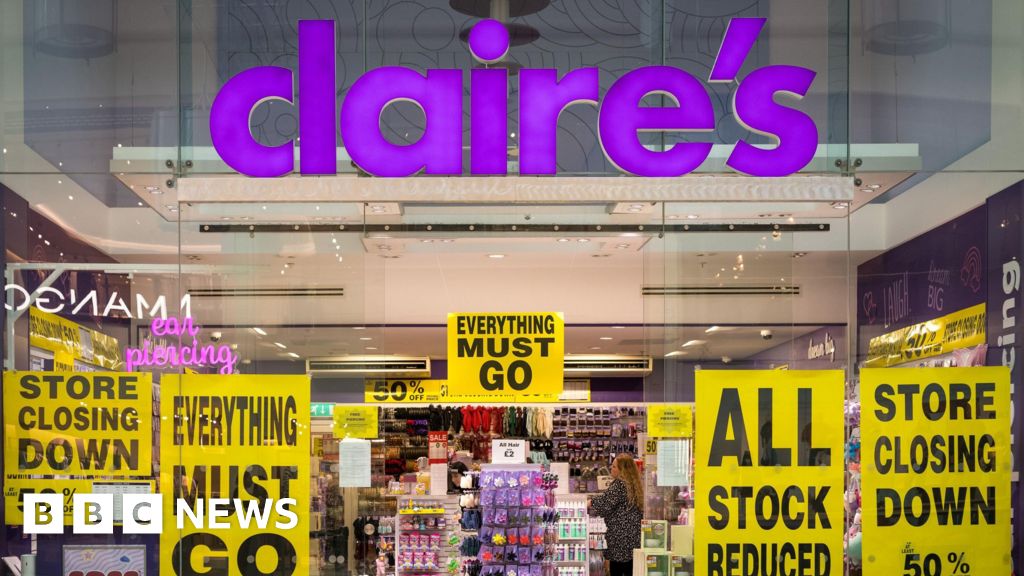
All of the chain’s standalone stores have stopped trading in the UK and Ireland.
Source link

A pedestrian walks by a Domino’s Pizza on Dec. 9, 2025 in San Francisco, California.
Justin Sullivan | Getty Images
Domino’s Pizza stock fell 10% in morning trading on Monday after it reported weaker-than-expected U.S. same-store sales growth.
The chain’s domestic same-store sales rose just 0.9%, lower than the 2.3% bump expected by Wall Street analysts, based on StreetAccount estimates.
“We’re not happy with it,” CEO Russell Weiner told CNBC.
The pizza chain also lowered its full-year U.S. same-store sales forecast to low-single digit growth, down from its prior projection that U.S. same-store sales will increase 3%.
Weiner said he expects more fast-food chains to report similar headwinds from winter weather and weak consumer sentiment, which took a dive in March due to spiking fuel prices caused by the U.S.-Israeli war with Iran.
“One of the bad things about reporting first is you don’t get to hear about anybody else,” Weiner said.
Domino’s kicked off the earnings season for restaurant chains. Starbucks is on deck after the bell on Tuesday, and Chipotle Mexican Grill and Pizza Hut owner Yum Brands are expected to share their results on Wednesday. Rival Papa John’s will report its earnings next Thursday.
During the quarter, Domino’s also faced stiffer competition from rival pizza chains. Papa John’s and Pizza Hut both matched Domino’s $9.99 “Best Deal Ever” with promotions at the same price point. And Little Caesars undercut Domino’s $6.99 Mix & Match deal with a $5.99 version.
“People are seeing what we’re doing, and they’re sick of losing share, and they’re coming at it,” Weiner said, adding that he still expects Papa John’s and Pizza Hut to report same-store sales declines for the quarter despite the new promotions.
Looking ahead, Weiner expressed confidence that Domino’s will prove itself in the long run.
“Domino’s has got a bigger advertising budget than our second two competitors combined,” he said. “And those competitors are both going up for sale, so we know things aren’t good there right now.”
Yum announced in November that it was exploring strategic options for Pizza Hut, which could include a sale. And Papa John’s is reportedly in talks with Qatari-backed Irth Capital to go private. Both chains have also announced plans to close hundreds of restaurants this year, which could further boost Domino’s dominant position in the pizza category.
And if either Pizza Hut or Papa John’s goes private, Weiner said he expects that a new owner would shutter even more locations — a win for Domino’s.
Shares of Domino’s have lost nearly a third of their value over the last year. The company’s market cap has fallen to roughly $11.2 billion.

United Airlines CEO Scott Kirby (L) and American Airlines CEO Robert Isom listen as U.S. Transportation Secretary Sean Duffy speaks to reporters outside the White House on October 30, 2025 in Washington, D.C.
Kevin Dietsch | Getty Images
United Airlines CEO Scott Kirby confirmed Monday that he contacted American Airlines about a potential merger, a possibility American rejected.
“I approached American about exploring a combination because I thought we could do something incredible for customers together,” Kirby said in a statement. He said he shared his “big, bold vision” because he was confident it could win regulatory approval.
American rejected the idea and its CEO, Robert Isom, last week said such a merger would be bad for customers and “anticompetitive.”
Kirby had floated the idea to the Trump administration earlier this year, according to people familiar with the matter who weren’t authorized to discuss the private conversation, in hopes that the combination would mean a big global airline to compete with foreign rivals
American declined to comment on Kirby’s Monday statement.
“I was hoping to pitch that story to American, but they declined to engage and instead responded by publicly closing the door,” Kirby said in his statement Monday. “And without a willing partner, something this big simply can’t get done.”
He said that “American’s public comments make it clear that a merger like this is off the table for the foreseeable future” but outlined his vision for a combined airline.
Kirby reiterated that the country has deficit with foreign airlines that fly more than half of the long-haul seats into the U.S., with most of the customers being Americans.
“The combined scale of United and American would be a better way to compete with foreign carriers,” he said.
President Donald Trump said he was against the idea of a combination last week.
“I don’t like having them merge,” he told CNBC’s “Squawk Box” on Tuesday morning. He said he would, however, like someone to buy struggling discount carrier Spirit but he also suggested that the federal government could “help that one out.”
Spirit and the Trump administration are in advanced talks for a rescue package.


PCB shares ticket pricing details for PSL 11 Qualifier in Karachi – SUCH TV

Melania Trump says ABC should ‘take a stand’ on late-night host Kimmel

A Brain Implant for Depression Is About to Be Tested in Humans

-

 Sports1 week ago
NCAA men’s gymnastics championship: All-time winners list
-

 Sports1 week ago
WWE WrestleMania 42 Night 2: Live match results and analysis
-

 Politics6 days ago
UK’s Starmer seeks to deflect blame over Mandelson appointment
-

 Fashion1 week ago
UK’s Sosandar returns to profitability amid robust FY26 performance
-
 Entertainment7 days ago
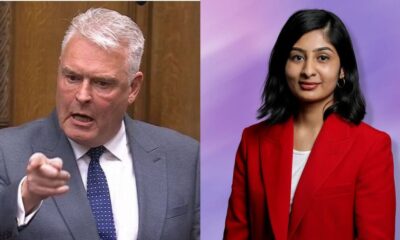
Lee Anderson, Zarah Sultana kicked out of UK Parliament for calling PM ‘liar’
-
 Business7 days ago
How Trump’s psychedelics executive order could unlock stalled cannabis reform
-
 Business1 week ago
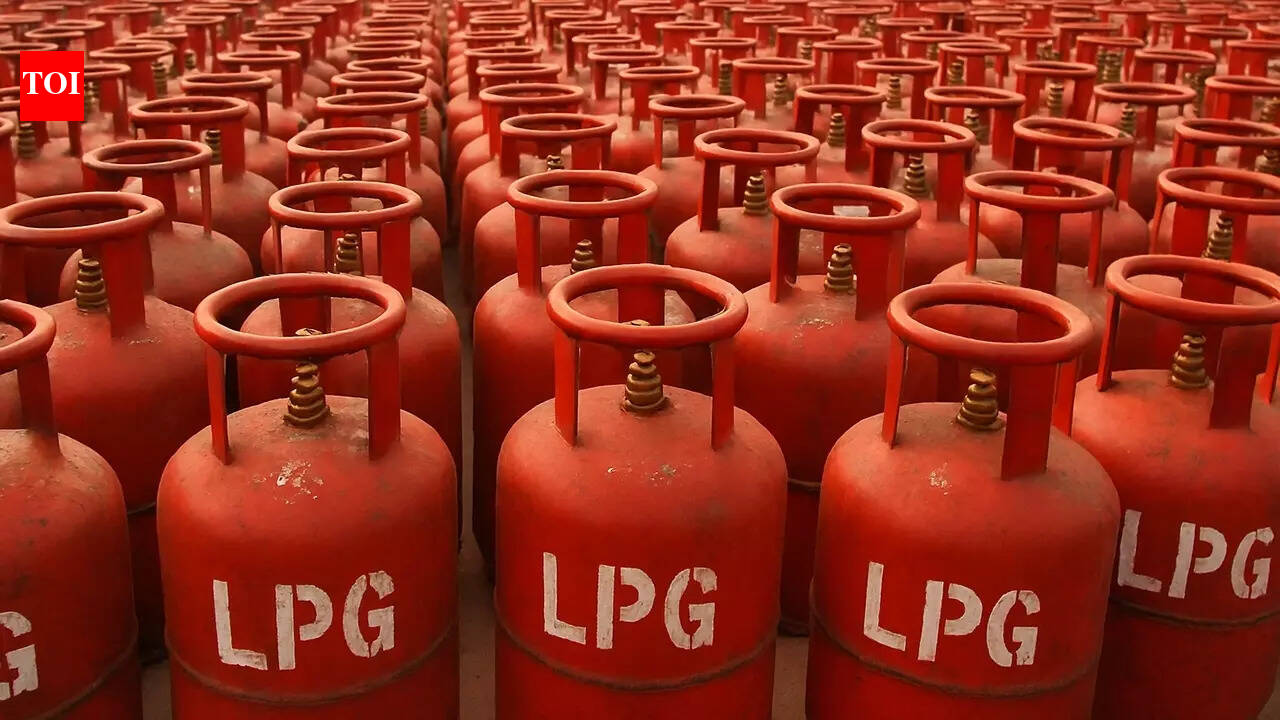
No fuel shortage: Govt assures 100% domestic LPG, PNG, CNG supply amid Hormuz energy crunch – The Times of India
-

 Sports1 week ago
Quetta Gladiators opt to bowl after winning toss against Peshawar Zalmi in PSL 11 clash