

Tech
Nvidia, Nokia ‘pioneer’ AI platform for 6G comms | Computer Weekly


Nvidia and Nokia have announced a strategic partnership to add the former’s artificial intelligence (AI)-powered radio access network (RAN) products to Nokia’s RAN portfolio, enabling communication service providers to launch AI-native 5G Advanced and 6G networks on Nvidia platforms.
The aim is to drive wireless innovation in performance and efficiency, ensuring consumers using generative, agentic and physical AI applications on their devices will have “seamless” network experiences. The companies say that by working together, they are laying the strategic infrastructure and opening up a high-growth frontier for telecom providers by delivering distributed edge AI inferencing at scale.
They said growth in AI traffic is exploding, noting that almost half of ChatGPT’s 800 million weekly active users access the site via mobile devices, and that its monthly mobile app downloads exceed 40 million.
With their AI-RAN systems, Nokia and Nvidia are confident that mobile operators can improve performance and efficiency as well as enhance network experiences for future generative AI and agentic AI applications and experiences. They will be able to introduce AI services for 6G with the same infrastructure, powering billions of new connections for cars, robots, drones, and augmented and virtual reality glasses that demand connectivity, computing and sensing at the edge.
Another aim of the partnership will aim to address the AI-RAN market, representing a significant opportunity in the RAN market that analyst Omdia predicts will be worth cumulatively in excess of $200bn by 2030.
As a result, the deal will see Nvidia introducing Aerial RAN Computer Pro (ARC-Pro), a 6G-ready accelerated computing platform that combines connectivity, computing and sensing capabilities, enabling telcos to move from 5G Advanced to 6G through software upgrades. Nokia will accelerate the availability of its 5G and 6G RAN software on the Nvidia Cuda platform and expand its RAN portfolio by embedding Nvidia ARC-Pro at the heart of the new AI-RAN service.
The partnership will also see Nvidia invest $1bn in Nokia to mark, said the companies, the beginning of the AI-native wireless era, providing the foundation to support AI-powered consumer experiences and enterprise services at the edge while being ready for 6G applications such as integrated sensing and communications. T-Mobile US will also collaborate with Nokia and Nvidia to drive and test AI-RAN technologies as part of a 6G innovation and development process.
Trials are expected to begin in 2026, focused on field validation of performance and efficiency gains for customers.
Commenting on the deal, Nvidia founder and CEO Jensen Huang described telecommunications as a critical national infrastructure, and “the digital nervous system” of the US economy and security.
“Built on Nvidia Cuda and AI, AI-RAN will revolutionise telecommunications, a generational platform shift that empowers the US to regain global leadership in this vital infrastructure technology,” he said. “Together with Nokia, and America’s telecom ecosystem, we’re igniting this revolution, equipping operators to build intelligent, adaptive networks that will define the next generation of global connectivity.”
Nokia president and CEO Justin Hotard said: “The next leap in telecom isn’t just from 5G to 6G – it’s a fundamental redesign of the network to deliver AI-powered connectivity, capable of processing intelligence from the datacentre all the way to the edge.
“Our partnership with Nvidia, and their investment in Nokia, will accelerate AI-RAN innovation to put an AI datacentre into everyone’s pocket,” he said. “We’re proud to drive this industry transformation with Nvidia, Dell Technologies and T-Mobile US; our first AI-RAN deployments in T-Mobile’s network will ensure America leads in the advanced connectivity that AI needs.”
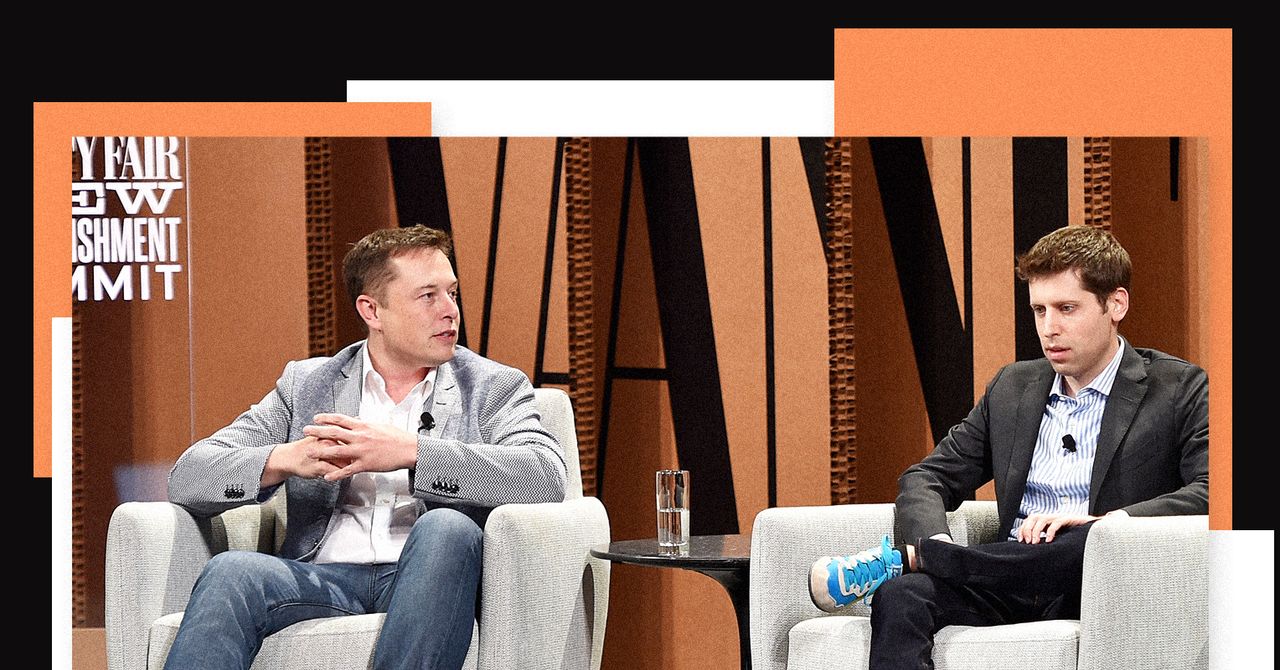
A few months before Elon Musk left OpenAI’s board of directors in February 2018, he tried to recruit Sam Altman to join a “world-class AI lab” within Tesla. Musk went as far as offering the OpenAI CEO a Tesla board seat, according to emails and testimony presented in federal court on Wednesday during the Musk v. Altman trial. The emails were shown to a jury during the cross examination of Shivon Zilis, a former OpenAI adviser and board member who is also the mother of four of Musk’s children.
Musk’s core claim in this lawsuit is that Altman and OpenAI president Greg Brockman effectively stole a nonprofit, using the $38 million Musk invested to create a private company worth more than $800 billion today. On Wednesday, lawyers for Musk showed video depositions of former OpenAI CTO Mira Murati and former OpenAI board member Helen Toner, to raise concerns over Altman’s alleged history of deceit.
OpenAI’s legal team has responded to Musk’s claims by questioning his true motives, arguing that the Tesla CEO has had “sour grapes” ever since he failed to assume control of OpenAI in 2017. He has since started a rival, for-profit AI lab. OpenAI’s lawyers used Zilis’ cross-examination on Wednesday to bring up evidence about Musk’s alleged plans to subvert OpenAI, and tried to suggest Zilis was privy to those plans. As it pertains to this case, one of Zilis’ most important roles at OpenAI was acting as a conduit between Musk and Altman.
In a text from February 2018 presented as evidence, Zilis—then an OpenAI adviser, as well as a Neuralink and Tesla executive—asked Altman, “Did you think through a B Corp subsidiary of Tesla?”
“There was documentary evidence that, at several points, Mr. Musk had contemplated seeking to join Sam Altman to the board and offered that option,” said OpenAI lawyer William Savitt outside the courthouse on Wednesday. “It was part of Mr. Musk’s effort to corrupt OpenAI and absorb it into Tesla … he was trying to get Altman to abandon the mission and be part of Tesla.”
In an email to Tesla’s VP of communications, Sarah O’Brien, from November 2017, Zilis shared a draft of an FAQ page about an event Tesla was planning to hold at the NeurIPS AI conference. “The purpose of this event is to share that Tesla is building a world leading AI lab(?) which will rival the likes of Google / DeepMind and Facebook AI Research,” the drafted FAQ read. The document continues, “One major issue for Tesla is when people think of Elon and AI, they think of OpenAI.”
Another part of the FAQ labeled “Who?” lists several Tesla executives who were planned to lead the unit, including Musk and Andrej Karpathy, a former OpenAI researcher. Altman’s name is listed next to Musk’s with two question marks beside it.
The FAQ is marked up with notes including that Altman could be a moderator for the NeurIPS event, which “could be a forcing function for Sam to commit to TeslaAI.” Another note reads that Tesla AI’s “strategy had yet to be defined and some of it may be deeply proprietary.”
Zilis testified on Wednesday that Altman never ended up joining Tesla, and the AI lab and the NeurIPS launch event never came to fruition. She also testified that Musk reached out to Karpathy about recruiting him to Tesla. Savitt told reporters that Zilis’ testimony on Karpathy is “directly contrary to what Mr. Musk told the jury just a few days ago.” Earlier in this trial, Musk testified that Karpathy left OpenAI of his own volition.

Meta is beefing up its age-verification mechanisms with an AI system that analyzes images and videos on Instagram and Facebook for “visual cues,” such as height and bone structure, to identify and delete accounts of users under the age of 13. The company announced the move amid a wave of cases in which hundreds of children have managed to evade social network access restrictions, even through simple tricks such as drawing on a mustache.
The new approach is part of a series of measures Meta adopted as part of an AI-based security strategy designed to correct the limitations of traditional methods, which rely heavily on self-reported age. With this change, the company seeks to reduce the ease with which minors access platforms that, in theory, are restricted to them.
In a press release, Meta explained that it is implementing several tools to identify contextual indicators that allow estimating a person’s age. This process includes the analysis of posts, comments, bios, and descriptions, with special attention to references related to school years or birthday celebrations—elements that can offer clues about the real age of the person who manages the account.
These tools are in addition to automated analysis techniques aimed at detecting physical traits from imagery shared to Meta’s social platforms. These include characteristics such as height and bone structure. Meta is careful to stipulate that this system is not face recognition, as it does not seek to identify specific individuals in images or videos. Instead, the company notes that, “by combining these visual insights with our analysis of text and interactions, we can significantly increase the number of underage accounts we identify and remove.”
If, based on these elements, Meta suspects that an account is managed by a child under 13, it will be suspended. The user will have to revalidate their age using the procedures established by the company to regain access; otherwise, the profile will be permanently deleted.
Meta also announced that it will expand the scope of its technology to detect users between the ages of 13 and 15 and automatically assign them teen accounts. This type of profile incorporates content restrictions and parental controls enabled by default, with the aim of providing a safer environment for this age group.
Meta began implementing age-verification tech in 2024 for Instagram users in the United States, Australia, Canada, and the United Kingdom. Now, the mechanism will be extended to Instagram accounts in Brazil and 27 European Union countries. In addition, these practices will be applied for the first time to Facebook users in the US, with plans to expand to the EU and UK next month.
Looking All Grown-Up
The new measures have been interpreted as a response to a preliminary ruling recently issued by the European Commission, which concluded that the company led by Mark Zuckerberg is in breach of the Digital Services Act for allegedly failing to effectively prevent children under 13 from using its platforms. The EU body found that the company lacks sufficiently effective mechanisms to block such access and that its current systems for identifying and suspending accounts below the age threshold are insufficient.
These criticisms are supported by the results of a survey conducted by the nonprofit Internet Matters. After surveying nearly 1,300 children and their parents in the UK, the study revealed that approximately one-third of children have successfully evaded government-imposed restrictions on access to social networking sites. In some cases, the methods employed are particularly striking.
The report, titled “The Online Safety Act: Are Children Safe Online?” showed that 46 percent of 9- to 16-year-olds believe that circumventing age controls is very easy. In total, however, only 32 percent admitted to breaking the rules.

President Donald Trump’s negotiators face the arduous task of trying to convince the president that a deal he previously rejected is their best option in Iran.
Last month, Trump initially gave his blessing for a so-called “cash for uranium” deal, under which the US would release around $20 billion in frozen funds in exchange for Iran handing over its stockpile of highly enriched uranium, sources familiar with the matter tell WIRED.
Trump’s negotiators, vice president JD Vance, special envoy Steve Witkoff and Jared Kushner, Trump’s son in law, received repeated approvals from the president while they were in Islamabad, giving them confidence a deal was close.
But the deal unraveled, in part because Trump was warned by his team that there was a risk he could be seen as giving Iran “pallets of cash”—an echo of his own oft-stated criticism of Barack Obama’s Iran deal—and he pulled the plug, the sources said.
Except now, that’s once again the cornerstone of the current proposal.
The current negotiations for a memorandum of understanding that could guide talks on a nuclear deal center on Iran handing over its stockpile of highly enriched uranium, and a moratorium on further uranium enrichment for somewhere around 12 to 15 years, Axios earlier reported.
In exchange, the US would offer a combination of billions in sanctions relief and the gradual release of frozen funds after gaining control of the enriched uranium, in order to destroy it or blend it down so it cannot be used for a nuclear weapon.
While a memorandum of understanding might get Iran to the table, that framework is not materially different from what was discussed previously in Islamabad and rejected by Trump, who has repeatedly told advisers in recent weeks he is against sending money to Iran, sources tell WIRED.
Some of Trump’s advisers say the decision of whether Trump ultimately blesses the framework is likely to come down to how badly he wants a deal. There are few options to incentivize Iran, they add, and financial aid has been the most compelling.
“They are going to have to do something like that, and it’s better than the Obama deal, so he should take it,” one Trump adviser said on the condition of anonymity, referring to the Joint Comprehensive Plan of Action. Trump has long criticized that deal for having provisions similar to ones currently under discussion, like a sunset clause on nuclear enrichment and the US lifting some sanctions.
For all the machinations in the West Wing, it has not gone unnoticed by Trump’s orbit that some of his top players have been conspicuous in their absence on Iran, according to two administration officials familiar with the matter.
Marco Rubio, the secretary of state and national security adviser, has been part of the group advising Trump on Iran and, physically speaking, spends most of his time in his West Wing office overlooking West Executive Avenue instead of at the State Department.
Rubio was happy to brief reporters on Tuesday, but he only did so at the request of the White House, a person familiar with the matter said, with his advisers wary of him getting involved in Iran negotiations that could as easily unravel as succeed.
In fact, given the downside risk, Rubioworld has been saying they were surprised that Vance asked to be a part of the Iran talks—a contention denied by people close to the vice president, who said he was ordered to by Trump.
Rubio instead has been more focused on Cuba, and on Venezuela, where assistant secretary of state Caleb Orr has been involved in overseeing new private equity investment to rebuild the country’s oil infrastructure.


India updates rules to clear FDI proposals within 12 weeks

Justin Baldoni on settlement with Blake Lively: ‘Very pleased’

Looking back on nearly a century of World Cup balls.

-

 Sports1 week ago
Pro wrestling star Steph De Lander reveals how colleague’s advice helped lead her to title triumph at ACW
-
 Business1 week ago
PSX plunges over 4,800 points | The Express Tribune
-

 Tech1 week ago
This Ambitious Laptop Doesn’t Leave Much Room for Your Hands
-
Uncategorized1 week ago
[CinePlex360] Some plugins have failed to updat
-

 Fashion6 days ago
Canada’s Lululemon appoints Esi Eggleston Bracey to board of directors
-

 Tech7 days ago
Almost half of UK businesses hit by cyber attacks | Computer Weekly
-

 Fashion1 week ago
Egypt’s SCZONE signs $8-mn Turkish textile project in Qantara West
-
 Business1 week ago
BP profits more than double as oil trading booms amid Iran war