

Business
Nvidia, Palantir power market rebound as US shutdown nears resolution | The Express Tribune


AI giants lead Wall Street higher as investors cheer progress in Washington to end record federal shutdown
Wall Street ended sharply higher on Monday, led by big gains in Nvidia, Palantir and other heavyweight AI-related companies following progress in Washington to end a record government shutdown.
The longest government shutdown in US history could end this week after a compromise that would restore federal funding cleared an initial Senate hurdle late on Sunday, though it was unclear when Congress would give final approval.
“The government shutdown was continuing a lot longer than people had expected. There were concerns around the economy, about flights potentially being cancelled and having a wider impact on the economy,” said Chris Zaccarelli, Northlight Asset Management’s chief investment officer.
Heavyweight tech stocks rebounded from some recent losses. Last week, the S&P 500 technology sector index (.SPLRCT) tumbled 4.2%.
Nvidia (NVDA.O), the world’s most valuable company, rose 5.8%. AI data analytics firm Palantir (PLTR.O) jumped 8.8% and Tesla (TSLA.O) climbed 3.7%.
“This is a rebound after being slightly oversold last week. It’s another example of the “buy the dip” mantra really acting quickly in the tech and AI space,” said Ross Mayfield, investment strategy analyst at Baird in Louisville, Kentucky.
“There is nothing structural hitting the AI theme. In fact, a lot of earnings reports have been really strong in that sector.”
S&P 500 components so far in 2025
The S&P 500 climbed 1.54% to end the session at 6,832.43 points.
The Nasdaq gained 2.27% to 23,527.17 points, its biggest one-day percentage gain since May 27.
The Dow Jones Industrial Average rose 0.81% to 47,368.63 points.
The small-cap Russell 2000 (.RUT) gained 0.9%, while the PHLX semiconductor index (.SOX) jumped 3%.
Volume on US exchanges was relatively light, with 17.9 billion shares traded, compared with an average of 20.8 billion shares over the previous 20 sessions.
Airlines came under pressure as government-directed flight cuts and air traffic staffing absences disrupted US air travel. United Airlines (UAL.O) dipped 1.3% and American Airlines (AAL.O) fell 2.5%.
On betting website Polymarket, the probability of an end to the shutdown this week stood at 88%.
The longest federal shutdown in history has created a data gap for the Federal Reserve and markets alike, leaving them dependent on private data that has given a mixed picture of the economy.
Some Fed officials reiterated their caution regarding the monetary policy decision at the central bank’s next meeting, while Fed Governor Stephen Miran repeated his call for a big rate cut.
Optimism around artificial intelligence has fueled a bull run in US stocks this year, but concerns around monetisation and circular spending within the sector drove a bout of selling recently. The Nasdaq (.IXIC) last week marked its worst performance in over seven months.
Meanwhile, the third-quarter earnings season is nearly complete. Of the 446 S&P 500 companies that have reported, 83% have delivered better-than-expected earnings, according to data compiled by LSEG.
Shares of health insurers dropped after the U.S. Senate struck a deal to end the 40-day federal shutdown without extending Affordable Care Act subsidies, setting up a December vote on the issue instead.
Centene (CNC.N) dropped 8.8%, Humana (HUM.N) fell 5.4% and Elevance Health (ELV.N) declined 4.4%.
Metsera (MTSR.O) slumped 14.8% after Pfizer won a $10 billion bidding war to acquire the company.
Eli Lilly (LLY.N) rose 4.6% to a record high after Leerink Partners upgraded its rating on the stock.
Advancing issues outnumbered declining ones within the S&P 500 (.AD.SPX) by a 1.7-to-one ratio.
The S&P 500 posted 32 new highs and 8 new lows; the Nasdaq recorded 106 new highs and 128 new lows.







Six supermarket brand eggs cost £1 in 2022. How much are they now, why have they gone up, and is anyone profiteering?
Source link

Travelers walk through the terminal at Ronald Reagan Washington National Airport on May 1, 2026.
Leslie Josephs | CNBC
Higher fuel prices are testing how badly consumers want to travel this summer, whether flying or driving.
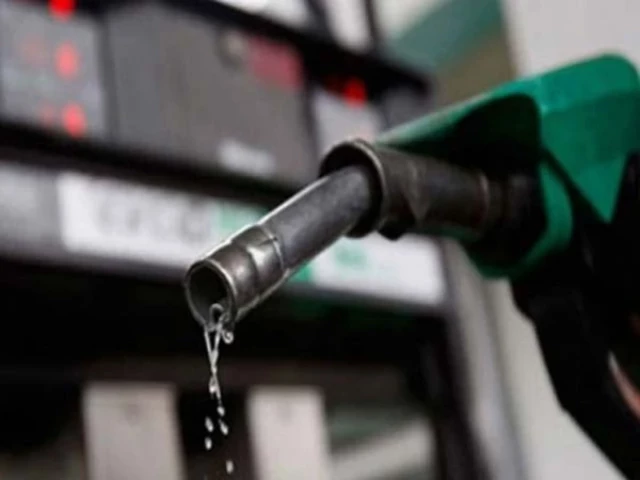
Airfare hasn’t been this high since May 2022, when airlines stumbled out of the pandemic with aircraft and employee shortages to face hordes of consumers ready for “revenge travel.” Gasoline is above $4 a gallon and could get closer to $5 a gallon this summer, AAA warned this week.
Jet fuel prices doubled in the span of less than three months this year after the U.S. and Israel attacked Iran, kicking off a conflict that has left a key shipping channel effectively closed.
Domestic round-trip airfares in April averaged $623, the highest in nearly four years, according to data from the Airlines Reporting Corporation, which tracks travel agency ticket sales. Jet fuel is the second-biggest expense for airlines after labor, and carriers say they are increasingly passing those costs along to customers.
Separately, airlines are also trimming their growth plans because of higher fuel costs. Even if a route isn’t cut, fewer flights on certain routes means that customers will have fewer seats to choose from and, with demand robust, that could drive up prices even more.
Spirit Airlines, the most famous budget carrier in the U.S., shut down earlier this month, and partially blamed jet fuel prices for its failure to emerge from near back-to-back bankruptcies. It was the biggest U.S. airline collapse in decades. Other airlines swooped in to snatch up those customers in the aftermath, but the carrier’s demise removes a main purveyor of low fares.
The fuel spikes have set the stage for higher fares and more expensive gas station visits this summer. The start of the peak travel season Memorial Day weekend will be a taste of how much travelers will shell out to fly while everything from groceries to clothing has become more expensive this year.
The Transportation Security Administration said it expects to screen 18.3 million people between Thursday and next Wednesday, compared with the 18.5 million it saw over a similar period last year.
Lackluster road trip growth
Road trips won’t be a bargain either. AAA this week forecast 39.1 million people will drive at least 50 miles between Thursday and Monday, up just 0.1% compared with last Memorial Day weekend. That was the least growth in a decade, AAA told CNBC.
Gasoline price site GasBuddy forecast this week that prices across the U.S. will average $4.48 on Memorial Day, up from $3.14 last year, and that prices could average $4.80 through Labor Day “if the Strait of Hormuz remains closed for a significant portion of the summer.”
A customer fills his vehicle with fuel at a gas station in Miami, April 13, 2026.
Joe Raedle | Getty Images
Still flying
Leisure travel intentions in the U.S. were slightly lower in March — at 82.8% compared with 83.1% the same month a year earlier — though they are still relatively high, UBS said in a note Monday.
“We believe the year-over-year moderation in travel intentions this year was likely due to higher jet fuel and other geopolitical concerns,” UBS airline analyst Atul Maheswari wrote. He added that the intent to travel is near the highest points in the past nine years.
So far, airline executives said, customers are still booking, and executives are optimistic about the summer travel season. They’ve also said they’re expecting a boost from the FIFA World Cup, which will be held in June and July in the U.S., Canada and Mexico, and from major concerts such as Harry Styles’ residencies in Amsterdam and London this summer.
United Airlines said it expects to carry 53 million travelers between June and August, up 3 million people from last year. American Airlines has forecast 75 million customers between May 21 and Sept. 8, after Labor Day, topping its previous record, in 2019.
Refueling trucks at LaGuardia Airport in New York, April 23, 2026.
Zhang Fengguo | Xinhua News Agency | Getty Images
‘What are you waiting for?’
Airlines have been pruning their schedules and axing unprofitable or less profitable routes but have been eager to fill in the gaps after Spirit’s collapse.
Travelers can still find deals if they’re flexible, said Kyle Potter, who runs the Thrifty Traveler website. He recommended using tools such as the “Explorer” tool in Google Flights that allows users to look up destinations by the length of trip and by month in a map view.
He also suggested flyers consider traveling on a Tuesday or Wednesday, when fares and traffic are often lower.
“That, in many cases, can save you hundreds of dollars per ticket, and multiply that by a family of four,” he said.
He had a simple message for travelers sitting on piles of frequent flyer miles.
“Now is the time to use your miles or your credit card points or both,” he said, warning that miles can end up devalued. “What are you waiting for? I think a lot of people hoard their miles because they want to go to to Europe in 2027.”
— CNBC’s Contessa Brewer contributed to this report.
Business
‘Potential to diversify’: US state secretary Rubio pushes for US energy supplies to India in meeting with PM Modi

US Secretary of State Marco Rubio emphasised Washington’s intent to prevent geopolitical disruptions from distorting global energy markets, as tensions linked to the Iran conflict continue to affect oil supply routes and pricing dynamics.During discussions on energy security, Rubio’s office, quoted by Reuters, stressed that the US sees energy exports as a key instrument in strengthening partnerships, particularly with India, which remains a major crude importer navigating supply diversification challenges.In that context, Rubio said, “US energy products have the potential to diversify India’s energy supply.” He also emphasized a broader US position on global energy stability amid the Iran-related crisis, with his office adding, “the United States will not let Iran hold the global energy market hostage.”The remarks come as the Iran war has disrupted global energy flows and contributed to volatility in oil markets, complicating efforts by Washington to reduce India’s reliance on Russian crude imports. The instability has added a new layer of complexity to US energy diplomacy in Asia, where supply security has become increasingly central to strategic engagement.Officials indicated that the ripple effects of the conflict have not only impacted global pricing but also slowed parts of Washington’s broader effort to realign energy trade flows away from sanctioned or high-risk suppliers.Rubio’s comments were made alongside broader engagement in New Delhi, where he met Indian leadership to discuss energy cooperation, trade expansion under the “Mission 500” framework, and Indo-Pacific strategic alignment through the Quad.In earlier public remarks, Rubio had also signalled a more aggressive US commercial energy posture toward India, saying, “We want to sell them as much energy as they’ll buy.”Separately, he reiterated India’s importance in Washington’s strategic outlook, describing it as a key partner in shaping long-term regional stability while the US continues to manage the economic and geopolitical spillovers of the Iran conflict.


PET prices decline after April peak amid weak polyester operating rate

Georgia’s apparel imports expand as post-war spending strengthens

NASCAR’s Truck Series and O’Reilly Autoparts Series honor Kyle Busch with moments of silence at Charlotte

-

 Entertainment1 week ago
Where Pete Davidson, Elsie Hewitt stand after breakup: Details revealed
-

 Politics1 week ago
Rising diesel costs from Iran war strain US school budgets
-

 Entertainment1 week ago
Drake drops highly anticipated "Iceman" album, plus two surprise albums
-

 Tech1 week ago
Greg Brockman Officially Takes Control of OpenAI’s Products in Latest Shakeup
-

 Tech7 days ago
Why Is Your Grill So Dumb? The Best Grills Set Temp Like an Oven
-
 Business1 week ago
UK borrowing costs rise and pound falls as leadership drama continues
-

 Tech7 days ago
This Solar-Powered Smart Sprinkler Keeps My Lawn Watered Without Any Power Cables
-

 Fashion1 week ago
RMG trade bodies seek policy support from Bangladesh PM