

Business
Oil Prices Likely To Fall Later This Year As Global Supply Expands: Signum’s Charles Myers

Last Updated:
‘Because the US now controls Venezuela essentially, and which means the US has unfettered 100% access to the biggest oil reserves in the world,’ chairman of Signum Global Advisors.




Easing geopolitical tensions later this year could unlock additional oil supply from multiple regions, says Charles Myers, Chairman of Signum Global Advisors.
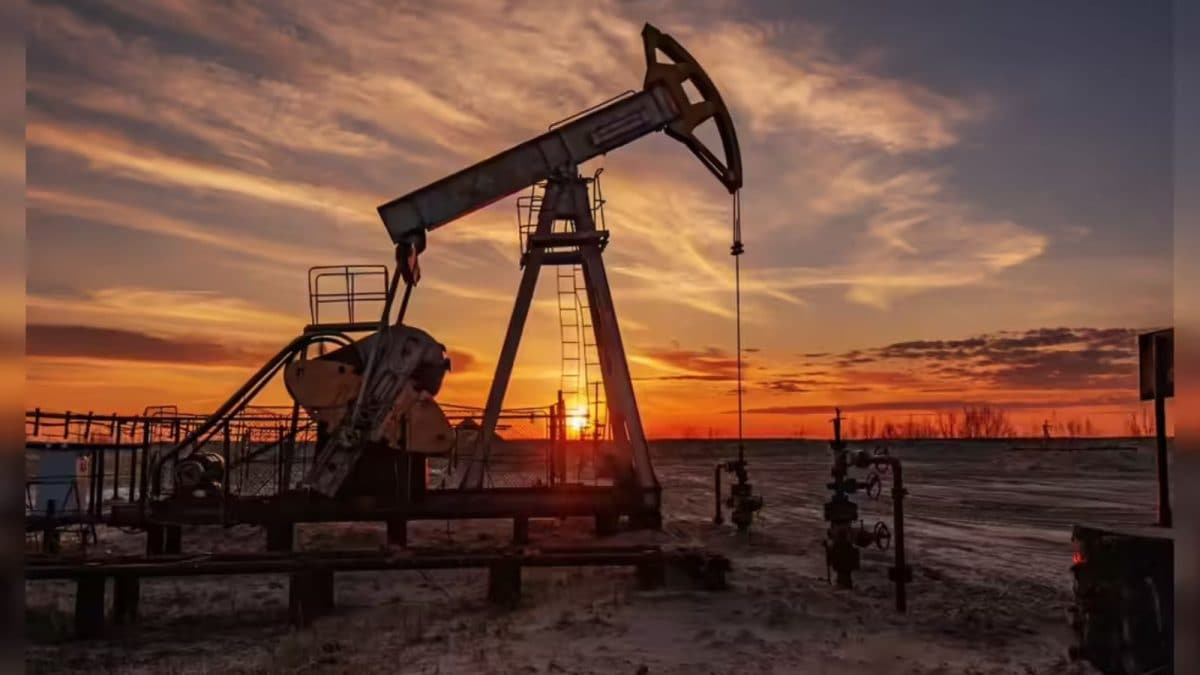
Global oil prices could decline significantly later this year as additional supply enters the market from countries such as Venezuela, Iran and Russia, according to Charles Myers, Chairman of Signum Global Advisors.
Speaking at the second edition of Moneycontrol’s Global Wealth Summit 2026, Myers said geopolitical developments could eventually lead to a surge in global oil supply.
“I say that because the United States now controls Venezuela essentially, and which means the United States has unfettered 100% access to the biggest oil reserves in the world. The oil output from Venezuela will increase much faster than most assessments,” he said.
More supply from Venezuela, Iran and Russia
Myers said easing geopolitical tensions later this year could unlock additional oil supply from multiple regions.
He noted that Venezuela, which holds the world’s largest proven oil reserves, could play a key role in boosting global supply if production ramps up quickly.
According to him, improved relations with Iran and the possibility of a renewed nuclear deal could allow Tehran to export more oil legally. A potential ceasefire in the Ukraine war could also bring more Russian oil back to global markets.
He added that strong investor interest in Venezuela’s energy sector has prompted a visit to Caracas with 55 clients in the coming days.
Myers argued that global oil supplies are already ample and that resolving geopolitical conflicts would help ensure a more stable and secure flow of energy worldwide.
Israel-Iran war
Commenting on the ongoing Middle East conflict, Myers said he believes the outcome of the war involving the United States, Israel and Iran is inevitable.
“The US today is at war, it is a very big deal. There is only one outcome of this war that Iran will lose. I say that factually, at the end of the day, Iran is up against the two most powerful, battle tested, sophisticated militaries in the world,” he said.
He added that the United States military would eventually control the Strait of Hormuz, ensuring the continued flow of oil through the critical global shipping route.
The United States military will occupy the Strait of Hormuz and the oil will flow again. “Though the war might not end,” he said.
The remarks come as tensions in the Middle East continue to escalate. Iran recently warned it could reduce US-linked oil facilities to “a pile of ashes” after US President Donald Trump said Washington could “wipe out” Iran’s largest oil export terminal on Kharg Island. Since the United States and Israel launched hostilities on February 28, waves of missile, drone and air strikes have reportedly displaced millions and killed more than 1,200 people in Iran.
March 14, 2026, 12:22 IST
Read More





Business
Middle East turmoil: After IndiGo and Air India, now Akasa Air to levy fuel surcharge – check details – The Times of India

Akasa Air on Saturday announced that it will introduce a fuel surcharge ranging from Rs 199 to Rs 1,300 on domestic and international flight tickets booked from March 15, citing a sharp rise in aviation turbine fuel (ATF) prices amid escalating geopolitical tensions in the Middle East.In a post on X, the airline said the surcharge will apply to all bookings made from 00:01 hrs on March 15, 2026, and will not be applicable to tickets booked before that time. The airline said the additional charge will be levied per sector and will vary depending on the duration of the flight.
Akasa cites sharp rise in ATF prices
“There has been a significant increase in the price of aviation turbine fuel, driven by evolving geopolitical developments in the Middle East,” Akasa Air said in its statement.“As fuel represents a significant portion of airline operating costs, this impacts the cost of operations across the aviation industry,” it added.The airline said it remains focused on offering “warm and efficient customer service, reliable operations, and affordable fares while maintaining the highest standards of operational efficiency”, and added that it will continue to monitor the operating environment and review the fuel surcharge periodically.
Move follows Air India, IndiGo fare actions
Akasa’s decision comes after larger Indian carriers Air India Group and IndiGo also moved to pass on part of the fuel cost burden to passengers.Earlier, IndiGo said it will levy an additional fuel charge of Rs 425 to Rs 2,300 on all new domestic and international bookings made from 00:01 hrs on March 14, citing “the significant surge in fuel prices following the ongoing geopolitical issues”.IndiGo said IATA’s jet fuel monitor showed an over 85% rise in fuel prices for the region, adding that ATF represents a major share of airline operating costs.Air India Group had earlier introduced a fuel surcharge ranging from Rs 399 to $200 on flights beginning Thursday, saying that without the move, some services may not cover operating costs and could face cancellation.
Middle East conflict driving fuel cost pressure
The latest surcharge announcements come as the widening conflict in the Middle East continues to disrupt global oil supplies and push up jet fuel prices worldwide.Attacks on commercial shipping and oil infrastructure in the Gulf region, along with disruption through the Strait of Hormuz, have tightened supplies and driven a steep increase in fuel prices. Airlines are also facing added operational costs due to airspace restrictions and longer rerouted flights, which burn more fuel.Industry experts said long-haul international routes are likely to feel the greatest impact, though domestic fares may also remain under pressure if fuel prices stay elevated.With Akasa now joining Air India Group and IndiGo, Indian flyers are set to face higher ticket costs across more carriers as airlines respond to the sustained spike in fuel expenses.
Business
Meta Layoffs 2026: Tech Giant Plans To Sack 16,000 Employees Amid Massive AI Spending Push, Says Report

Last Updated:
Meta Layoffs 2026: Over the past year, Mark Zuckerberg has been pushing the company to compete aggressively in the generative AI race.
Mark Zuckerberg announced a major restructuring during the “year of efficiency” in 2022 and early 2023.
Meta Layoffs 2026: US-based tech giant Meta is planning extensive layoffs that could affect 20% or more of its workforce, which is nearly 16,000 employees, as the company looks to offset the rising cost of artificial intelligence (AI) infrastructure and improve efficiency through AI-assisted operations, according to a Reuters report.
However, the report said that no timeline has been finalised for the potential job cuts and the scale of layoffs is still under discussion.
According to the report citing people familiar with the matter, senior executives have recently signalled the plans to other leaders and asked them to begin preparing for workforce reductions.
Responding to queries, Meta spokesperson Andy Stone said: “This is speculative reporting about theoretical approaches.”
Layoffs could affect nearly 16,000 employees
Meta had nearly 79,000 employees as of December 31, according to the company’s latest regulatory filing.
If the company proceeds with a 20% reduction, the layoffs could impact around 16,000 workers. That would make it the largest workforce reduction at the company since Mark Zuckerberg announced a major restructuring during the “year of efficiency” in 2022 and early 2023.
Meta had laid off about 11,000 employees in November 2022, roughly 13% of its workforce at the time. Around four months later, the company announced another round of job cuts affecting nearly 10,000 employees.
Massive push into generative AI
Over the past year, Zuckerberg has been pushing the company to compete aggressively in the generative AI race.
Meta has been offering lucrative compensation packages — some reportedly worth hundreds of millions of dollars over four years — to attract top AI researchers to its newly created superintelligence team.
The company has also said it plans to invest as much as $600 billion to build data centre infrastructure by 2028 to support its AI ambitions.
Earlier this week, Meta acquired Moltbook, a social networking platform designed for AI agents. The company is also reportedly spending at least $2 billion to acquire a Chinese artificial intelligence startup called Manus.
Zuckerberg has also hinted that AI could significantly improve productivity. In January, he said he was already seeing “projects that used to require big teams now be accomplished by a single very talented person.”
AI setbacks and new model plans
Meta’s aggressive AI push follows setbacks with its Llama 4 models last year. The company faced criticism for providing misleading benchmark results for early versions of the model.
It also shelved the release of the largest version of the model, called Behemoth, which had been expected to launch in the summer.
Meta’s superintelligence team is now working on a new model called Avocado to improve its AI capabilities, although the performance of the system has reportedly fallen short of expectations so far, delaying its release.
In January, Amazon confirmed it would cut about 16,000 jobs, representing nearly 10% of its workforce.
Last month, fintech company Block also slashed nearly half of its staff, with CEO Jack Dorsey explicitly pointing to advances in AI tools that allow companies to operate with smaller teams.
March 14, 2026, 08:13 IST
Read More

Last Updated:
The drop in reserves came amid heavy dollar sales by RBI as it sought to support the rupee against pressure triggered by the Iran war and the sharp rise in global crude oil prices.
India’s Latest Forex Reserves.
India’s foreign exchange (forex) reserves declined sharply by $11.68 billion to $716.81 billion in the week ended March 6, according to the latest data from the Reserve Bank of India (RBI). The fall comes after the country’s reserves had touched an all-time high of $728.49 billion in the previous reporting week.
The latest decline was driven by a combination of RBI intervention in the currency market and valuation losses arising from global currency movements, analysts said.
RBI likely sold dollars to support rupee
The drop in reserves came amid heavy dollar sales by the central bank as it sought to support the rupee against pressure triggered by the Iran war and the sharp rise in global crude oil prices. A strengthening US dollar and rising US bond yields also weighed on reserve levels.
According to Gaura Sen Gupta, economist at IDFC FIRST Bank, the decline reflects net dollar sales of about $6.1 billion by the RBI along with valuation losses of roughly $5.4 billion.
“The RBI sterilised the liquidity impact of the dollar sales through on-screen bond purchases,” she said, according to Reuters.
Foreign currency assets lead the decline
Foreign currency assets (FCA), the largest component of the reserves, fell by $9.88 billion to $563.25 billion during the week under review.
Changes in FCA, expressed in dollar terms, include the impact of appreciation or depreciation of non-US currencies such as the euro, pound and yen that are held in the forex reserves.
Gold reserves also fall
The value of India’s gold reserves declined by $1.61 billion to $130.02 billion during the reporting week, the RBI data showed.
Meanwhile, Special Drawing Rights (SDRs) with the International Monetary Fund (IMF) fell by $146 million to $18.72 billion.
India’s reserve position with the IMF also declined by $45 million to $4.83 billion during the week.
Despite the latest decline, India continues to hold one of the world’s largest forex reserve buffers, which provides a cushion against external shocks and helps the central bank manage volatility in the rupee.
March 14, 2026, 07:55 IST
Read More

Middle East turmoil: After IndiGo and Air India, now Akasa Air to levy fuel surcharge – check details – The Times of India

King Willem Alexander reveals unexpected change in flying career

11 Indian nationals charged in US visa fraud conspiracy

-

 Politics1 week ago
India let Iran warship dock the day US sank another off Sri Lanka, say officials
-

 Sports1 week ago
Pakistan set for FIH Pro League debut | The Express Tribune
-
 Business1 week ago
Restaurant group changes name after bid to buys pubs across the UK
-

 Entertainment7 days ago
Harry Styles kicks off new era with ‘One Night Only’ comeback show
-

 Sports1 week ago
Winners and losers of the 2026 NHL trade deadline
-
 Business1 week ago
Home heating oil: ‘Most of my pension has gone on home heating oil’
-
 Business2 days ago
Stock market crash today (March 12, 2026): Nifty50 opens below 23,600; BSE Sensex down over 900 points on continuing US-Iran war – The Times of India
-

 Entertainment1 week ago
Kanye ‘Ye’ West trips during trial: ‘Is he asleep?’