

Politics
One dead in shooting near mosque in Sweden

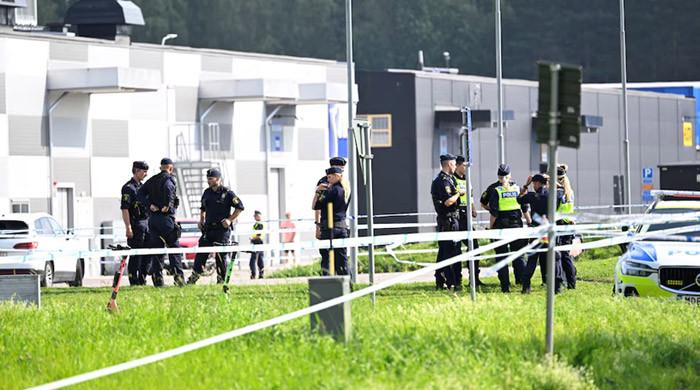
- Second person injured as shots fired outside mosque.
- Police continue search for gunman after Friday attack.
- Witness reports four to five shots fired rapidly.
One person was killed and another wounded Friday in a shooting near a mosque in southern Sweden, an attack police said they believed was linked to feuding organised crime gangs.
Local media quoted witnesses as saying at least one person was shot as he left the mosque in the town of Orebro, about 200 kilometres west of Stockholm.
Police said in a statement that a man “around the age of 25 died as a result of the wounds he suffered”. The condition of the second person was not disclosed.
Police provided no details about the deceased’s identity or the circumstances of the shooting, and urged the public to stay away from the scene as their search for the shooter continued several hours after the incident.
“We are currently actively pursuing the perpetrator or perpetrators,” police spokesman Anders Dahlman told AFP.
“We are interviewing witnesses and carrying out our technical investigation,” he said.
The shooting occurred as people were leaving the mosque after Friday prayers, sparking panic as people ran from the scene, local media reported.
One witness told Swedish public broadcaster SVT that he was standing just a few metres (yards) away from one of the men who was shot.
“He was on his way out of the mosque. Then another man came up and fired four, five shots,” said the witness, whose name was not disclosed.
Organised crime link
In a statement, police said they believed the incident was linked to Sweden’s “criminal network milieu”.
Police spokesman Lars Hedelin told daily Aftonbladet the shooting was likely an “isolated incident” and not directed at the mosque itself.
Police said initially they had opened a preliminary investigation into attempted murder, which was changed to murder after the man’s death.
The Scandinavian country, once known for its low crime rates, has struggled for years to rein in organised crime.
Criminal networks are involved in drug and arms trafficking, and welfare fraud, with regular shootings and bombings plaguing the country in recent years.
Police say the leaders of the criminal networks increasingly operate from abroad. They orchestrate murders and attacks via social media, often recruiting young children under the age of criminal responsibility to carry out the attacks.
According to the global database Statista, Sweden had the third-highest number of homicides involving firearms per 100,000 inhabitants in Europe in 2022, behind Montenegro and Albania.
Data from Sweden’s National Council for Crime Prevention show that while shootings have declined since the peak year 2022, the number of explosions has increased.
The town of Orebro was the scene of a school shooting in February in which 11 people were killed, including the perpetrator.
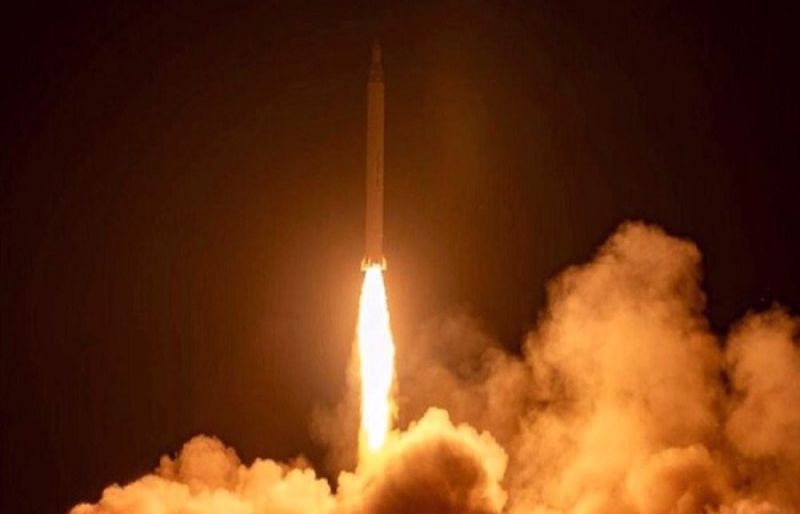

The Iranian armed forces have started a new wave of extensive drone and missile attacks on targets in the Israeli-occupied territories and US assets in regional countries.
A late Monday statement from the Islamic Revolution Guards Corps (IRGC) said that the 11th wave of offensive attacks under Operation True Promise 4 had been launched by the naval and aerospace units of the elite force.
The statement said the “extensive and high-density operation” had targeted American intelligence centers and military support warehouses in the Persian Gulf region, the Israeli communications industries complex in the occupied city of Beersheba, as well as 20 locations in the occupied regions of Tel Aviv, West al-Quds, and Galilee.
It said the “brave sons of Iran’s armed forces” had used more than 700 drones and hundreds of missiles to hit 60 strategic targets and 500 military locations linked to the United States and the Israeli regime since the start of the US-Israeli aggression on Iran on Saturday.
The statement said the number of missiles and drones and the success rate of the attacks had far outpaced records seen during the 12-day war with Israel and the US in June 2025.
The IRGC said recent “brutal and terrorist” attacks on Iran that targeted citizens in hospitals, schools, and offices of the national media service (IRIB) had further strengthened their resolve and determination to pursue an all-out war against the enemies.
The IRGC has been carrying out retaliatory attacks on US military assets across the region and on targets in the Israeli-occupied territories since Saturday, when the US and Israel started the unprovoked war of aggression against Iran and assassinated Leader of the Islamic Revolution Ayatollah Seyyed Ali Khamenei.
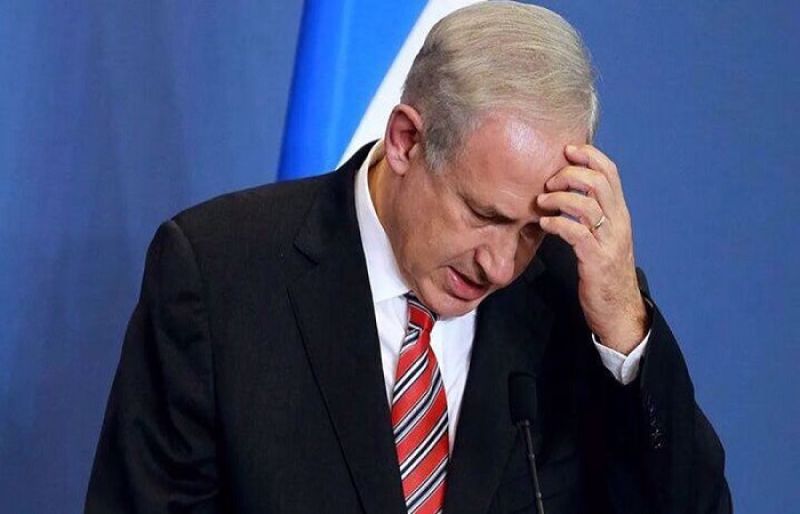

The Islamic Revolution Guards Corps (IRGC) says the fate of Israeli prime minister Benjamin Netanyahu is uncertain following “purposeful and surprise” attacks on his office and the residence of the regime’s air force commander.
In a statement on Monday, the IRGC said Iranian Armed Forces heavily attacked the office of Israel’s criminal prime minister and the residence of commander of the Israeli air force.
They were hit during “purposeful and surprise” attacks by Kheybar missiles, the elite force stated.
According to the statement, the 10th phase of Iran’s successful missile attacks on occupied territories focuses on the Israeli regime’s premises.
The IRGC said it would later announce the achievements of the attacks and provide further information.
The United States and Israel launched a joint war of aggression against Iran early on Saturday, assassinating Leader of the Islamic Revolution Ayatollah Seyyed Ali Khamenei and several senior military commanders before attacking military and civilian sites across the country.
Iranian armed forces have responded with massive missile and drone strikes, hitting strategic targets deep inside the Israeli-occupied territories as well as American military bases scattered across the region.
Iranian authorities say the retaliatory attacks will continue as long as necessary and that it will be the Islamic Republic that will decide when and how the war will end.
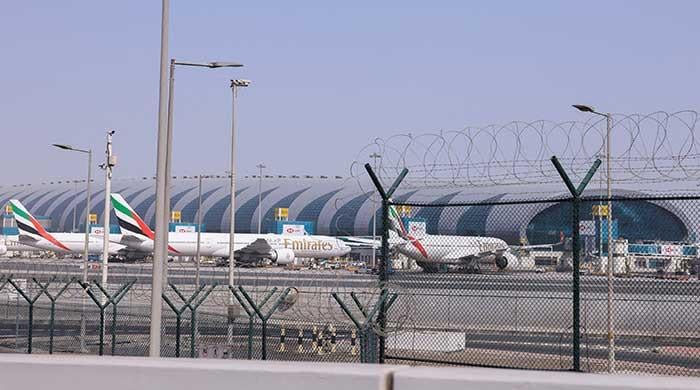
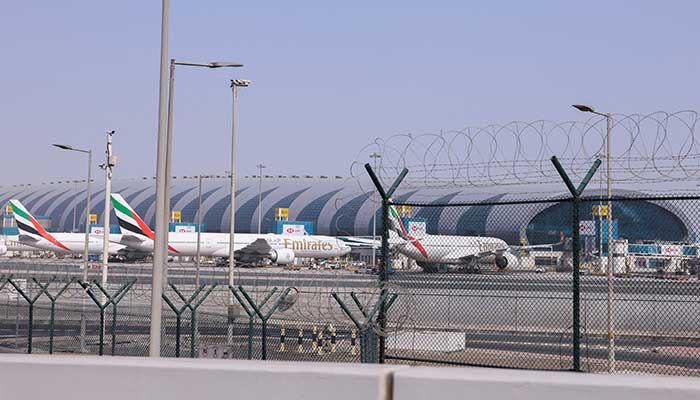
- Emirates, flydubai to restart limited flights from today.
- Etihad Airways announces resuming flights on Tuesday.
- Iran strikes targeted Gulf airports, airspace remains restricted.
Dubai Airports said “limited” flights would resume on Monday evening, three days after they were cancelled as Iran began striking targets in the Gulf, including Dubai and Abu Dhabi airports.
Global air travel remained in severe disarray since Sunday as sustained air strikes forced the closure of major Middle Eastern airports, including Dubai — the world’s busiest international transit hub — in one of the most significant aviation disruptions in recent years.
Transit gateways such as Dubai and Abu Dhabi in the United Arab Emirates, as well as Doha in Qatar, were either shut down or operating under heavy restrictions, with large sections of regional airspace closed.
The disruption followed US and Israeli strikes that reportedly killed Iranian Supreme Leader Ayatollah Ali Khamenei on Saturday, plunging the Gulf into heightened uncertainty.
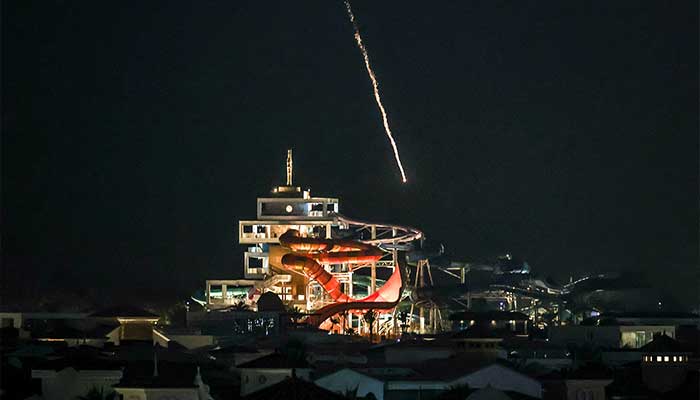
A fresh wave of attacks extended into a third consecutive day, deepening concerns over regional stability and prolonging the paralysis of air traffic.
“Dubai Airports announces a limited resumption of flights from Dubai International Airport (DXB) and Dubai World Central – Al Maktoum International Airport (DWC) starting this evening, Monday, March 2, 2026,” it said in a statement.
Emirates and low-cost carrier flydubai both said they would resume some flights on Monday evening.
In a post on X, Emirates, one of the UAE’s flag carriers, said it would prioritise passengers with existing bookings. Travellers rebooked on the limited services will be contacted directly by Emirates.
All other flights remain suspended until further notice, the airline said, urging passengers not to travel to the airport unless formally notified. It added that operations will be adjusted in line with developments on the ground.
Eihad Airways, which operates flights from Abu Dhabi, said it would resume flights on Tuesday.
Iran’s unprecedented bombardment in the Gulf states has hit military bases but also civilian infrastructure such as residential buildings, hotels, airports and sea ports, rattling a region long seen as a refuge from Middle East conflict.
Since Iran launched its campaign on Saturday, Dubai, Abu Dhabi, Kuwait and Manama airports were targeted.
Authorities reported one death in the Emirati capital Abu Dhabi in the “incident” at the facility.
On Saturday, the UAE announced it had closed its airspace “temporarily and partially” as an exceptional precautionary measure.
Dubai’s main airport (DXB) ranks as the second-busiest worldwide, behind Atlanta in the United States, according to Airports Council International.
The airspace closures hit a vital sector for the city, with Dubai’s air industry accounting for about a third of the emirate’s economy.

[CinePlex360] Please moderate: “Chinese company

Colorado opts to practice, mourn death of Dominiq Ponder
[CinePlex360] Please moderate: “China warns Jap

-
 Business6 days ago
Households set for lower energy bills amid price cap shake-up
-
 Entertainment1 week ago
Talking minerals and megawatts
-

 Politics5 days ago
What are Iran’s ballistic missile capabilities?
-

 Sports1 week ago
Eileen Gu comments on Alysa Liu’s historic gold medal
-
 Business6 days ago
Lucid widely misses earnings expectations, forecasts continued EV growth in 2026
-

 Sports1 week ago
South Africa thrash India by 76 runs in T20 World Cup Super 8 – SUCH TV
-
 Business1 week ago
Govt to return unclaimed EPFO deposits, expand scholarships for unorganised workers’ children – The Times of India
-
 Business1 week ago
Haryana Govt bars IDFC First Bank, AU Small Finance Bank over alleged Rs 590 crore fraud