

Tech
Ordnance Survey works with Snowflake to tackle flood risk | Computer Weekly

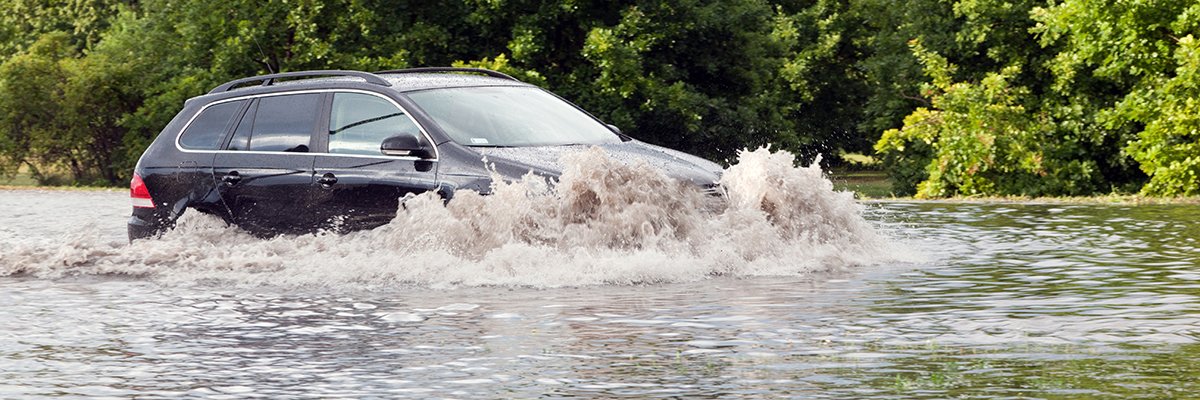
Ordnance Survey (OS) has worked with Snowflake to develop Intelligent Flood Readiness, an artificial intelligence (AI)-powered data model for assessing the impact of flooding. The model has identified that 1.2 million in England are at risk of falling outside flood protection measures, many in some of the most deprived parts of the country.
The model’s main use is in policymaking, where it is able to support analysis of more granular data instead of treating wide, geographic areas as homogenous when assessing flood risk and remediation. According to Snowflake and OS, policymakers could use the model to identify plans for period properties with basements, for example, and apply that protocol to areas where these properties are shown to exist. It also offers policymakers the ability to assess clusters of vulnerability, especially when these areas straddle arbitrary boundaries such as local authorities or flood risk management plan (FRMP) zones.
The model combines OS’s buildings data with a range of government data and current FRMPs. It combines six entirely separate, critical data streams into a single, shared “structural intelligence” layer.
The initial analysis involved bringing together OS’s building datasets with the Indices of Deprivation in England. Snowflake and OS said the model was able to identify where physical vulnerability (building height and type) intersects with social risk. This was then layered against Environment Agency (EA) flood data, the EA’s Rivers and Sea defended and undefended flood risk extents, and an AI-driven text analysis of over 3,000 pages of statutory FRMP documents.
Snowflake and OS said the model estimated that up to 68% of the buildings identified could be highly vulnerable to the after-effects of flooding – at elevated flood risk, but also located in deprived areas and potentially lacking the resources and social infrastructure to help recover quickly. A contributory factor is likely to be that as much as 84% of these undefended buildings pre-date 2001 – before legislation ensured flood risk was factored into planning permissions.
Yorkshire and the Humber region were idenified by the model as having some of the highest concentrations of vulnerable, undefended properties.
Additionally, the analysis based on the model suggests that 15% of the at-risk premises date from before 1919, and 23% from 1919 to 1959, so were potentially built before their location became a flood risk – underlining just how dynamic England’s natural and built environment is, as captured by OS’s geospatial data.
Tim Chilton, managing geospatial consultant at OS, said: “Ordnance Survey is excited to collaborate with Snowflake to develop an innovative AI model that could help Local Authorities better understand, plan for and manage floods.
“Built on OS’s authoritative and trusted geospatial data and developed using Snowflake’s technology, the model provides insights into how well areas and properties are protected and where to prioritise investment in critical flood defences,” he added.
“By delivering geospatial intelligence difficult to derive manually, decision-makers can access data-driven, actionable insights – without the burden of analysing endless spreadsheets. The model maps vulnerable zones and identifies areas at greatest risk, helping local government shape policy, direct resources and safeguard communities.”
The data also suggests that 85% of at-risk, undefended buildings are vulnerable to surface water flooding, rather than river or coastal flooding. Snowflake and OS said this implies that high-density, multi-unit residential buildings may account for more at-risk households than those in more obviously threatened seafront or riverside locations.
Fawad Qureshi, global field chief technology officer at Snowflake, said: “Data is at the heart of making informed decisions. As this project shows, it’s rare that one body holds all the relevant data or that this data is in the same format. But we’re now in an era where technology can bring together the right people and the right data to collaborate on making better-informed decisions.”
Such data could be used, for instance, to assess surface water infrastructure investment such as better drainage, given that most properties are at risk from surface water flooding.

Having demonstrated that it has the operational capability to transport humans safely to the moon and back, the United States is moving on to its next major aim: It wants nuclear reactors in orbit and on the lunar surface by 2030. For such a feat, the National Aeronautics and Space Administration will have to work in conjunction with the Department of Defense and the Department of Energy.
In a post on X, the White House Office of Science and Technology Policy (OSTP) unveiled a document with new guidelines for federal agencies to establish the space nuclear technology road map for the coming years. This, they say, will ensure “US space superiority.”
At present, space instruments use solar power to operate. However, this is considered impractical for more complex purposes. Although technically there is always sunlight, the power is intermittent and almost always requires bulky batteries to store it.
Reactors produce fairly continuous energy for years through nuclear fission. They can also be used for so-called nuclear electric propulsion. Continuous output makes them the most viable option for lunar base subsistence, but they can also allow spacecraft to undertake long or complex missions without worrying about depleting a limited supply of chemical fuel.
Nuclear technology, in short, makes it possible to go farther, with more payload, for longer, and with fewer constraints.
According to the memorandum, the US goal is to put a medium-power reactor in orbit by 2028, with a variant designed for nuclear electric propulsion, and a first functional large reactor on the surface of the moon by 2030. To achieve this, both NASA and the Pentagon will develop energy technologies in parallel, using the current strategy of competition among contractors.
The reactors will have to be modular and scalable, and will have to include applications for both future life on the moon and space propulsion. For its part, the DOE will have to ensure that these projects have the fuel, infrastructure, and safety features necessary to achieve their objectives. In addition, the agency will evaluate whether the industry has the capacity to produce up to four reactors in five years.
The plan contemplates technologies that produce at least 20 kilowatts of electricity (kWe) for three years in orbit and at least five years on the lunar surface. In the meantime, they should have a design capable of raising power to 100 kWe. The first designs should arrive within a year.
Finally, the order tasks the OSTP with creating a road map for the initiative, noting obstacles and recommendations for addressing them.
“Nuclear power in space will give us the sustained electricity, heating, and propulsion essential to a permanent presence on the moon, Mars, and beyond,” OSTP posted. For his part, NASA administrator Jared Isaacman posted, “The time has come for America to get underway on nuclear power in space.” The message was followed by an emoji of a US flag.
The plan provides a common framework for each agency to work within. In the background, the race for space infrastructure is evidence of technological competition with China, which is also seeking advanced energy capabilities for the moon.
This story originally appeared in WIRED en Español and has been translated from Spanish.

Nvidia is the undisputed king of AI chips. But thanks to the AI it helped build, the champ could soon face growing competition.
Modern AI runs on Nvidia designs, a dynamic that has propelled the company to a market cap of well over $4 trillion. Each new generation of Nvidia chip allows companies to train more powerful AI models using hundreds or thousands of processors networked together inside vast data centers. One reason for Nvidia’s success is that it provides software to help program each new generation of chip. That may soon not be such a differentiated skill.
A startup called Wafer is training AI models to do one of the most difficult and important jobs in AI—optimizing code so that it runs as efficiently as possible on a particular silicon chip.
Emilio Andere, cofounder and CEO of Wafer, says the company performs reinforcement learning on open source models to teach them to write kernel code, or software that interacts directly with hardware in an operating system. Andere says Wafer also adds “agentic harnesses” to existing coding models like Anthropic’s Claude and OpenAI’s GPT to soup up their ability to write code that runs directly on chips.
Many prominent tech companies now have their own chips. Apple and others have for years used custom silicon to improve the performance and the efficiency of software running on laptops, tablets, and smartphones. At the other end of the scale, companies like Google and Amazon mint their own silicon to improve the performance of their cloud-computing platforms. Meta recently said it would deploy 1 gigawatt of compute capacity with a new chip developed with Broadcom. Deploying custom silicon also involves writing a lot of code so that it runs smoothly and efficiently on the new processor.
Wafer is working with companies including AMD and Amazon to help optimize software to run efficiently on their hardware. The startup has so far raised $4 million in seed funding from Google’s Jeff Dean, Wojciech Zaremba of OpenAI, and others.
Andere believes that his company’s AI-led approach has the potential to challenge Nvidia’s dominance. A number of high-end chips now offer similar raw floating point performance—a key industry benchmark of a chip’s ability to perform simple calculations—to Nvidia’s best silicon.
“The best AMD hardware, the best [Amazon] Trainium hardware, the best [Google] TPUs, give you the same theoretical flops to Nvidia GPUs,” Andere told me recently. “We want to maximize intelligence per watt.”
Performance engineers with the skill needed to optimize code to run reliably and efficiently on these chips are expensive and in high demand, Andere says, while Nvidia’s software ecosystem makes it easier to write and maintain code for its chips. That makes it hard for even the biggest tech companies to go it alone.
When Anthropic partnered with Amazon to build its AI models on Trainium, for instance, it had to rewrite its model’s code from scratch to make it run as efficiently as possible on the hardware, Andere says.
Of course, Anthropic’s Claude is now one of many AI models that are now superhuman at writing code. So Andere reckons it may not be long before AI starts consuming Nvidia software advantage.
“The moat lives in the programmability of the chip,” Andere says in reference to the libraries and software tools that make it easier to optimize code for Nvidia hardware. “I think it’s time to start rethinking whether that’s actually a strong moat.”
Besides making it easier to optimize code for different silicon, AI may soon make it easier to design chips themselves. Ricursive Intelligence, a startup founded by two ex-Google engineers, Azalia Mirhoseini and Anna Goldie, is developing new ways to design computer chips with artificial intelligence. If its technology takes off, a lot more companies could branch into chip design, creating custom silicon that runs their software more efficiently.

For months now, it seems that every day brings with it a new faction of MAGAworld getting angry with President Donald Trump over something he says or does.
In recent memory, to name a few, podcaster Joe Rogan has compared ICE raids to Gestapo operations; conspiracy theorist Alex Jones has questioned Trump’s cognitive abilities; former US representative Marjorie Taylor Greene claimed Trump had “gone insane;” former Fox News host Tucker Carlson called the president a “slave” to Israel; and conservative influencer Candace Owens claimed Trump belongs “to the Epstein class.”
Even on Truth Social, a social media platform created by Trump as a haven to post without any backlash, there is backlash. “What!?! You are way outta line,” a Truth Social account holder called CaliMAGA69 wrote in response to Trump’s recent criticism of Owens, Jones, Carlson, and former Fox News host Megyn Kelly as “low IQ” losers. “Most of these people, especially Alex Jones, have been your Day 1s!! You need to step back and take a good hard look at who is whispering in your ear. Get back to America 1st!!”
This week, MAGA Christians have raged at Trump, which reached fever pitch on Monday when he posted an AI-generated picture seemingly depicting himself as Jesus. Some of MAGA grew incensed, with multiple major conservative pundits and influencers debating whether or not this all meant Trump was the antichrist.
The pileup has only continued. White nationalist Nick Fuentes, who has long broken with Trump, posted on X a laundry list of complaints about the failures of the second Trump reign, including “regime change war with Iran” and “attacking the Catholic Church.”
Some MAGA conspiracy theorists are even abandoning Trump. Instead of discussing how the assassination attempt on Trump’s life in 2024 was a deep-state plot, some are now debating whether it even happened at all. “Where’s his scar today,” former pro wrestler and former Minnesota governor Jesse Ventura asked in an appearance on Piers Morgan’s show.
In what appears to be one of the biggest recent schisms in the Republican party, it’s not totally clear how much of the party is actually abandoning Trump—or if the events and criticisms of the past few months are nothing but a blip. The answer, it seems, is a little bit of both.
MAGA, the most powerful US political movement in recent decades, is not merely a political ideology; it is more akin to a cult of personality where supporters have generally been willing to back Trump no matter what he says. And there are still many willing to defend him: Over the weekend, former adviser Steve Bannon compared Trump to former presidents Abraham Lincoln and George Washington, claiming Trump will “return America to Her greatness.” Others have also spoken out in support.
But while key allies and outlets like Fox News remain loyal to the president, in recent years the right-wing media ecosystem has fractured. A new media landscape where figures like Carlson, Kelly, and Owens have huge audiences, and where their sound bites reach millions more on social media, is no longer willing to protect Trump no matter the cost.
As Dan Pfeiffer, a former adviser to President Barack Obama, notes in his latest newsletter, that’s a big problem for the GOP, especially when it comes to voters who may be wavering over their support for Trump and the GOP in the midterms.
“For these voters, the fact that the criticism is coming from Trump’s former allies matters a lot,” writes Pfeiffer. “When the criticism comes from someone with whom they share ideological affinity, it’s far more likely to land. One clip of Tucker Carlson attacking Trump is more effective than a thousand clips of Gavin Newsom, Hakeem Jeffries, or Pod Save America making the same point.”


Pakistan steps in as US enforces naval blockade on Iran

NASA Wants to Put Nuclear Reactors on the Moon

For cruise lines, Iran conflict and oil prices threaten to dent profits

-

 Fashion1 week ago
India’s exports face reset as EU links trade to carbon metrics: EY
-

 Entertainment1 week ago
Queen Elizabeth II emotional message for Archie, Lilibet sparks speculation
-

 Entertainment1 week ago
Lamar Odom shocking response to Khloé Kardashian account of his overdose
-

 Tech1 week ago
As the Strait of Hormuz Reopens, Global Shipping Will Take Months to Recover
-

 Tech1 week ago
Azure customers up in arms over ‘full’ UK South region | Computer Weekly
-

 Fashion1 week ago
CII submits 20-pt agenda to Indian govt to back firms hit by Iran war
-

 Tech6 days ago
This AI Button Wearable From Ex-Apple Engineers Looks Like an iPod Shuffle
-

 Politics5 days ago
Indian airlines hit hardest after Dubai limits foreign flights until May 31