

Sports
Overreactions, big questions from five wild-card games: Have the Patriots still not beat a good team?

-
Dan Graziano
-
Ben Solak
Close
Ben Solak
ESPN
- Ben Solak joined ESPN in 2024 as a national NFL analyst. He previously covered the NFL at The Ringer, Bleeding Green Nation and The Draft Network.
The NFL playoffs are officially underway. The Rams narrowly edged the Panthers, and the Bears took down the NFC North-rival Packers in a wild comeback. On Sunday, the Bills held off the Jaguars, the 49ers took down the defending champion Eagles and the Patriots won a low-scoring affair over the Chargers.
What are the main lessons and takeaways from each wild-card matchup, and what’s next for these teams? We asked national NFL reporter Dan Graziano and NFL analyst Ben Solak to help size up every matchup from the opening round and look forward from all angles. For each wild-card game, Solak is answering one big remaining question and Graziano is judging the legitimacy of one potential overreaction.
Let’s jump in, making sense of potential offensive changes for the Chargers and Eagles, the Bills’ Super Bowl window, the Jaguars’ rushing attack, Caleb Williams‘ growth and Bryce Young‘s future. And check back all weekend for more snap reactions as games happen.
Jump to:
LAC-NE | SF-PHI | BUF-JAX
GB-CHI | LAR-CAR



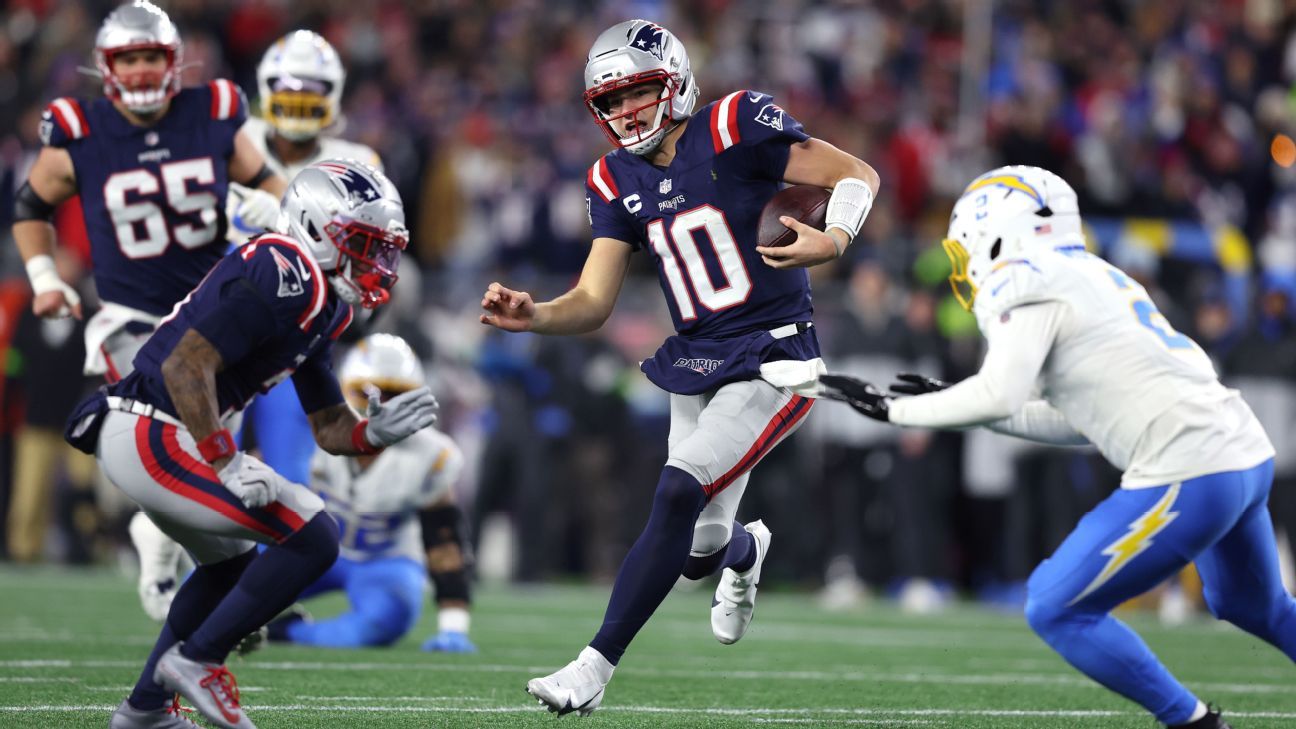
‘The Patriots STILL haven’t beaten anybody good!’ Overreaction?
No, not an overreaction. Oh sure, they won. Which is all that matters at this point. But their performance did not scream “No. 2 seed/Super Bowl contender,” and it did little to tamp down the notion of them being an untested team that could struggle against better competition. The Chargers are now only the third team the Patriots have beaten this season that made the playoffs. One of the other two was the Panthers, who finished their season 8-10 after losing to the Rams on Saturday. And the final one was the Bills, to whom they also lost to later in the season.
The Patriots made some plays when they had to against the Chargers. They made their field goal attempts, which really matters in games that are touchdown-free until the final 10 minutes. But they were also sloppy with the ball and didn’t generate much of their usual exciting, explosive offense. The Chargers’ defense was one of the best at limiting explosive plays this season, so that might have been a part of it. But it would have been hard to watch this game and not think a team with a functional offense could have knocked out New England in the first round.
So what happens now? Did quarterback Drake Maye & Co. get their stinker out of the way early and survive it? Do they learn from this and play better next week against the Steelers or Texans? Or does this advanced level of competition do them in, the way their critics feared all season that it might?
We’ll have to wait a week for the answers. Coach Mike Vrabel has pressed every correct button in his first season as the Patriots’ coach, and MVP contender Maye has not let anything bother him. They’ll get either the Steelers and a chance to avenge a Week 3 loss in which they turned the ball over five times, or a Texans team that would be coming in on a 10-game win streak and features an even tougher defense than the Chargers.
This is the survive-and-advance time of the year, and the fact that the Patriots won ugly doesn’t disqualify them from winning it all. It just adds a little bit of strength to the arguments of those who continue to believe this team is playing over its head. — Graziano
Why haven’t the Justin Herbert-led Chargers won a playoff game?
Herbert has officially gone 0-3 in his first three postseason starts. He is only the fourth quarterback this century to go winless in his first three postseason starts, joining Andy Dalton, Matt Ryan and Matthew Stafford.
The general NFL consuming public is reasonably suspicious of Herbert among the modern quarterbacking elites, as he doesn’t have the wins that Patrick Mahomes or Josh Allen have, let alone QBs such as Jalen Hurts or Brock Purdy. Though Herbert didn’t play a great game Sunday, it’s hard to construct an argument that he lost the game for the Chargers.
The Chargers clearly need new interior offensive linemen. Though the injuries at tackle submarined the whole line, all three starters on the interior were the expected ones preseason: Bradley Bozeman at center, Zion Johnson at left guard and Mekhi Becton at right guard. Bozeman and Johnson have not been starting-caliber players for years, and Becton is only an average-level starter.
On 12 of Herbert’s 18 starts in 2025, the Chargers gave up a quick pressure rate (pressures in under 2.5 seconds) greater than 15%. The league average for quick pressure rate this season was 13.8%. The Chargers have also been consistently outschemed under coordinator Greg Roman. His usage of wonky personnel and diverse running schemes is valuable, but the Chargers haven’t delivered against playoff-caliber defenses. Though the offensive line was dreadful, few if any efforts were made to change the game around the offensive line. No screens, rollouts, trick plays. When was the last time the Chargers truly outschemed their opponent?
Of course, that doesn’t explain away the four-interception game against the Texans in the 2024 postseason, nor the collapse against the Jaguars in the 2022 postseason. Taking the collective weight of those three losses and calling Herbert a postseason disappointment is a fair assessment. But of the three quarterbacks he has joined (and, not for nothing, Peyton Manning would also qualify if we included the 1999 season), he’s clearly more of a Stafford character than a Dalton one.
Postseason success will come to Herbert when he plays for a more well-rounded team. As unsatisfying as it is to say, it’s the truth. — Solak
0:24
Patriots deck Herbert to force fumble
K’Lavon Chaisson drops Justin Herbert and forces a fumble.


‘The 49ers can make a legit Super Bowl run.’ Overreaction?
Yes, overreaction. The 49ers are an easy team to like and respect. They are TOUGH tough. They’ve been without their two best players on defense (linebacker Fred Warner and defensive end Nick Bosa) for months. They played more than a month without quarterback Brock Purdy. Tight end George Kittle was in and out of the lineup all season — and he’s now out for however long their season continues after tearing his Achilles in Philadelphia. It is a miracle that they’re one of the eight divisional-round teams, and they deserve admiration for the extent to which they’ve fashioned chicken salad out of … well, everything that has happened to them this year.
But the 49ers have to go play in Seattle, and we just saw that game last weekend. Playing the Seahawks at home with the division title and the NFC’s top seed on the line, the Niners put up a meager 173 yards of total offense in a 13-3 loss. Now, the Seahawks will be at home and coming off a bye, while the Niners will limp in after a physically brutal win over the defending Super Bowl champs.
Will it help that left tackle Trent Williams, who didn’t play in Week 18, is expected to play next week? Sure. But the 49ers still won’t have Kittle, and their run game isn’t very good without him. Running back Christian McCaffrey remains a playmaker for Purdy in the passing game, but they averaged 3.5 yards per rush attempt in Sunday’s win. That’s not out of character for the Niners, as they averaged 3.8 in the regular season (30th in the NFL). They’re limited in what they can do on offense, and the Seahawks have the kind of defense that can take advantage of that.
There was a point in the fourth quarter when I thought, “Whoever wins this game is getting smoked in the next round,” and I kind of stand by it. The 49ers are just about out of players, and the Eagles couldn’t do anything against a team that was just about out of players.
It was a fitting end for a 2025 Eagles team that was never as many believed it to be. Even as they marched down for the go-ahead score, it never felt like they would get it. A child born during the third quarter of this game could have figured out the Eagles were going to Dallas Goedert on the final play, and they did despite him being triple-covered. It was peak 2025 Eagles — no creativity, no juice. They weren’t a great team; they just won a lousy division. Meanwhile, the Seahawks won the only division in NFL history in which three teams won at least 12 games. Kudos to Kyle Shanahan, Robert Saleh and Co. for getting as far as they got with their roster crumbling around them. But it’s only getting tougher from here. — Graziano
0:28
49ers stop Eagles on 4th down to clinch victory
Eric Kendricks makes a great play on defense to stop the Eagles from scoring and secure the 49ers’ 23-19 win vs. the Eagles.
The lingering question: Is the Eagles’ offensive breakup inevitable?
There is no worse-kept secret in the NFL than the frustration internally and externally with the Eagles’ offensive coaching this season. Coordinator Kevin Patullo, promoted to replace the outgoing Kellen Moore, has been a longtime assistant for coach Nick Sirianni. But Patullo was evidently underqualified for his role. Wide receiver A.J. Brown was visibly upset to varying degrees throughout the year. Running back Saquon Barkley was not nearly as productive as he was last season. Quarterback Jalen Hurts continued to struggle with throwing to the middle of the field.
There will almost certainly be a new offensive coordinator in Philadelphia next season — the fifth in five years. But perhaps the greatest question is if anything else will be new in the Eagles’ offense? Brown, who went over 20 minutes of game clock in the second half without a target and was seen arguing with Sirianni on the sideline, was a rumored target for many teams at the trade deadline. His contract represents a substantial dead cap ($66.9 million) if he’s traded, and he would likely have to collaborate with the Eagles’ front office and finagle the finances if he demands a trade.
Other than Brown, tight end (and key red zone option) Dallas Goedert will be a free agent. At 31, he’ll want to cash in on what probably will be his final good years, and the Eagles don’t have a ton of cap space to pay him. But they also don’t have a good TE2 waiting in the wings. Right tackle Lane Johnson, a franchise mainstay for more than a decade, missed the end of the season because of a foot injury and will turn 36 this spring. How much longer does he want to play — and how effective would he be? It feels like a bigger change than a mere coordinator switch is on the horizon for Philadelphia’s offense as the Eagles look to get back on top of the NFC. — Solak

‘This really is Josh Allen‘s best chance to win the Super Bowl.’ Overreaction?
No, not an overreaction. This has been the #narrative since the preseason. The Bills were set up with one of the easiest-looking schedules. They’ve played one game all season outside of their home time zone. Patrick Mahomes missed the playoffs. Joe Burrow and Lamar Jackson missed the playoffs. Allen and the Bills, the theory went, had the road cleared for them and were in line to finally get over that postseason hump.
But a funny thing happened on the way to the coronation. This season’s Bills turned out to be … not as good as usual. The defense never really got it together and still looks very vulnerable. Jacksonville ran for over 100 yards outside the tackles in Sunday’s game, the first time a Jaguars team has done that in more than three years. Buffalo is incredibly banged-up and short-handed on both sides of the ball. It didn’t have an answer for Trevor Lawrence until the stunning tipped-ball interception that locked down Sunday’s win. The Bills will likely be a road underdog next weekend.
But what the Bills do have is guts and experience — and Allen, who plays with multiple simultaneous injuries and doesn’t have a star WR1 but somehow finds a way to do whatever it takes. Yes, even if that’s a 10-yard tush push on fourth-and-1 at the opponent’s 11-yard line with a minute left in a playoff game. The Bills have a winning culture, put in place by coach Sean McDermott and GM Brandon Beane, who both get a lot of grief for not getting over the hump. But they have built a postseason mainstay out of a team that — their critics may forget — had missed the playoffs 17 years in a row before it got there.
Jacksonville had the better team this season. Honestly, it looked very much as if it had the better team Sunday. But Allen and the Bills willed their way to a win, and they’re still going. There is still no Mahomes dragon to slay. There is no team left in the field with anywhere close to Buffalo’s postseason experience. This is the year without the dominant team. This is the NFL playoffs, where no one knows who’s supposed to win; where everyone’s favorite team is an NFC 5-seed that barely beat a sub-.500 team in the first round. There is no way we can rule out a Josh Allen Super Bowl run, even if this is far from the best team he has ever brought to the playoffs. Someone has to win this thing.
Find me a team that has been through more than the Bills. Find me a team that’s hungrier. Find me a team that’s more certain it can do what it takes to win games this time of year. Find me another team with Josh Allen. — Graziano
The lingering question: Why didn’t the Jaguars run it more?
About halfway through the third quarter, you, me and every armchair coach in America were wondering the same thing: Why weren’t the Jaguars relying on the running game? Jacksonville was gaining almost 10 yards per carry through their first seven drives, and the deficit was never greater than one score. Lawrence was not bad, but he was certainly erratic, and it felt like the Jaguars’ passing game might be one big mistake away from disaster.
Well, the Jags rolled down the field on their next two drives, scoring touchdowns on 11- and 10-play sequences that collectively took up 11 minutes of clock. The running game was sprinkled in, but it was Lawrence ripping throws with accuracy and aggression that created the scoring opportunities. During the back half of the regular season, the Jaguars had been an extremely one-dimensional offense, ranking fourth in success rate on dropbacks but 31st in success rate on designed runs. They were third in EPA per play on dropbacks but 30th in EPA per play on designed runs. It’s hard to stop dancing with the one that brought you, even when the Bills were so willing to play with light boxes and surrender ground against the run.
0:24
Travis Etienne Jr. shakes off a tackle attempt to put Jags back up late in 4th
Trevor Lawrence finds Travis Etienne Jr., who powers through a tackle attempt to give the Jaguars a lead with a little over four minutes remaining.
Even despite his shaky accuracy and first-quarter interception, Lawrence had a 48.5% dropback success rate (Allen was 42.1%) on the day. The Jaguars certainly could have run the ball more in an effort to shorten the game and minimize the number of second-half possessions Allen got. And I’d make a strong guess that coach Liam Coen and GM James Gladstone will invest serious offseason resources into bolstering the offensive line to ensure they have the sort of running game that they can trust all season long.
At the end of the day, the Jaguars lost a brutally close game to an excellent Bills team. As with all losing teams, there were plenty of little things they could have done better. But someone has to lose the ballgames, and Jacksonville — despite its truly excellent season and legitimate Year 1 leap under Coen — drew the shorter straw Sunday. — Solak


‘Caleb Williams is going to win the MVP award next season.’ Overreaction?
No, not an overreaction. The Bears fell behind 21-3 at halftime. Williams completed less than 50% of his passes and threw two interceptions. And despite pouring it on in the second half, the Bears were down 27-24 at the two-minute warning — at home as the No. 2 seed — to their oldest and most hated rival. It was all setting up for a massive Bears playoff letdown. Until they won.
Williams hit DJ Moore for a 25-yard go-ahead touchdown pass with 1:43 left to complete a furious comeback, and for the seventh time this season, Chicago won a game it trailed in the final two minutes of regulation. Williams can put you through the full spectrum of emotion on literally any snap. But you watched him pick up a fourth-and-8 and a third-and-10 on his way to the touchdown pass that cut the lead to three and turned the Soldier Field crowd all the way up to 11, and you probably thought something along the lines of, “Yeah, there’s something magic about this kid.” You watched him get the ball back after the Packers’ missed a field goal attempt with 2:56 to go and you thought, “Yeah, I kind of think he’s got this.”
Williams can make throws other quarterbacks can’t make, and he appears to be the kind of player whose pulse chills all the way out in the moments that send the pulses of others through the roof. That’s why even when it’s not going great, you feel as if there’s a good chance it eventually will. With Williams in his second season as an NFL quarterback and Ben Johnson in his first year as an NFL head coach, Chicago went 11-6, won a division out of which the other three teams made last season’s playoffs and still has a chance to win the whole thing. The Bears have young skill position talent all over the place around Williams. They can spend their offseason beefing up the defense, too. Is there a compelling reason to believe they’ll be worse next season than they were this season? Nope.
Williams should continue improving with this group around him and Johnson coaching him. If next season’s Bears win 12 or more, and Williams wins five or six of those in the final two minutes, he can be the darling of the MVP voting body. There are a lot of “ifs” there, sure, but this isn’t far-fetched. — Graziano
The lingering question: What’s wrong — and right — with Ben Johnson’s fourth-down decision-making?
The fourth-down haters were out in full force at the end of the first half, as Johnson’s Bears went 1-for-4 there, including a failed fourth-and-5 at their 32-yard line. This was a particularly aggressive call. The NFL Next Gen Stats model favored a punt, while the ESPN model very, very narrowly favored a “go.”
Should Johnson have gone for all those early fourth downs? I’m not sure. The defense felt as if it had no stops in it, but as evidenced by the second half, it did. It’s hard to know from the outside what goes into every decision.
What we can say confidently is that the Bears were making massive, easy mistakes on fourth down. The interception targeting Luther Burden III on fourth-and-6 came because the rookie receiver was confused at the line. The second-half fourth-and-1 failure in the red zone was a result of a blown pass protection. Even the fourth-and-5, way backed up, looked like a huge Burden catch-and-run … until the ball was tipped at the line.
0:27
Bears pull within 3 after TD to Zaccheaus
Caleb Williams throws a beautiful pass to Olamide Zaccheaus for the Bears touchdown, and the two-point conversion is good.
The story of the Bears’ win — and the Bears’ season — isn’t one of decisions; it’s one of execution. Chicago made a lot of sloppy mistakes on offense to start the season and improved later in the schedule. In this first playoff game for a young offense, the Bears made plenty of easy mistakes and improved as the game progressed. These cardiac Bears are living by the hair on their chinny chin chins, and its hard to win all of your playoff games that way. But they are doing exactly what a young team needs to do in the playoffs: settling down, fighting back and learning what it takes to win January football. — Solak


‘Bryce Young is going to get a top-10 QB contract this offseason.’ Overreaction?
Yes, overreaction. Look, massive respect to Young and the Panthers here. The Rams won, but Carolina made all of us who thought it could pull off an upset look good. Young was fearless and fun and everything teams want their quarterbacks to be in big moments. He was 21-for-40 for 264 yards and a touchdown pass, and he also ran for a touchdown. He hit Jalen Coker for the go-ahead TD with 2:39 to go, only to watch his defense inexplicably go into prevent mode with way too much time left, as the Rams marched down the field for the winning score. But Young did everything he could to try to keep his season — in which he threw for 3,011 yards, 23 touchdown passes and 11 interceptions for a division champion — alive. Yes, an 8-9 division champion, but still.
All of that said, it’s too soon for the Panthers to commit. If Young wants to sign a Sam Darnold or Baker Mayfield type of deal, go ahead and do that, Carolina. Well worth it, given the promise Young showed this season and the investment the team has already made in him. But if he wants Tua Tagovailoa money? Uh-uh.
Young is signed through 2026, and the Panthers have an option for 2027, which I feel extremely confident they will pick up because there’s no reason not to do so. They’ll basically have him for $30 million over the next two years if they do that. That’s a totally reasonable investment that would allow them to gather more data and decide whether he’s the franchise guy they believed him to be when they traded up to select him first in 2023. The fifth-year option (and the franchise tag, frankly, if they want to do that in 2028) afford the team the opportunity to make Young prove it again.
Young doesn’t seem like the kind of guy who needs the affirmation that would come with the long-term deal. I’m sure he knows a ton of things he can do better and looks forward to a chance to work on them. Heck, he’s better off waiting and having an even better year in 2026 and negotiating off that. Big hat tip to Young and the Panthers, but it’s still way early. — Graziano
The lingering question: What have the two games against the Panthers taught us about the Rams?
There are plenty of big differences between the Panthers’ regular-season upset of the Rams and their near postseason repeat. The connecting thread is how successfully the Panthers tested the Rams’ defensive backs in coverage. In the first matchup, it was with shot plays late in drives to score big touchdowns; in this game, the Panthers ripped off explosives to Tetairoa McMillan and Coker. The ball came out fast from Young, which helped neutralize the Rams’ pass rush, as Carolina wagered on its supersized receivers against the Rams’ smaller defensive backs. It generally worked.
Nickelback Quentin Lake returned to the starting lineup for the first time since Week 11, and the Panthers immediately tested him, too. Lake was targeted 10 times and allowed 7 receptions for 83 yards, as the big slot Coker in particular gave him trouble (5 catches on 5 targets for 62 yards). As the Rams advance, I’d expect more teams to test that secondary in 50-50 and contested situations, whether deep down the sideline or in the middle of the field. It isn’t a big group, and physical receivers give it challenges accordingly.
1:19
Should Rams be concerned after tight win over Panthers?
Alex Smith, Tedy Bruschi, Rex Ryan and Randy Moss discuss the Rams’ 34-31 wild-card win over the Panthers.
Of course, the Rams have struggled with turnovers against Carolina, as well: three takeaways in the first game, then one (plus the blocked punt) in the second game. In general, the Panthers do well discouraging the play-action pass and forcing Matthew Stafford to play more patiently. And when he plays patiently, he’s forced to scramble more or take more checkdowns — not his preferred style of play. — Solak
It is an issue that is dividing football, a classic example of one generation questioning the choices of another, but the sight of a former Tottenham and Germany player rolling on the pitch in agony with a severely gashed leg earlier this month might end up changing opinions about the ever-decreasing size of shin guards.
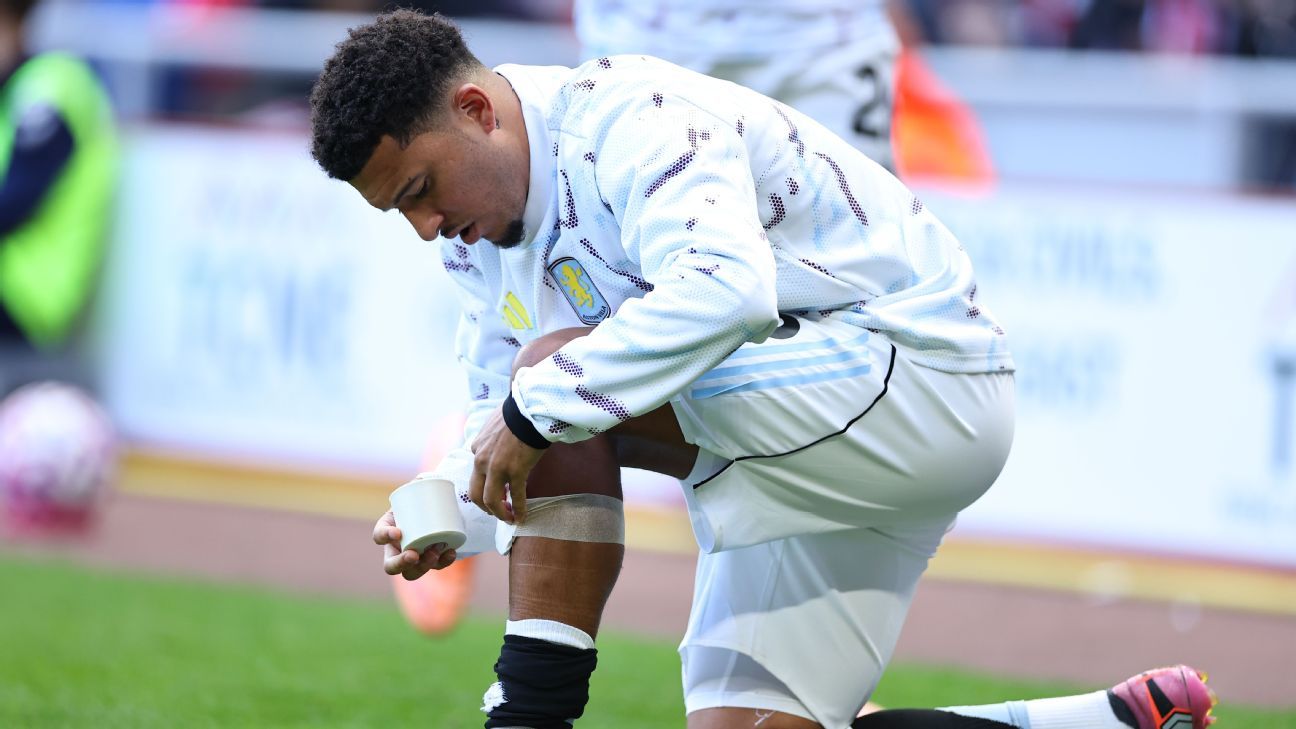
Until recently, shin guards covered the entire shin — sometimes up to 9 inches long — and they were made of foam or rubber with a hard plastic shell. But in recent years, some players have abandoned the protective element completely, wearing only tiny pieces of foam under their socks, and it seems only a matter of time before a serious injury leads to a rethink in what players are wearing.
Lewis Holtby‘s injury, sustained while playing for Dutch team NAC Breda against Fortuna Sittard in the Eredivisie on April 12, looks to have ended the 35-year-old’s season due to the depth of the wound on his left shin following a challenge with an opposition defender. It also led to a blame game centered on Holtby’s shin guards.
“I think it’s ridiculous that the referee [Jeroen Manschot] says something about it,” Breda coach Carl Hoefkens said after the game. “In the tunnel, it was said [by Manschot] that Holtby should just wear shin guards, or better shin guards. The officials also check the shin guards before the match, so it’s their responsibility as well.”
La aparatosa lesión de Lewis Holtby este fin de semana. 😬
Vía ESPNnl/X pic.twitter.com/WgHl4PL5xo
— ESPN Deportes (@ESPNDeportes) April 14, 2026
Breda defender Denis Odoi spoke about Holtby’s “small shin guards” and said “You’re never too old to learn,” when asked about players wearing “normal” shin guards again, while ESPN NL analyst, former Ajax and PSV Eindhoven winger Kenneth Perez, was more critical.
“They [players] are now wearing those tiny things, or basically toilet paper, just to have something there,” Perez said. “I have absolutely no sympathy for injuries that result from that.
“As a club, you can simply say: We require our players to wear proper shin guards.”
Watch any top-level fixture this season and you’re likely to see players with socks rolled down almost to their ankles — Everton‘s Jack Grealish and Tyler Dibling wear them low, covering tiny shin guards. Others have their socks just below the knee, but still sport shin guards half the size of a cellphone, as shown by Burnley midfielder Marcus Edwards during a game against West Ham in February. Arsenal forward Bukayo Saka has spoken this season about his preference for tiny shin guards — “I’m a fan of them; I don’t like big shin pads” — though Liverpool defender Virgil van Dijk harbors a more cautious approach to protecting his lower leg.
“If you get kicked on your shin and your shin pad is that size of an AirPod, then obviously that’s a big problem,” Van Dijk said.
Brighton forward Danny Welbeck has said that his younger teammates ridicule his old-school shin guards — “They say to me ‘Your shinnies are massive,’ but you need a bit more safety, you know?” — but just like Saka, Fulham winger Alex Iwobi prefers the small, lightweight guards because “I just don’t like having something heavy on my shin.”
Former England and Liverpool forward Peter Crouch regularly raises the shin guard issue on his podcast, That “Peter Crouch Podcast,” under the light-hearted “Make Shin Pads Great Again” banner, with Fulham midfielder Harry Wilson saying this season that some of his teammates “cut up the sponge you get from the physio and use that.”
If a high-profile player sustains this type of injury thanks to tiny shin guards, the kind of injury that forces them to miss the World Cup or that happens on the biggest stage this summer — the debate about the shrinking move towards smaller pads will likely increase in volume.
The trend toward smaller shin guards — and away from larger models that would also include ankle protectors — is rooted in many things, including the game becoming less physical with fewer tackles and players wanting to feel as light as possible to boost their sprinting speed. But it is also a result of a change in the Laws of the Game in July 2024 when IFAB (the International Football Association Board) amended the rule covering shin guards (Law 4) to place the responsibility on the player rather than the match officials to ensure sufficient shin protection was worn.
Prior to the change, the responsibility was on referees to police the rule, but many were being ignored by players and clubs and then criticized — or even sometimes challenged in court — for failing to impose the rules if a player was subsequently injured. But the Law remains vague and open to interpretation. There is no minimum size required, only that the shin guards are “covered entirely by the socks, are made of suitable material (rubber, plastic or similar substances) and provide a reasonable degree of protection.”
“The reason we changed the Law was because it is impossible to legislate and say a shin pad must be a certain size,” David Elleray, IFAB technical director and former Premier League referee told ESPN. “So two years ago, we put the responsibility on the players that they should wear something which they believe protects them.
“The challenge we had was partly legal. If we left the responsibility with the referees and the referees said, “Okay, that shin guard is okay,” then the player got injured, the player might decide to take action. So we put that very firmly in the court of the players and the coaches, and for young players, the parents.”
The change of the Law has led to players placing speed and aesthetics — many dislike the bulk of larger shin pads — above safety, however, and Elleray admits it has not led to a sensible approach by players and clubs.
“We [IFAB] had hoped, or expected, that they would take a responsible attitude to it, but there was one recently [Marcus Edwards] that was almost like a sticking plaster,” Elleray said. “The pressure needs to go on the individual players, the coaches and the clubs to make sure their players are protected because it’s impossible to legislate for.”
Former leading referee Pierluigi Collina, now the Chair of the FIFA referees’ committee, has urged players to be more mindful of their well-being when choosing their shin guards. “At the end of the day, the shin pad rule is for their own safety,” Collina told ESPN. “So they should care of what is really safe for them.”
But as shocking as Holtby’s injury was, it perhaps generated such attention because of the rarity of such incidents. Broken legs and deep cuts and gashes seem less prevalent despite the reduction in shin pad sizes, with muscle tears and ligament injuries to ankle and knee more likely to sideline a player.
The argument put forward by those who favor small shin guards is that players no longer suffer serious impact injuries, and that might be a valid point. In a recent example of a bad impact injury, Liverpool’s Alexander Isak was wearing small — but not tiny — shin guards when he suffered a fractured leg in a challenge with Tottenham’s Micky van de Ven last December, but it would be difficult to argue that larger shin pads would have diminished the severity of Isak’s injury.
Sources at the Professional Footballers’ Association (PFA) have told ESPN that “primary decisions around safety are taken by players in consultation with their club and medical teams” and that players ultimately “feel comfortable with different shapes and sizes of shin pads.” There is certainly no drive within the game to force players to re-think the protection being offered by their shin pads.
Football trends have changed since larger and heavier shin pads were the go-to model for top players. The Umbro Armadillo, which was manufactured during the early-2000s, was a large plastic guard with ankle protectors and was worn by Michael Owen and Alan Shearer, while Brazil forward Ronaldo wore Nike’s T90 model. Both designs were significantly larger, heavier and stronger than the pads now being preferred.
Today’s younger players prefer small, lightweight pads and the shifting trend led two brothers — Kaizer Chiefs midfielder Ethan Chislett and Zack, who plays for UAE-based Palm City — to develop their brand of Joga shinpads, which are tiny, much lighter and softer than traditional shin guards. The Joga Shinpad Sleeve, worn by Chelsea‘s João Pedro, is a cellphone-sized soft pad within a fabric sleeve that’s worn to cover the shin. Everton midfielder Grealish wears Joga’s Breathe pads that measure just 6 centimeters x 10 centimeters (2 inches x 4 inches).
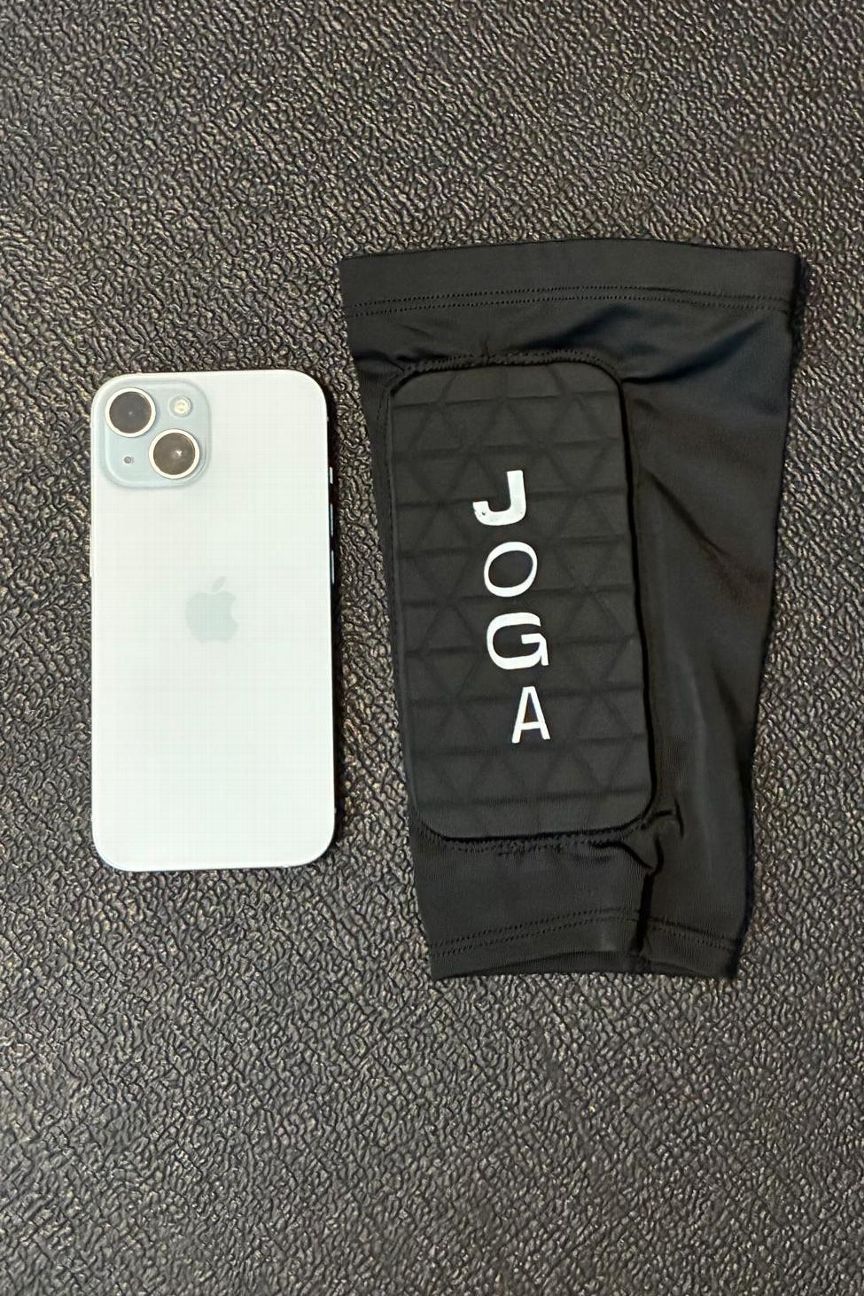
“We were the first ones to make a mini shin pad that you could buy,” Zack Chislett told ESPN. “I was playing nonleague at the time, my brother Ethan was playing for AFC Wimbledon, and we noticed that pads were getting smaller and smaller, but there was no-one giving players an option to buy them. They were just using anything they could find in the physio’s bag, so the demand was obviously there.”
But why do young players want their shin guards to be so small and lacking in protection?
“When you’re training the whole week without shin pads and you then put the big pad on, sometimes with ankle pads, on a Saturday, it doesn’t feel natural like when you’re training,” Zack said. “Some players will feel better with the big shin pad, but a lot of the younger, more attacking players don’t feel that way and they don’t want to feel as restricted when they go on the pitch.
“And the game has changed, 100%. The tackles aren’t coming in like they used to, it isn’t as aggressive or as physical. I’m 23, and players of my generation just don’t want to wear big shin pads — it would be like wearing old, heavy leather boots. It just isn’t going to happen.”
The likes of Welbeck and Van Dijk are being usurped by players such as Saka, Iwobi, Grealish and Joao Pedro when it comes to the size and protective elements of their shin pads.
Perhaps Holtby’s injury will prompt some players to think about the risks of playing without suitable protection and a high-profile injury at this summer’s World Cup could also lead to FIFA imposing stricter guidelines on what can, and can’t, be worn by players. But right now, footballers are putting risk to one side in favour of speed and freedom of movement, so shin pads could get smaller and smaller.
NEWYou can now listen to Fox News articles!
Danhausen made his debut at Elimination Chamber in February when he appeared out of a mysterious box that was set up on the stage.
The pro wrestling star’s entrance came with a puzzled fan base and questions about who this guy was and how he was going to fit on a crowded roster filled with talented wrestlers all vying for championships and time on the major premium live events, “Monday Night Raw” and “Friday Night SmackDown.”
CLICK HERE FOR MORE SPORTS COVERAGE ON FOXNEWS.COM
Danhausen made his WWE debut during the Elimination Chamber event at the United Center in Chicago, Illinois, on Feb. 28, 2026. (Craig Melvin/WWE)
Danhausen came out with his faced painted and several women, known at the time as the Danhausenettes. It was his first appearance since he left All Elite Wrestling, where he had the same gimmick – putting a “curse” and emerging as more of a comedy act than anything.
In the weeks leading up to WrestleMania, Danhausen caught on with the fans. He “cursed” The Miz, Kit Wilson, Dominik Mysterio, the New York Mets and Stephen A. Smith in between his debut and WrestleMania 42. In Las Vegas, his T-shirts were everywhere and dozens of fans painted their faces to match the “very nice, very evil” superstar.
“I’ve only been here for about two months, and look at the impact Danhausen’s made,” he told Fox News Digital before WrestleMania Night 1. “He’s got a merchandise stand at WrestleMania. He’s going to be at WrestleMania. And his face is on everything. Gotta get it on the side of the truck still. But what was your question? I was talking about how great I am.”
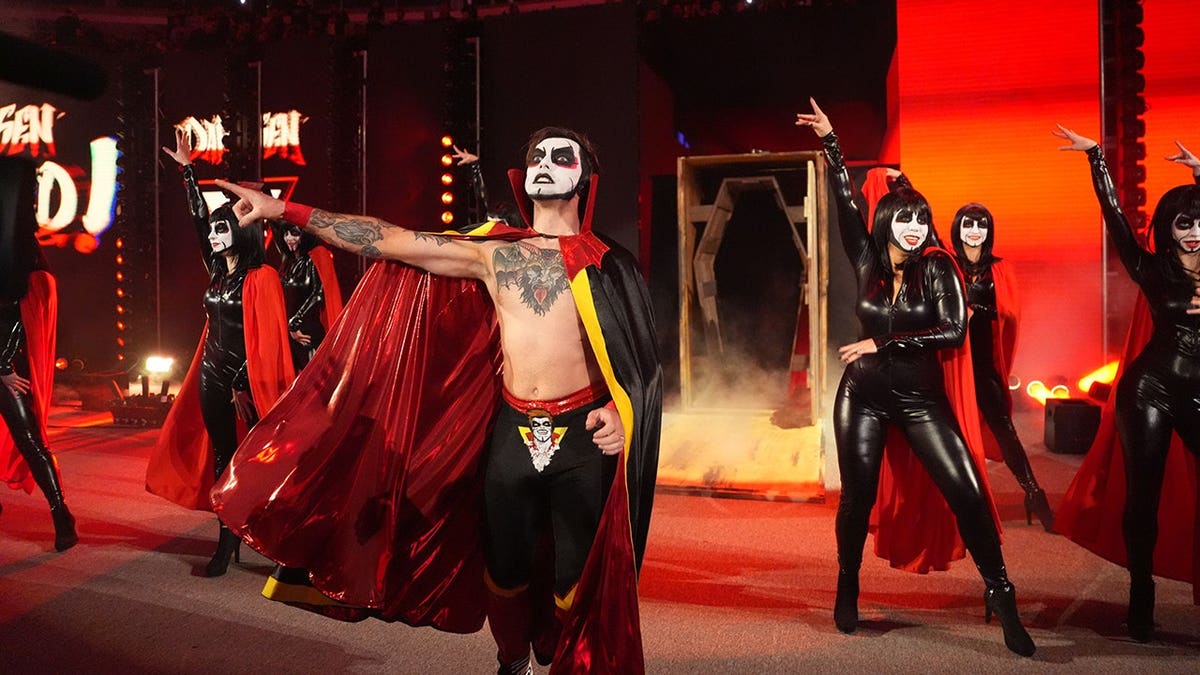
Danhausen came out with his faced painted and several women, known at the time as the Danhausenettes. (Craig Melvin/WWE)
ROMAN REIGNS, CM PUNK PUT ON PROFESSIONAL WRESTLING MASTERCLASS AT WRESTLEMANIA 42
Danhausen also provided an update on the Danhausenettes, who haven’t been seen since they were dancing and performing on the stage at Elimination Chamber.
“Well, we gave them a vacation,” he said. “A great reception. We gave them their human monies to go off and do whatever they want for the time being. Perhaps we’ll see them again. Perhaps we won’t. I don’t know. It’ll be a surprise.”
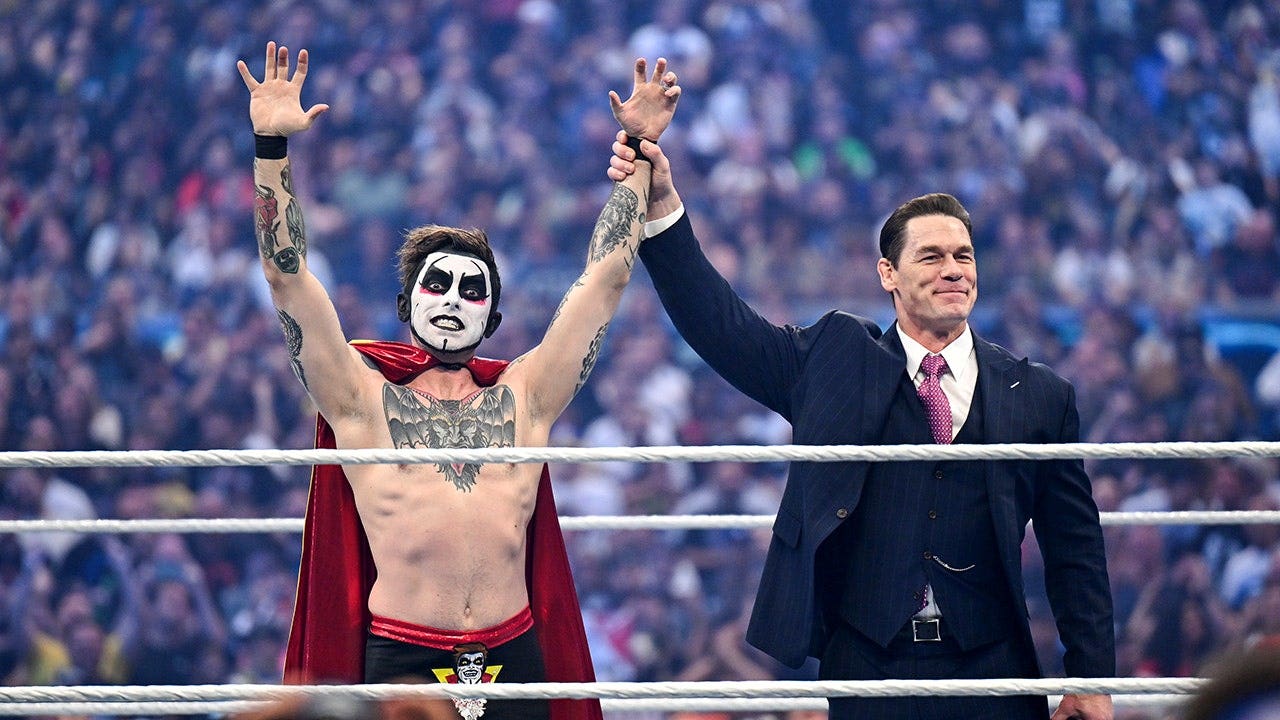
Danhausen appeared at WrestleMania Night 2 – his first WrestleMania.
He came out to a huge reaction in a segment that involved John Cena, The Miz and Wilson. He was accompanied by pro wrestlers from Micro Wrestling. They also got involved as Danhausen struck The Miz in the groin. The Micro Wrestling performers carried The Miz out of the ring.
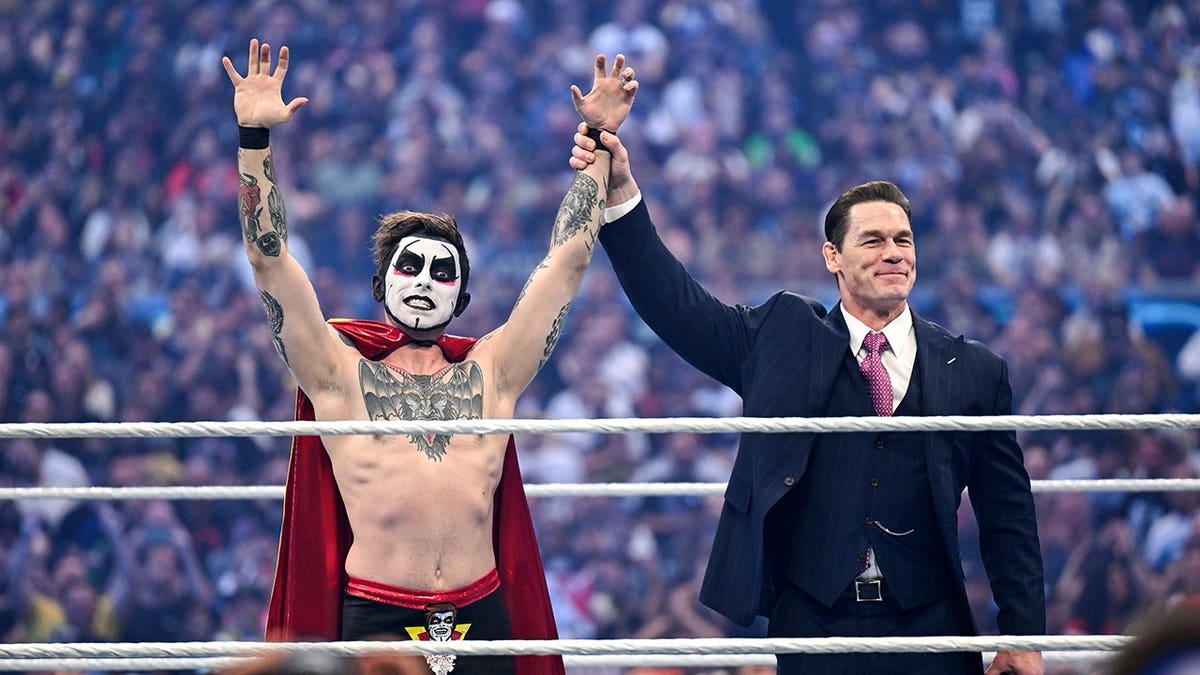
Danhausen and John Cena celebrate during WrestleMania 42: Night 2 at Allegiant Stadium in Las Vegas, Nev., on April 19, 2026. (Andrew Timms/WWE)
CLICK HERE TO DOWNLOAD THE FOX NEWS APP
It was one of the funniest moments of the weekend. One thing is for sure, Danhausen is in WWE to stay.
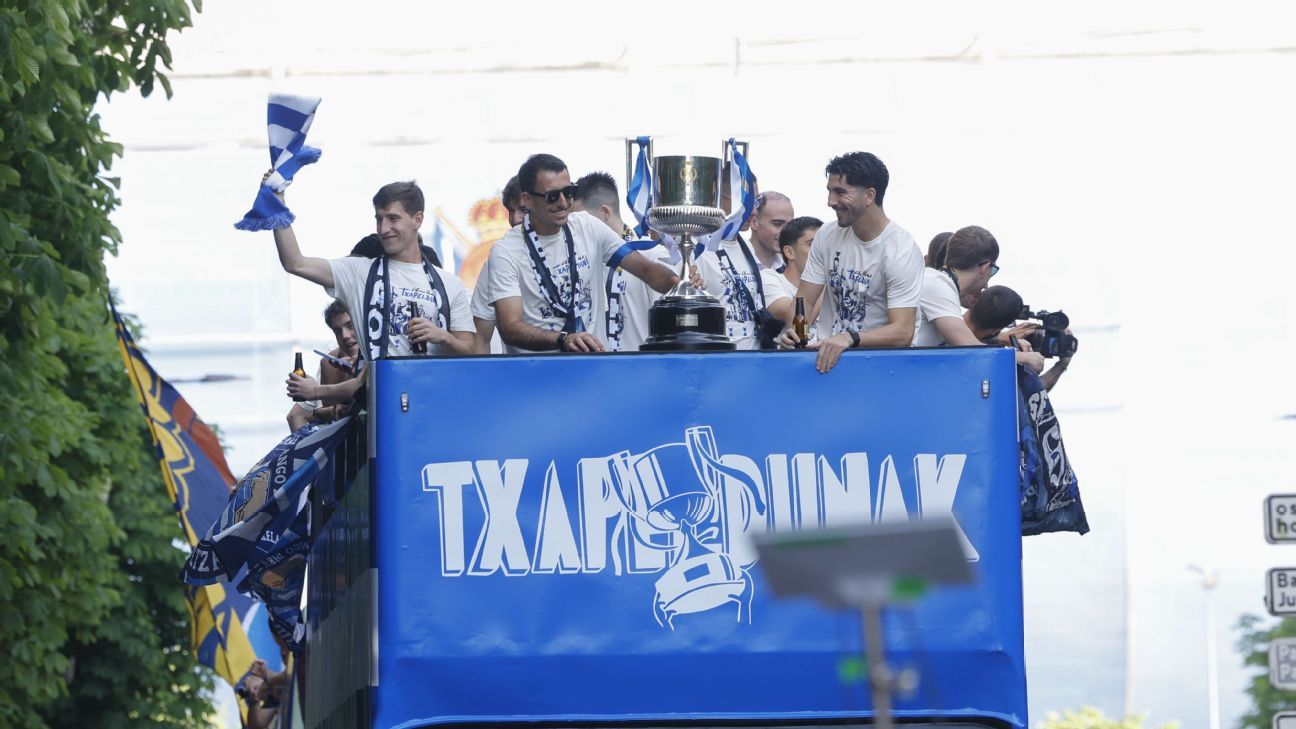
More than 100,000 fans gathered in the streets of San Sebastian, Spain, on Monday to celebrate Real Sociedad‘s Copa del Rey win over the weekend — a first major trophy for the Basque team since 2021.
Real Sociedad defeated Atlético Madrid on penalties Saturday to secure the title, marking a historic milestone for American coach Pellegrino Matarazzo, who earned his first trophy just four months after taking over the squad. In doing so, he became the first U.S.-born manager to win a major European tournament.
Matarazzo received one of the loudest ovations of the day. He further endeared himself to the local supporters by attempting a speech in Euskera, the Basque regional language.
“We are champions! I will try to do this in Basque, so I apologize for any mistakes I may make,” Matarazzo said from the balcony of San Sebastian’s town hall. “What a wonderful start on this path we are taking together. I feel that this is just the beginning! With your help, these players can achieve many great things.”
The “Blue and White” crowd chanted “Rino, Rino, Rino Matarazzo,” to which the New Jersey native responded that no one lifted the trophy as “high as I have,” due to his 6’6″ height and the proudness he feels.
Another moment of peak euphoria occurred when club captain Mikel Oyarzabal raised the trophy. The Spain striker thanked the fans for their unwavering support, while being frequently interrupted by the crowd chanting “Ballon d’Or” in his honor.
“Firstly, thank you very much for being here with us. It’s great to see how happy you look,” Oyarzabal said. “Here we are again, saying we are the champions of the Copa del Rey.”
Matarazzo — who previously coached Stuttgart and Hoffenheim in Germany — took charge of Real Sociedad as they struggled last December and has lifted them to seventh in LaLiga, and now a major trophy.
Information from The Associated Press was used in this report.


WhatsApp to let users generate private summaries of unread chats
US stocks today: Wall Street inches higher as markets eye ceasefire deadline; Dow jumps 300 points, S&P 500 remains flat – The Times of India

Soccer’s incredible shrinking shin guards could be a big problem

-

 Fashion5 days ago
France’s LVMH Q1 revenue falls 6%, shows resilience amid Iran war
-

 Sports1 week ago
The case for Man United’s Fernandes as Premier League’s best
-

 Entertainment1 week ago
Palace left in shock as Prince William cancels grand ceremony
-
 Business1 week ago
UK could adopt EU single market rules under new legislation
-

 Entertainment6 days ago
Is Claude down? Here’s why users are seeing errors
-

 Fashion1 week ago
Energy emerges as biggest cost driver in textile margins
-
 Business1 week ago
Delta Air Lines unveils first new Delta One suite in premium cabin arms race
-

 Fashion1 week ago
Asia claims largest share of markets on Kearney FDI Confidence Index