

Business
Pakistan Day: more than a day of remembrance | The Express Tribune

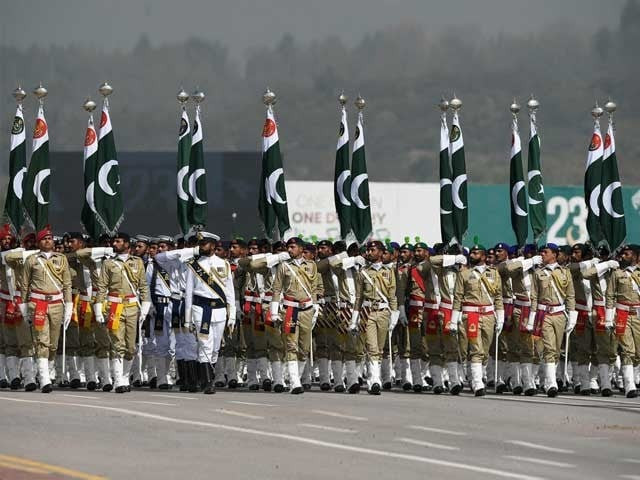
In modern world, sovereignty has evolved; it is no longer just political; it is deeply economic
ISLAMABAD:
Every year on March 23, Pakistan commemorates the Lahore Resolution – a defining moment that set the course for the creation of a sovereign state. It was a vision rooted in dignity, self-determination, and the right to shape an independent future.
More than seven decades later, Pakistan Day must be more than remembrance. It must also be reflection. Because sovereignty today cannot be measured by flags and borders alone.
In the modern world, sovereignty has evolved. It is no longer just political; it is deeply economic. A country that cannot sustain its economy without external support, which repeatedly returns to institutions such as the International Monetary Fund, must confront a difficult question: how independent is its decision-making in practice?
Economic fragility narrows policy space, limits strategic options, and forces governments into short-term decisions that often come at the cost of long-term stability. Over time, it creates an illusion of sovereignty – where political independence exists, but economic autonomy does not.
Pakistan is not alone in having emerged from colonial rule. Many nations that gained independence in the mid-20th century began their journeys with similar or even weaker starting points.
Consider South Korea. In the 1950s, it was war-ravaged, resource-constrained, and heavily aid-dependent. Today, it is a global industrial and technological power. Malaysia transitioned from a commodity-based economy to a diversified manufacturing and services hub through consistent policy direction and export-led growth. Vietnam, once devastated by conflict, has emerged as a major export economy, integrating deeply into global supply chains.
These transformations were not accidental. They were the result of sustained policy discipline, institutional consistency, and a clear understanding that economic strength is the foundation of sovereignty.
Pakistan’s economic story, by contrast, is defined by repetition. Crisis leads to stabilisation. Stabilisation leads to temporary relief. Relief delays reform. And the cycle begins again. Export bases remain narrow. Productivity growth is slow. Fiscal pressures are constant. Policy direction often shifts with political transitions rather than long-term national priorities.
The issue is not the absence of ideas. Pakistan has produced numerous reform frameworks and policy roadmaps. The issue is continuity. Without sustained implementation, even the best strategies remain unrealised.
Why this Pakistan Day feels different
This year, Pakistan Day carries a sharper edge. Amid evolving regional tensions and shifting geopolitical realities, the meaning of sovereignty has become more immediate. National security is no longer confined to defence capabilities; it is inseparable from economic strength. A fragile economy is not just a developmental concern; it is a strategic vulnerability.
The spirit that led to the Lahore Resolution was rooted in the desire for control over destiny. Today, that control depends as much on fiscal stability, export strength, and institutional credibility as it does on political independence. Pakistan does not need another diagnosis. Its challenges are well understood. What it needs is discipline; expressed through three forms of consistency.
Consistency in policy means that economic priorities must outlive political cycles. Investors, industries, and institutions respond to predictability, not periodic shifts. Without stable policies, even the most promising sectors fail to mature.
Consistency in reform requires that structural changes are not abandoned midway. Tax reforms, export strategies, industrial policies – these cannot be crisis-driven exercises. They must be sustained, even when immediate pressures subside.
Consistency in direction is perhaps the most critical. Nations that progress do so not because they avoid setbacks, but because they do not lose sight of their long-term trajectory. Pakistan has often changed course just when continuity was needed most. Without these three forms of consistency, reform remains episodic and progress remains fragile.
From political freedom to economic strength
The generation that gathered in 1940 secured a political future for Pakistan. The responsibility of the present generation is to secure its economic one. With a population exceeding 240 million – of which nearly 65% is youth – Pakistan stands at a defining moment. This demographic reality can either become a powerful engine of growth or a source of economic strain.
Without economic expansion, job creation, and productivity growth, the promise of youth becomes a pressure point. At the same time, the global economy is evolving rapidly. Competition is intensifying. Technological shifts are redefining industries. Countries that fail to adapt risk being left behind.
Economic strength, therefore, is not a luxury; it is a necessity. It is essential to safeguard political freedom. It is essential to provide dignity to citizens. It is essential to position Pakistan as a credible and confident member of the global community.
Pakistan Day is also a moment of remembrance. It is a reminder of those who struggled, sacrificed, and envisioned a state that would stand with dignity among nations. Their aspiration was not merely for territorial independence, but for a system that would ensure justice, opportunity, and self-reliance.
To honour that sacrifice is not only to remember it but to complete it. That requires moving beyond symbolic celebration to substantive progress. It requires building institutions that work, policies that endure, and an economy that sustains. It requires asking not only what Pakistan is but what it is becoming.
A day for decision
Pakistan Day should not only celebrate what was achieved; it should define what comes next. A nation that is politically free but economically dependent remains strategically constrained. When Pakistan came into being, it did so as a state with limited resources, fragile institutions, and immense uncertainty. Yet, through resilience and determination, it survived, stabilised, and laid the foundations of a functioning state against considerable odds.
That history is not a story of weakness; it is a story of endurance. But endurance alone is no longer enough. The world is moving faster than ever. Economies are transforming, technologies are redefining industries, and nations are competing not just for survival, but for relevance. In such a world, standing still is not stability; it is decline.
To catch up with the pace of global development, Pakistan must move with clarity of direction, consistency of decisions, and the courage to translate ambition into execution. Vision must become policy. Policy must become implementation. Implementation must deliver results. The generation of 1940 created Pakistan. This generation must now strengthen it. The promise was made. Its fulfilment still lies ahead.
The writer is a PhD; former executive director general, Board of Investment, Prime Minister’s Office; public policy & corporate law expert
Business
LPG crisis eases: Operations back to normal in many factories as commercial LPG supplies improve; workers return – The Times of India
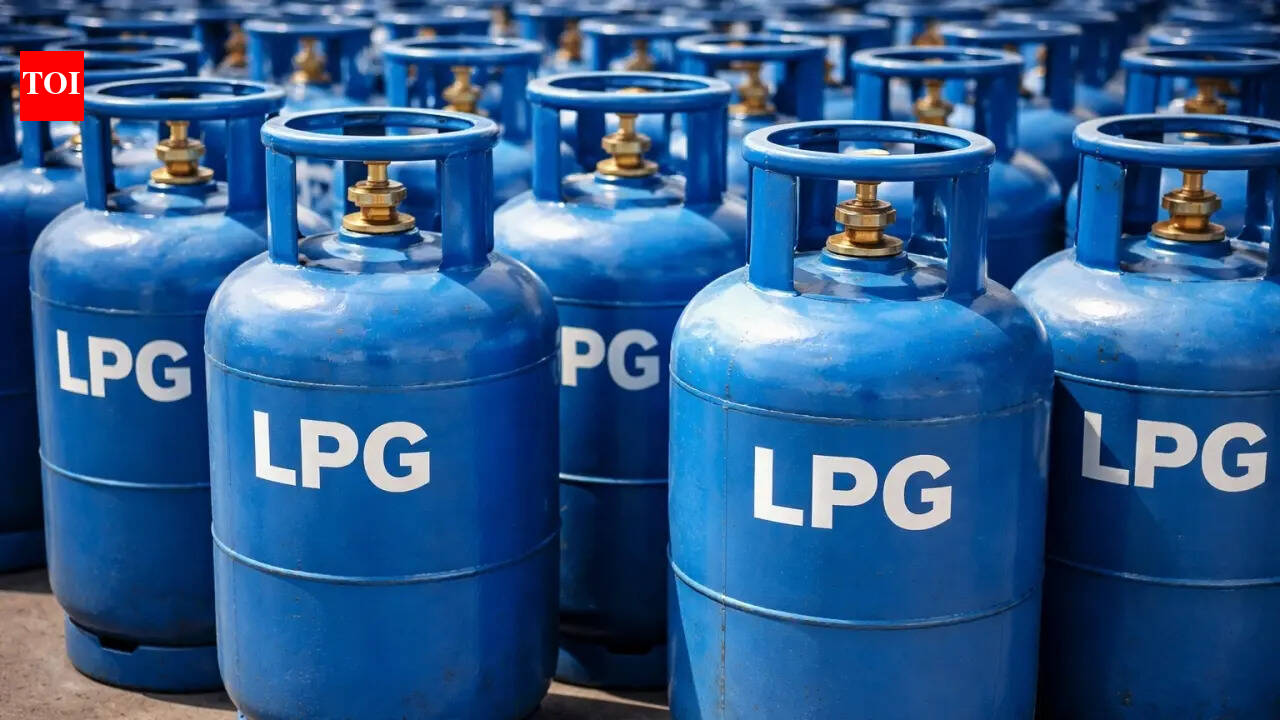
LPG crisis for factories across the country seems to be easing as the government steps up availability of commercial liquefied petroleum gas. Production disruptions are gradually subsiding as supplies of commercial LPG improve and migrant workers return to factories, supported by companies providing meals or alternative cooking solutions.This improvement follows the government’s move on Friday to raise the allocation of commercial LPG by an additional 20 percentage points, taking it to 70 per cent of pre-disruption levels that had been affected by the Gulf conflict and Iran’s near blockade of the Strait of Hormuz.
The Centre has designated sectors such as steel, automobiles, textiles, dyes, chemicals and plastics as priorities, given their labour-intensive operations and strong interlinkages with other industries, according to an ET report.Companies operating in these sectors have started to see operations gradually stabilise.Liquefied petroleum gas is extensively used across industries such as automobiles and electronics, particularly in processes like brazing and paint shop operations, as well as in segments like food processing.
Availability of Commercial LPG supplies
Industry players indicated that LPG availability has become more stable.“Earlier we had visibility of one-two days; now it’s about a week,” said Kamal Nandi, head of the appliances business at Godrej Enterprises. “There are no issues with labour or raw materials, and production is running at full throttle,” he was quoted as saying.An executive from the automobile sector noted that supply constraints at smaller vendors are easing, while larger manufacturers have managed to limit disruptions by adopting alternative fuel options.“The higher allocation for non-domestic LPG and inclusion of automobiles as a priority sector is a big help,” he said.Mayank Shah, vice president at Parle Products, said improved LPG availability is enabling previously impacted plants to move back towards optimal production levels. He added that companies have urged the government to include packaged foods among the priority sectors.Ajay DD Singhania, chief executive of Epack Durable, noted that supplies have recovered to nearly 60 per cent of normal levels and are likely to rise to around 80 per cent this week. “The new normal is that we have to follow up daily to secure LPG supplies, but availability has improved,” Singhania said. “Workforce retention is no longer a challenge with us offering meals or cooking support. However, production losses over the past three-four weeks are not recoverable.”Attendance levels have also improved as several firms introduced canteen meals, reducing reliance on LPG for cooking. Earlier, supply disruptions had led to absenteeism among migrant workers and a temporary outflow, as higher black market prices and the shutdown of small eateries and mess facilities made food access difficult.A senior executive in the auto components sector said companies are now providing meals across shifts or offering incentives of up to Rs 5,000 to offset higher LPG costs and retain workers. “Attendance has returned to normal,” he said.Avneet Singh Marwah, chief executive of Super Plastronics, said the migrant workforce has returned as supply pressures have eased. The company produces televisions under the Kodak, Thomson and Blaupunkt brands.

It comes after Iran-backed Houthi rebels in Yemen joined the conflict by striking Israel over the weekend.
Source link
Business
Rupee rebounds from record low: Currency rises 128 paise to 93.57 against US dollar – The Times of India

Rupee opened the week in green, recovering sharply in early trade after regulatory intervention aimed at curbing banks’ currency exposure. The currency climbed to 93.57 against the US dollar, on Monday, gaining 128 paise from its previous close, after opening at 93.62 in the interbank foreign exchange market. This comes days after the currency had hit a record low of 94.85 on Friday, following a steep fall of 89 paise. The turnaround follows a directive issued by the Reserve Bank of India on March 27, 2026, which placed a cap of $100 million on the Net Open Position (NOP-INR) that banks can hold overnight. Lenders have been asked to comply with the new limit by April 10. Market participants said the move is prompting banks to reassess their positions, particularly those with long dollar holdings in the onshore market. As these positions are reduced, dollar sales are expected to increase, lending short-term support to the rupee. “As banks begin adjusting their positions, they are likely to sell dollars in the market, which can temporarily support the rupee. This creates a phase of relief, driven by position unwinding, not by a major shift in fundamentals, but still meaningful in the near term,” Amit Pabari, Managing Director at CR Forex Advisors told PTI. Even so, the broader environment remains challenging for the Indian currency. The dollar continues to draw strength from safe-haven demand, keeping the dollar index above the 100 mark and restricting any sustained appreciation in the rupee. The dollar index was last seen marginally lower by 0.06% at 100.09. At the same time, rising crude oil prices are adding to pressure, with Brent crude trading 2.16% higher at $115 per barrel in futures. Geopolitical tensions have played a key role in pushing oil prices higher amid concerns over supply disruptions. “For India, this is critical. Being a major oil importer, higher oil prices increase dollar demand, which directly puts pressure on the rupee,” Pabari said. He added that despite the current relief, the rupee’s outlook remains sensitive to global factors such as oil price movements, geopolitical developments and the strength of the US dollar. Dalal Street also reflected the cautious mood, with the BSE Sensex dropping 1,191.24 points to 72,391.98 in early deals, and the Nifty 50 declining 349.45 points to 22,470.15. Foreign institutional investors were also seen pulling back, having sold equities worth Rs 4,367.30 crore on a net basis on Friday, as per exchange data.


Tamil Nadu tops India T&A exports; Haryana fastest-growing major state

Royal family ‘hides’ senior member cancer struggles: Shocking details out

US’ Ralph Lauren unveils ‘Timeless by Design 2030’ sustainability plan

-

 Politics6 days ago
Afghanistan announces release of detained US citizen
-

 Entertainment6 days ago
UN warns migratory freshwater fish numbers are spiralling
-

 Tech6 days ago
Can a Home Appliance Fix the Problem of Soft-Plastic Waste?
-
 Business6 days ago
Property Play: Home flippers see smallest profits since the Great Recession, real estate data firm says
-

 Sports6 days ago
Broadcast industry CEO says consolidation is ‘essential’ to compete for NFL soaring media rights prices
-

 Sports1 week ago
Men’s March Madness live tracker: Updates on Saturday’s games
-

 Sports1 week ago
Arne Slot: Liverpool’s defeat to Brighton ‘hurts a lot’
-
 Business6 days ago
Gold prices soar in Pakistan – SUCH TV